Nick Taylor and Barbara Nevins Taylor
We got to Rome on July 30, and it was burning up. We knew that heat waves were sweeping through Europe because in Athens two weeks earlier we climbed to the top of the Acropolis in 99 degree heat under a scorching sun. We cooled off when we boarded our extremely cool cruise ship headed out into the Aegean and then on to the Mediterranean. But every land stop put us back into the skillet.
A high of 102 was forecast for our two days in Rome. We needed a strategy that would let us enjoy the city. We saw how the heat was keeping people indoors when our driver dropped us at the Hotel Ponte Sisto on the Via Pettinari. We have always seen a parade of walkers headed to the bridge to cross the Tiber from Regalo to Trastevere. But this morning there were few. The usually busy streets and piazzas were almost empty.
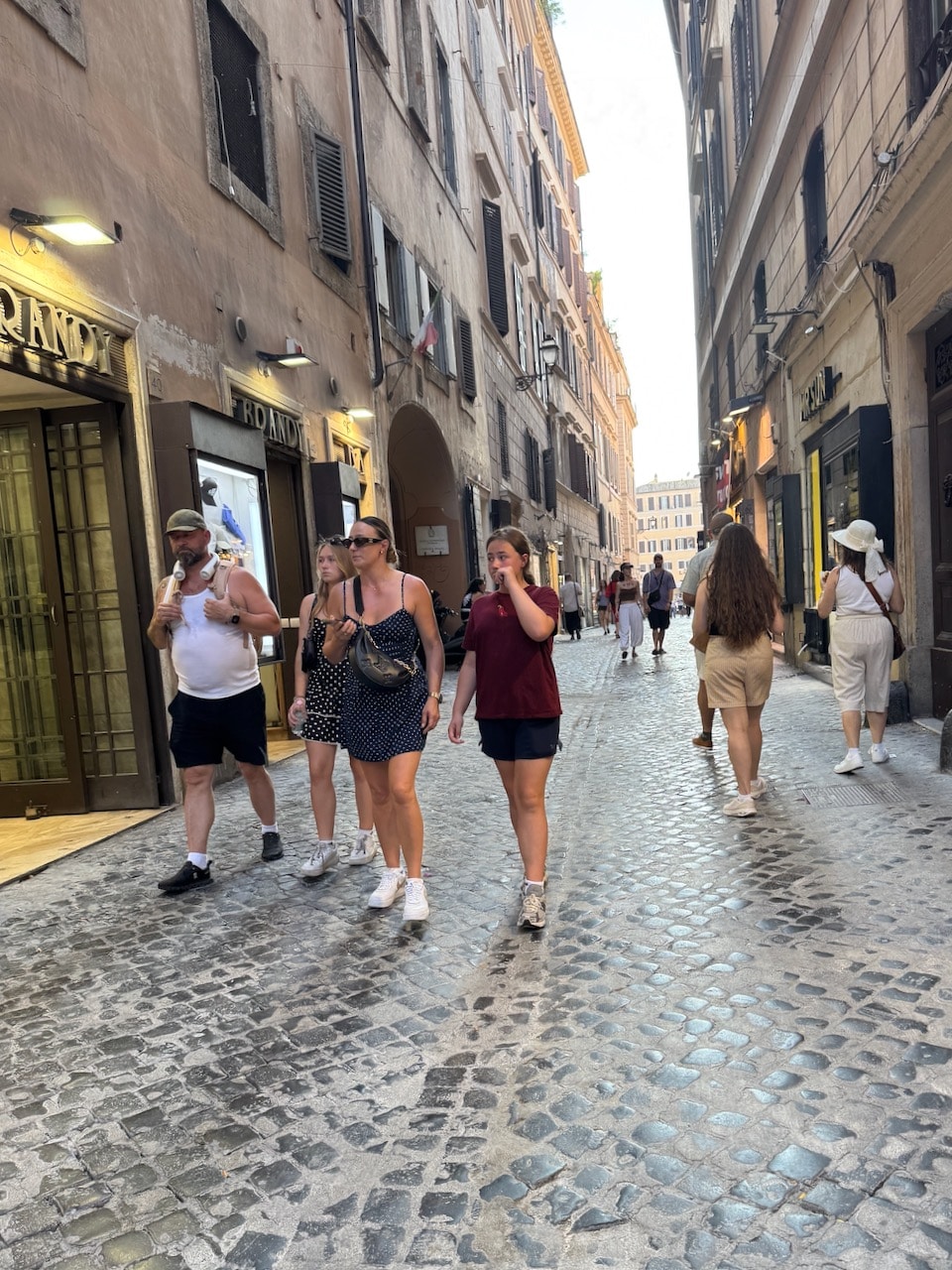
We took the hint; wandering the city, one of our favorite Roman pastimes, was off the agenda in the extreme heat. So what to do? We needed a strategy and we’ll share our tip for enjoying a favorite city in a dangerous heat wave: find a museum, maybe one you have never visited before, cool off in its air conditioning, and learn something new.
While we waited to get settled in the hotel, we looked online for possibilities. The Galleria Nazionale d’Arte Moderna e Contemporanea seemed just right. We’d never been there but as MoMA and Whitney members in New York it was down our alley. First, lunch was in order.
We braved the sun and walked across the Campo d’ Fiori to a little restaurant we knew called Ditirambo.
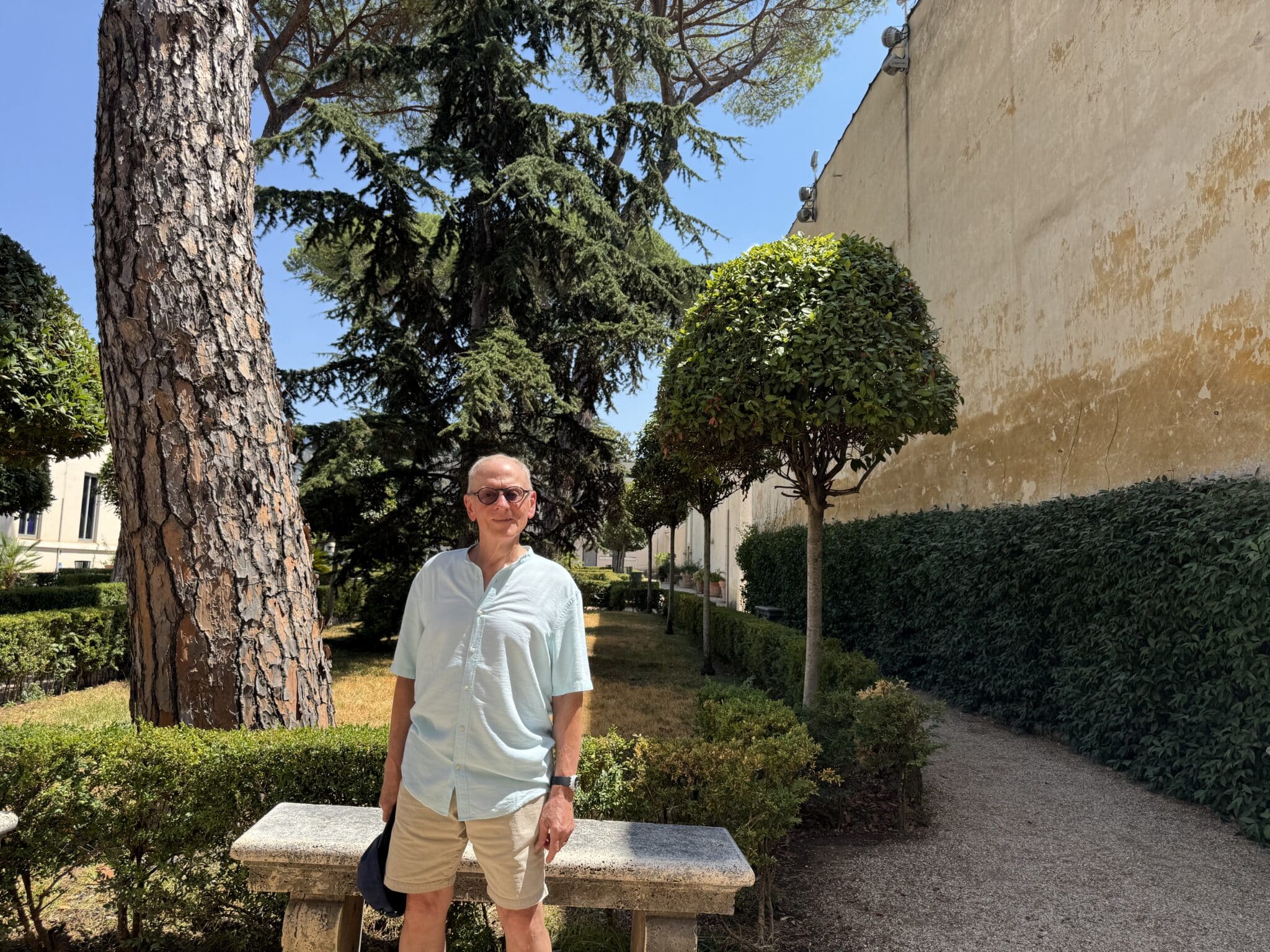
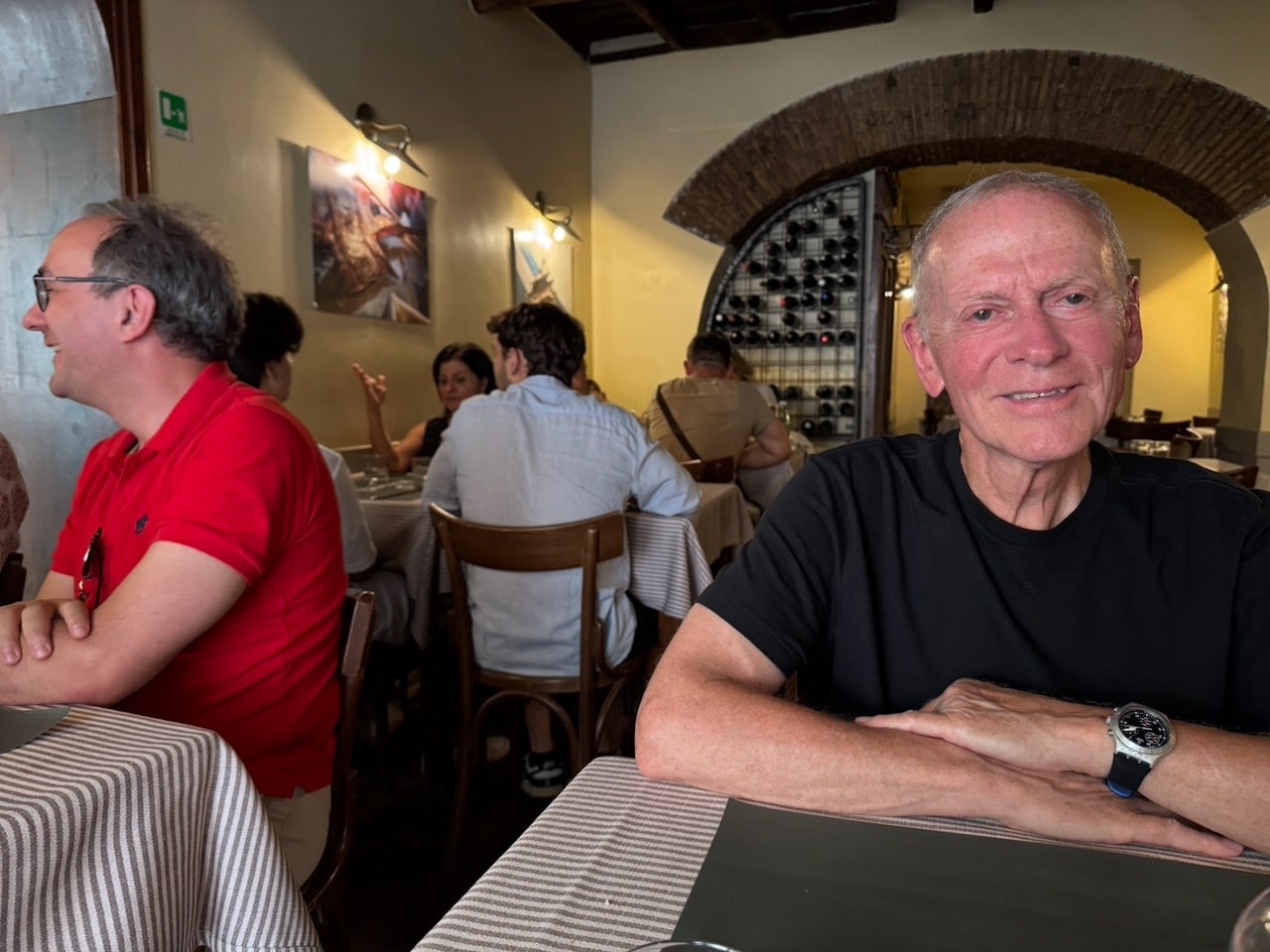 Nick Taylor at Ditirambo, Rome. Photo by ConsumerMojo.com
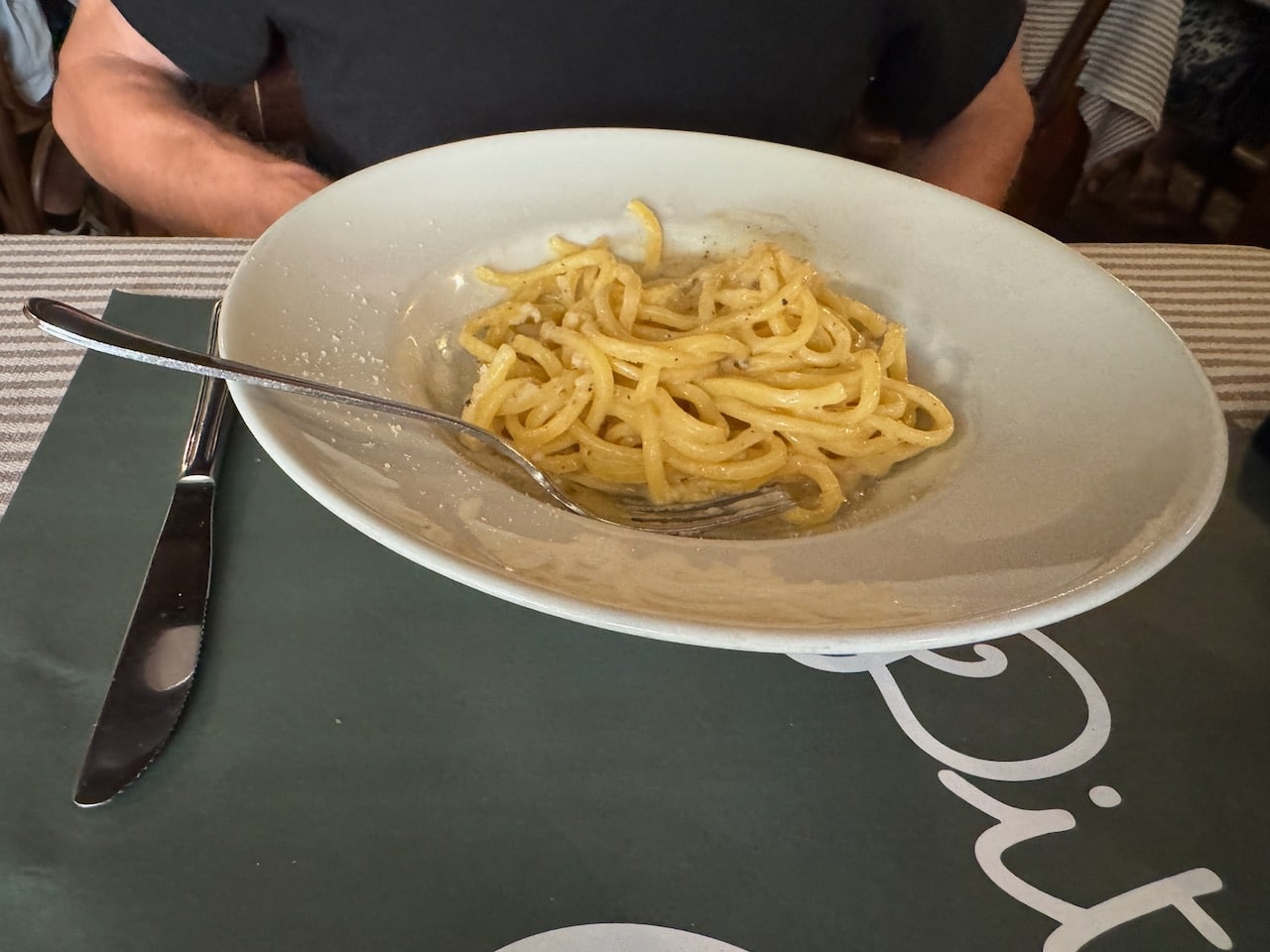
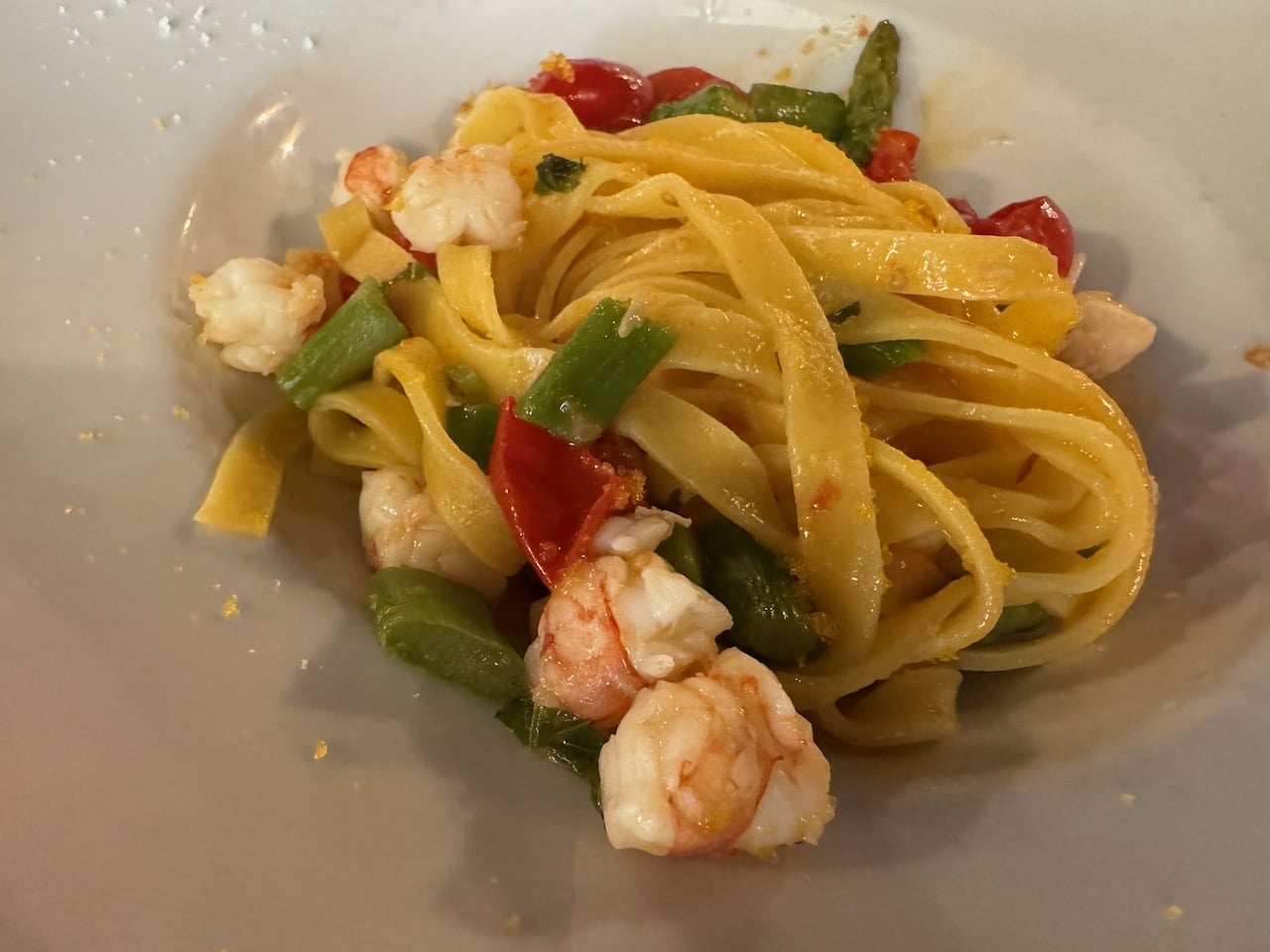
The cacio e pepe and fettuccine with shrimp, tomatoes and green beans tasted as good as we remembered.
After lunch we walked across the Corso Vittorio Emanuele II to a taxi stand and rode to the other end of the city.
The Galleria occupied a stately building across from the better known Borghese Gallery.
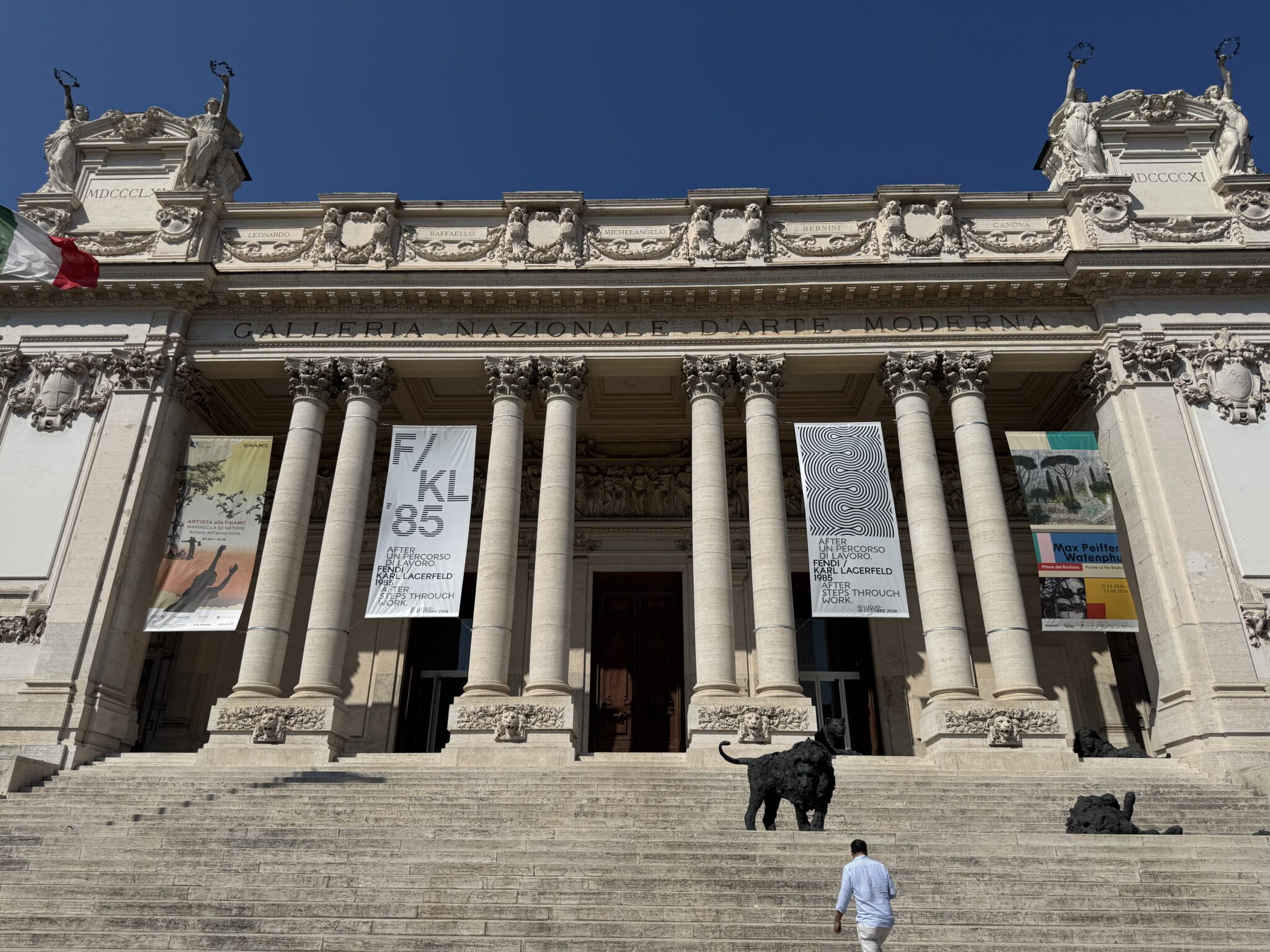
Nothing shaded the sun up the long steps leading to the entrance. If you think you see a long-tailed cat on those steps, it’s a lion sculpted in bronze by David Rivalta and there are two of them. They seem remarkably at ease against the gallery’s classical architecture.
Oonce inside, the cool vast lobby refreshed us from the heat. Two 14.50 Euro tickets admitted us to the surprising and elegant work in its halls and galleries. Among the first was the Hall of Hercules, devoted to Neoclassical art inspired by its Graeco-Roman forebears. At the center is Hercules and Lichas by Antonio Canova, who worked in the late 18th and early 19th centuries.
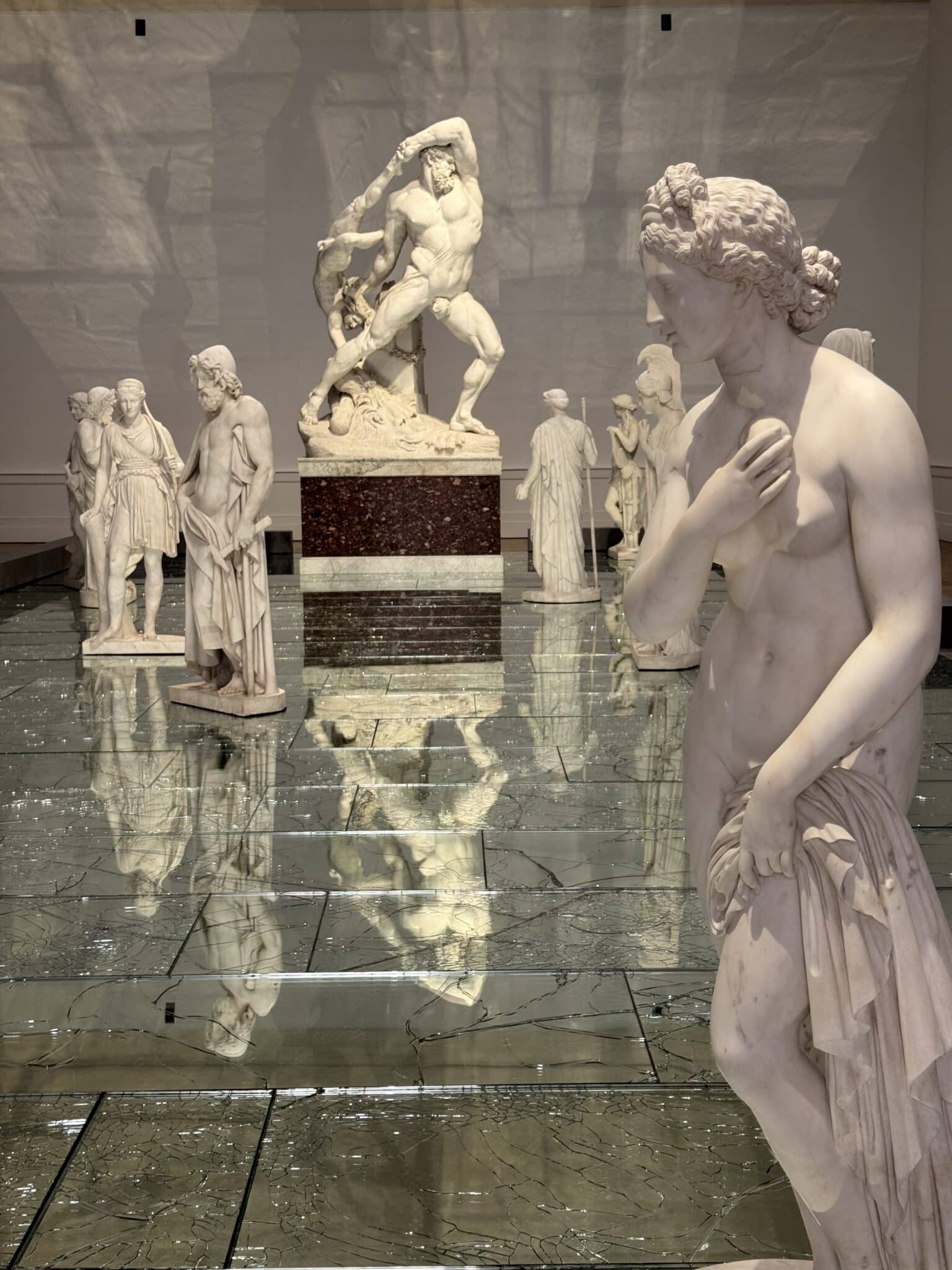
The myth behind the sculpture’s worth explaining. It’s the story of broken promises and a jealous wife. That was Deianira, who wanted to dissuade Hercules from his interest in Iole, whose hand he had won in an archery contest but didn’t marry. Deianira soaked a tunic in a centaur’s blood and asked Hercules’ servant Lichas to deliver it to him. The centaur’s blood caused maddening pain and Hercules blamed Lichas. The statue has him taking Lichas by the ankle and throwing him, as the myth says, into the sea,
A dozen more sculptures of Olympian divinities, by different artists, join Hercules on a floor of splintered mirrors, designed to spark more artistic contemplation.
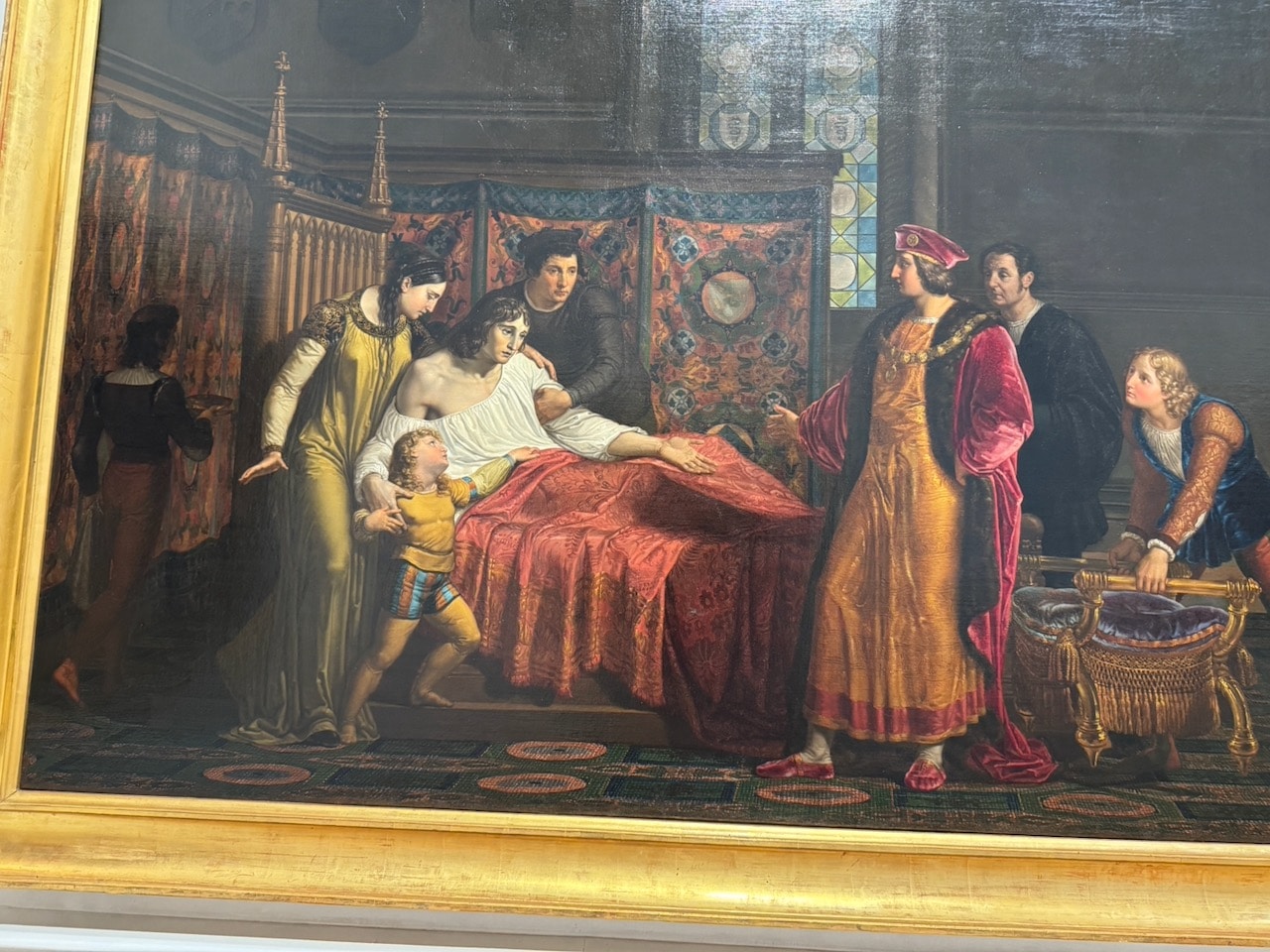
Another gallery introduced us to the work of 19th century Italian artist Francisco Coghetti in this painting of a man dying after a duel.
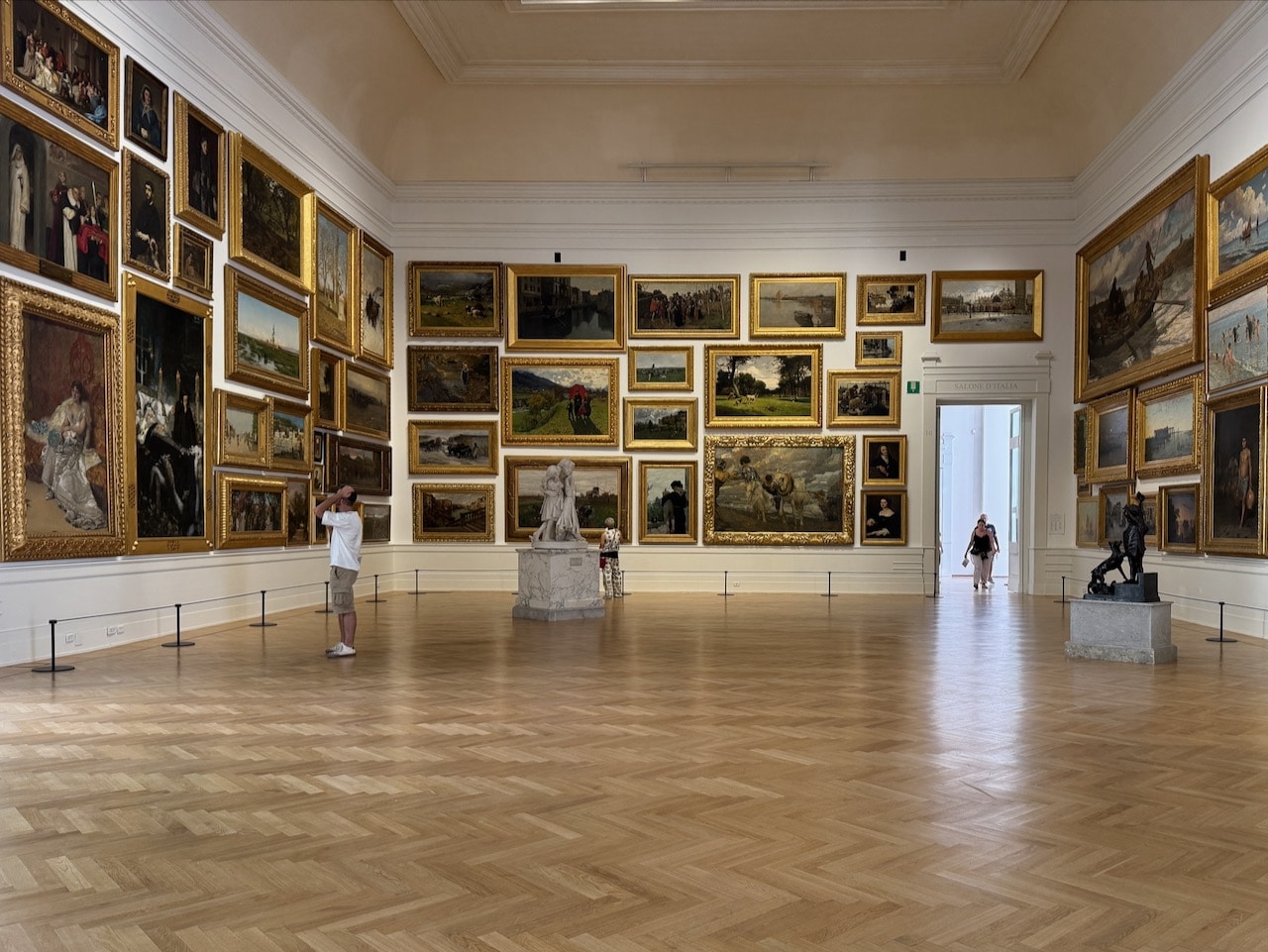
And then we followed the prompts and stepped into a large gallery and a collection of 19th century work.
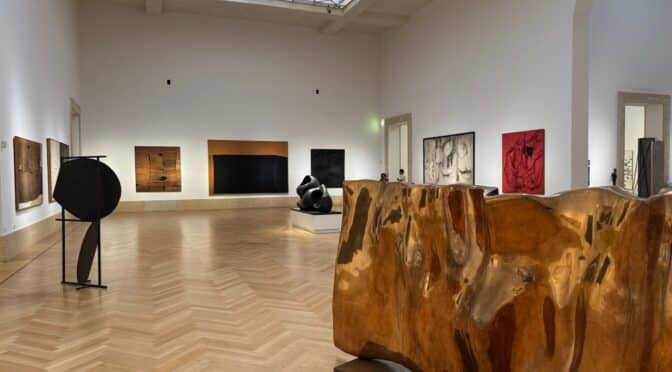
But most of the galleries were devoted to the 20th and 21st centuries.
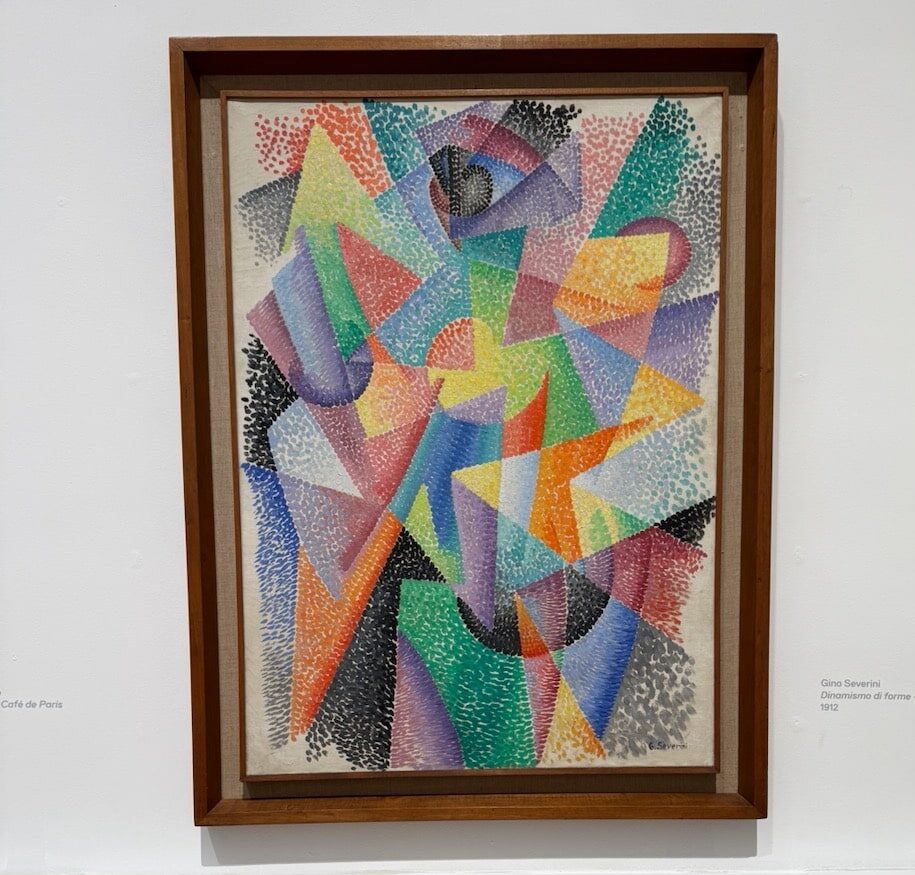
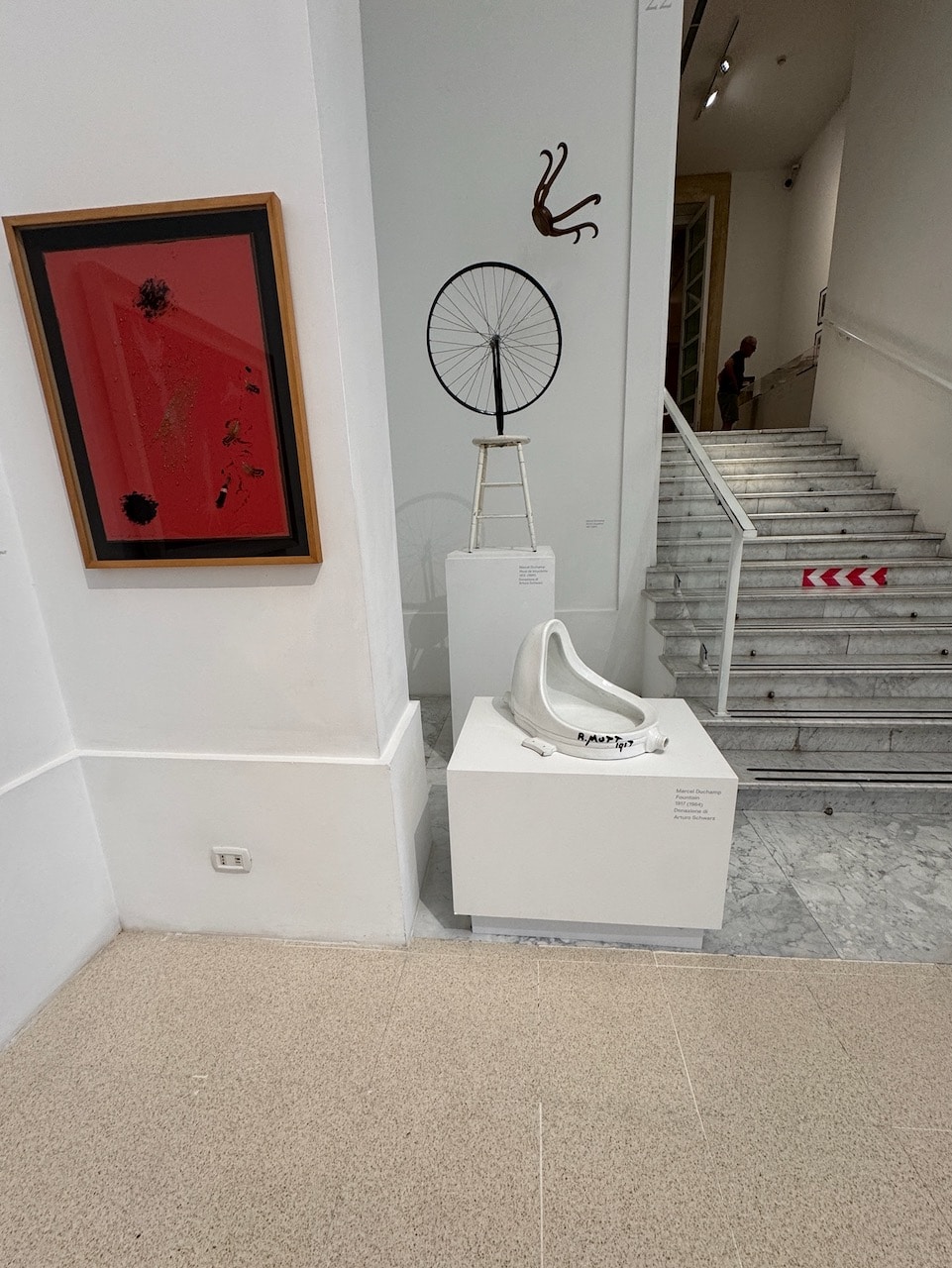
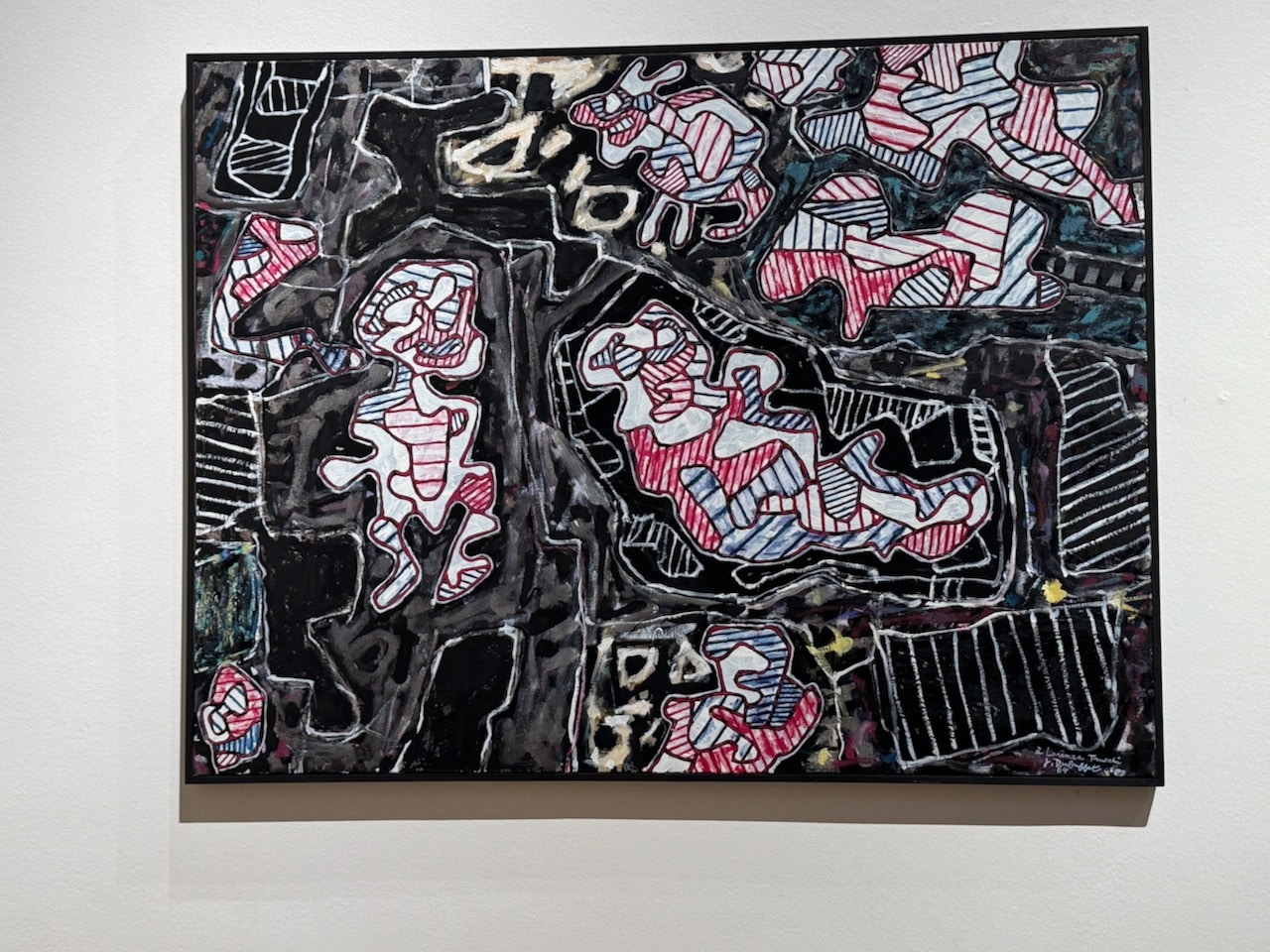
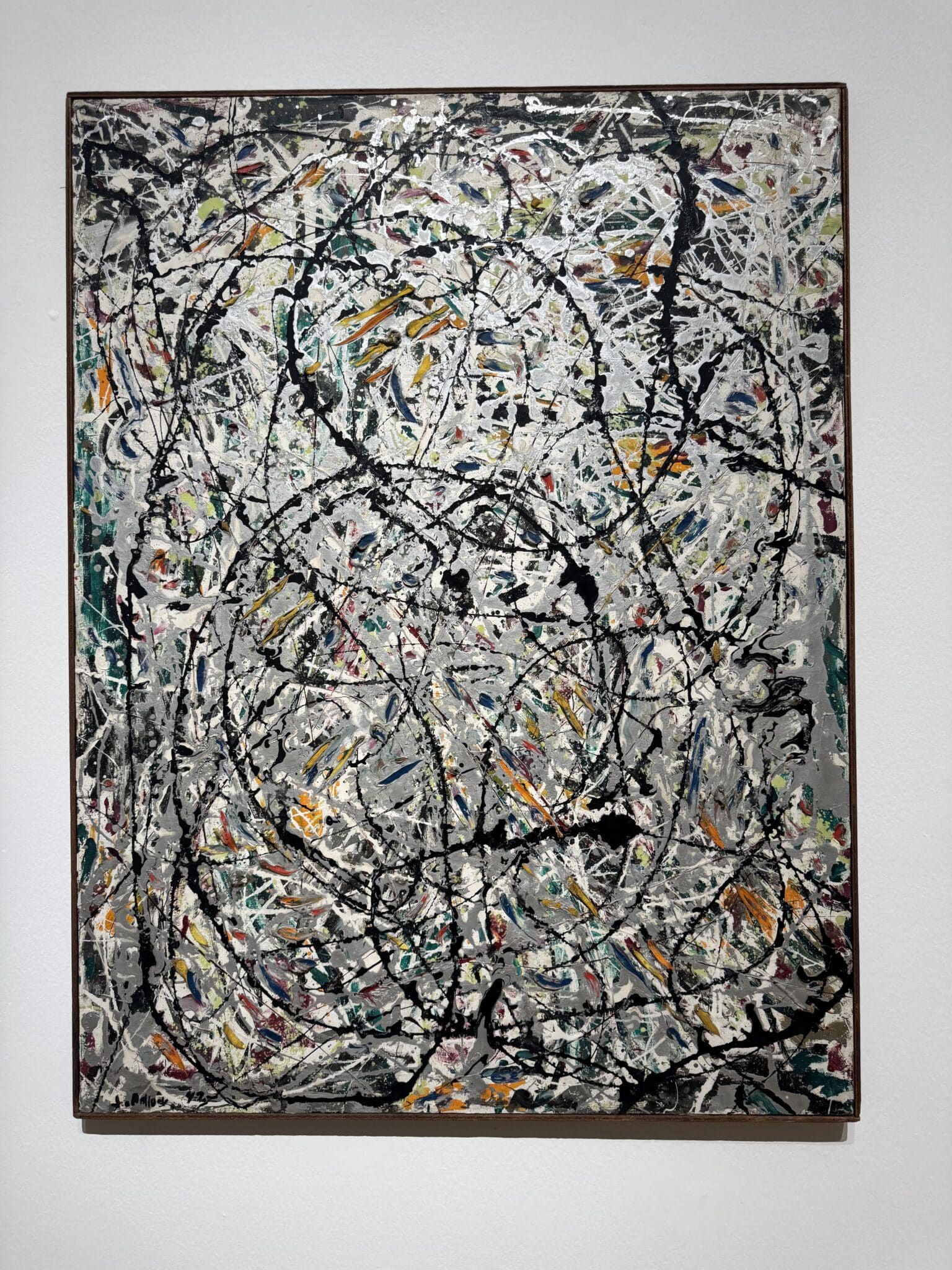
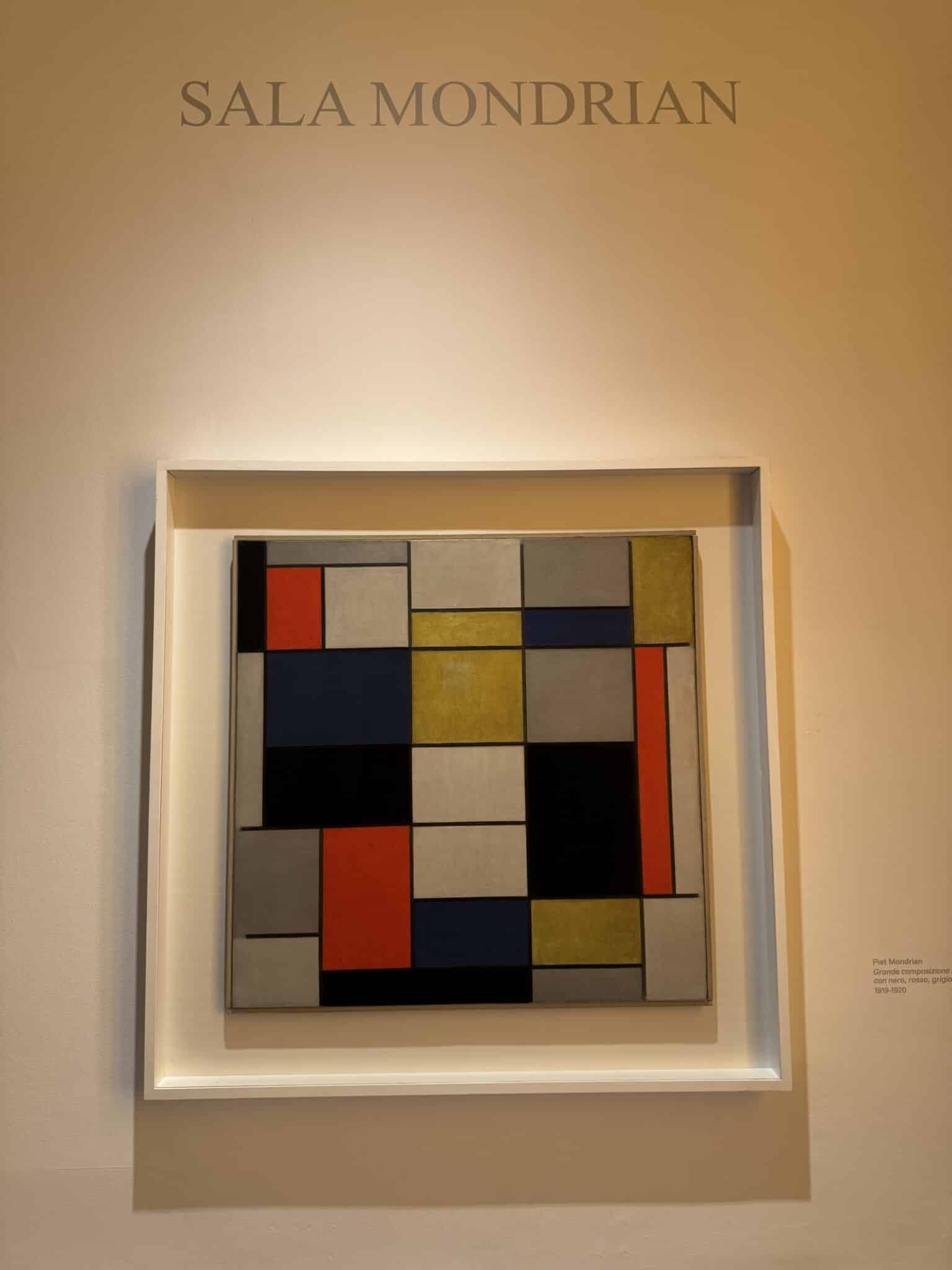
We could have been in MoMA or the Whitney, but we could also have been visiting portions of the Met.
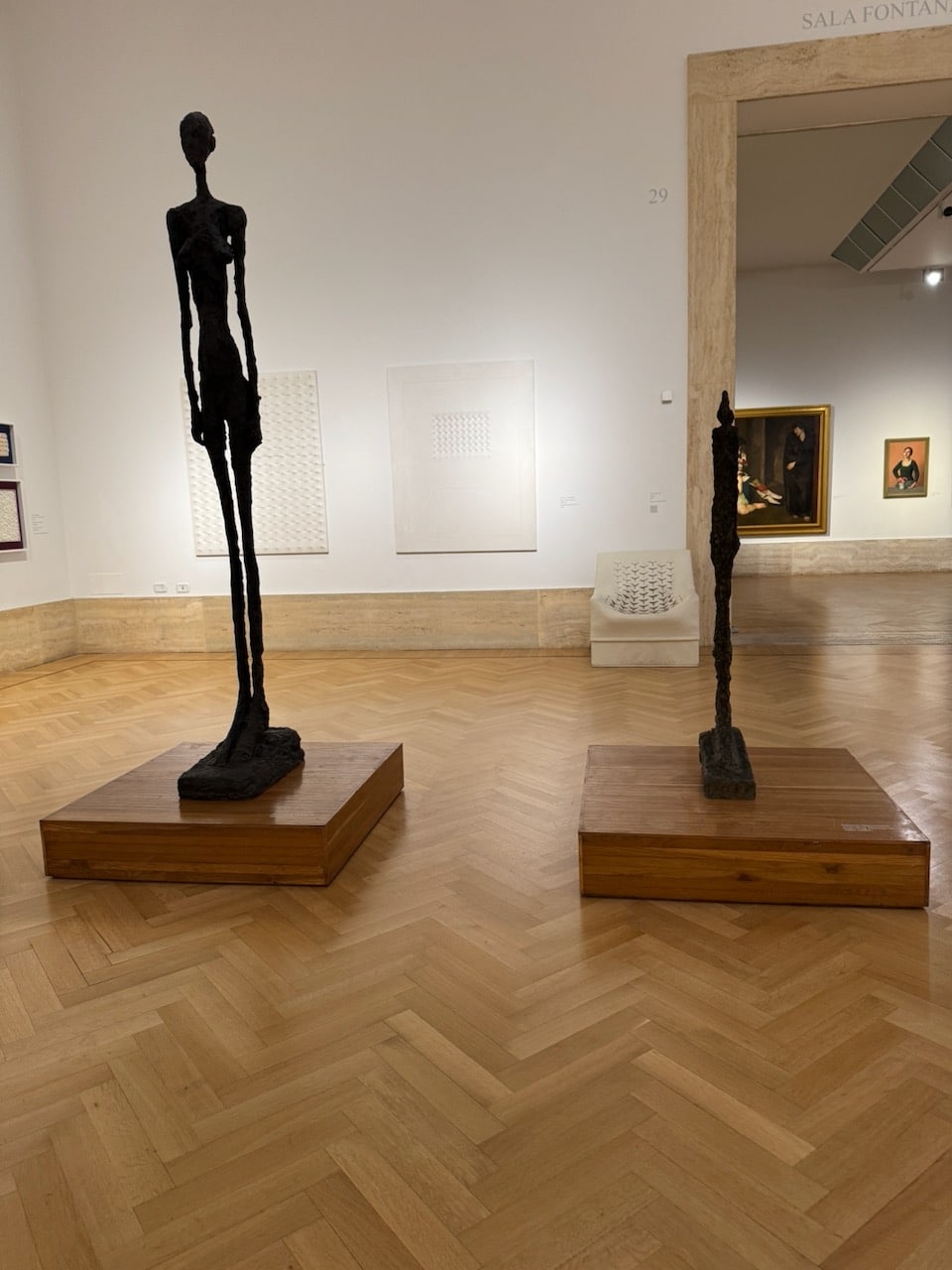
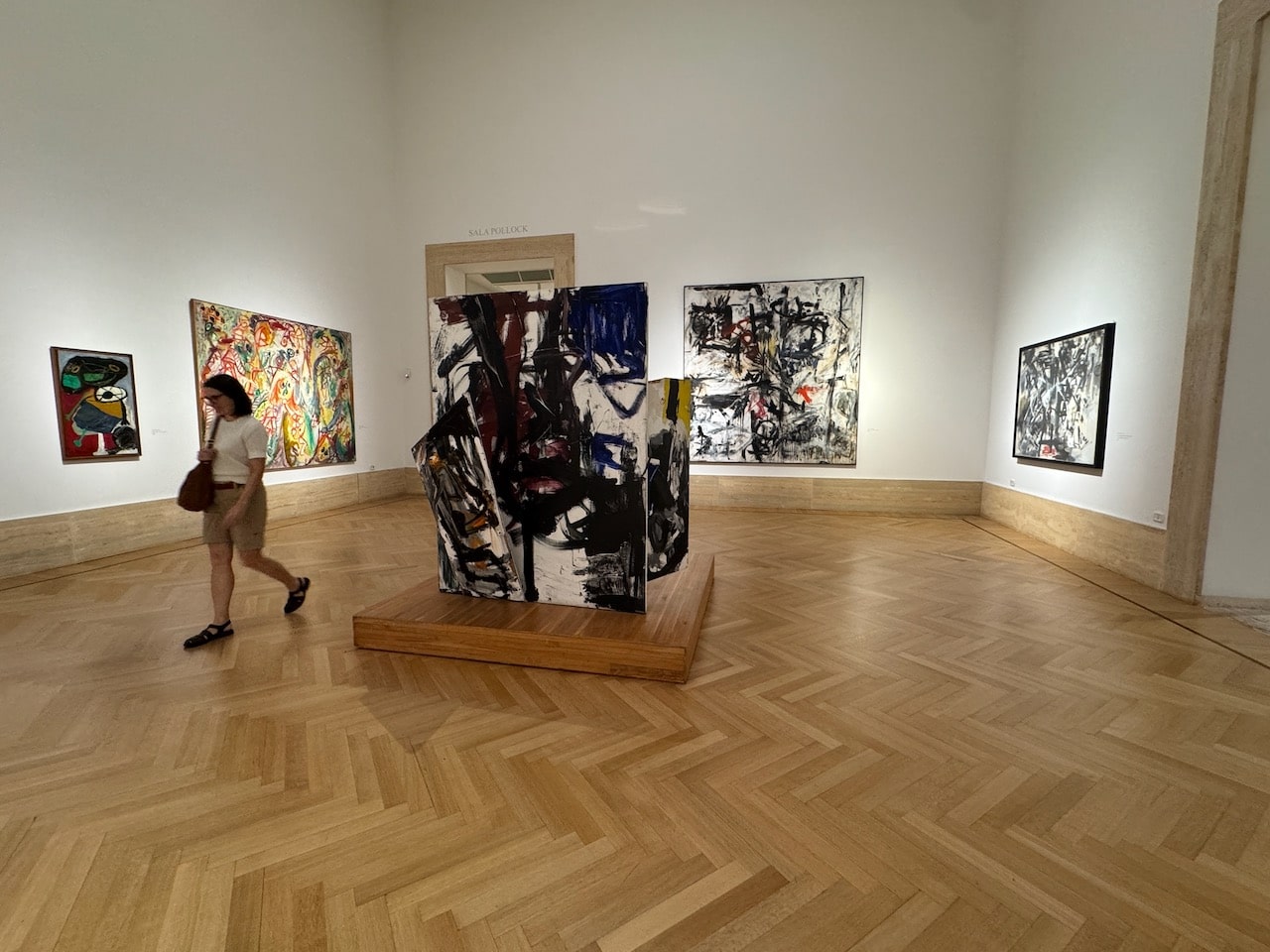
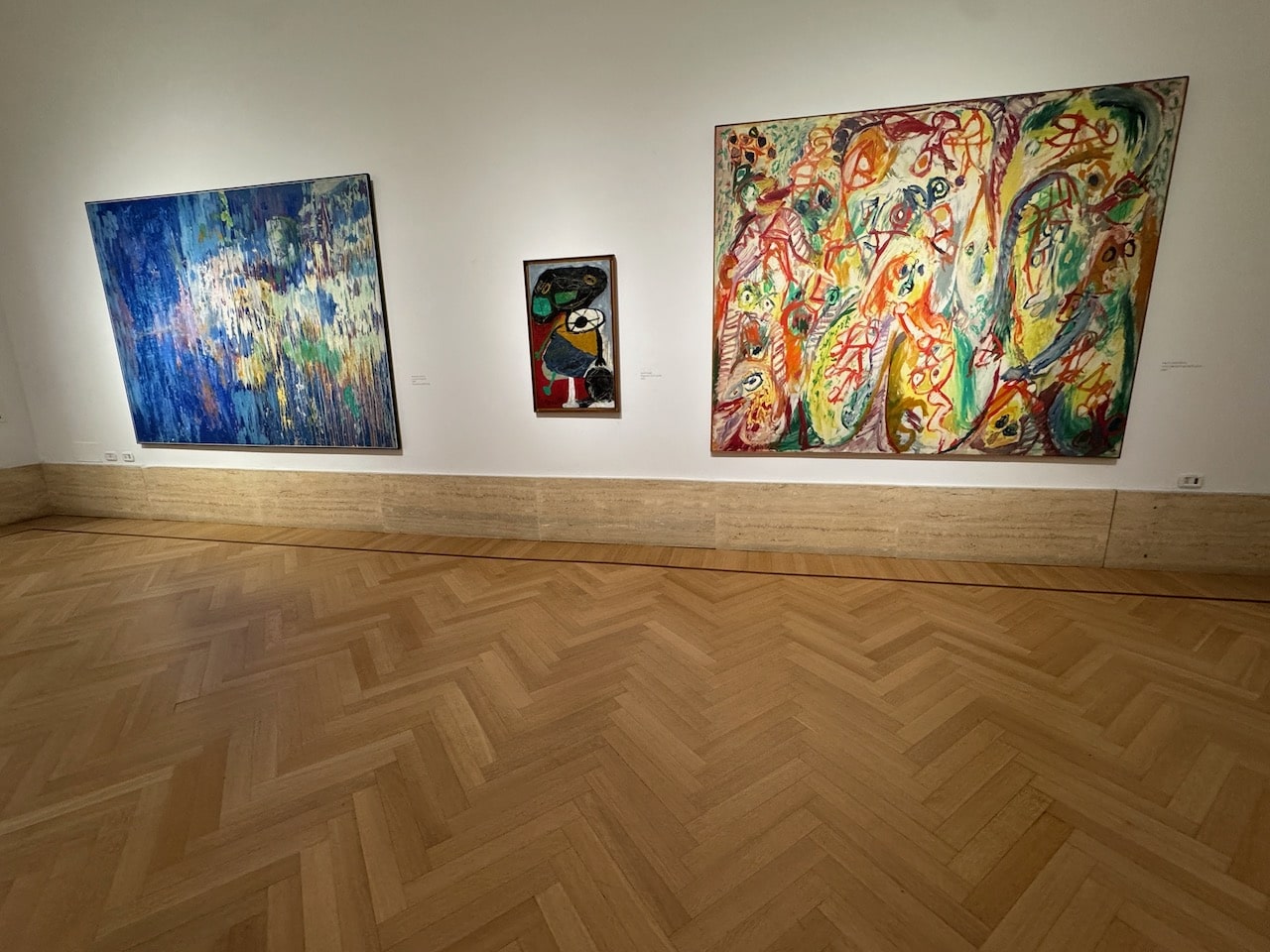
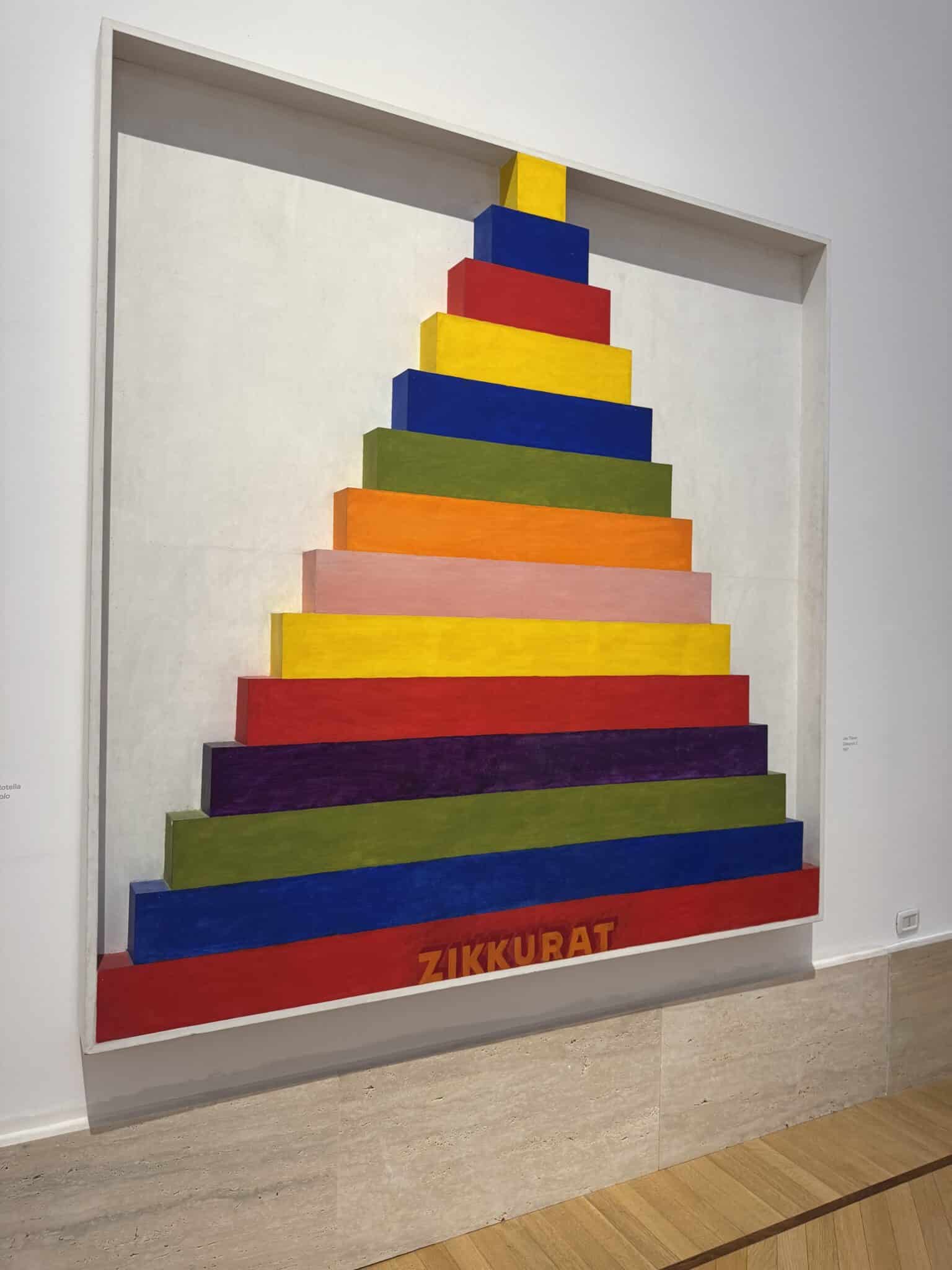
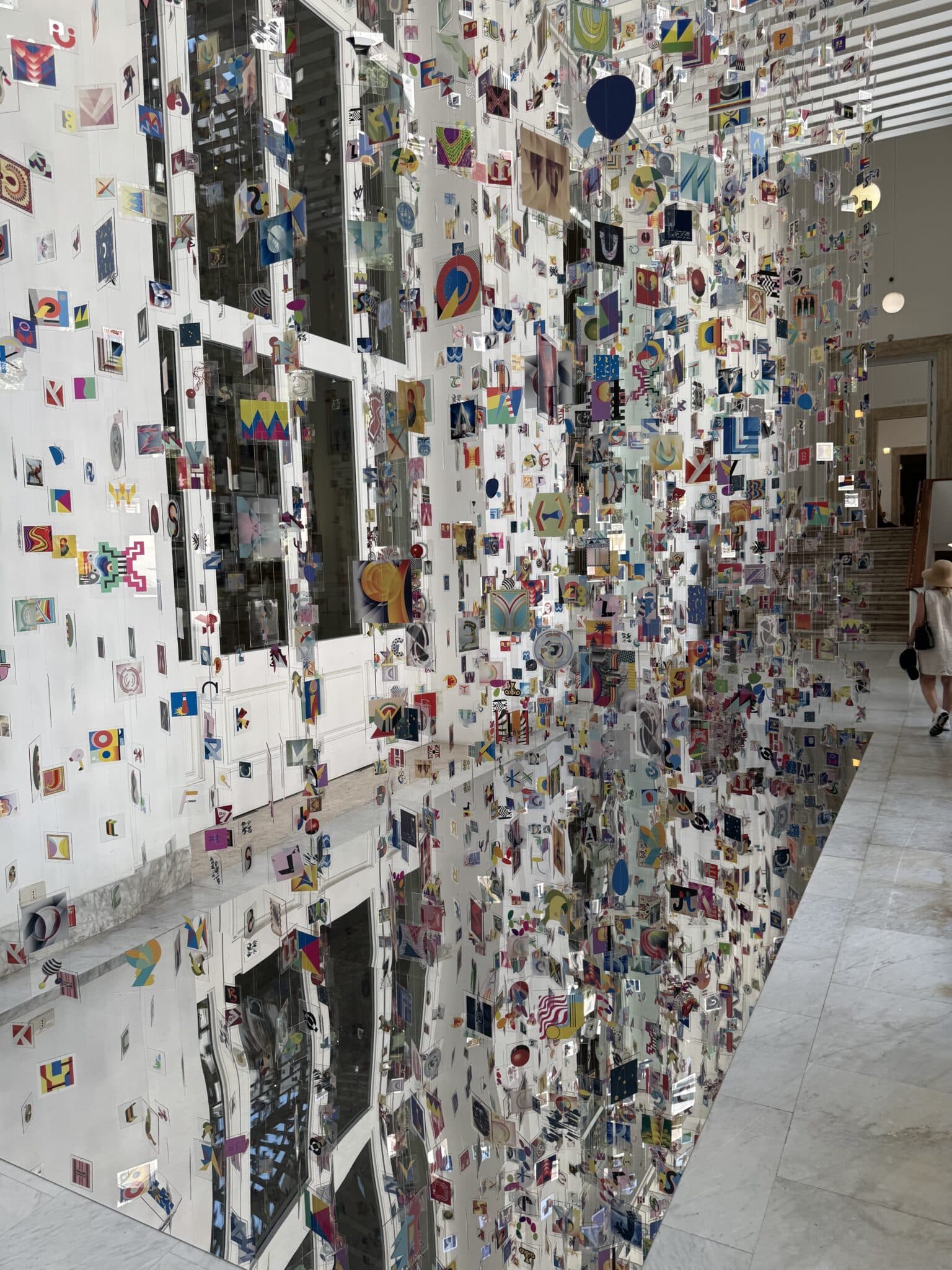
Here’s a piece we liked especially, a hanging sculpture by Lorenzo Marini. It overhangs a mirror that effectively doubles its height.
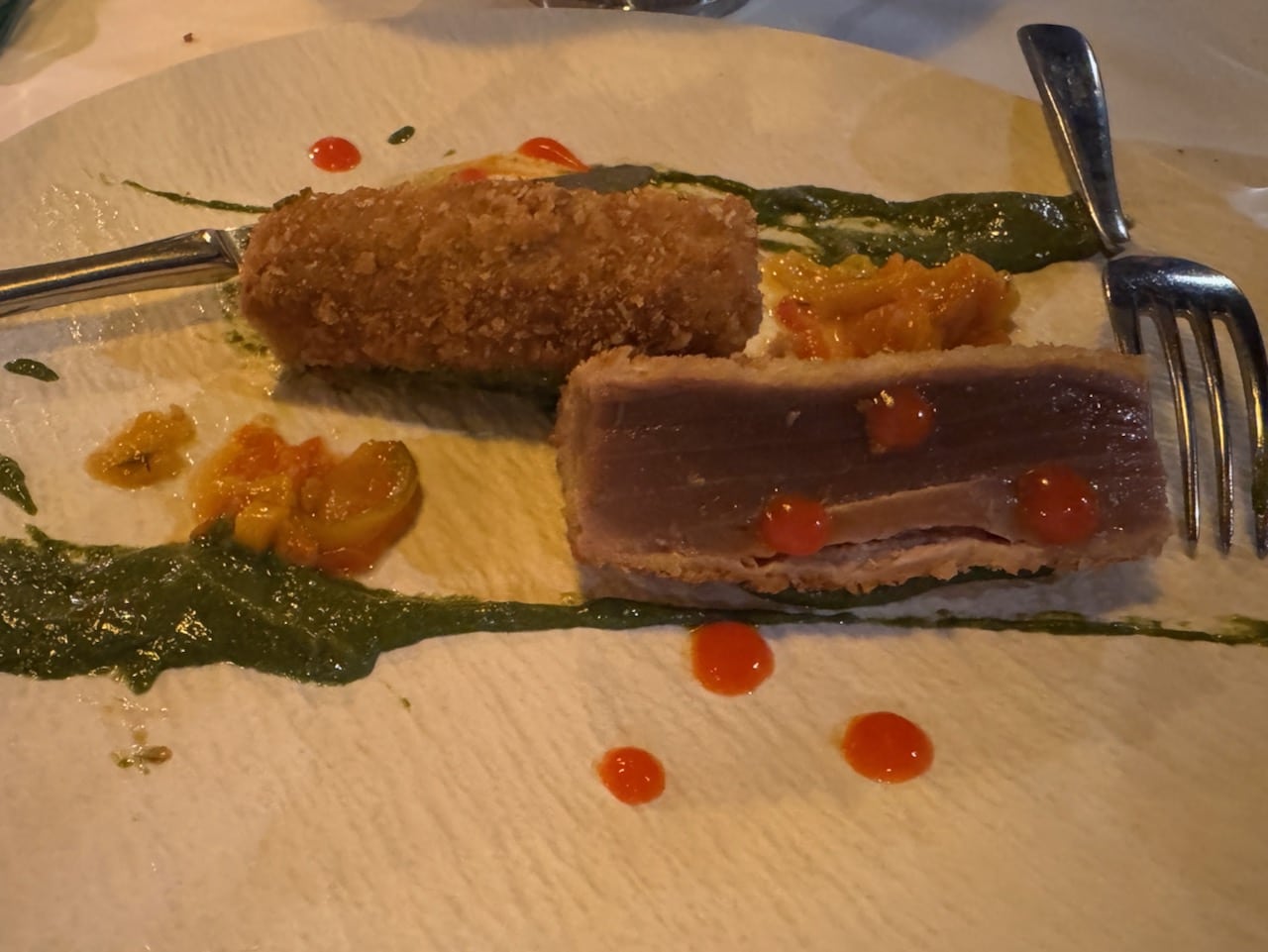
That evening, we visited a favorite restaurant in the Piazza de´ Ricci. Pierluigi was Rome’s first seafood restaurant when it opened in 1938. Outdoor dining is usually a pleasure here.
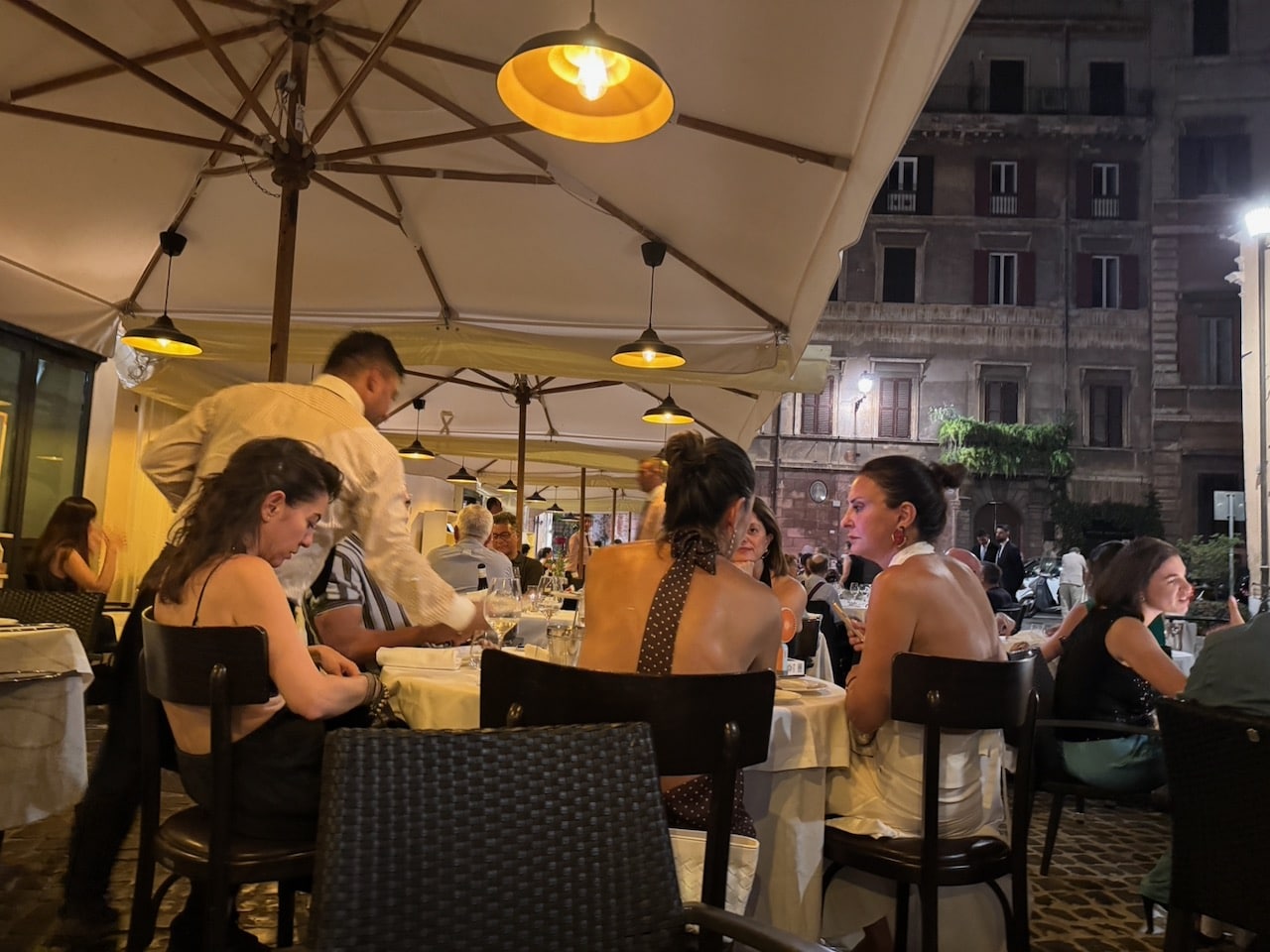
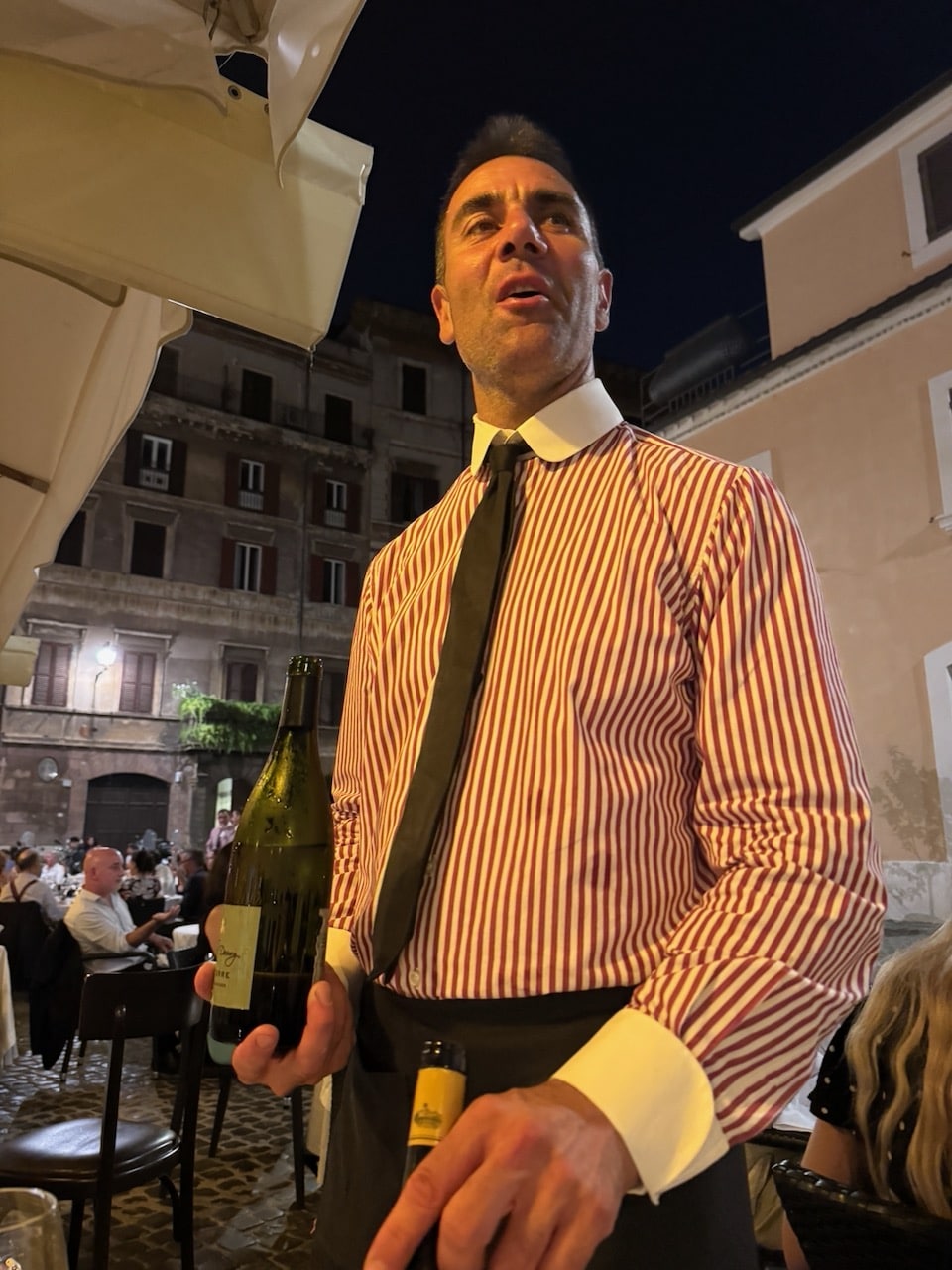
The waiters, usually unflappable, seemed to be suffering in their tight collars and neckties.
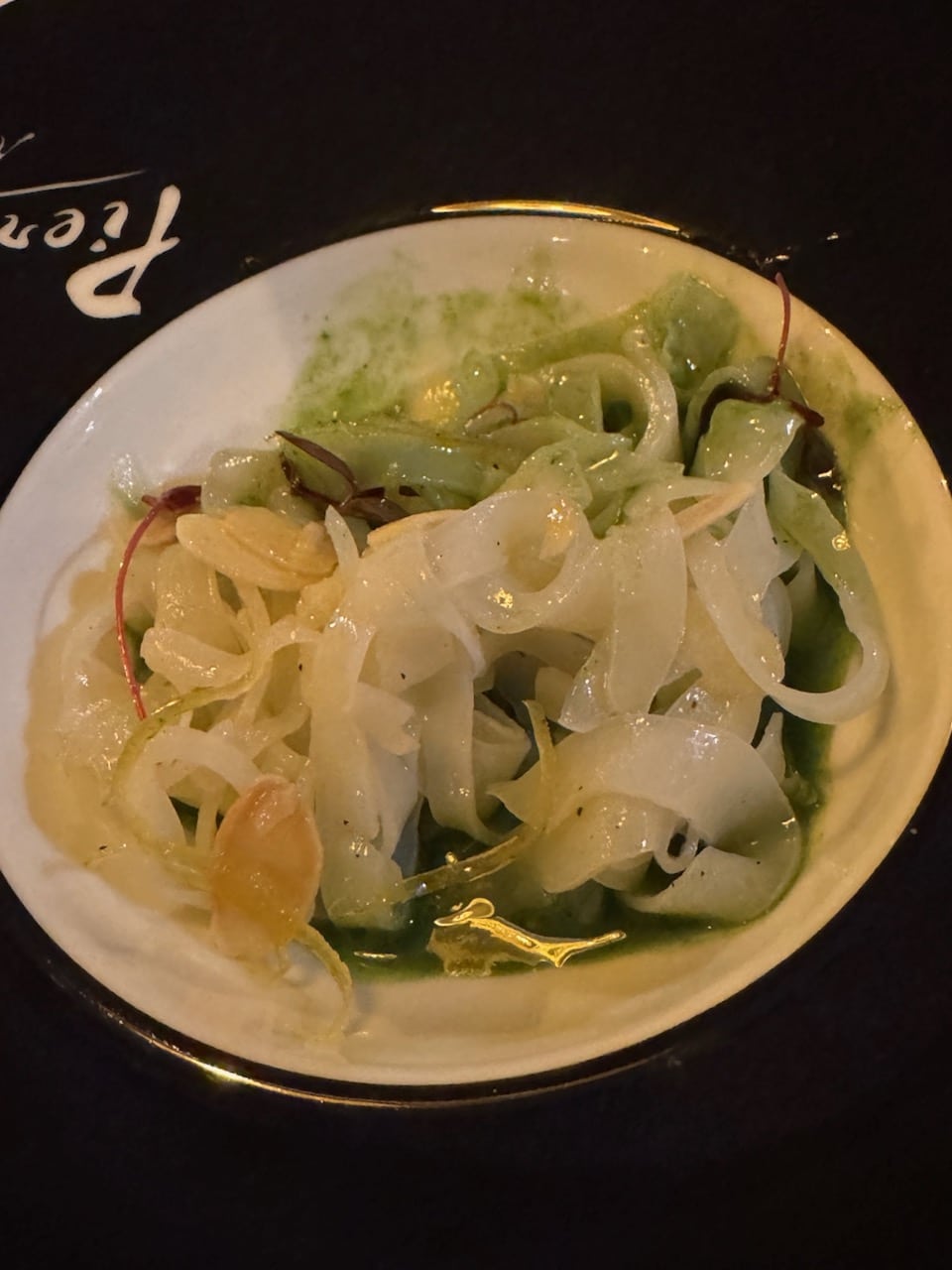
The food we ordered was delicious and seemed unaffected by the heat. Good Roman cooking!
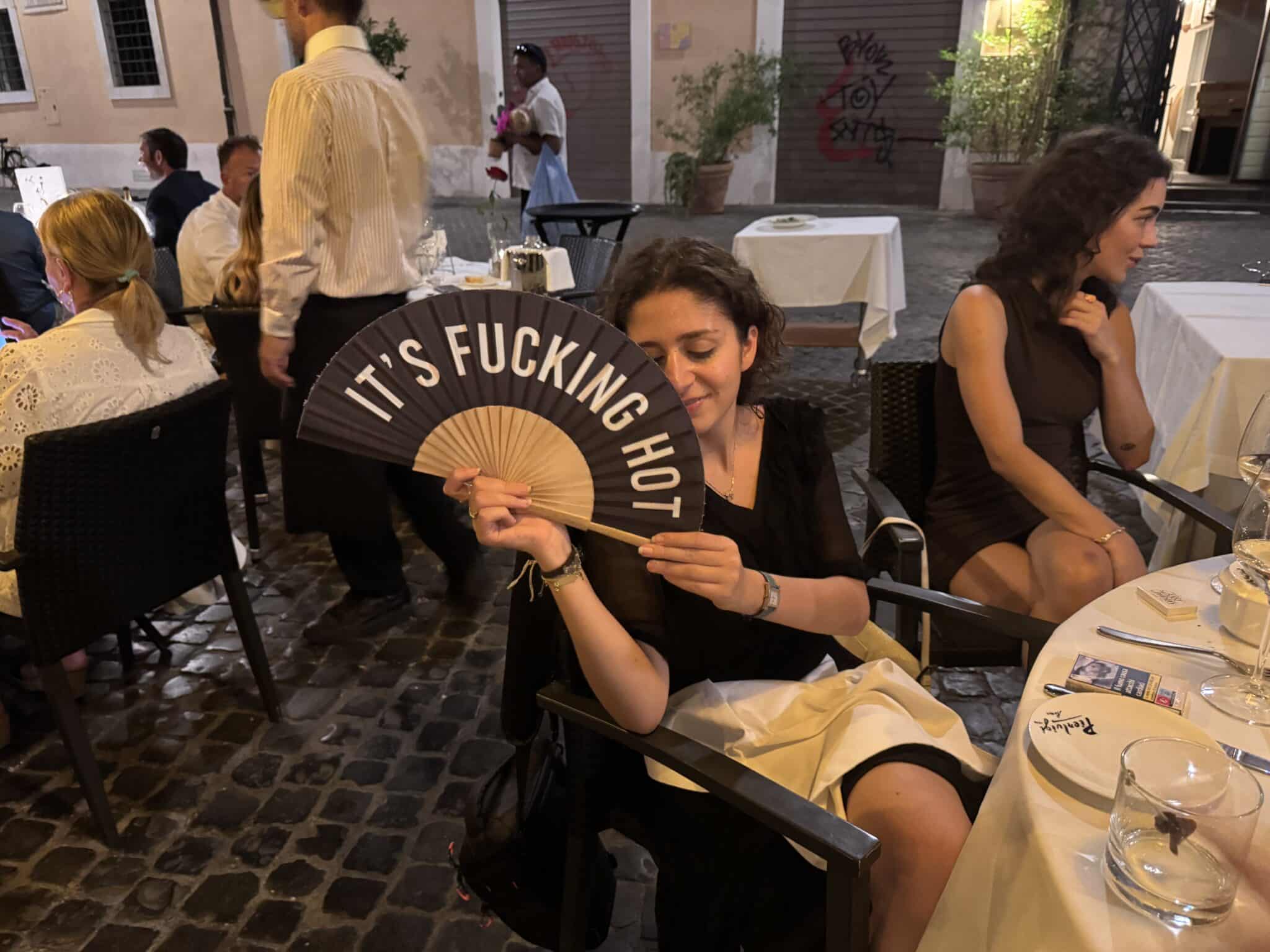
But a fellow diner at one of Pierluigi’s outdoor tables had a fan that told this summer’s story.
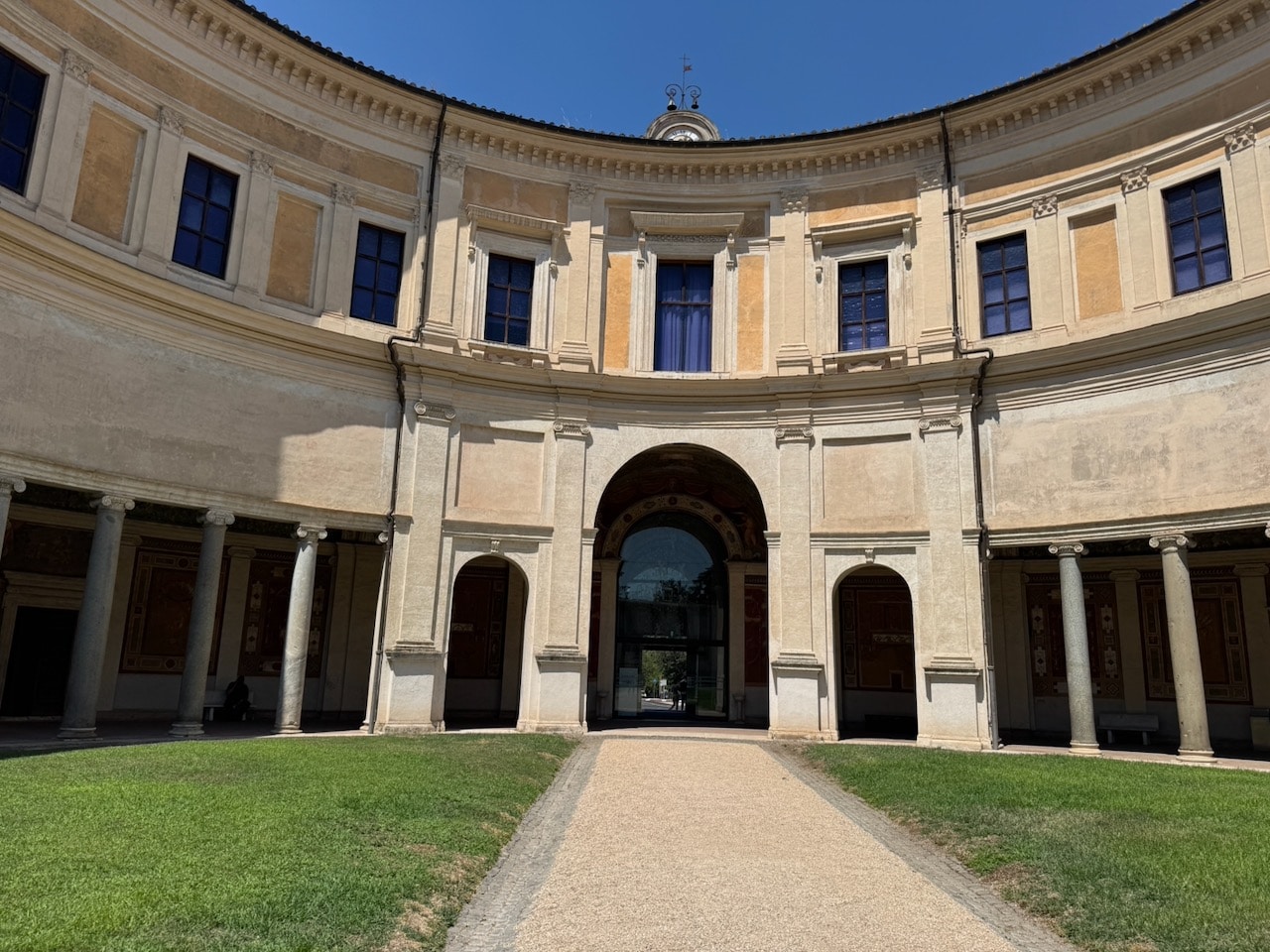
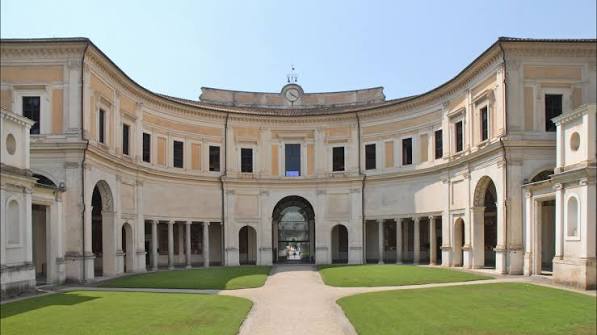
The next day, a Friday, facing another 102 degree forecast, we again opted for the cool of a museum over wandering Rome’s hot streets. And this was another revelation. The National Etruscan Museum at the Villa Giulia told the story of the Etruscan civilization in what became today’s Italy.
Etruria began around 1000 BC as the people who lived in the area north of Rome through what is now Tuscany to the Arno River began to recognize and exploit their common interests. They had minerals to sell, for example. By the 700s BC the Etruscans began forming a loose collection of city-states. These multiplied and spread and by 500 BC had become a Mediterranean power, one that reached north to the Po River Valley and west to the island of Corsica. They traded with Greeks and Phoenicians, and held liberal attitudes toward the rights and roles of women, allowing them to own property and participate in public life.
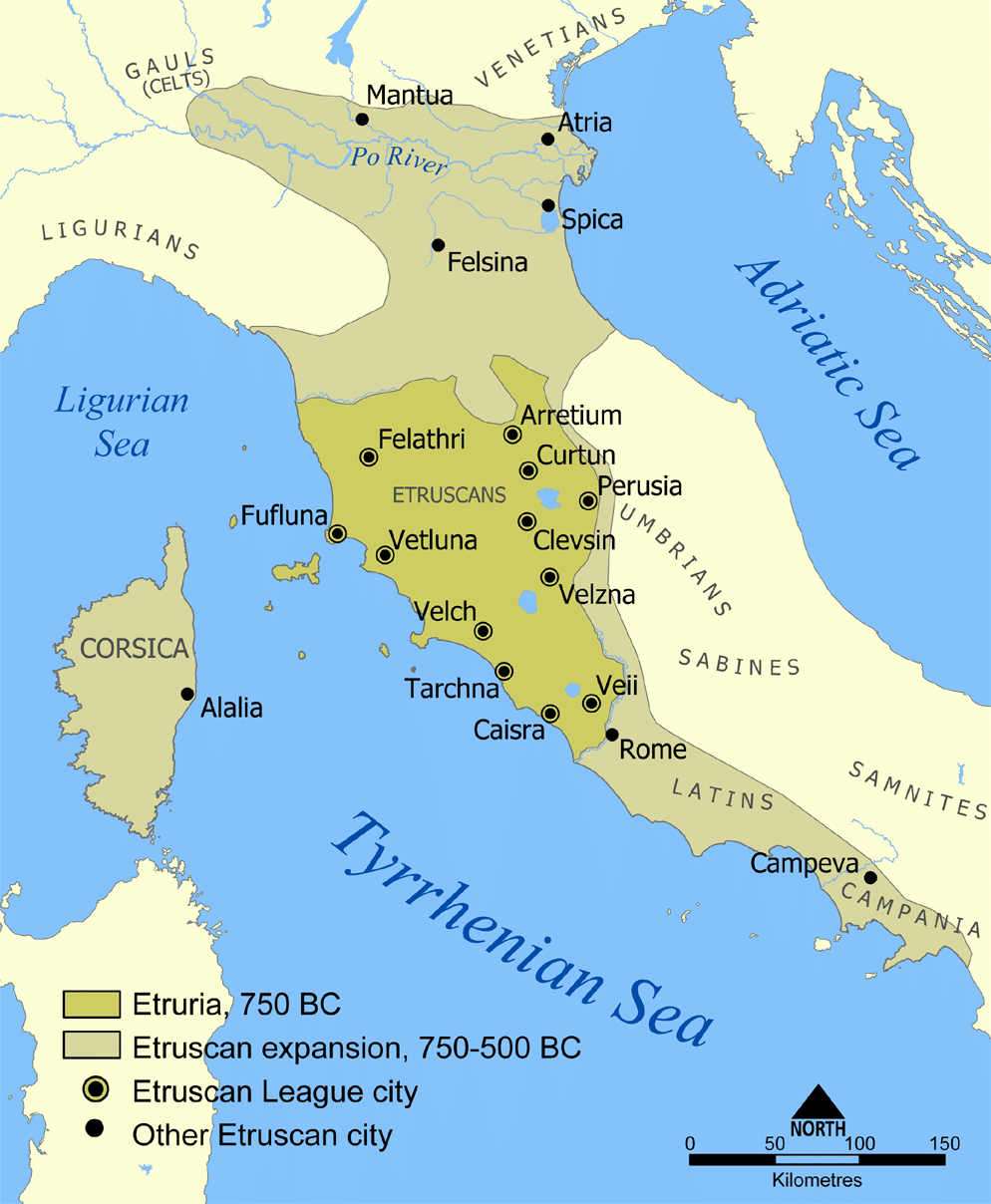
For all of that, Etruscan history was elusive. Its alphabet borrowed from Greek but was eventually absorbed by Latin and few examples survive. Historians today know life in Etruria largely through elaborately decorated tombs and funerary plots.
The newest exhibit at the Etruscan Museum was a tomb of the aristocratic Satie family discovered in 1857 by Alessandro François. François opened it to find jewelry and remarkable frescoes dating to the 4th century BC that brought Greek mythology together with Etruscan history. Over years the pieces were separated and sold to museums around Europe, but they came together at the museum this past summer thanks to Italy’s Culture Ministry. The room with the frescoes is tomblike and small. Only a few visitors can enter at one time.
On one wall the Etruscan fresco illustrates Achilles avenging his friend Patroclus and killing Hector, the Prince of Troy
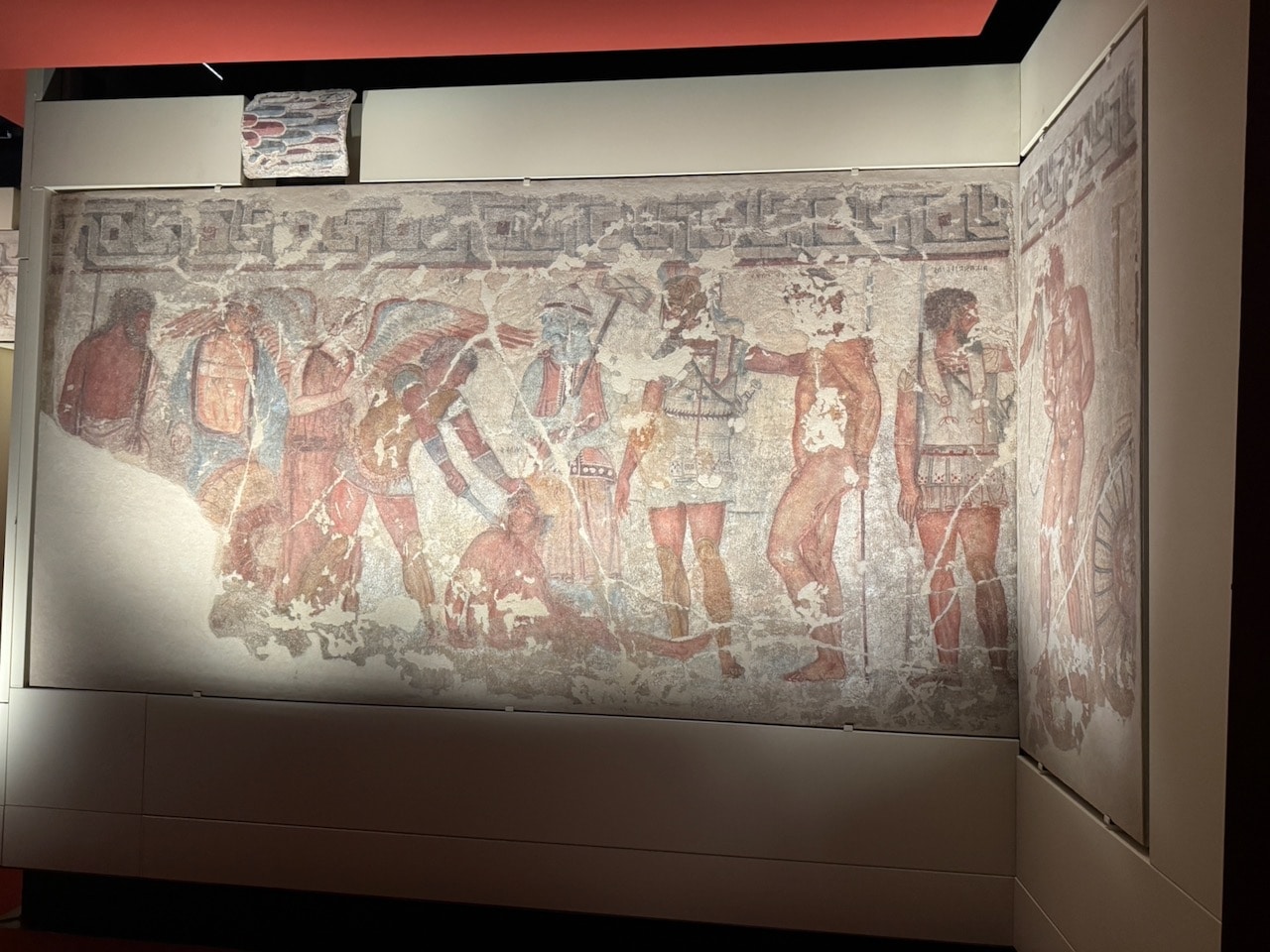
Francesca Mazzoncini was in the room to make sure that we and the other couple who visited didn’t touch anything. She was extremely knowledgable and helped us understand what we were looking at.
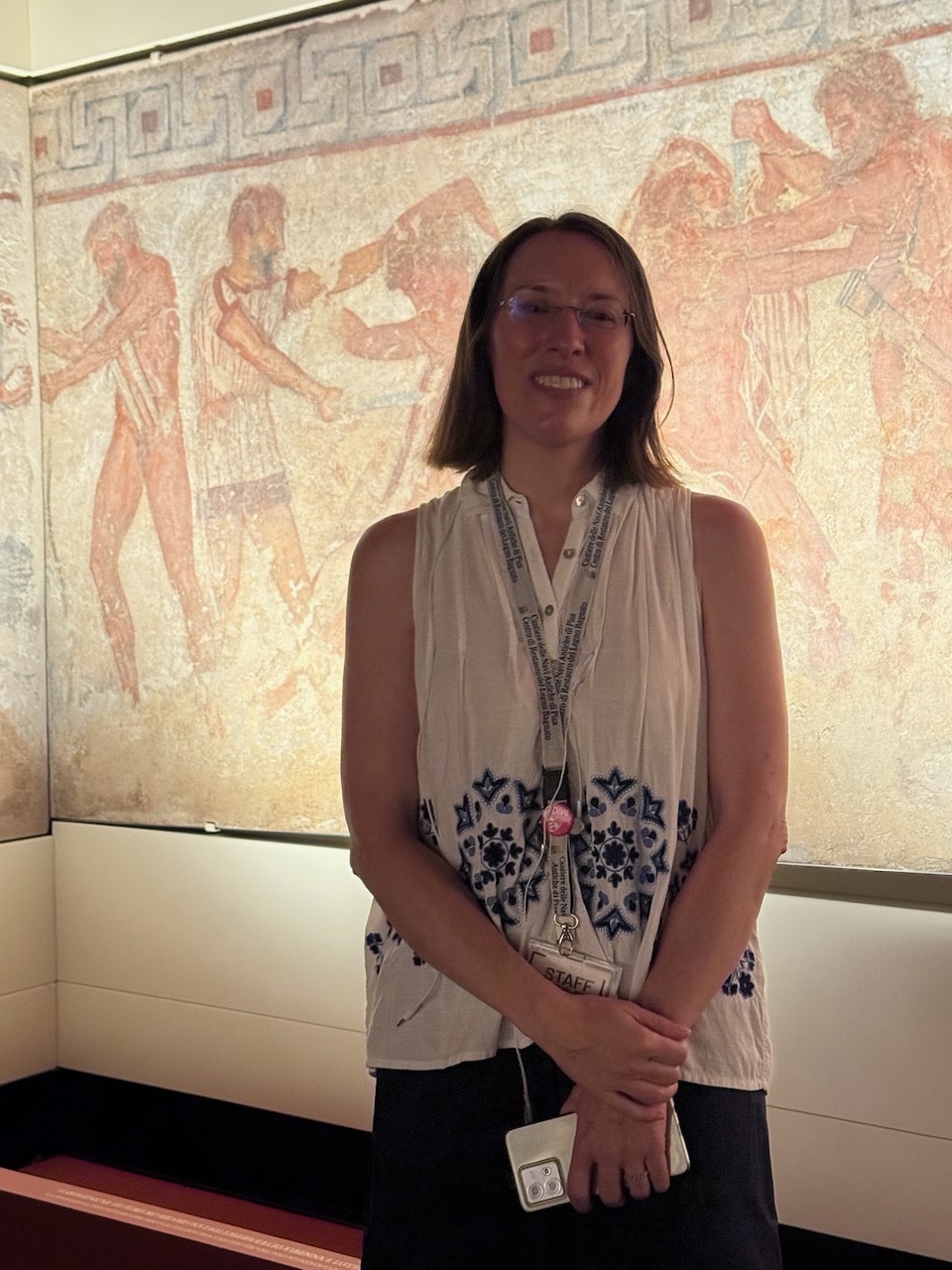
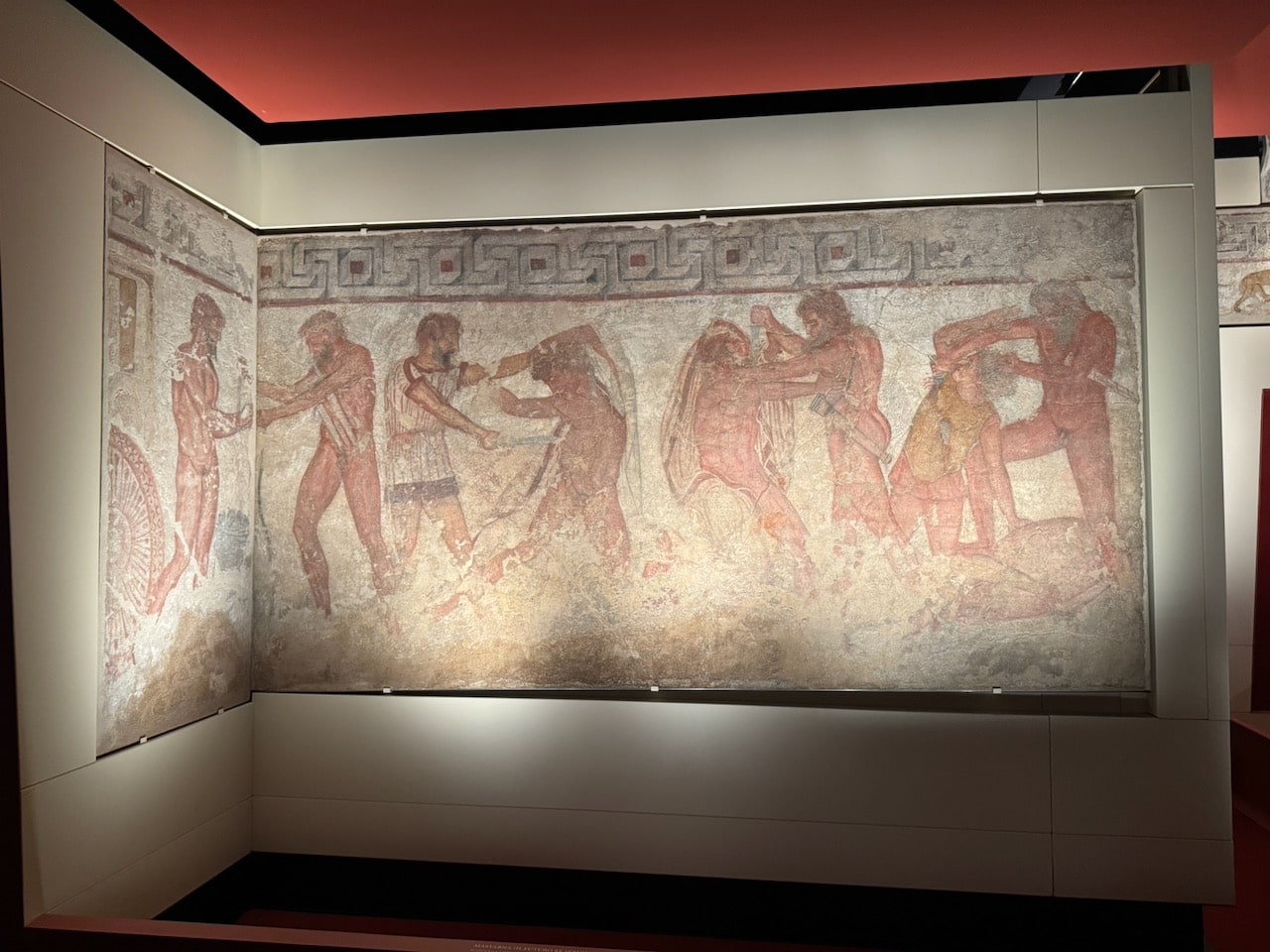
She pointed out the contrast to the Greek story on the opposite wall. This fresco depicts Etruscans battling the Romans. The violence certainly comes through. There’s swordplay and stabbing and slaves and all kinds of naked combat.
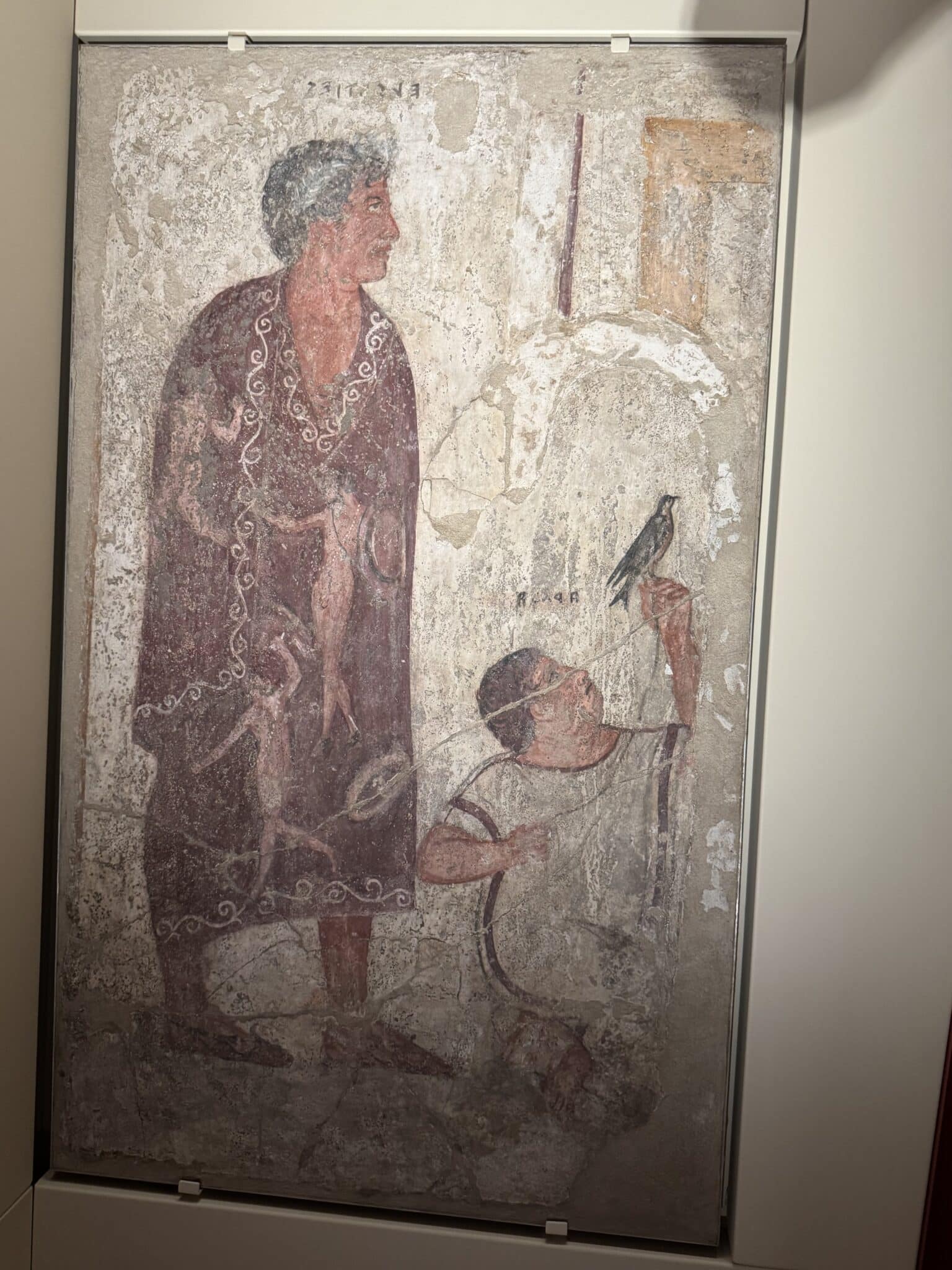
The nobleman behind the family tomb was Vel Saties. He’s pictured here with a dwarf servant or companion named Arnza, and the bird perched on Arnza’s hand is attached by a string. This is important, because many Etruscans interpreted their world by finding omens in things like the flight of birds or animal entrails.
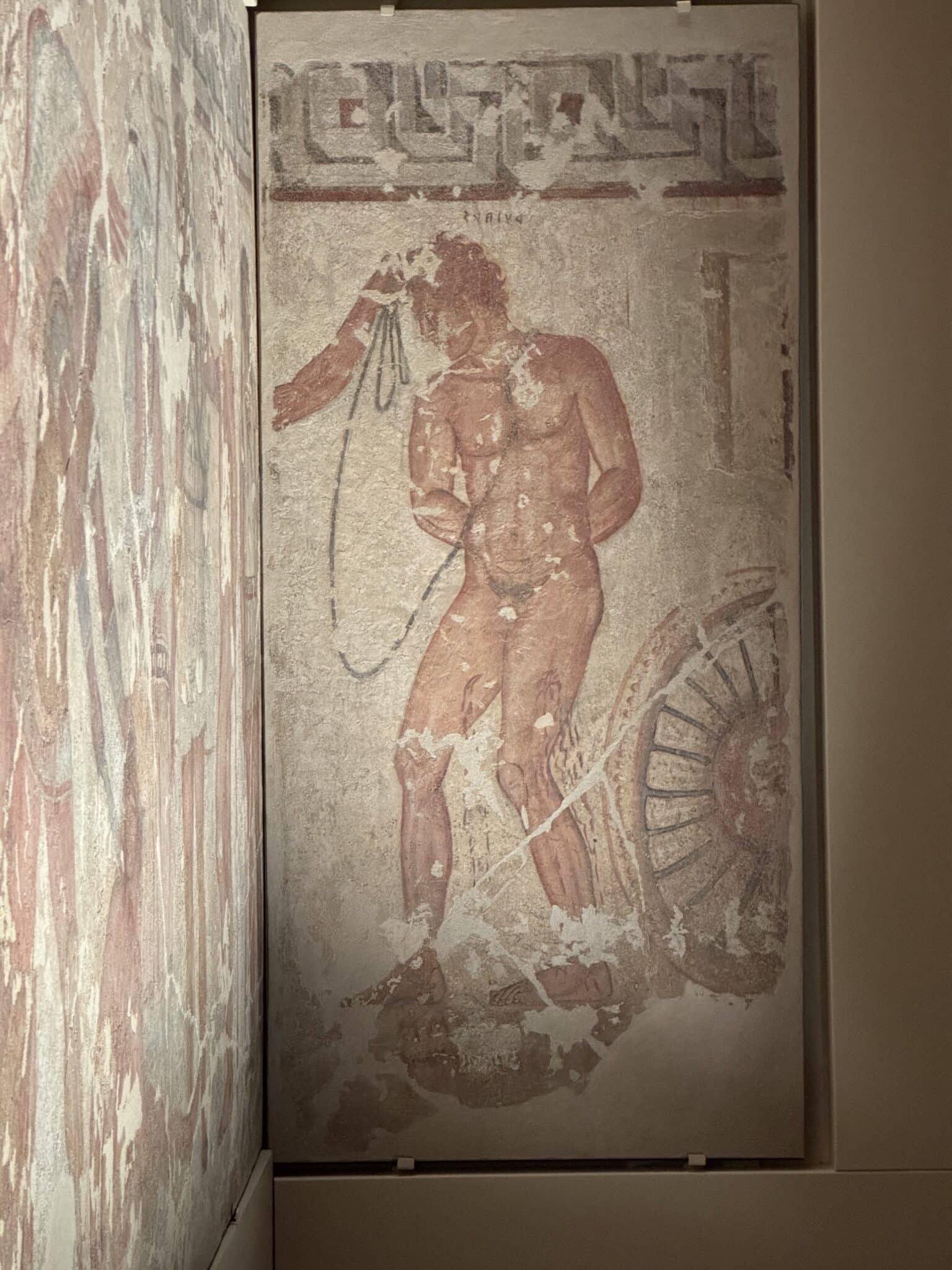
Here we have the hero Caelius Vibenna being freed from captivity by his friend Servius Tellius, Rome’s sixth king.
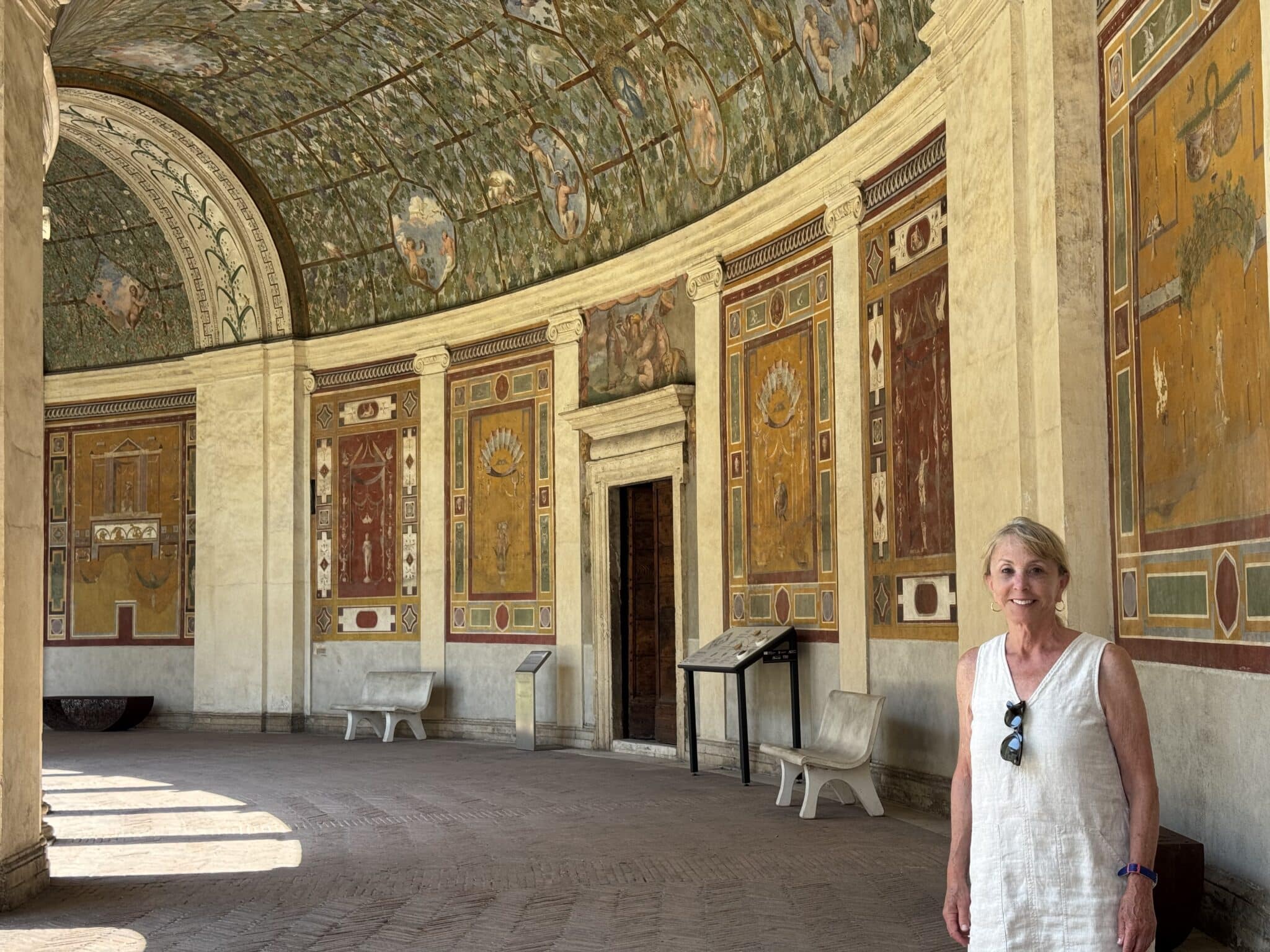
The history and pictures of Etruscan Italy were new to us, and Barbara’s smile spoke for us both.
The museum itself is beautifully arranged in the Villa Guilia, which was built by Pope Julius III in 1551 to 1553 as a summer residence.
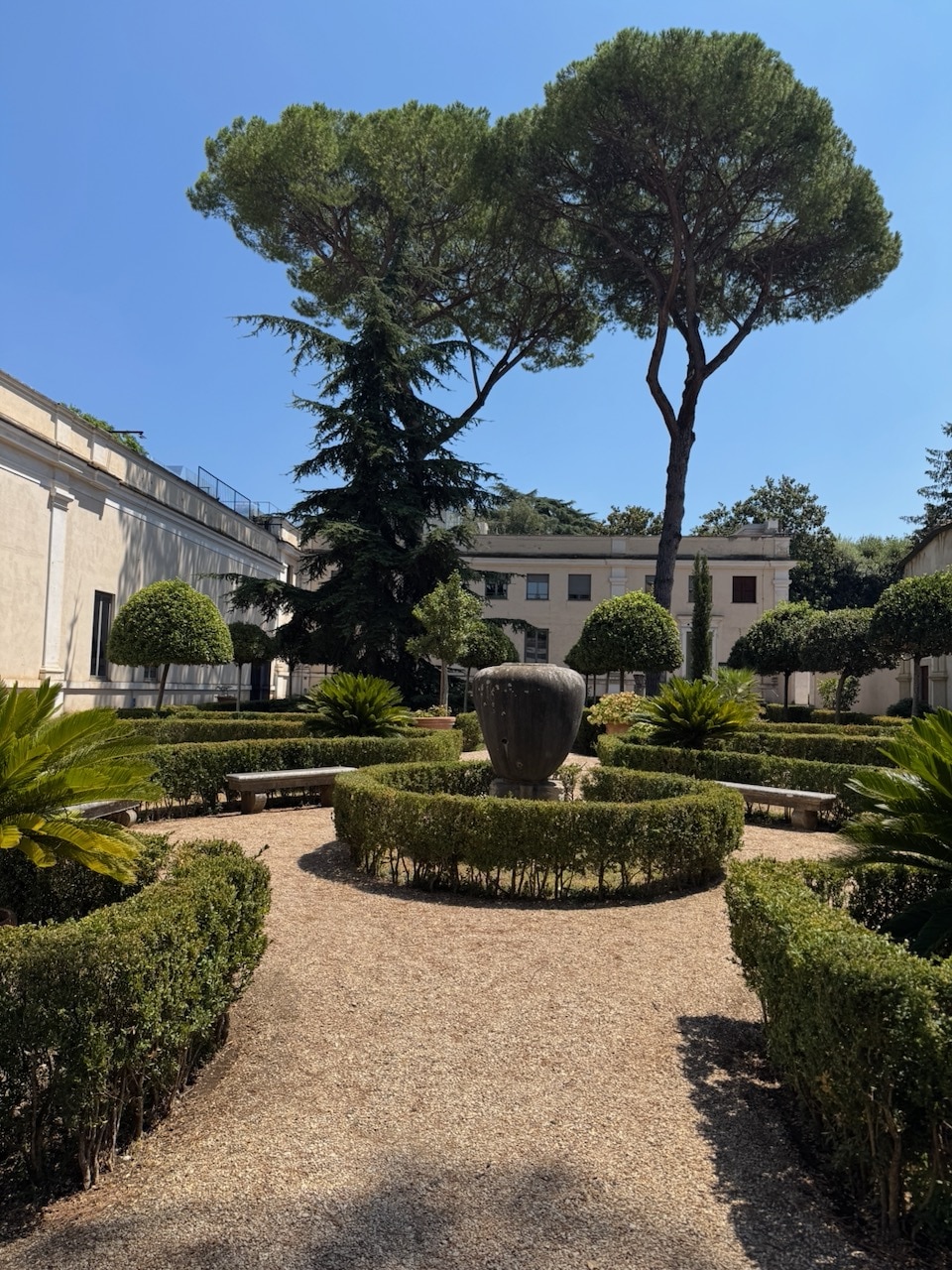
But the garden provided little respite for the summer’s heat.
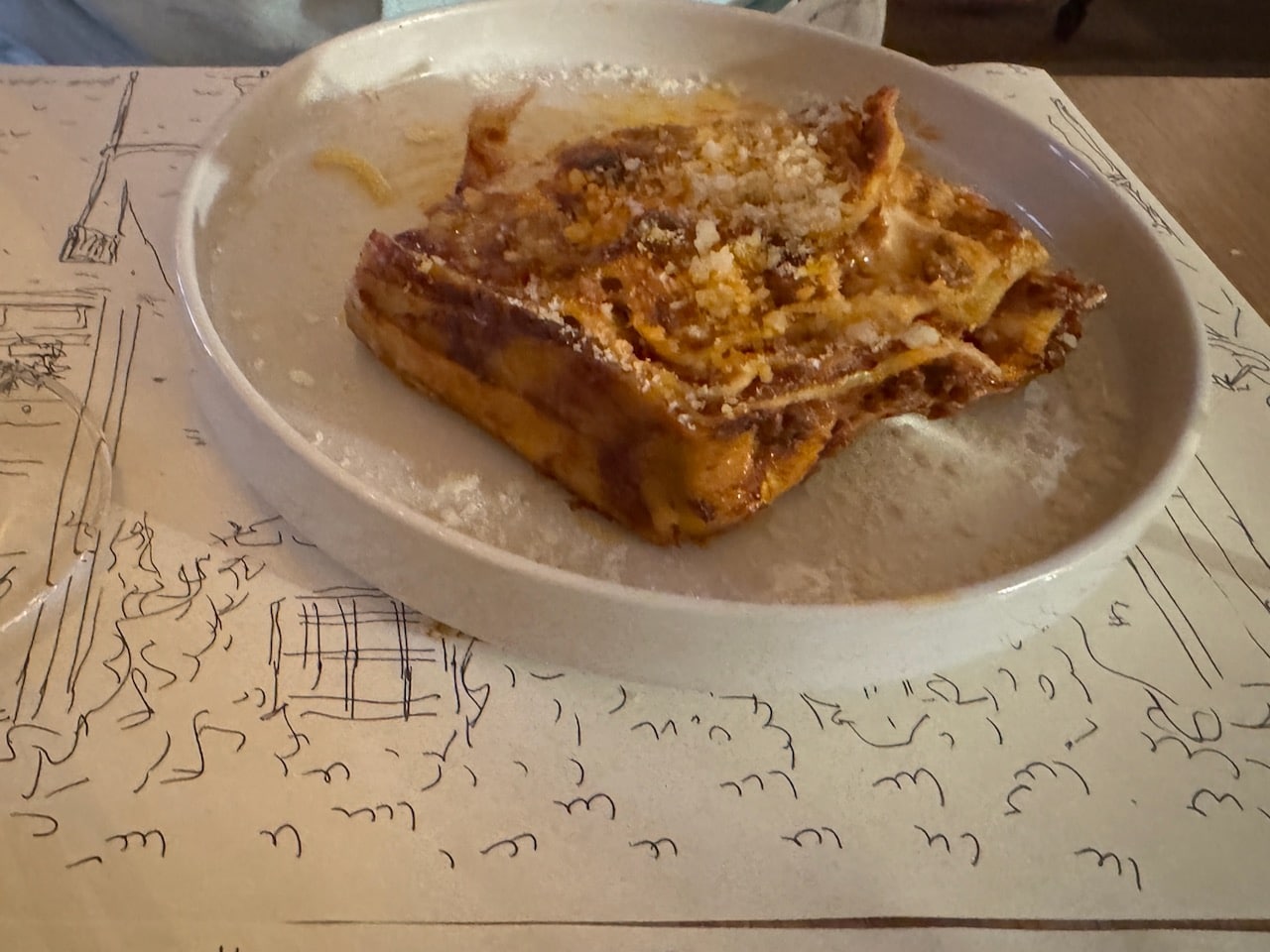
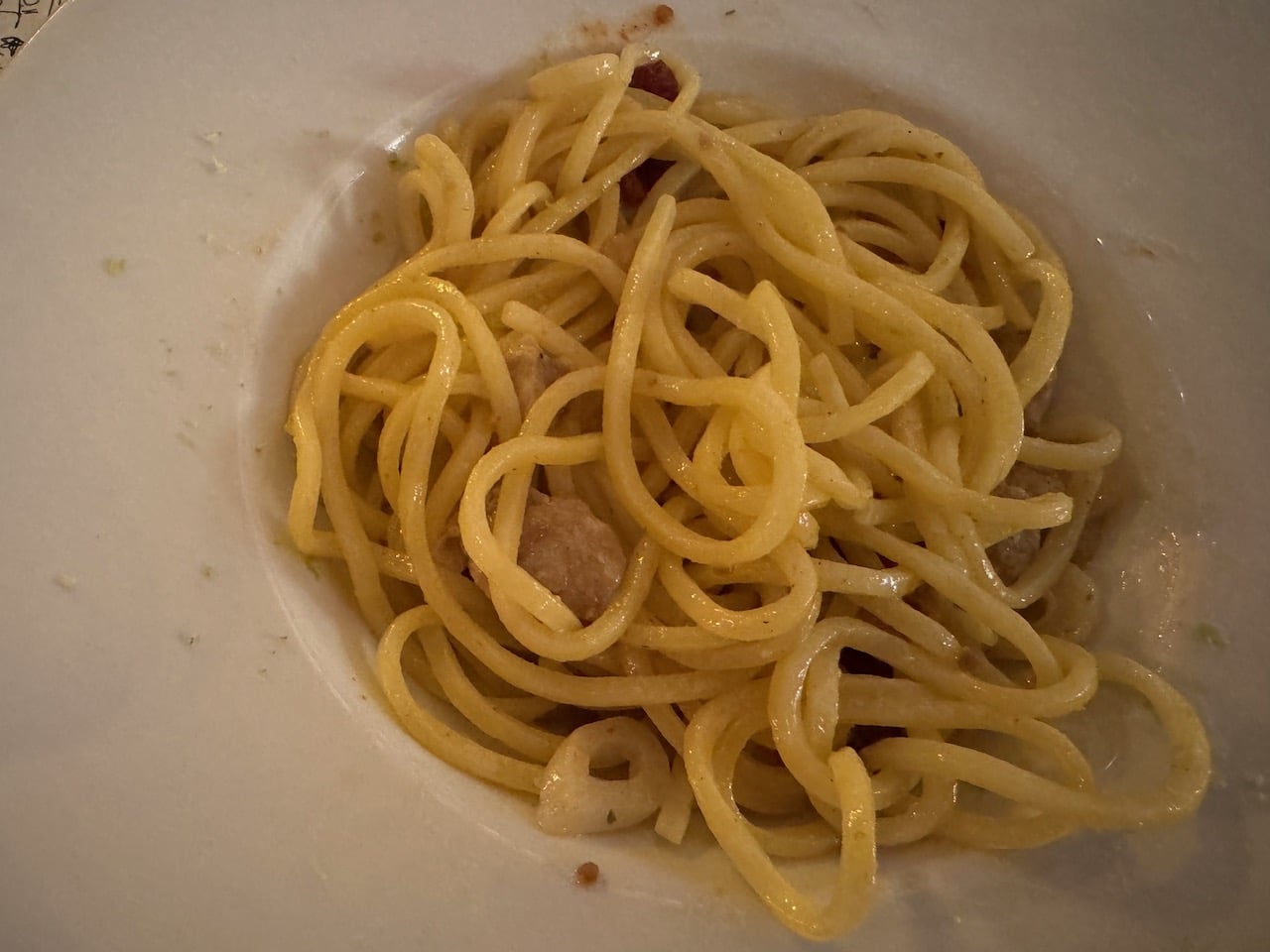
For our last night in Rome, we continued the Guilia theme and ate at restaurant on the via Guilia , a five-minute walk from our hotel. Guilietta Vino e Cucina, needs no translation. It’s a small idiosyncratic restaurant that because of licensing problems requires diners to write down their dinner orders themselves. It was fun and the wine and pastas were great.
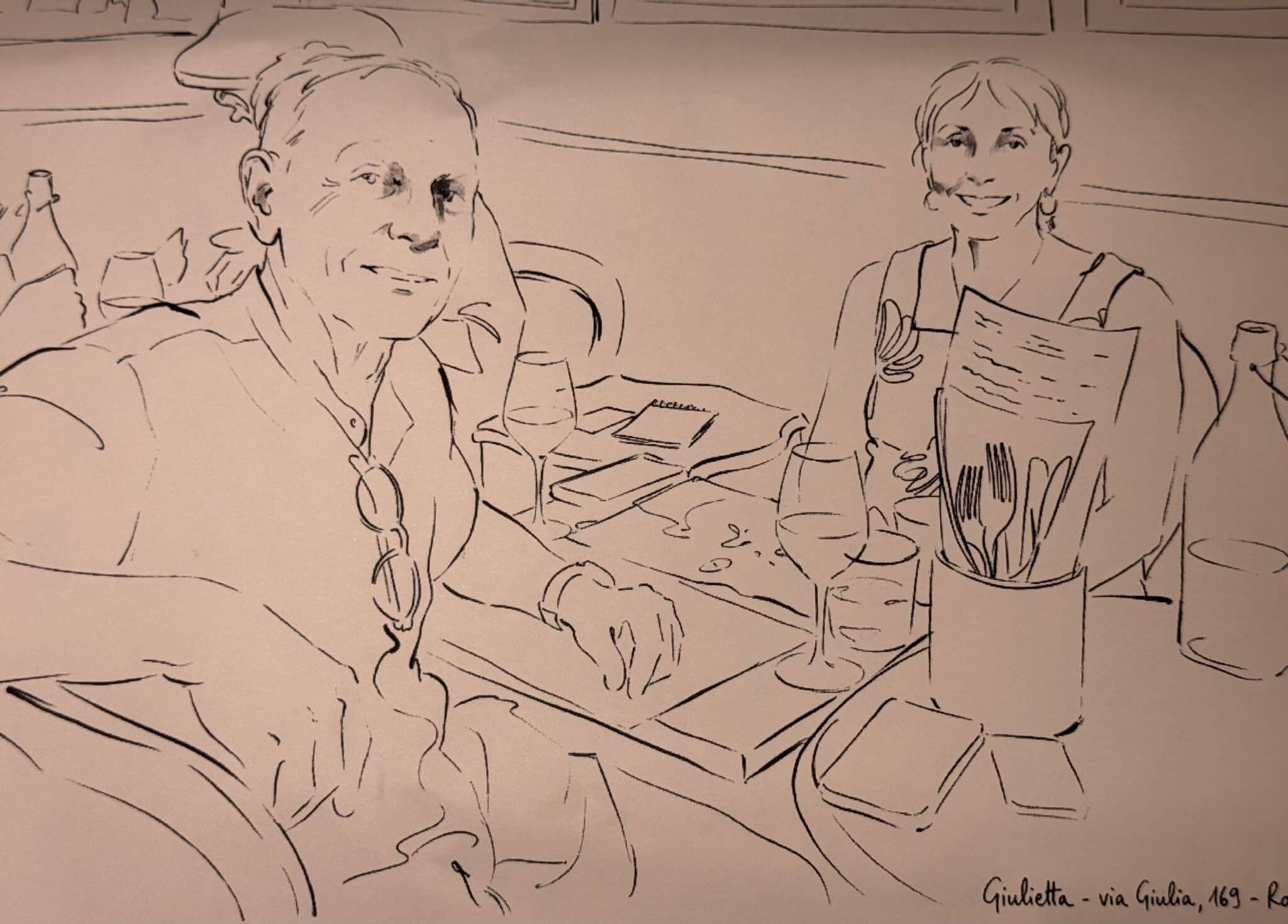
It was all even greater at the end when through some reverse alchemy, an app specially created for them, the restaurant made a photo into this portrait of us at our table.
One hundred Fahrenheit was the Saturday forecast but we were in the air by midmorning headed home to New York.