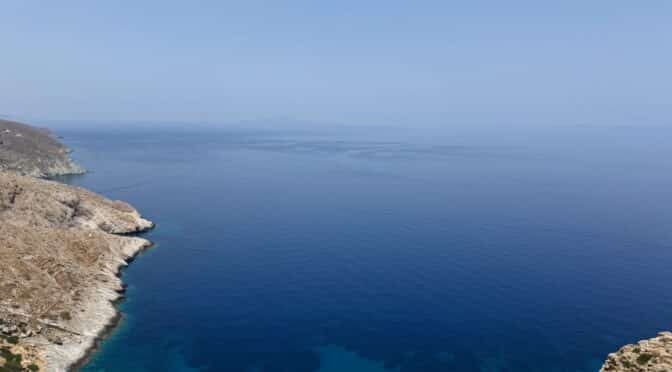
We looked forward to visiting Mykonos, the iconic Greek island that we’d heard so much about. But we also dreaded it. We feared that the island’s popularity would bring us in contact with hordes of tourists like ourselves and make us wish for a more peaceful destination. To our happy surprise, we found that Mykonos handles the cruise ship tourist load really well.
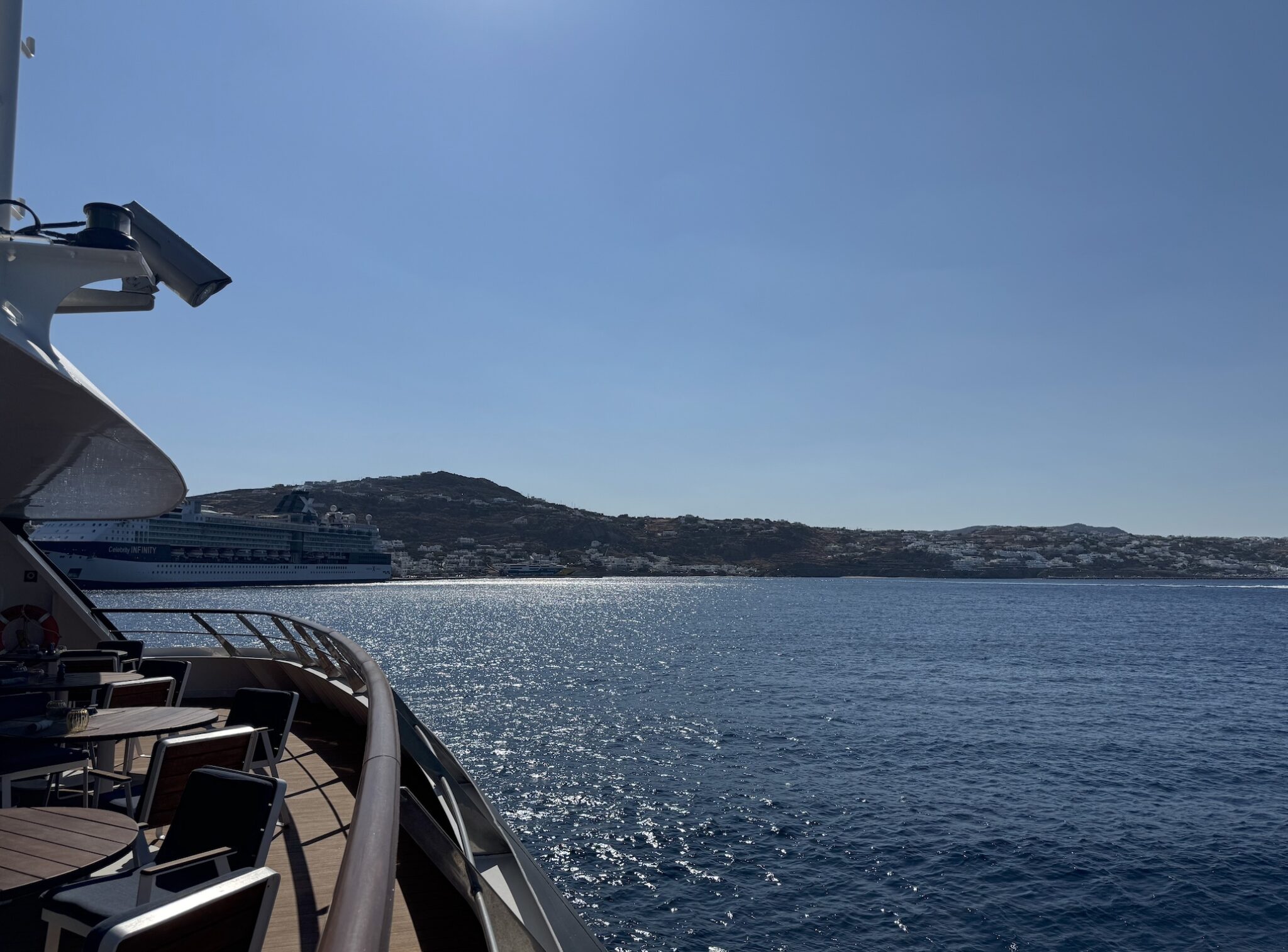
Cruise ships brought more than 1.2 million visitors to the island in 2025, and the system for receiving their passengers seemed pretty smooth to us.
Like other Greek islands, Mykonos charges a cruise line a sustainability fee for everyone who disembarks. But it is higher for the more popular islands. The fee in peak season for Mykonos and Santorini is 20 Euros and that money goes to maintain and repair the islands’ infrastructure. It’s also an attempt to control over-tourism.
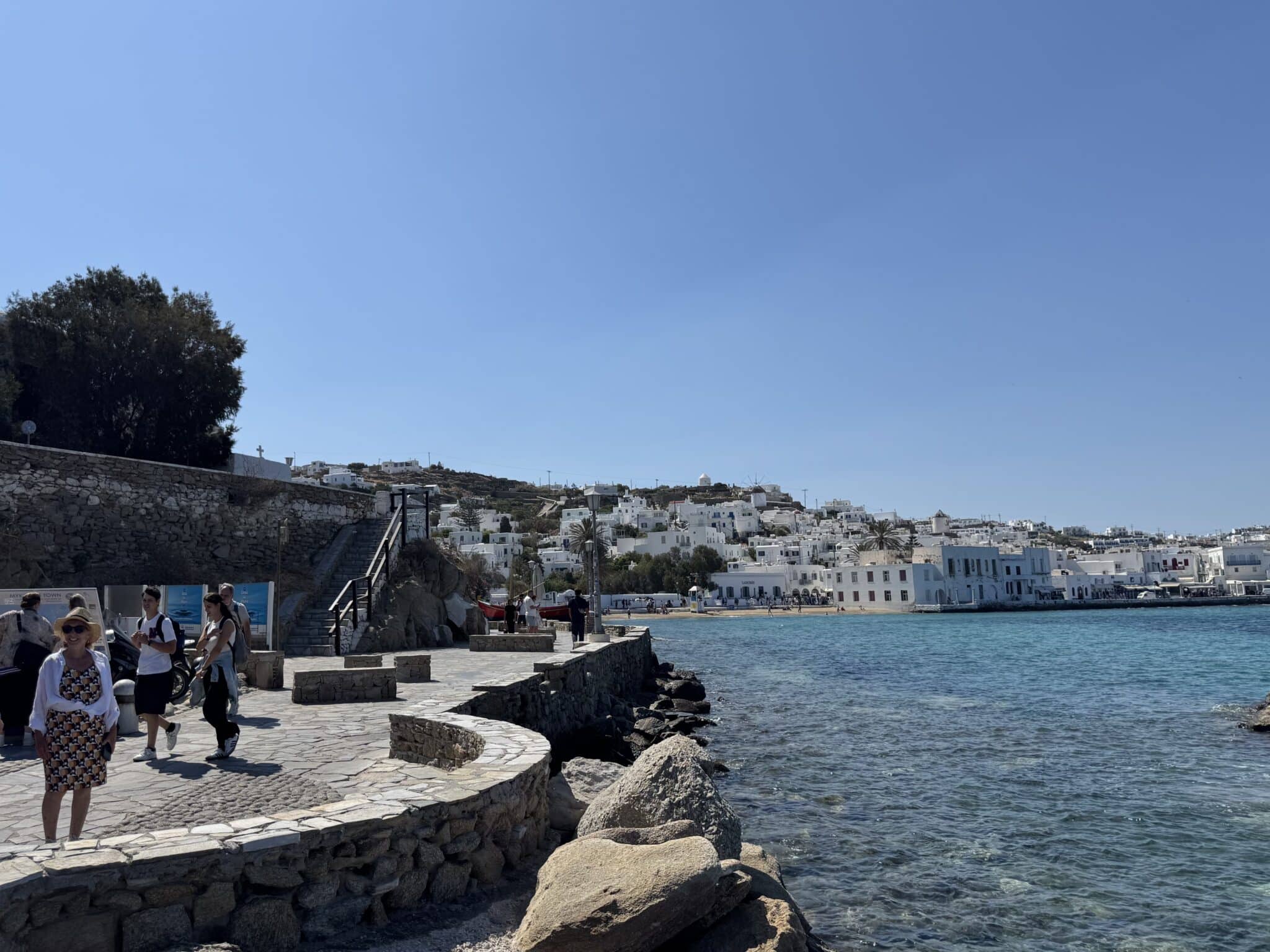
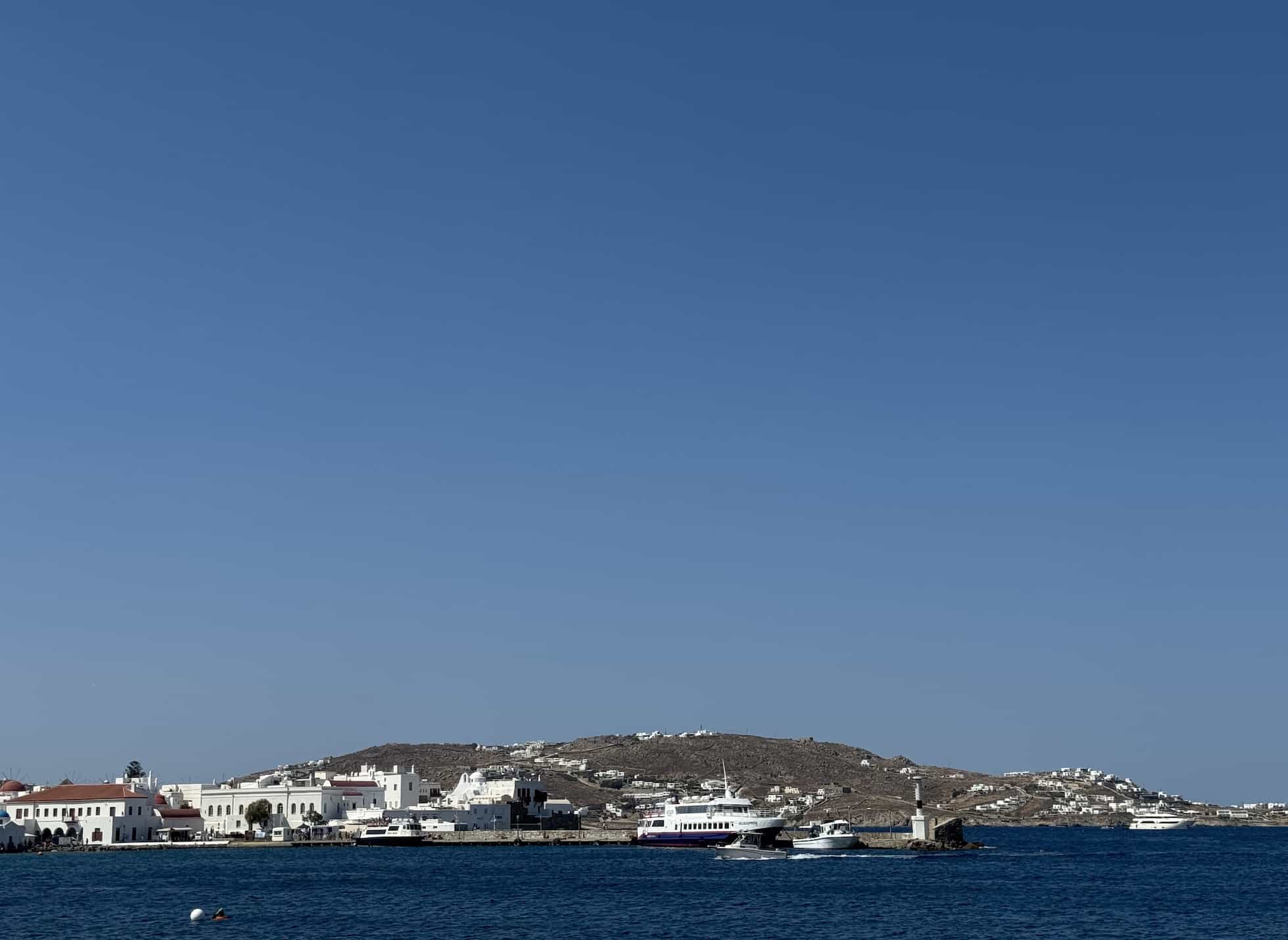
Mykonos’ Old Port, the landing spot for cruise ship passengers, is about a 30-minute walk from the old town. That means hundreds or thousands of people don’t converge on the fragile old-city spot at the same time.
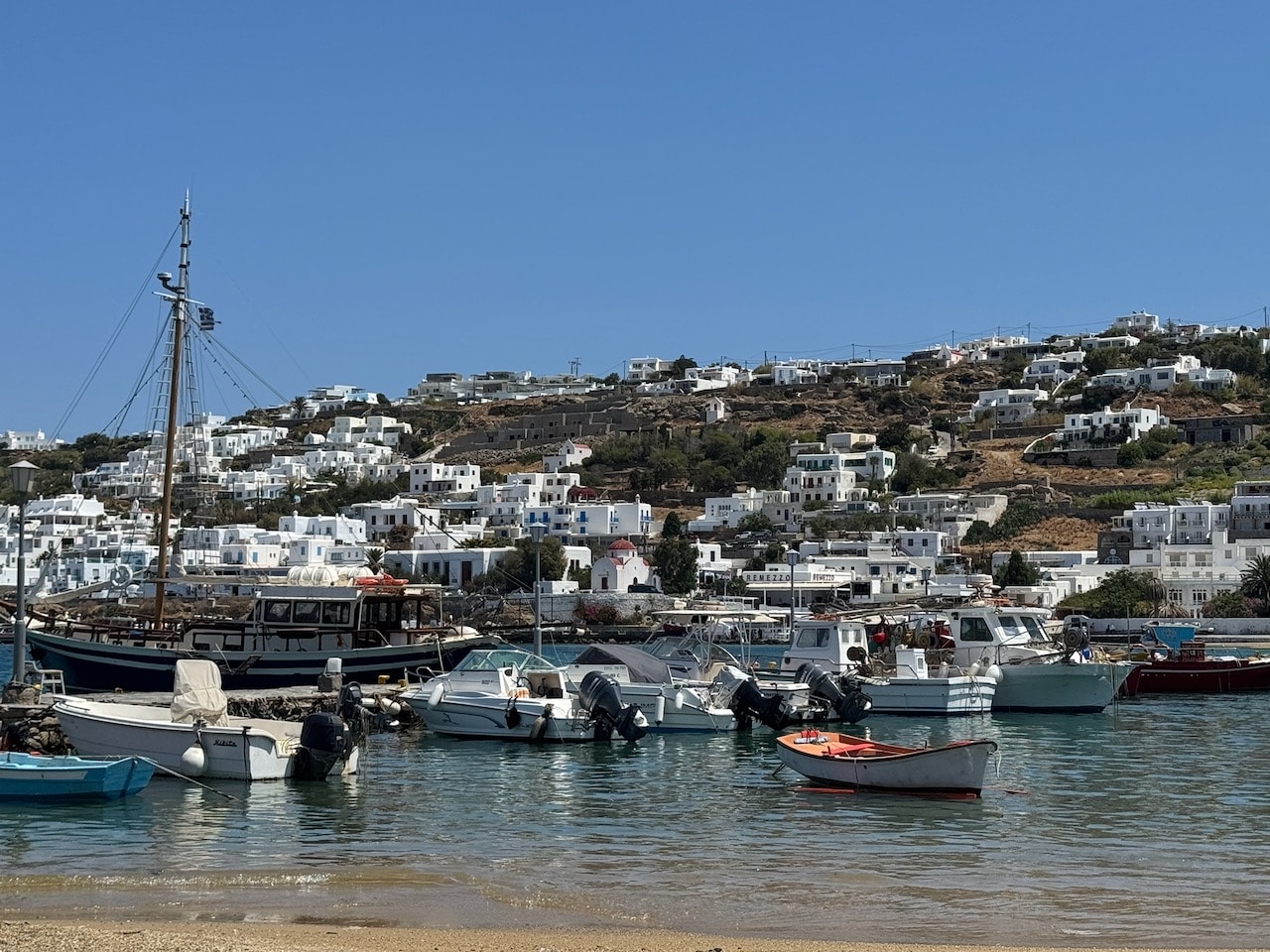
A very efficient shuttle bus system is also available. And our cruise line had buses ready to take us on the short ride to a bus terminal, still a way out from the town. That gave us a chance to walk along the Old Port town beach.
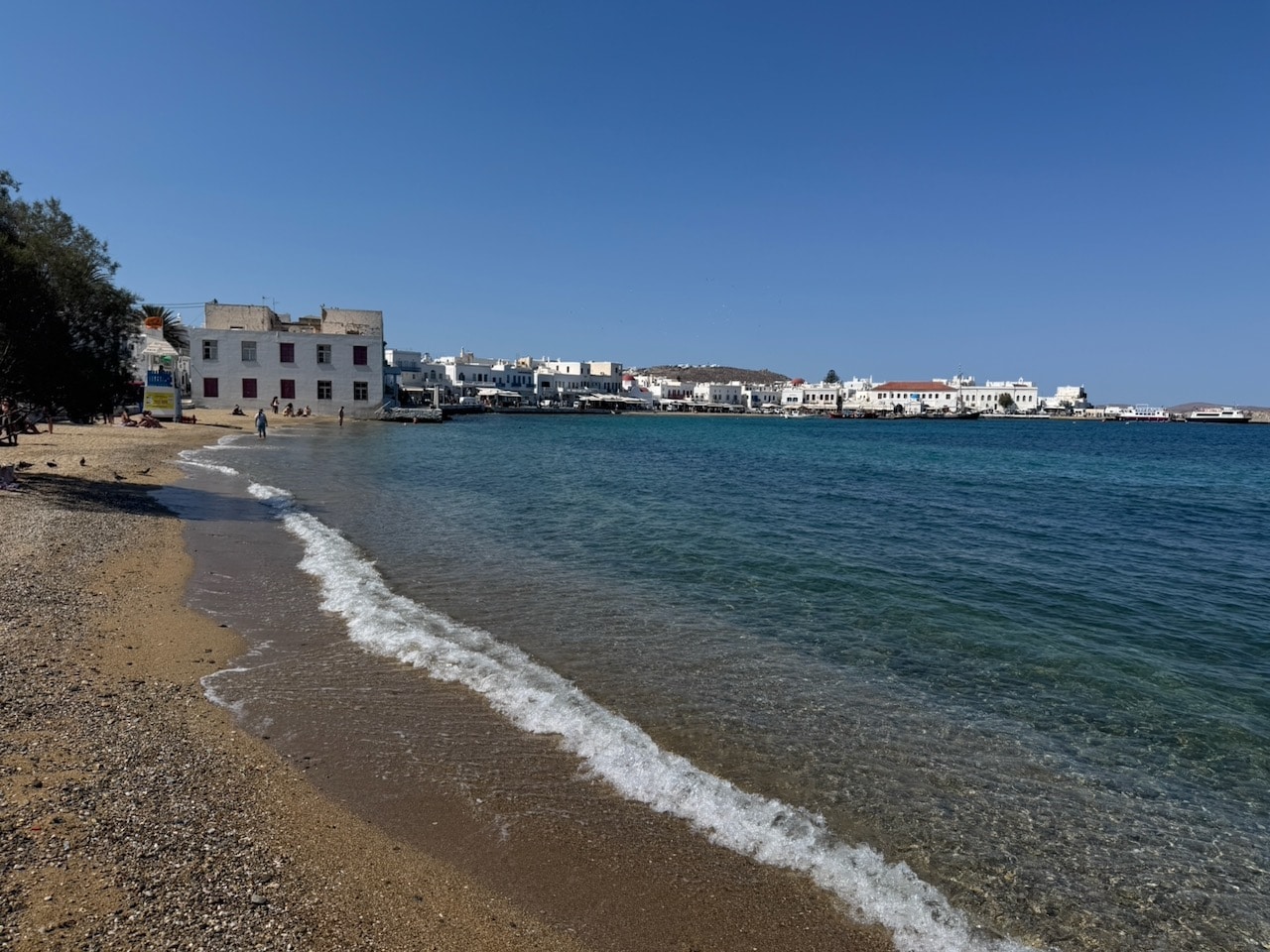
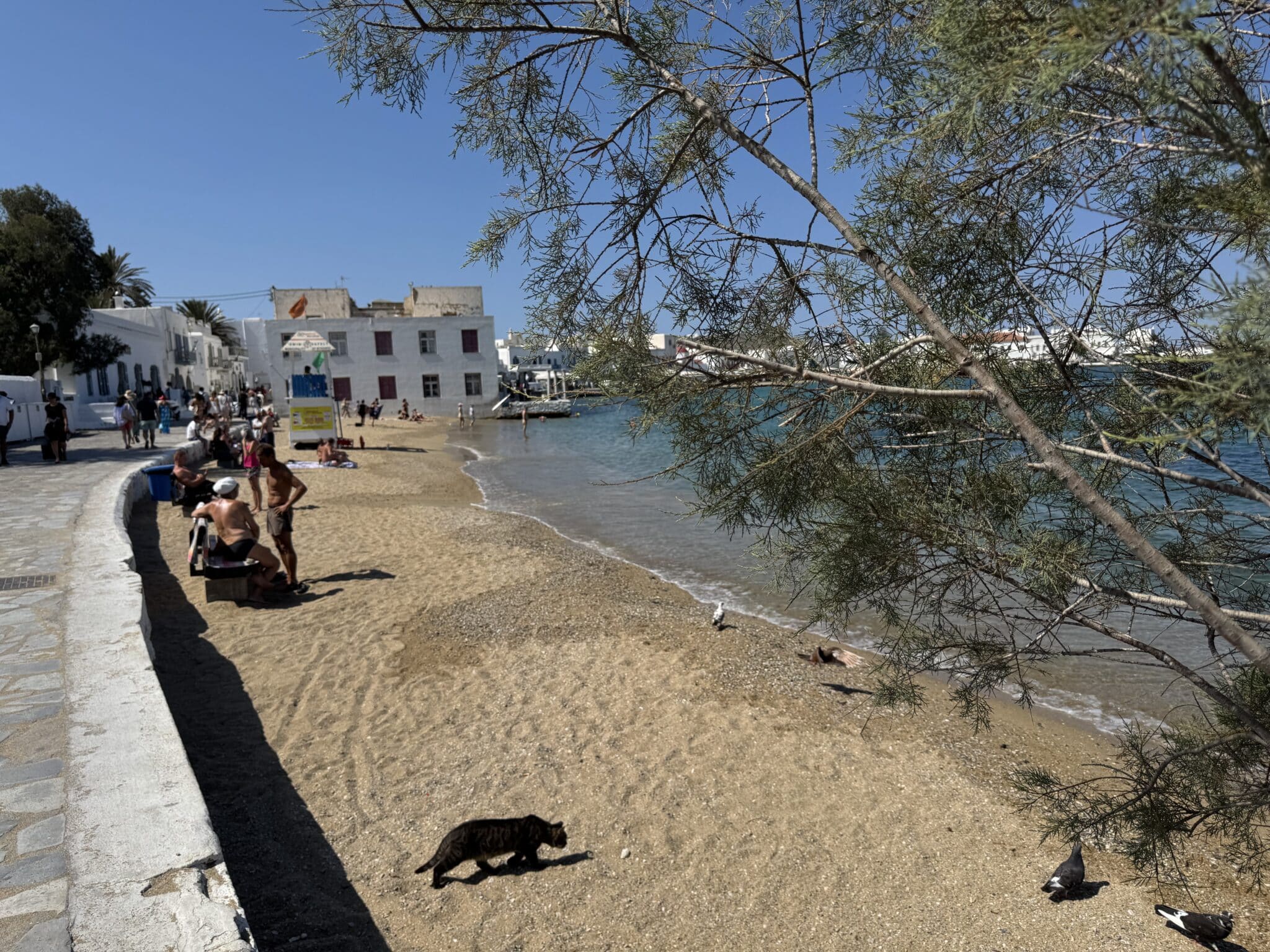
Mykonos town is also called Chora and the main town on other islands is the same. Chora (or Hora) translates loosely as village or town. Whatever you call it, Mykonos’ main town is definitely ready for tourists.
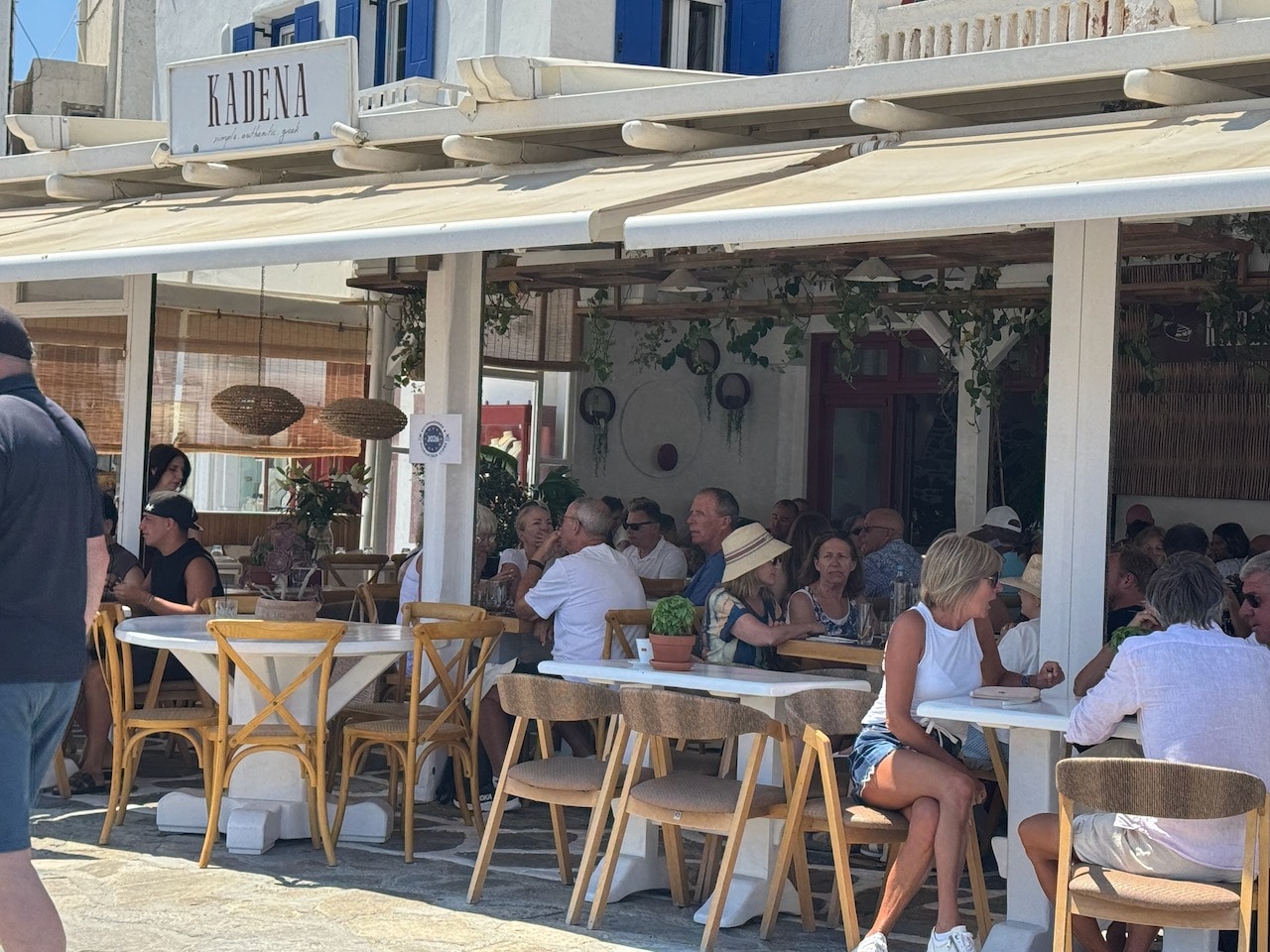
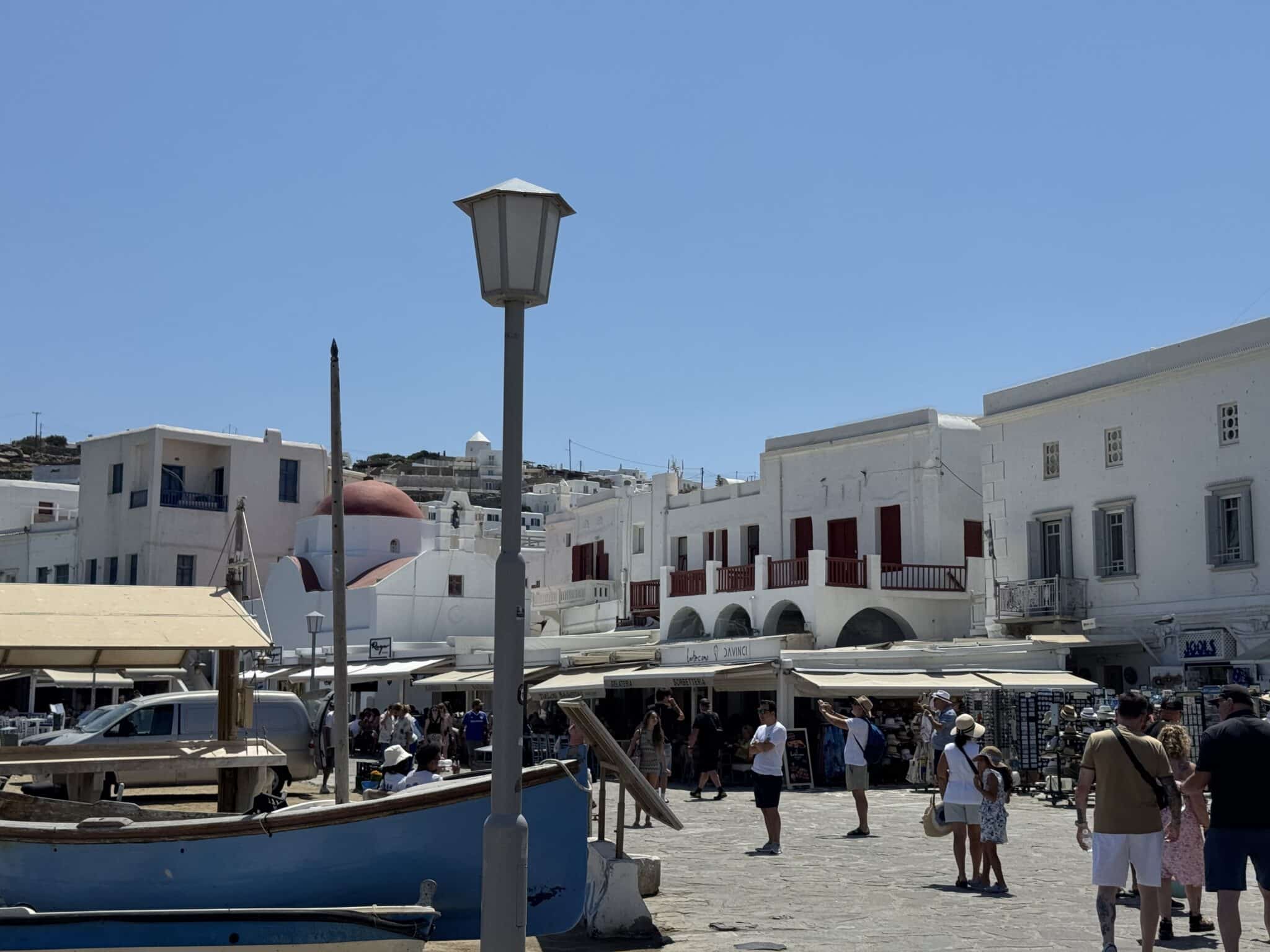
We manuevered beyond the waterfront and ambled about the narrow inner part of the old city to try to get a feel for how people live.
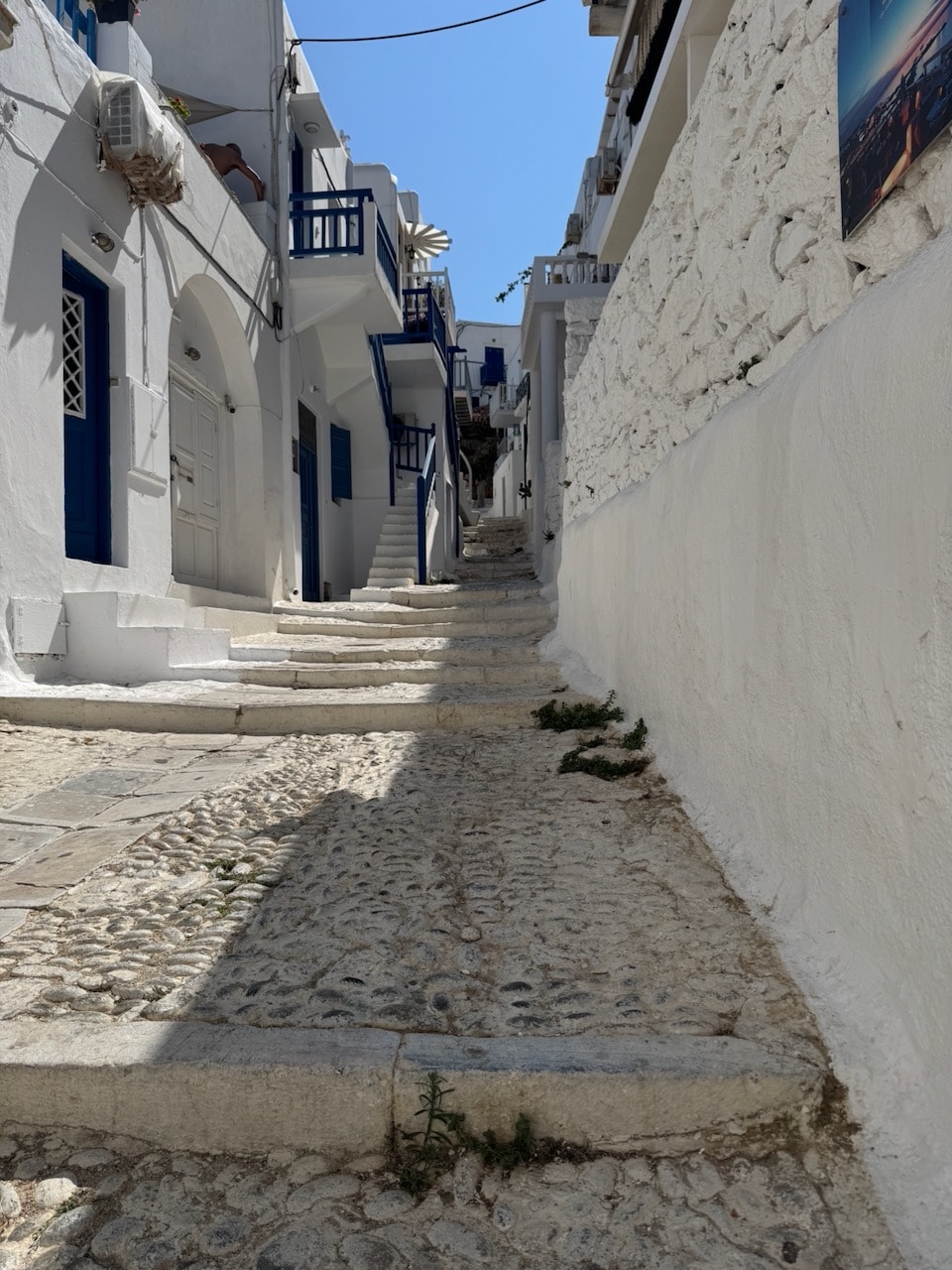
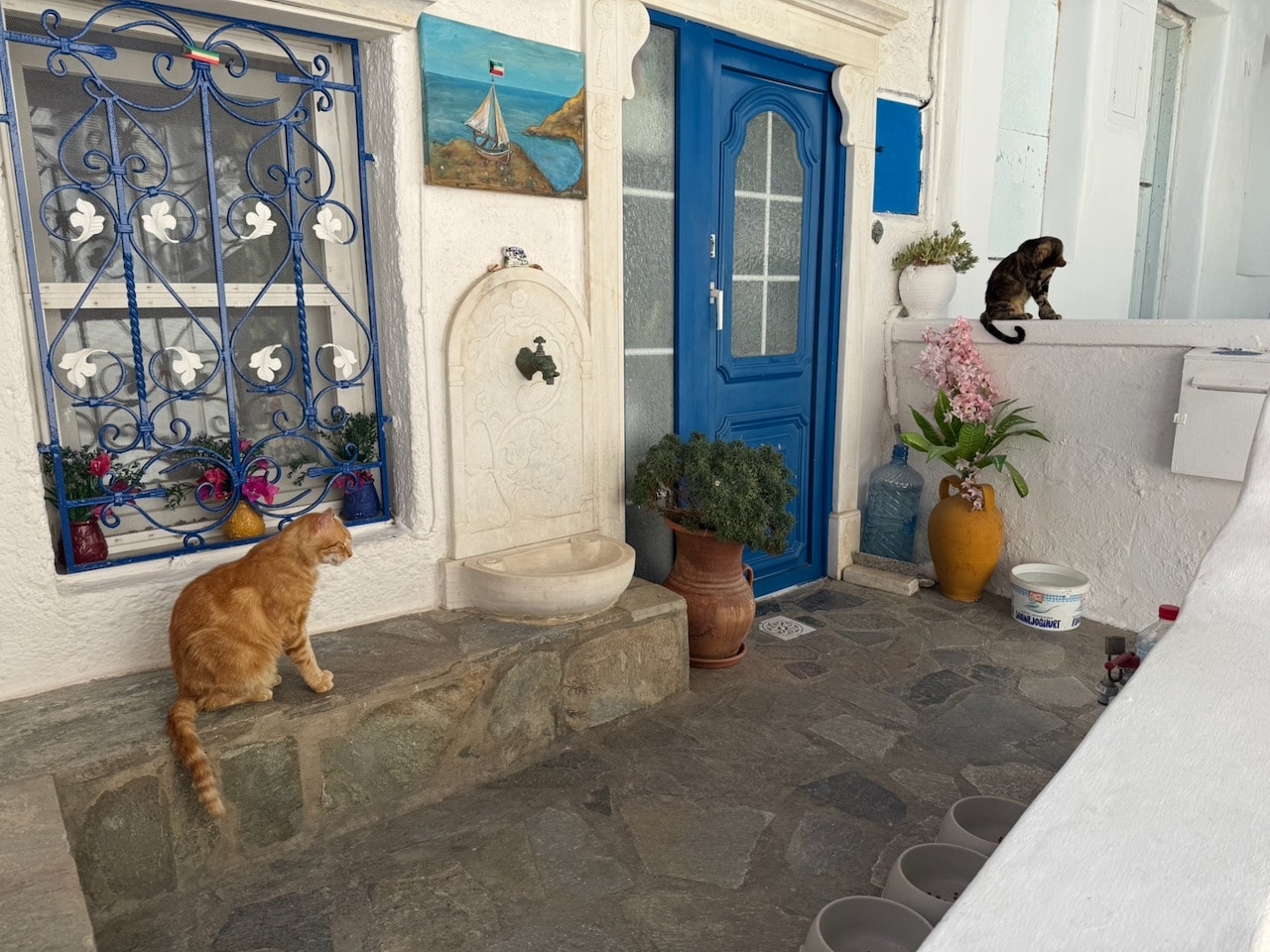
One street turned into another and we met Mariana, shelling okra in front of her house. When she learned that we’re New Yorkers she said, “I go to Brooklyn every year to visit my cousins.”
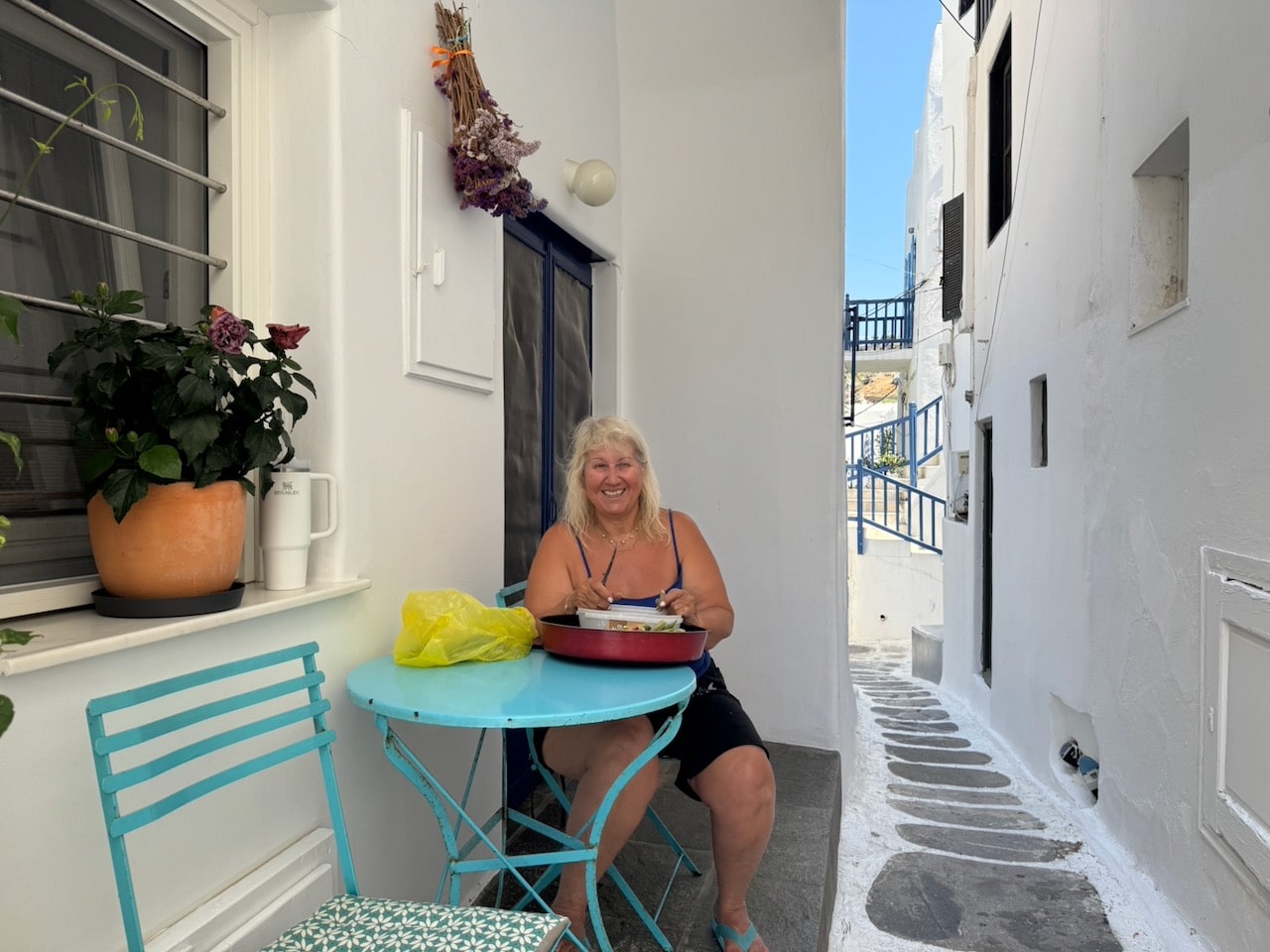
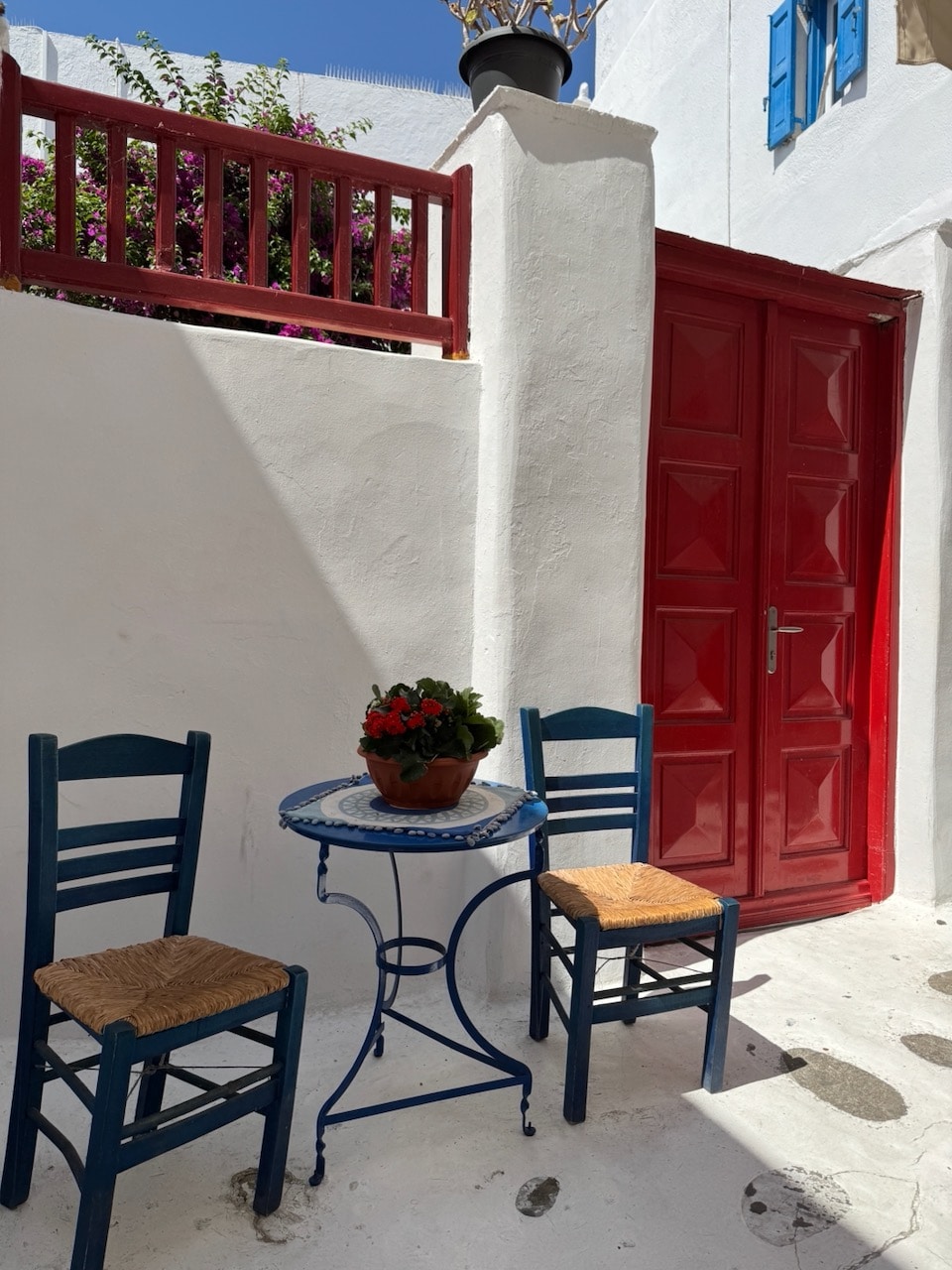
She gave us directions to find the famous Mykonos windmills. On the way we saw picture pretty homes and decorative touches.
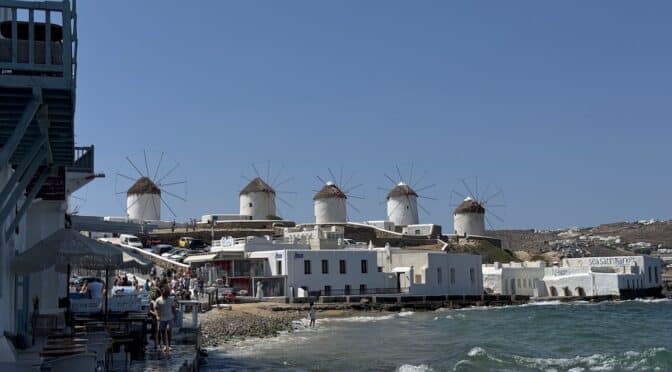
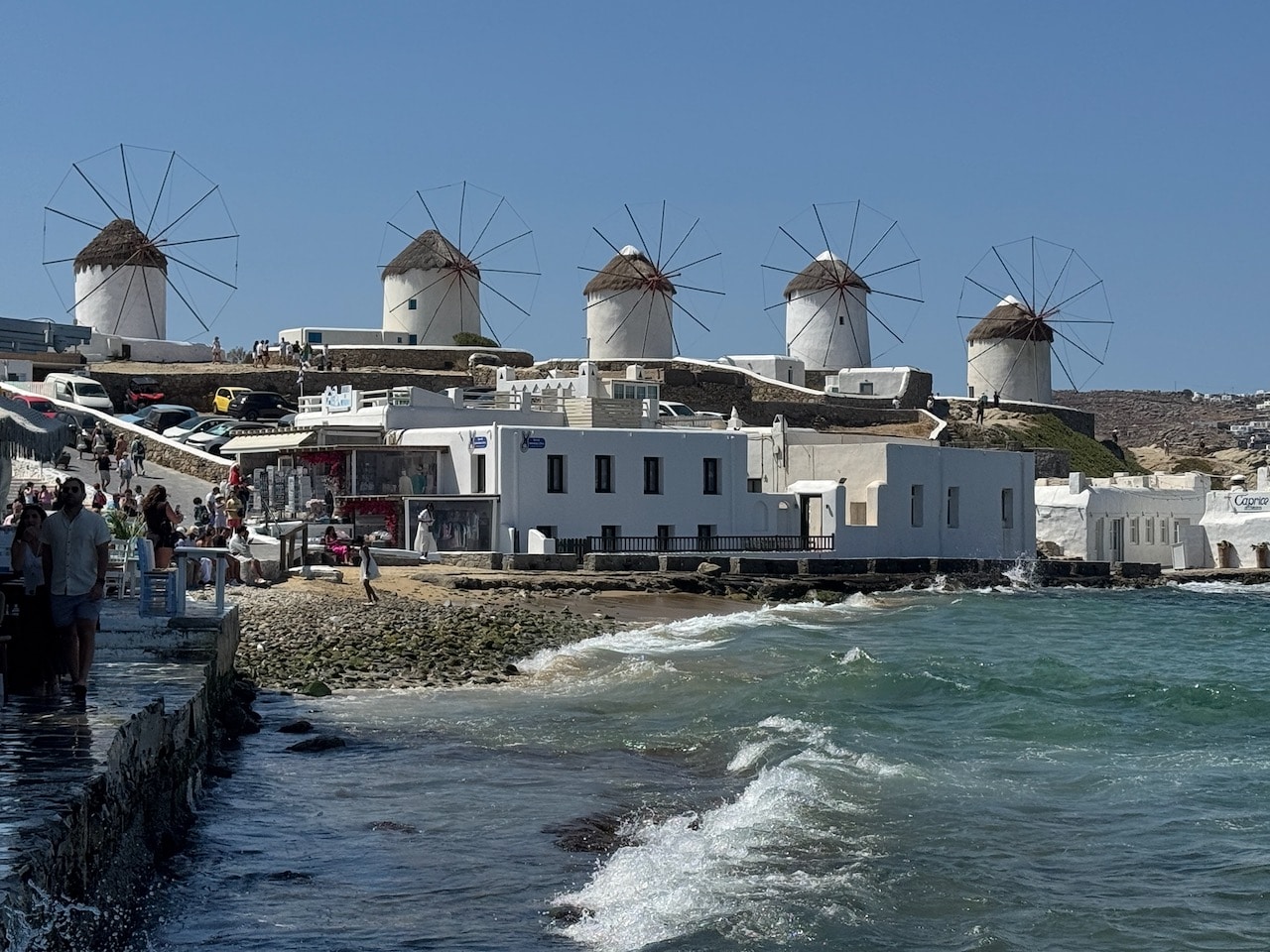
You can see five of the windmills here, but Mykonos has sixteen of them. Most were originally built on the windy island by the Venetians in the 16th century. Locals historically used the windmills to grind or mill wheat that was turned into flour, which became a primary source of income for a long time.
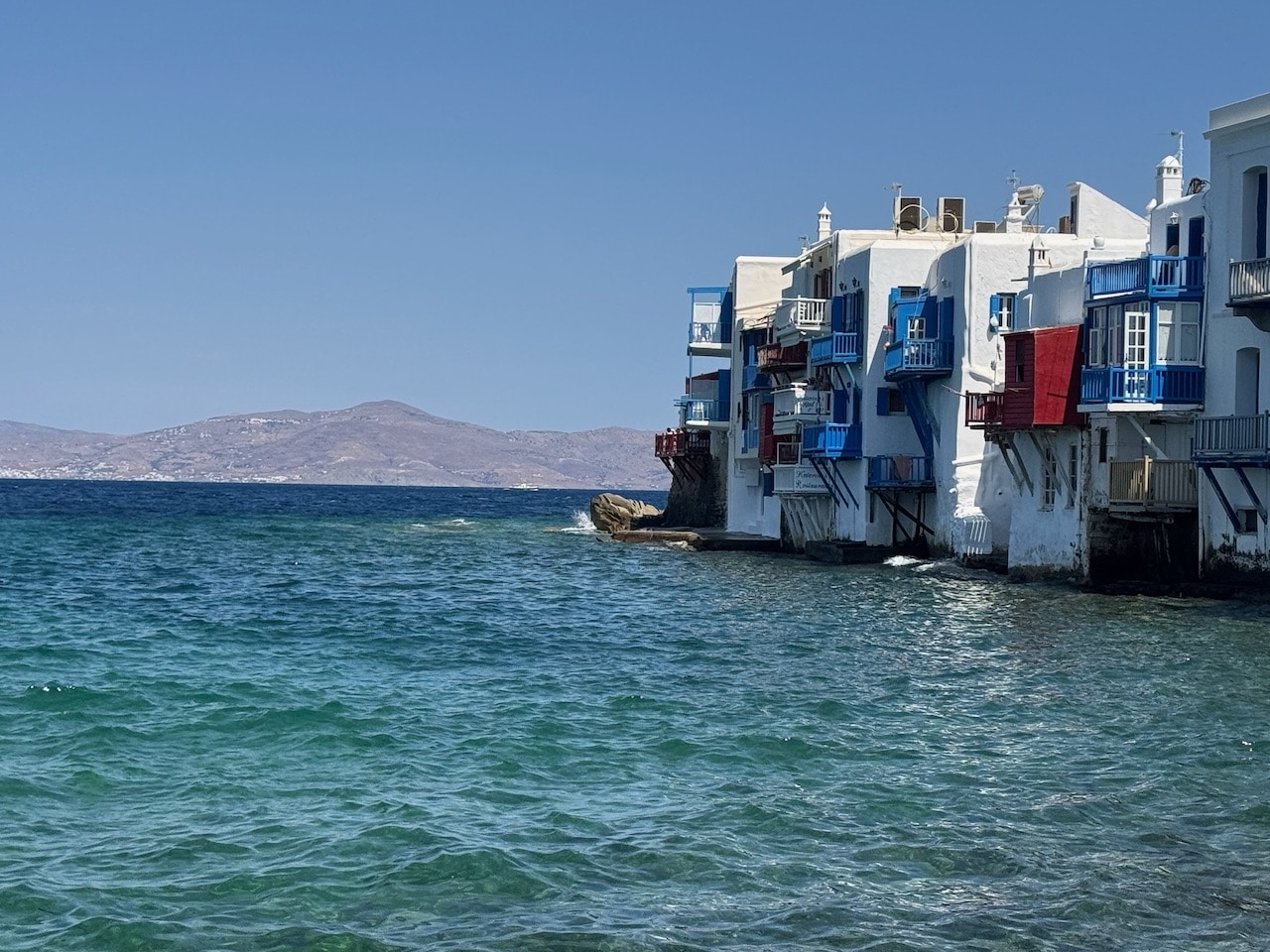
The windmills face a row of bars and restaurants in an area called Little Venice.
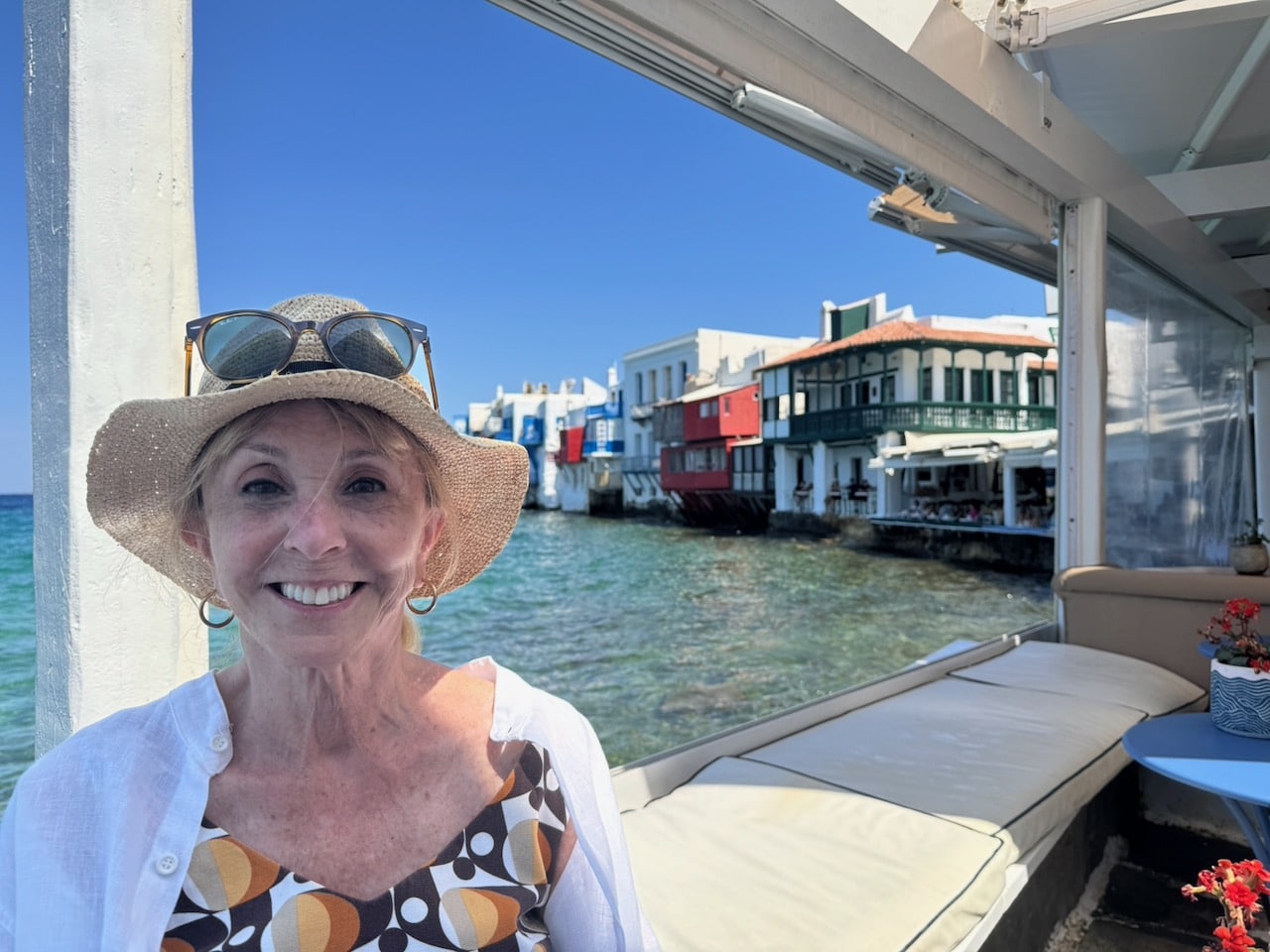
The buildings behind Barbara look like they are about to fall into the sea.
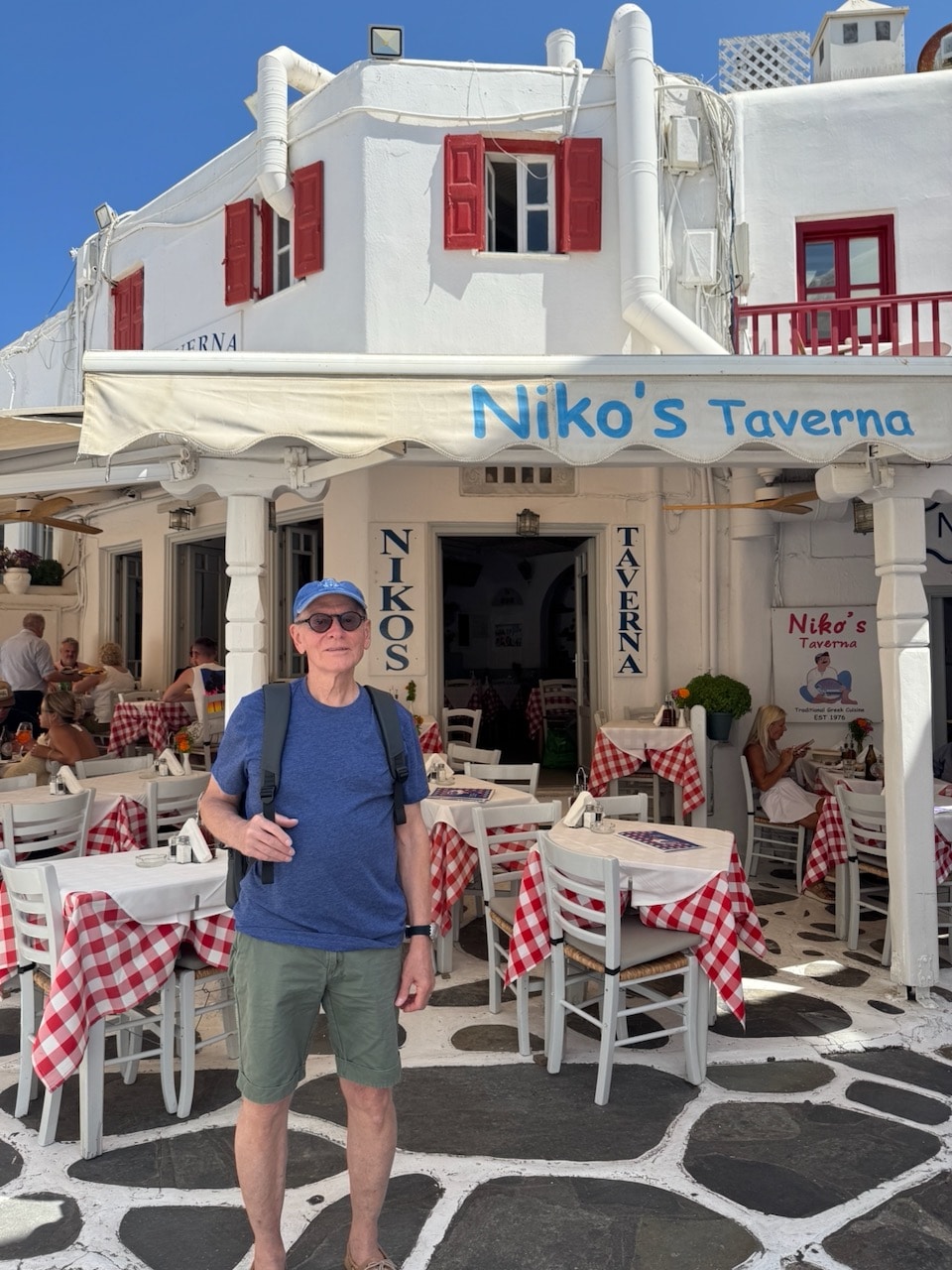
We did some shopping nearby and then had to take another Niko photo.
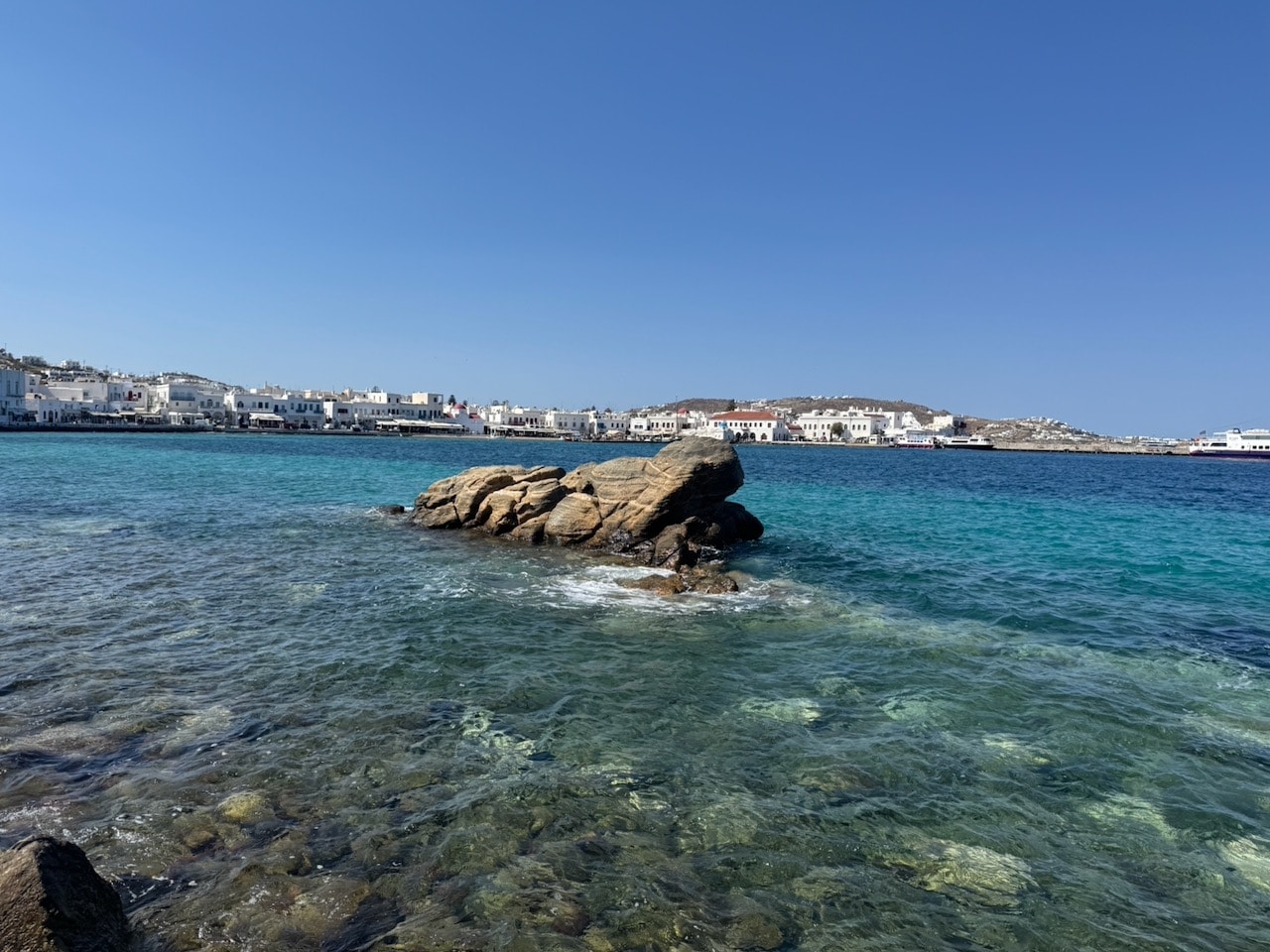
We found our way back to the bus stop outside the town and thought that despite our initial hesitation, Mykonos is another place we might like to come and stay for a while. We’re not sure if we’d frequent its popular all-night dance clubs or bask at its nude beach, but if we wanted to, they’re there.
From Mykonos, World Traveller hoisted anchor and turned west toward Italy and the strait of Messina, which divides Sicily from the Italian mainland.
The last Saturday of July dawned clear and bright. During the night we had passed the southern tip of Greece into open waters of the Ionian Sea. Swells rolled down from the north giving us a bumpy ride. On this Epicurean Expedition, the World Traveller’s staff planned a pasta sauce cooking competition in the boat’s Atlas Lounge,
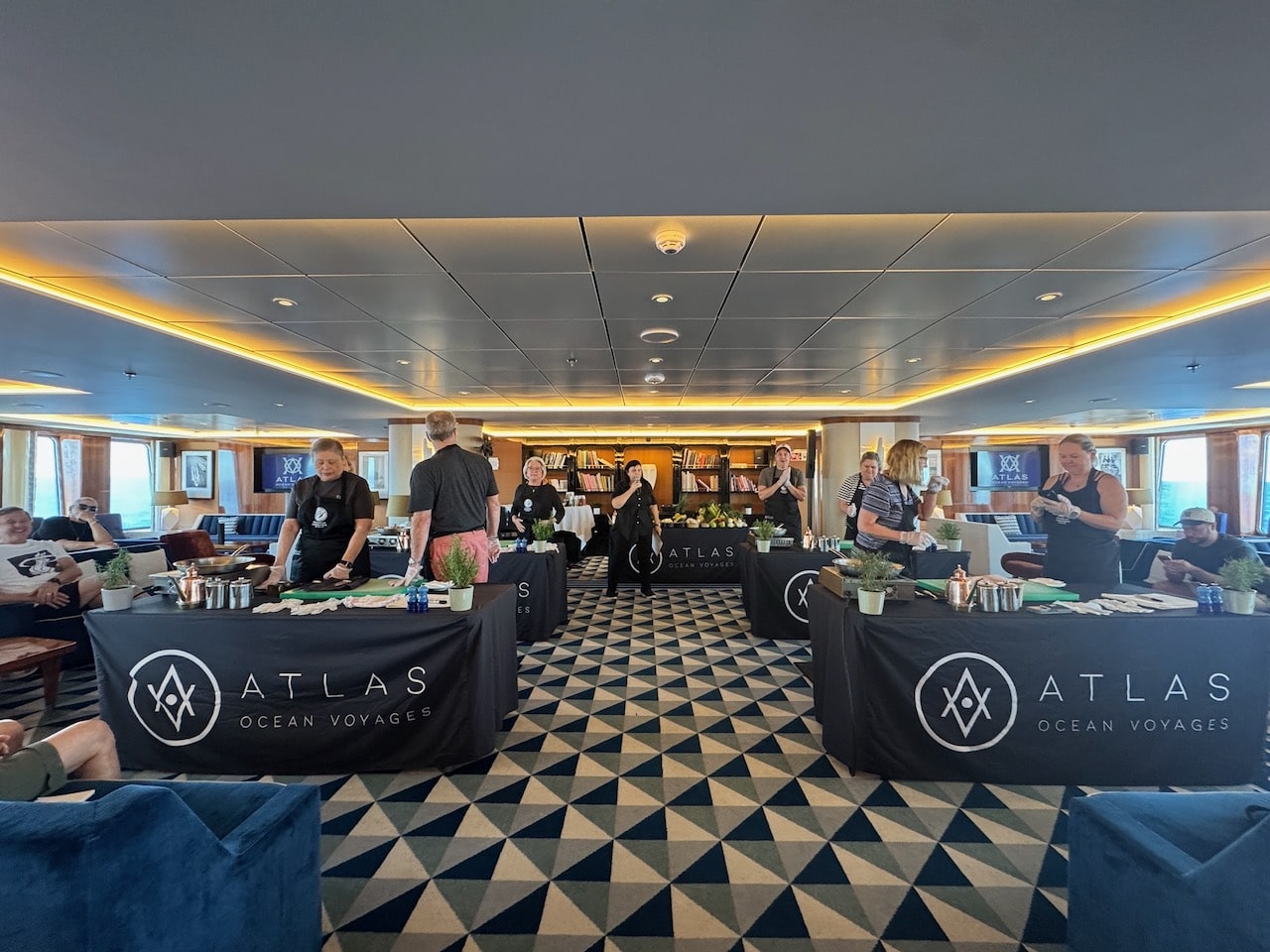
The culinary team asked Barbara to be one of the judges.
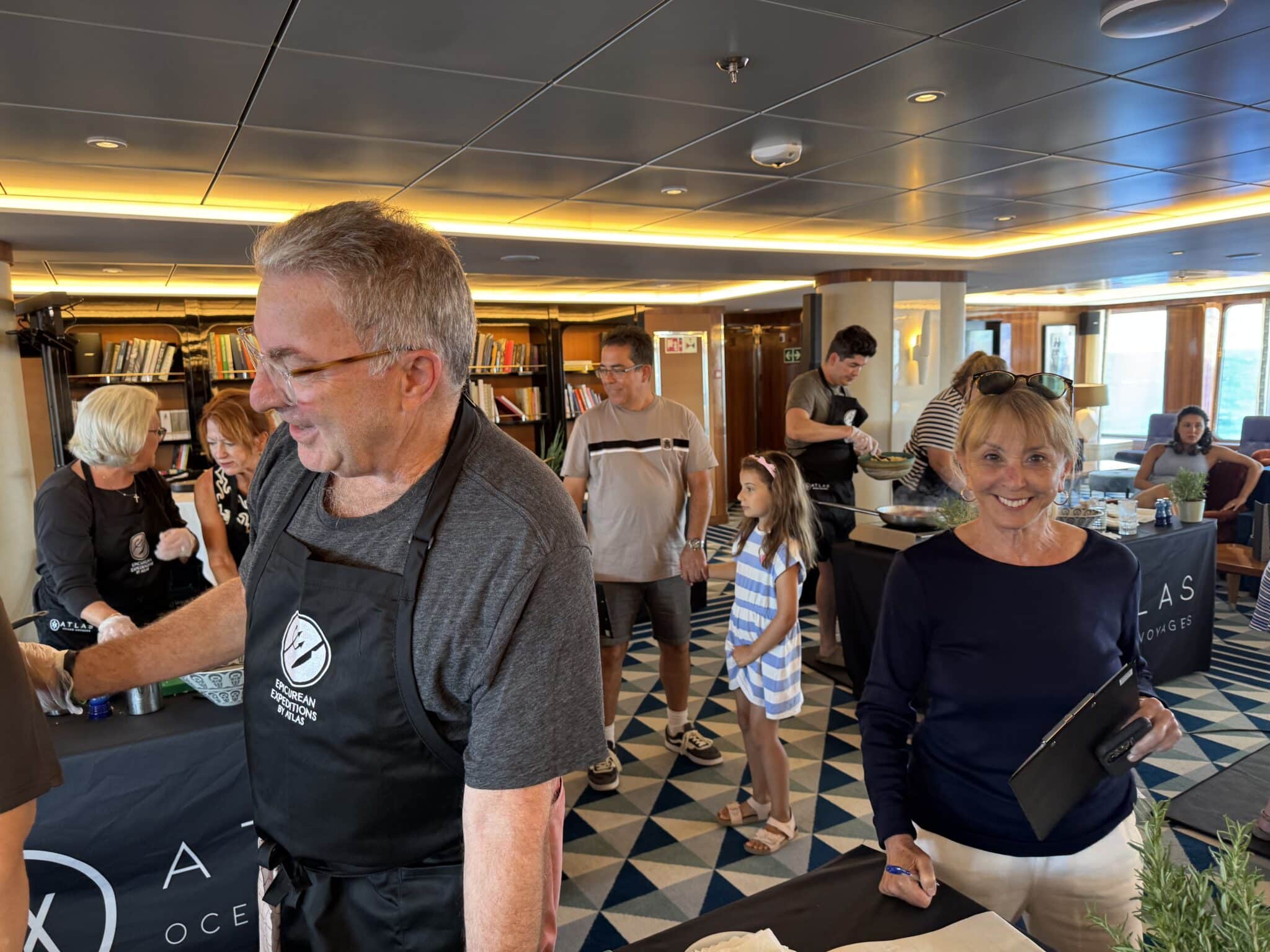
Four two-member teams chose ingredients from a bounty of food laid out for them.
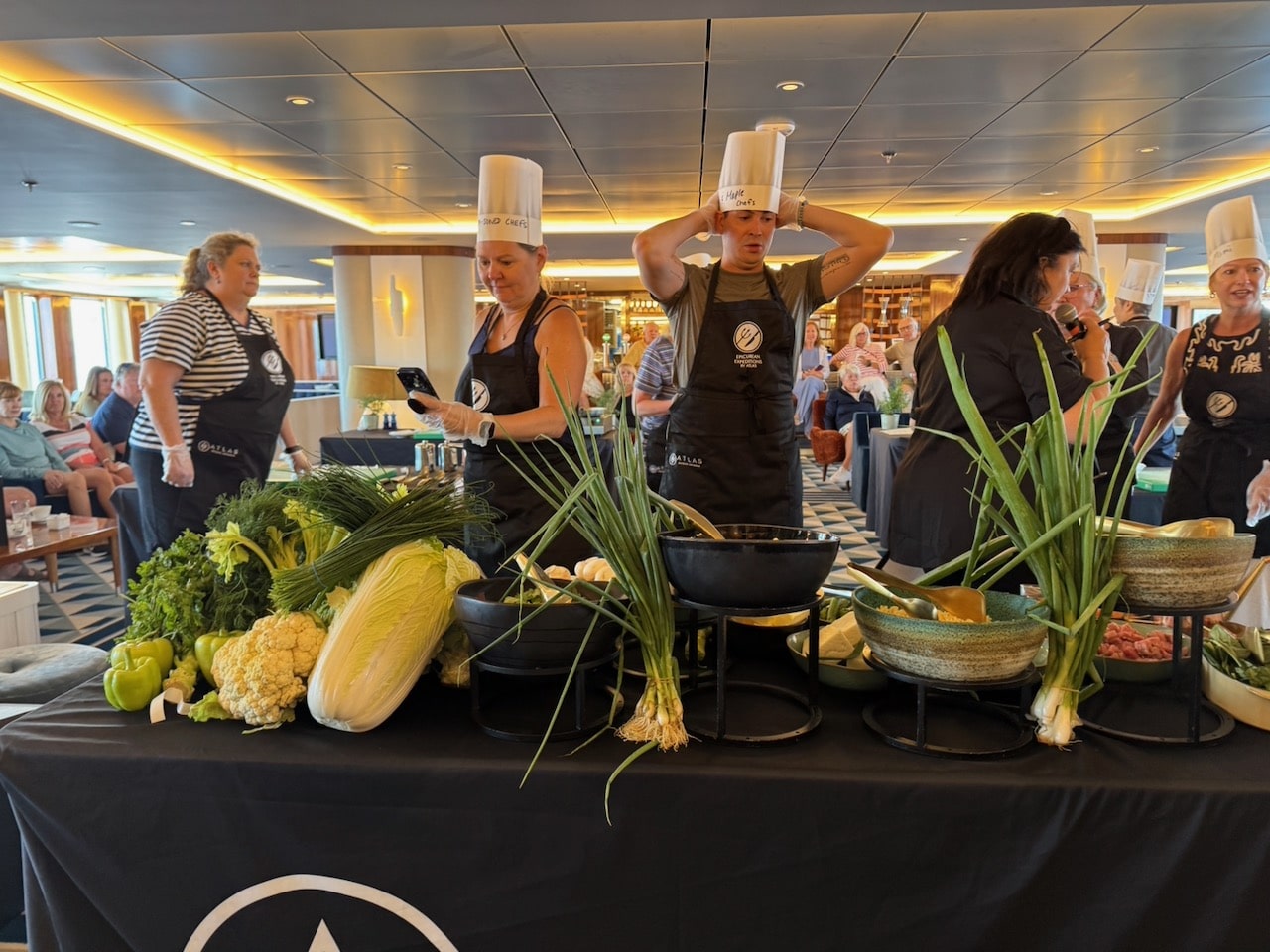
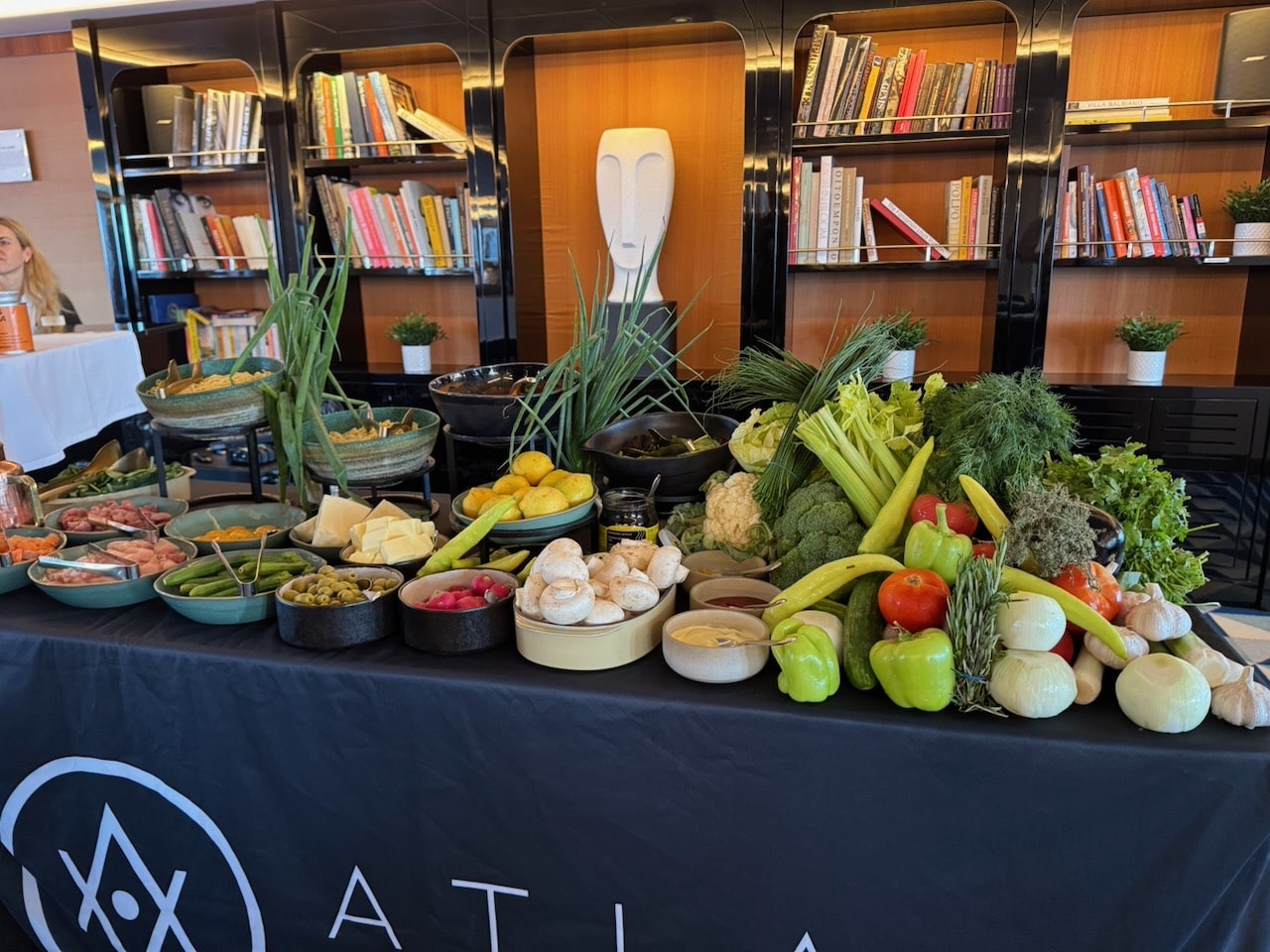
The teams moved to cooking stations with cutting boards and frying pans on electric burners, and had 20 minutes to complete their dishes.
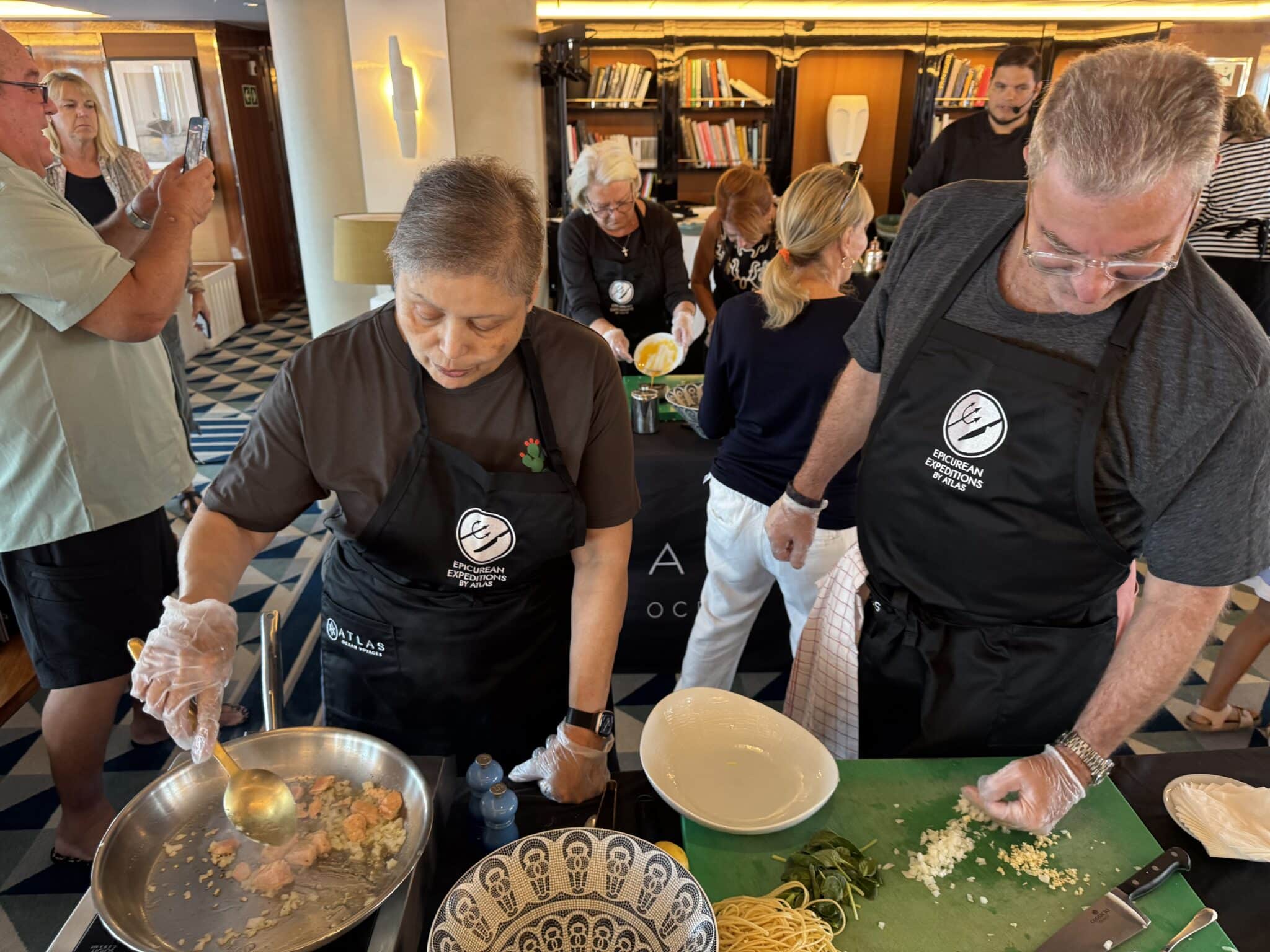
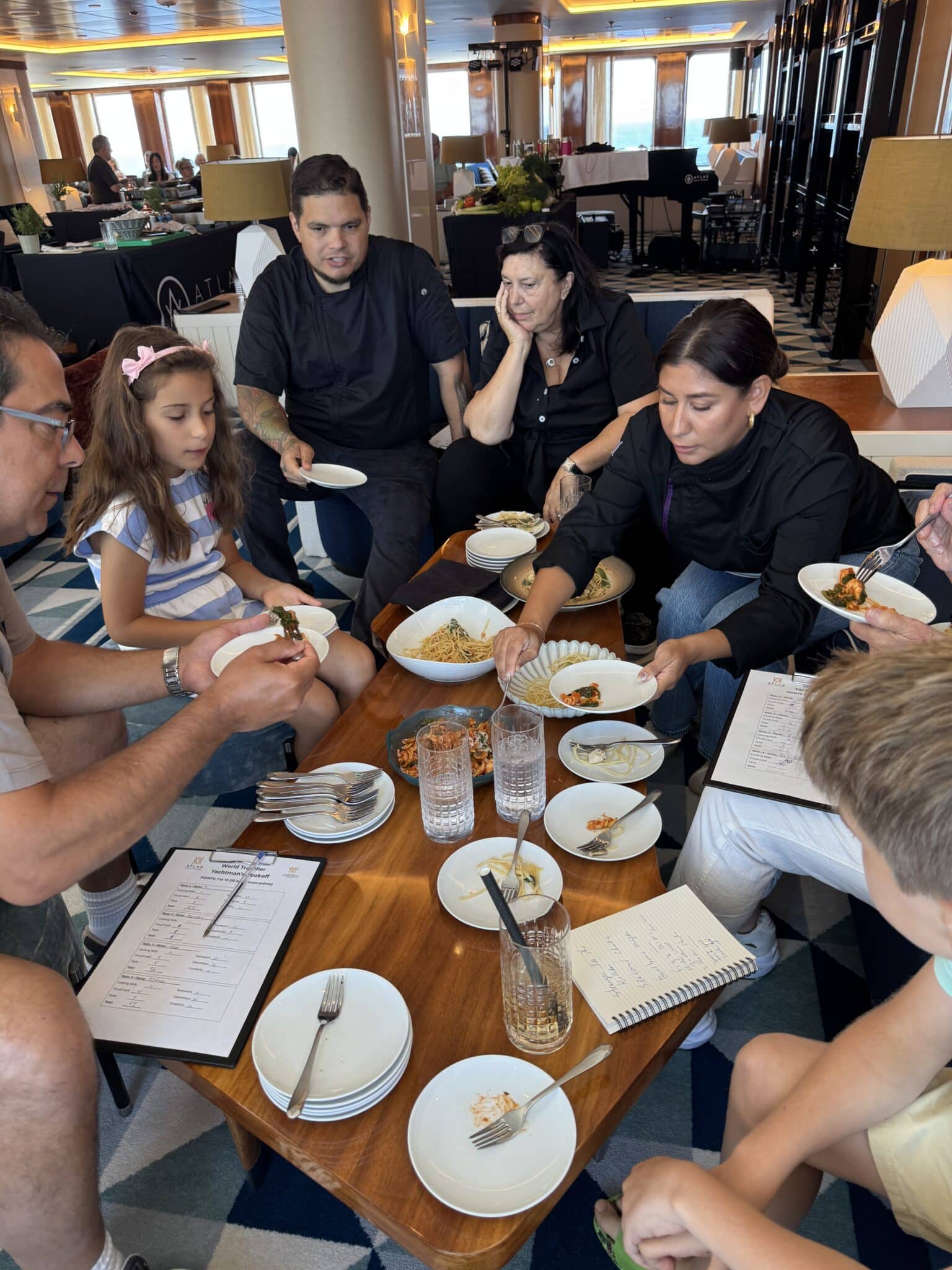
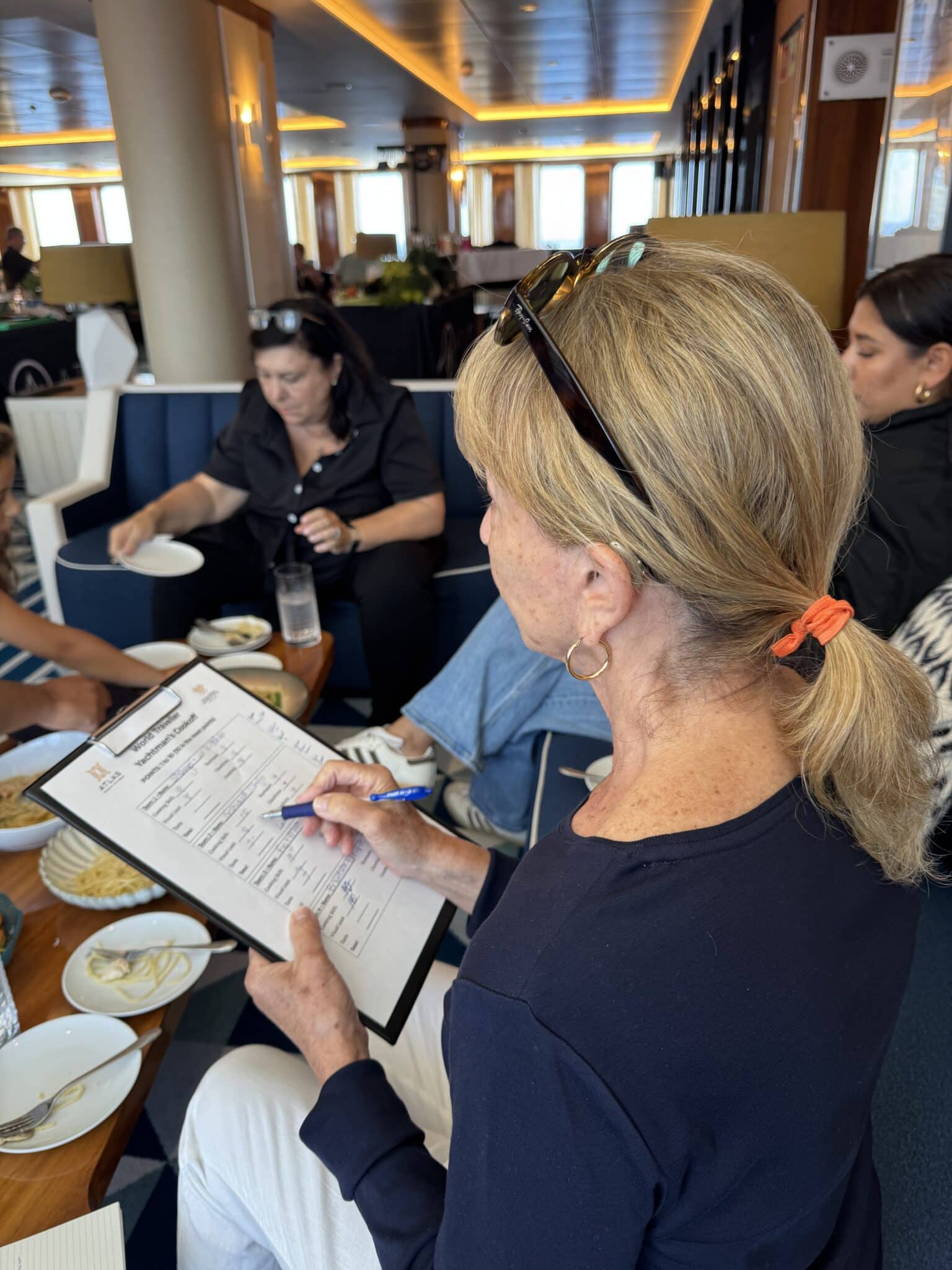
The entries were judged on taste, appearance, and the cleanliness of the cooking stations at the end.
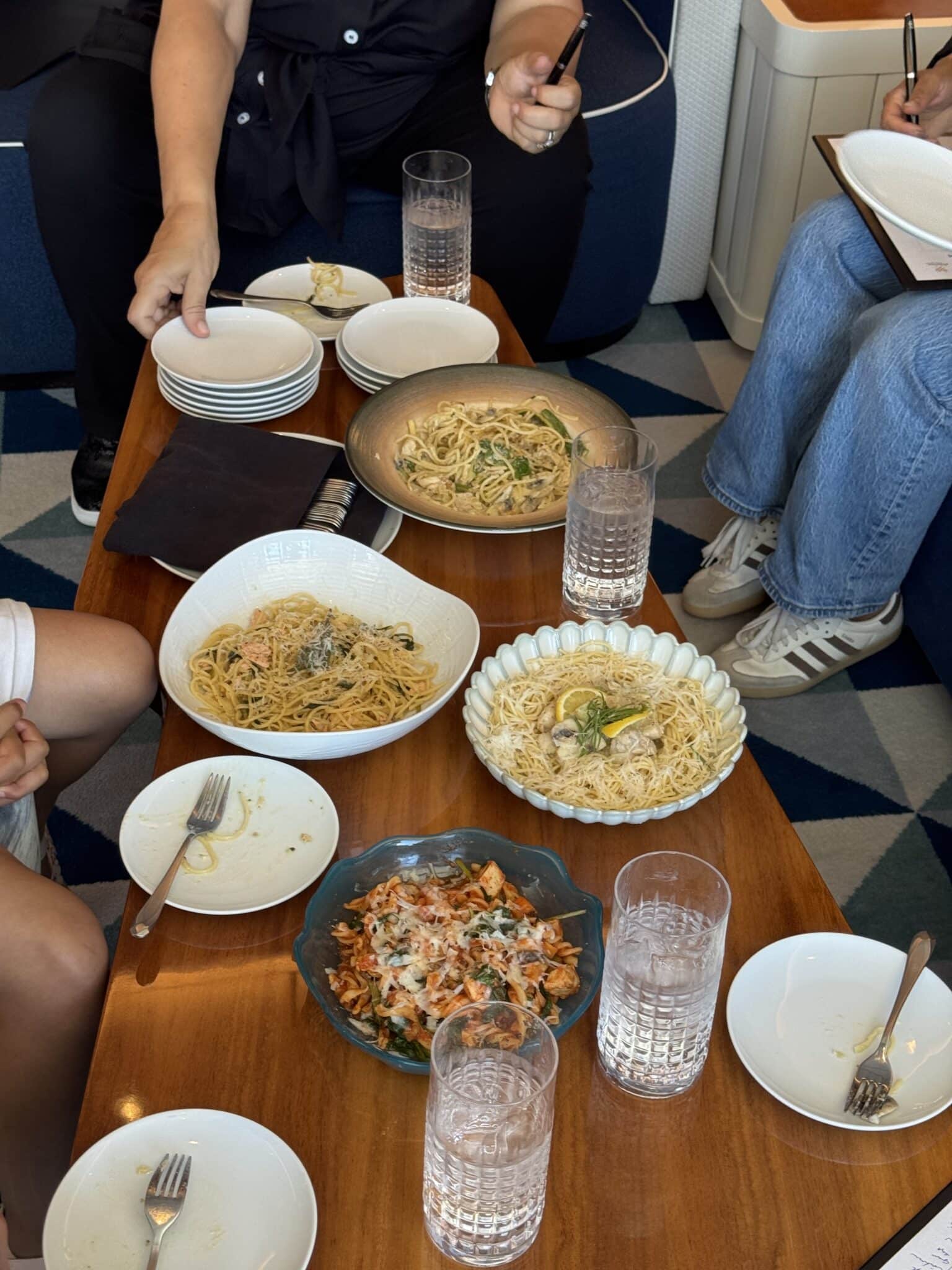
The winner was a puttanesca sauce by the team of Bourbon and Maple, the name the two cooks chose for themselves for fare from their home states — Kentucky bourbon and North Carolina maple syrup. You can watch the video of the cook-off down below.
In the evening, we were still headed west and nearing Sicily.
Amalfi from the sea. Photo by ConsumerMojo.com.