by Nick Taylor and Barbara Nevins Taylor
After two days on the ship, we still felt giddy enough to rise with the sun. Nick took the first shot of the sky beginning to flame as we approached Folegandros, World Traveller’s stop after Santorini.
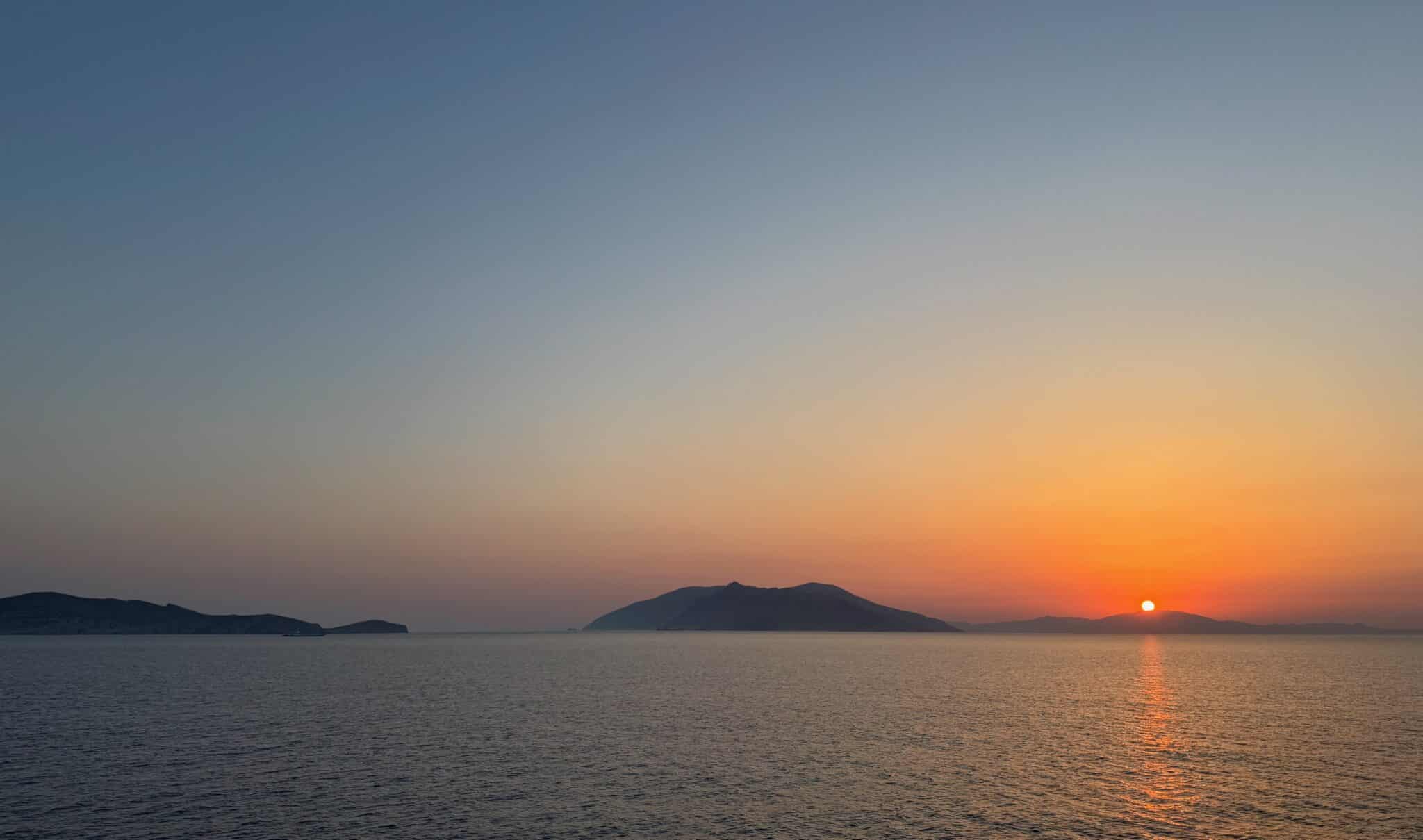
Sunrise approaching Folegandros. Photo by ConsumerMojo.com.
Barbara caught it a few minutes later.
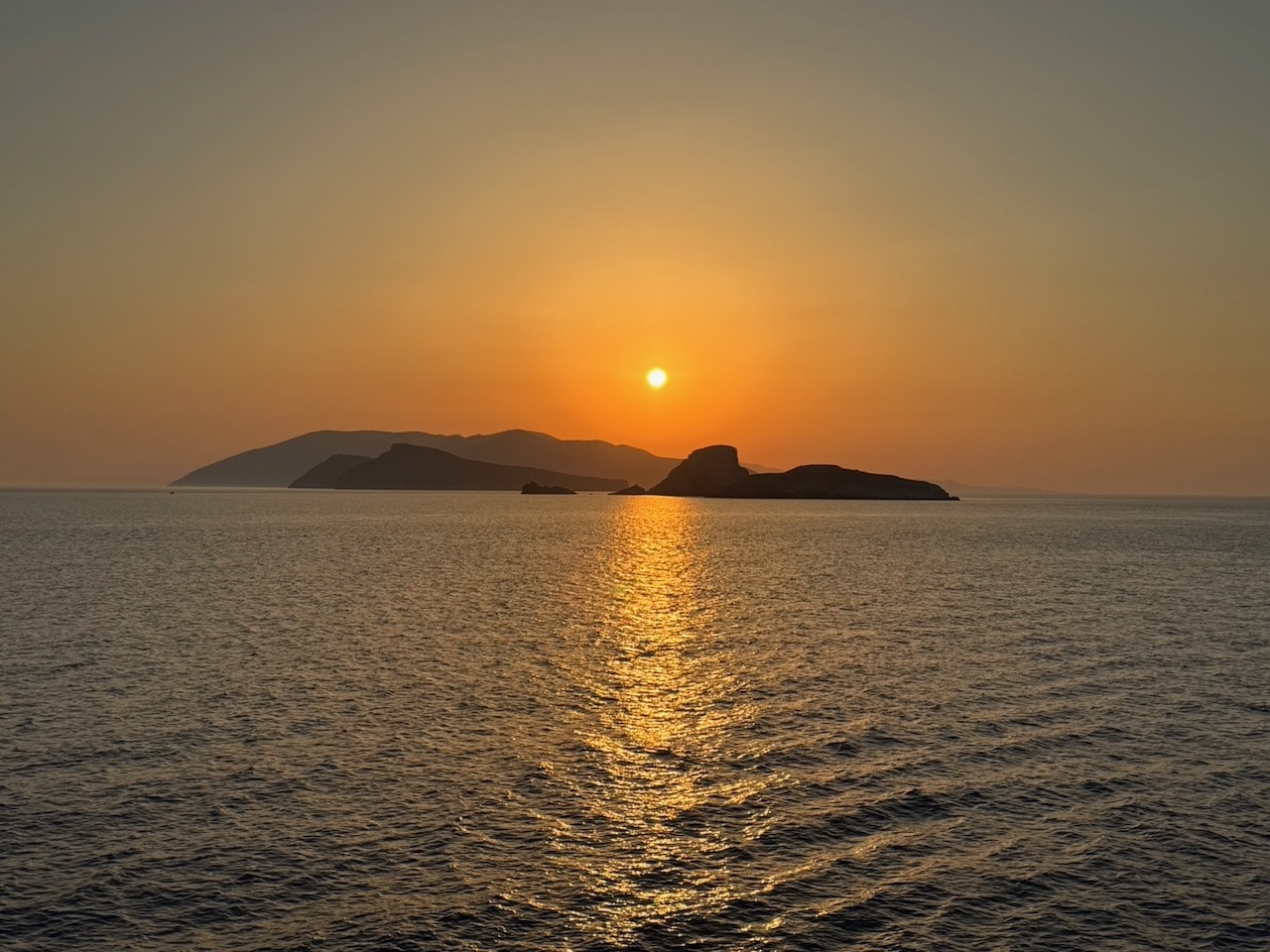
The simple beauty we caught in the sunrise photos only hinted at the peace and unusual beauty we would find a few hours later in Folegandros.
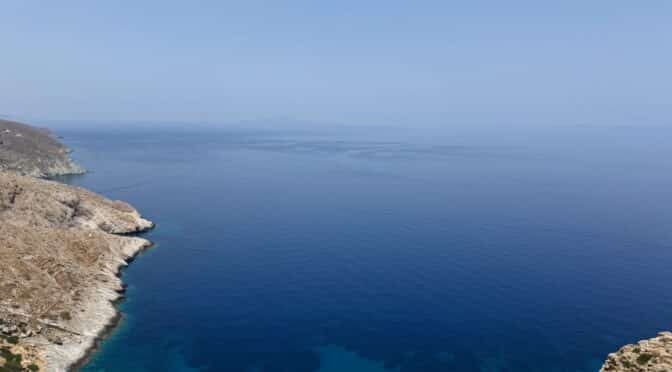
Our daily guide from Atlas Ocean Voyages told us Folegandros was known for its cliffs and views. We’d never heard of the island before this trip and found it on our map a little northwest of Santorini in the southern portion of the Cycladic chain.
There are two stories about its name. Greek mythology says Minos, the king of Crete, sent his son Folegandros to live there. Archeologists have found coins dating to the 3rd and 2nd centuries BC with the image of a young man on one side and a bull on the other, giving the story some credence. Google “sons of Minos of Crete,” though, and you get four names, none of which is Folegandros.
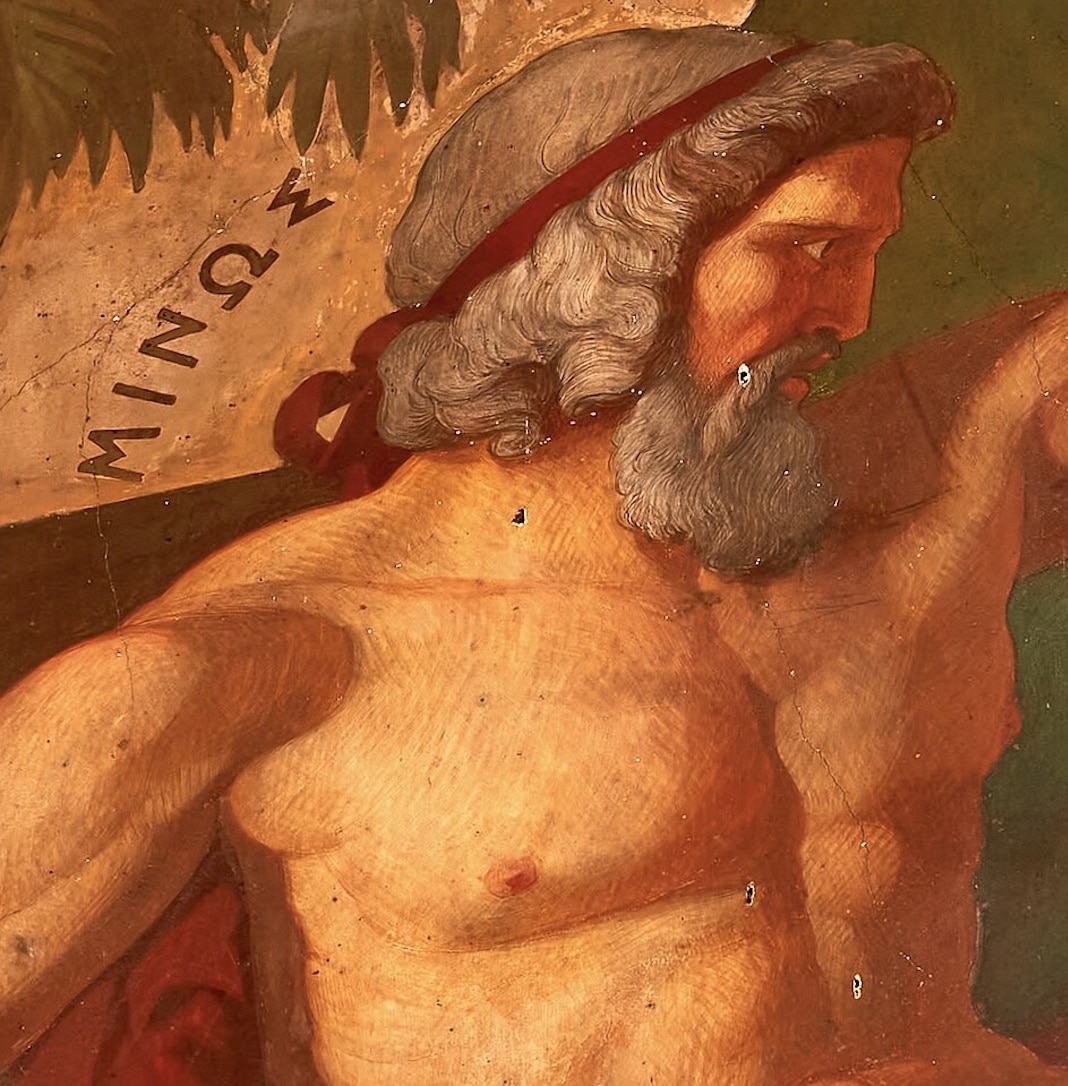
The bull is significant because Minos is the king who cheated Poseidon by failing to sacrifice a sacred bull. Poseidon got even by casting a spell to make the king’s wife Queen Pasophae fall in love with a bull and have sex with the animal. After the liaison, she gave birth to the Minotaur, half human and half bull.
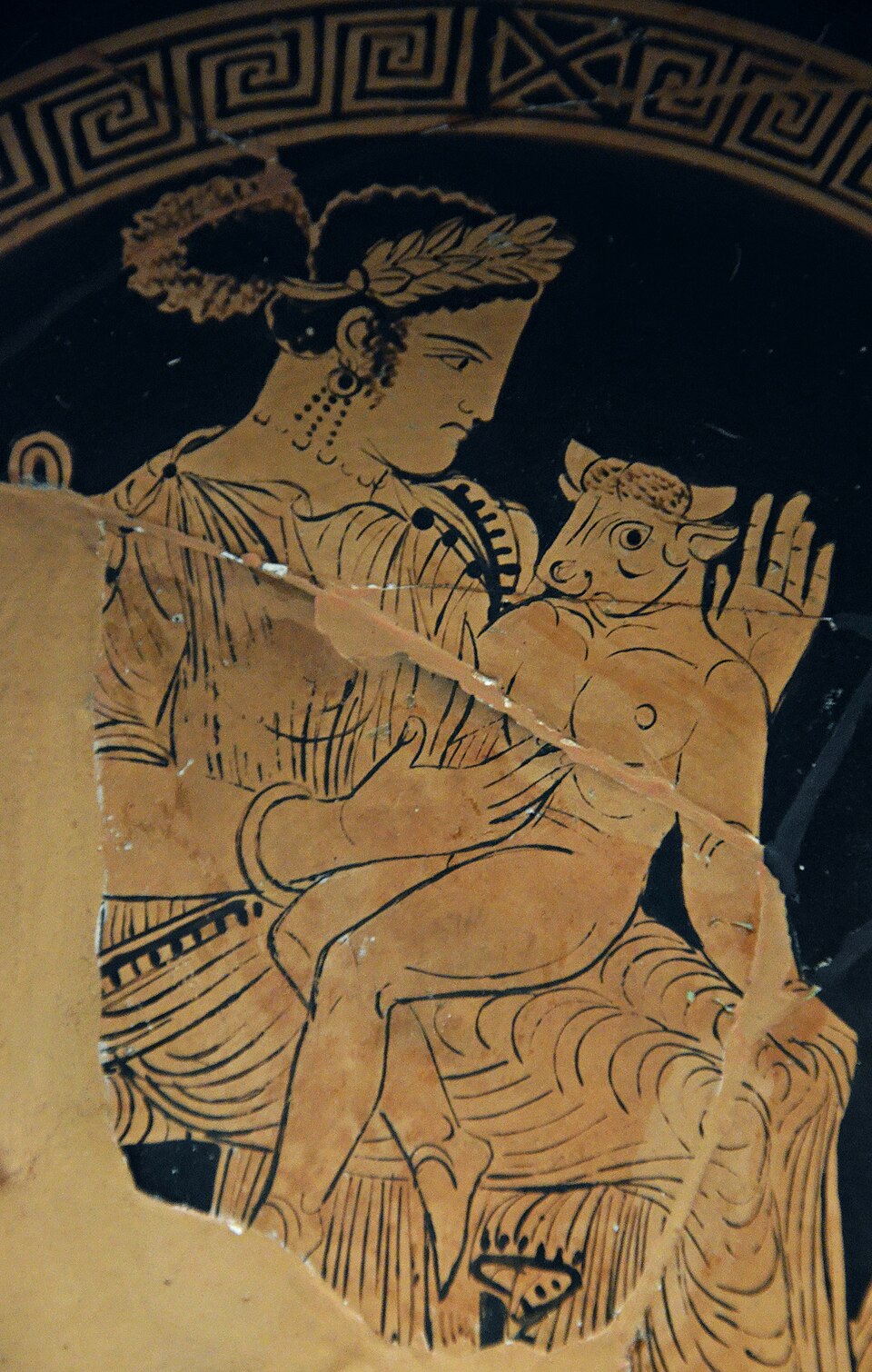
Then Daedalus built a labyrinth for the Minotaur underneath the palace in Knossos on Crete, and that’s where the Minotaur remained until he was slain.
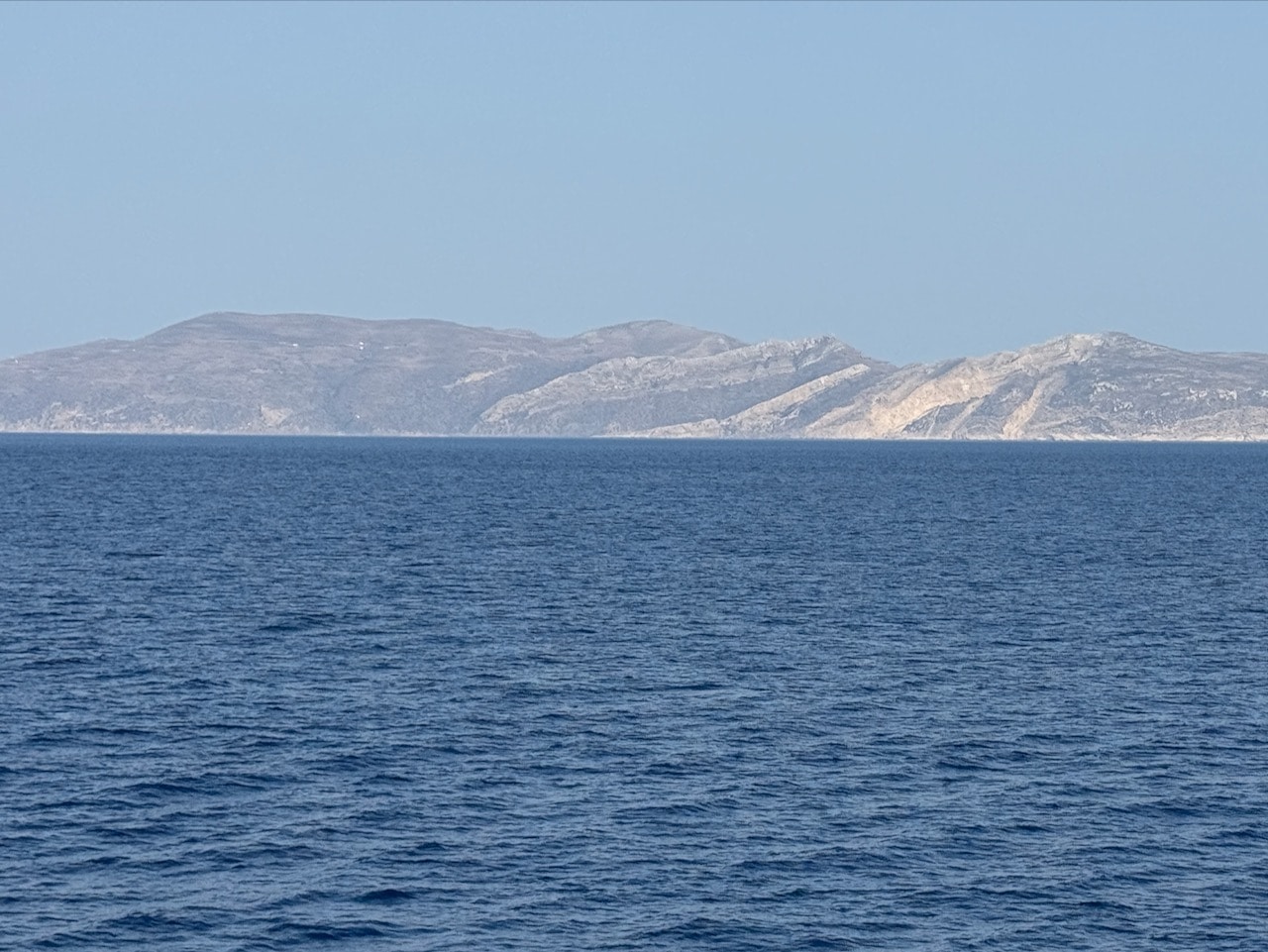
Another theory, with a less dramatic backdrop, says the name derives from a Phoenician word for land strewn with rocks. That is precisely what we saw when we got our first glimpse of the island.
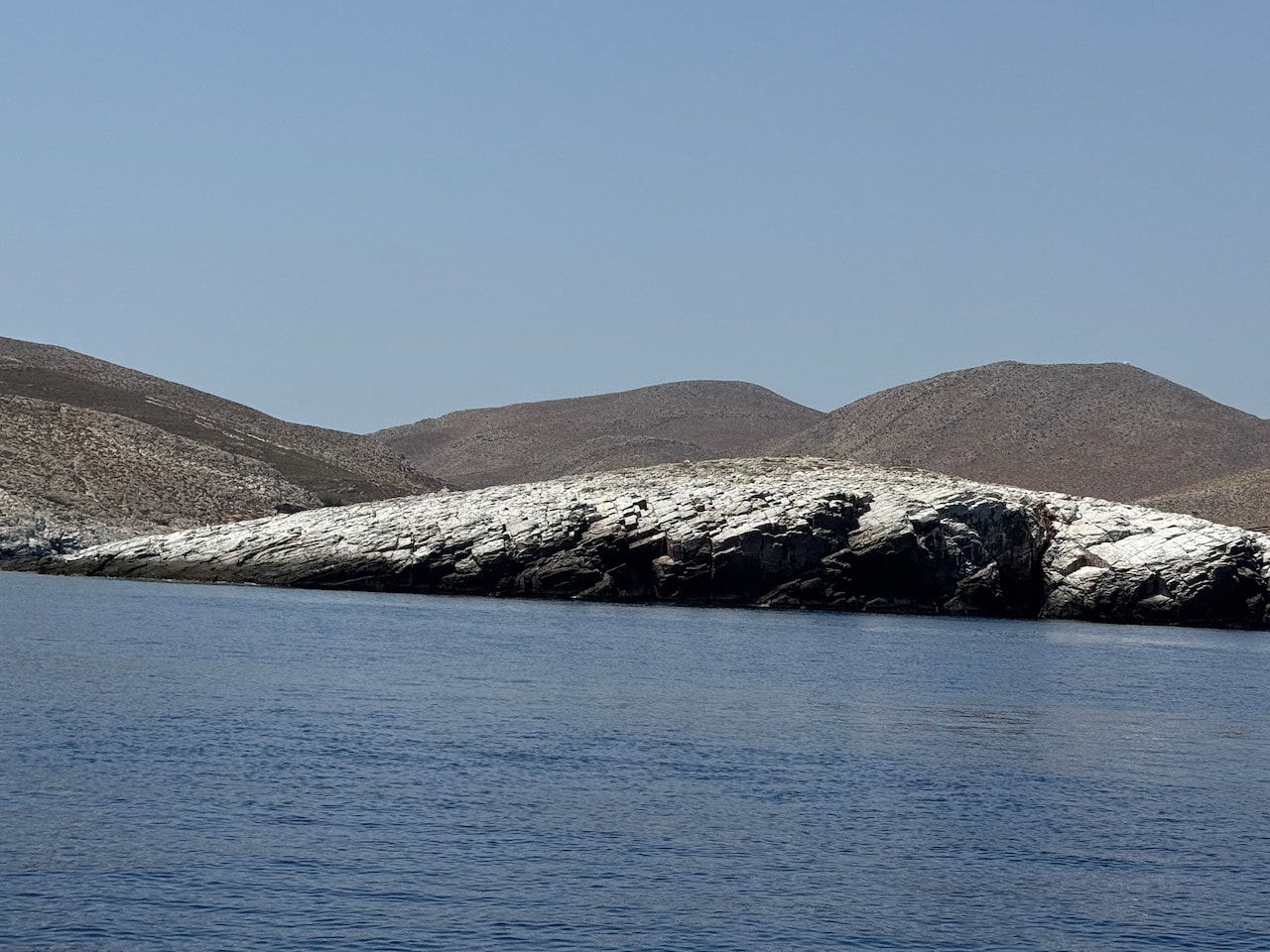
Folegandros at first sight looks rocky and barren, but the island turned out to be a lovely surprise.
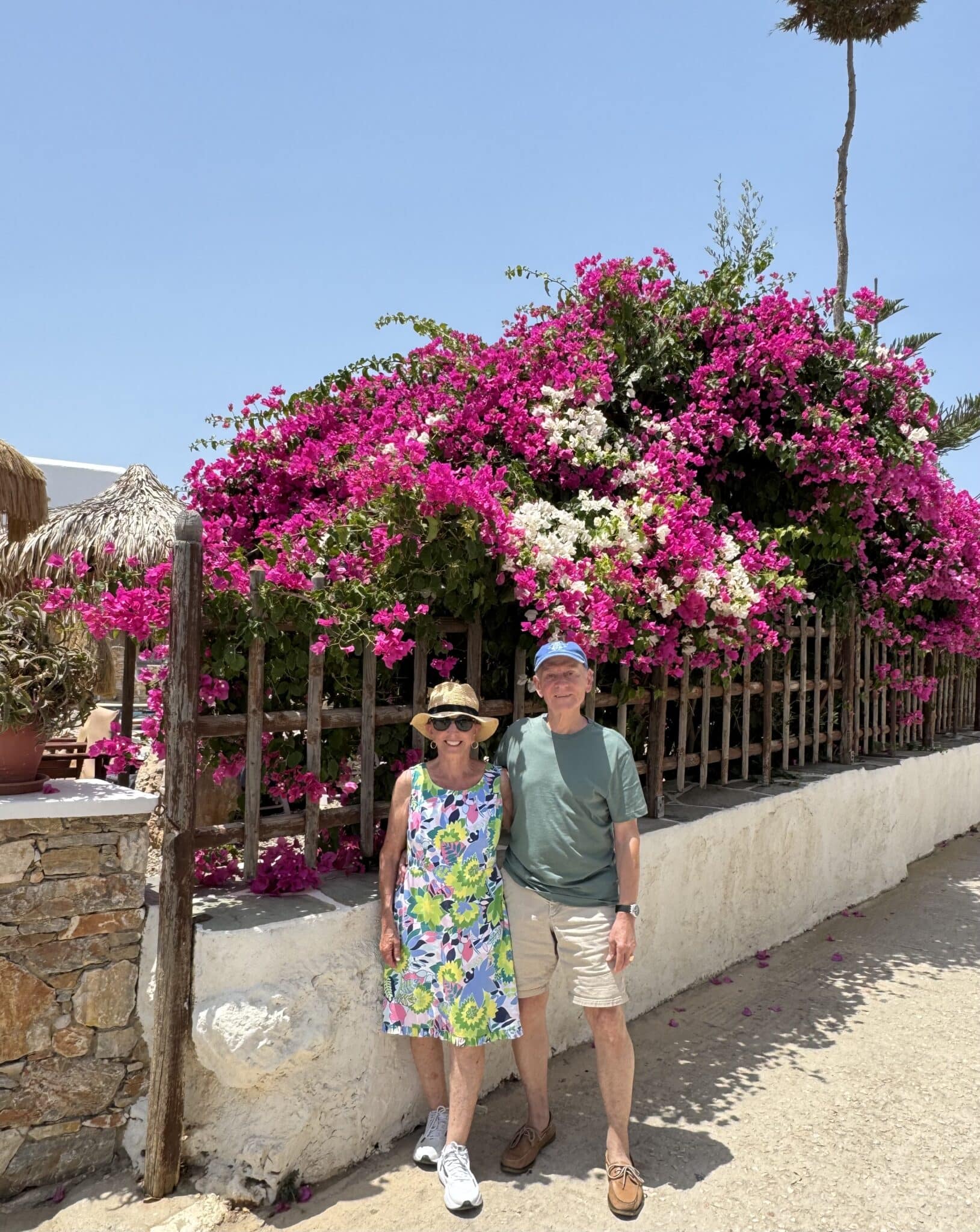
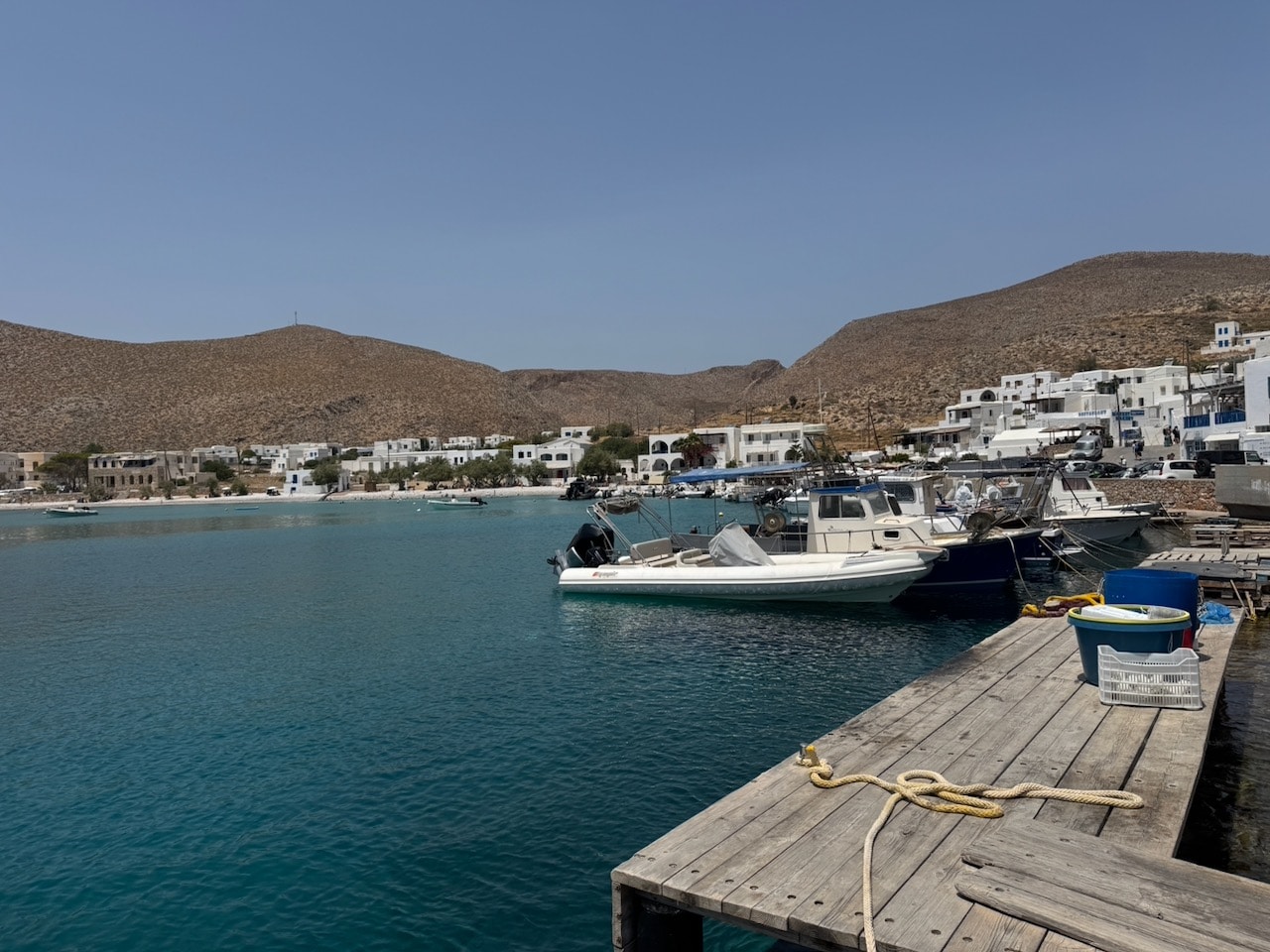
World Traveller had organized an 8:30 a.m. outing billed as “Treasures of Unspoiled Folegandros.” We passed on that and decided to explore by ourselves a little later. The tender dropped us at the small port in the town of Karavostaso where there are some tavernas and hotels. Ferries from the other Cycladic islands and Piraeus stop here too. And it is simply how you get to the island because there is no airport.
A shuttle bus took us up the hill three kilometers to the car-free streets of Chora, Folegandros’s main town and capital.
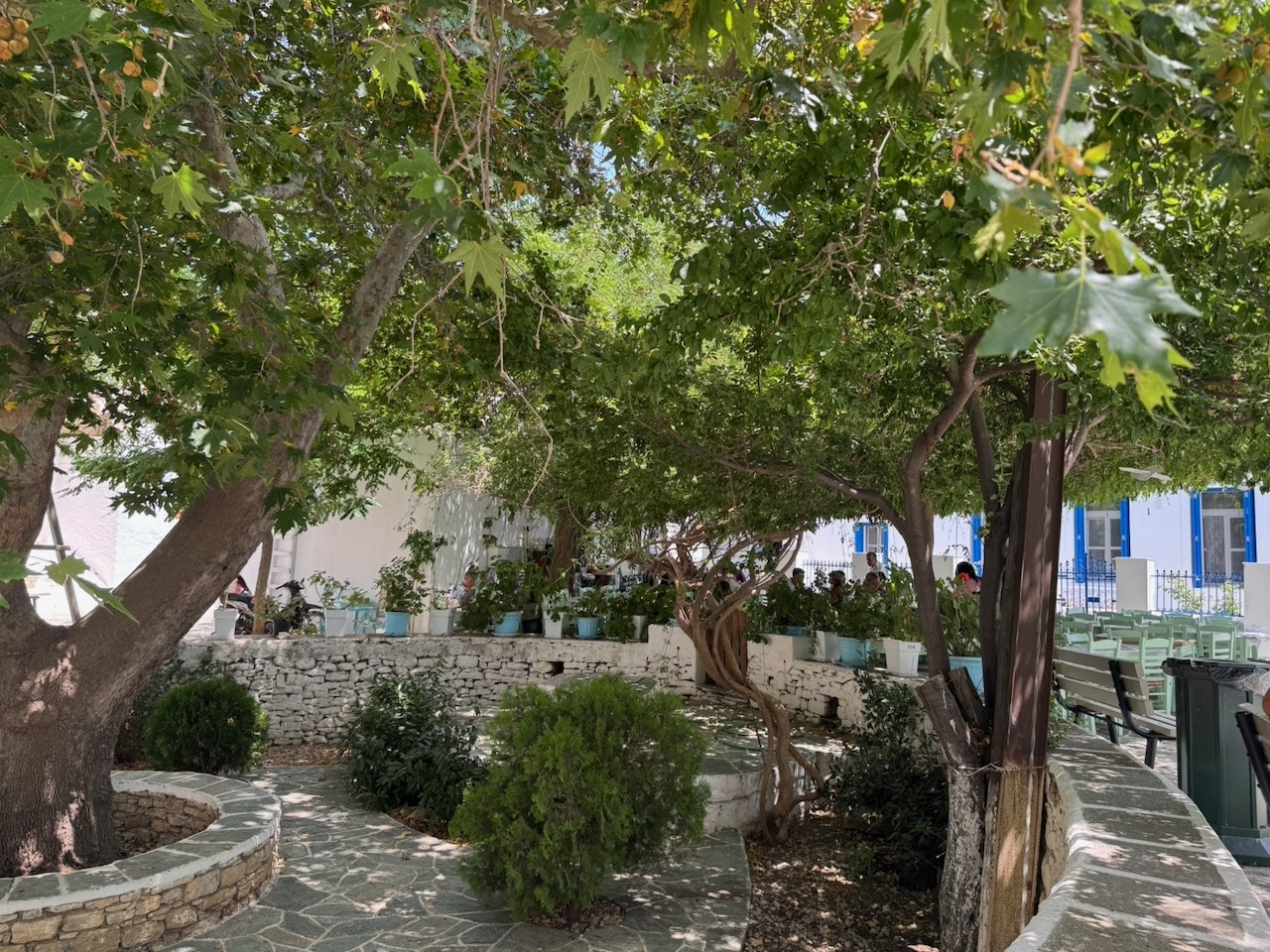
We found an oasis without a horde of fellow tourists.
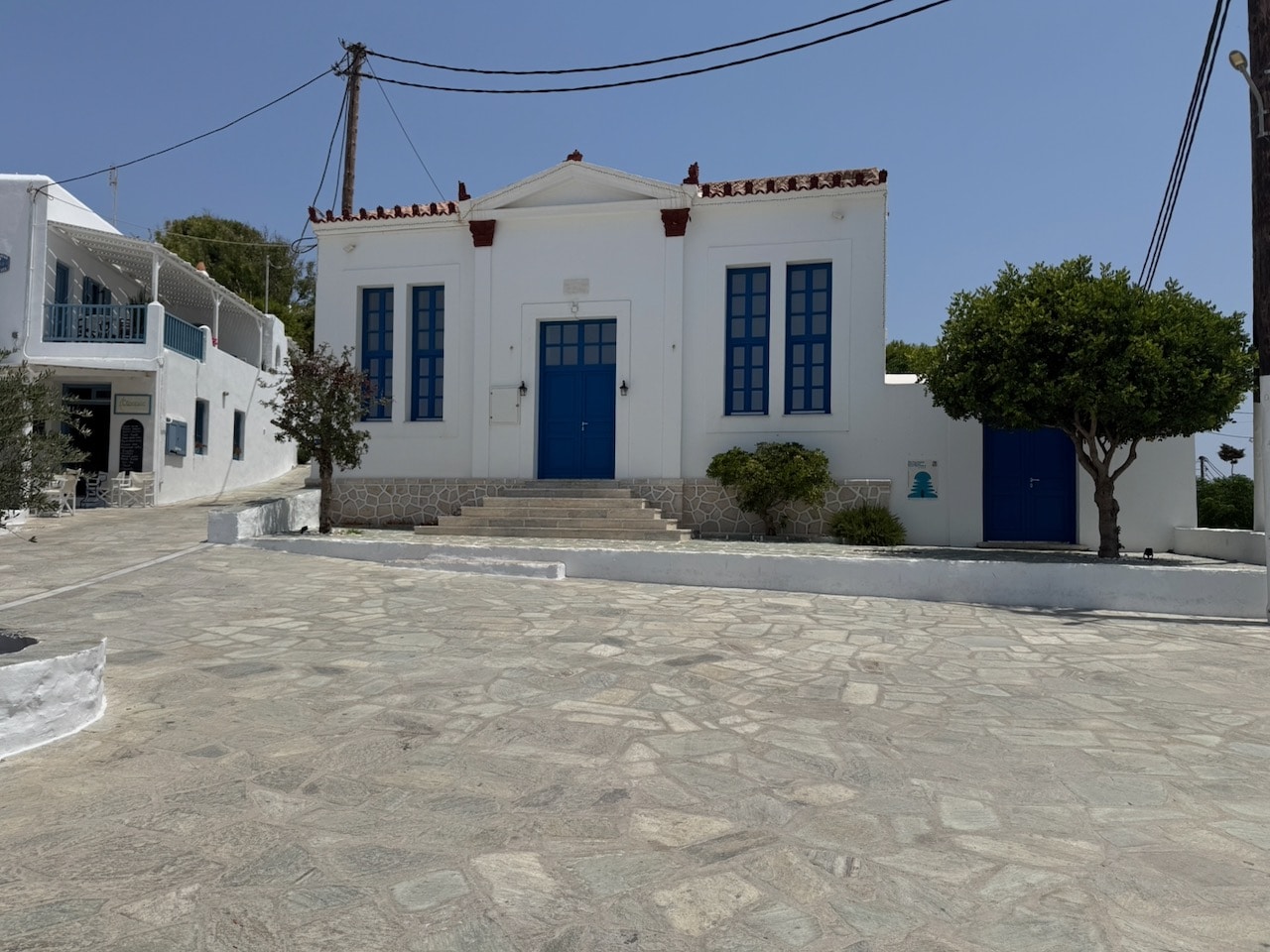
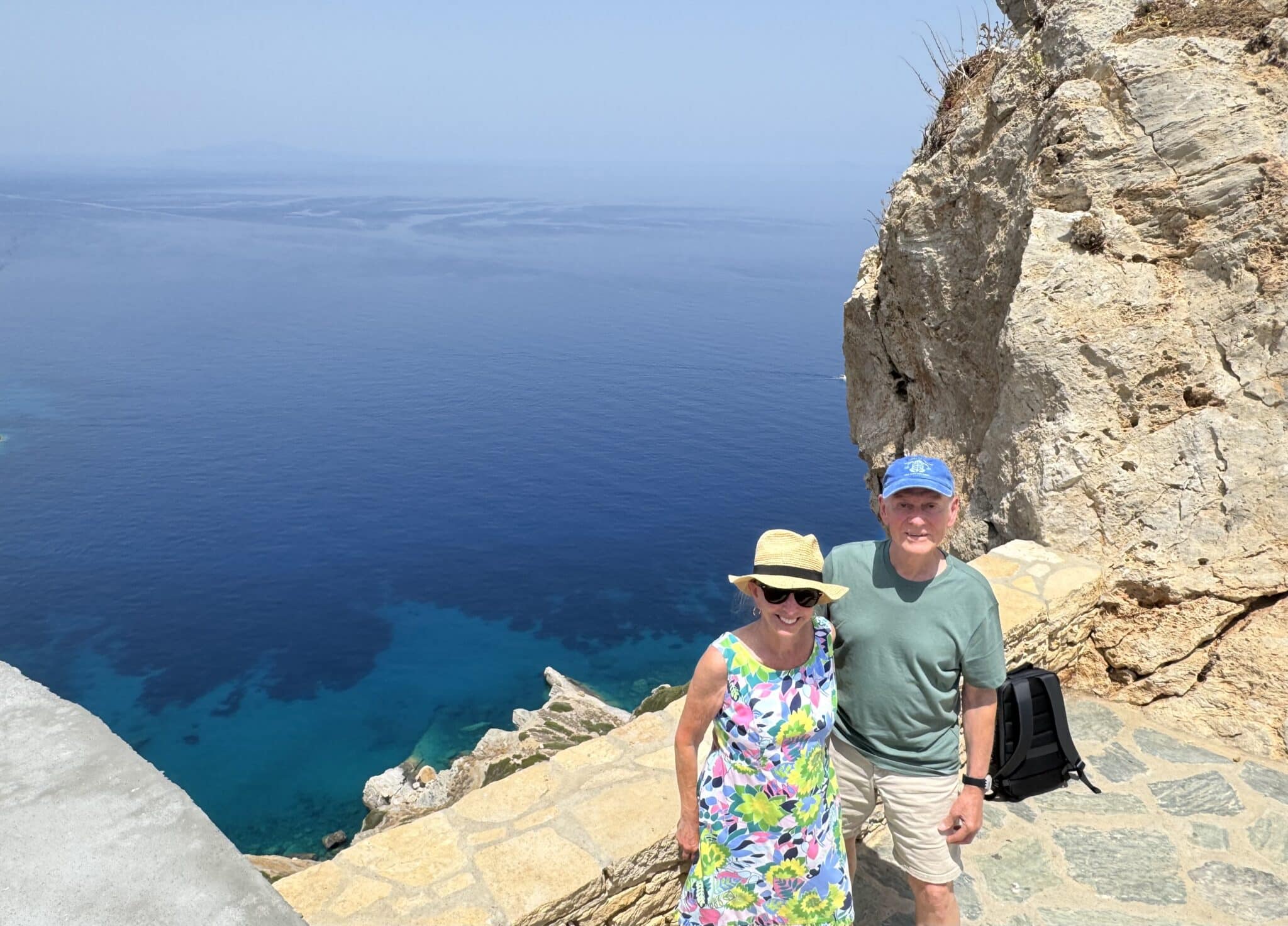
Simple whitewashed buildings with blue doors and window trim sat at one end of the town square. On the other side we peered down a spectacular 660 foot cliff.
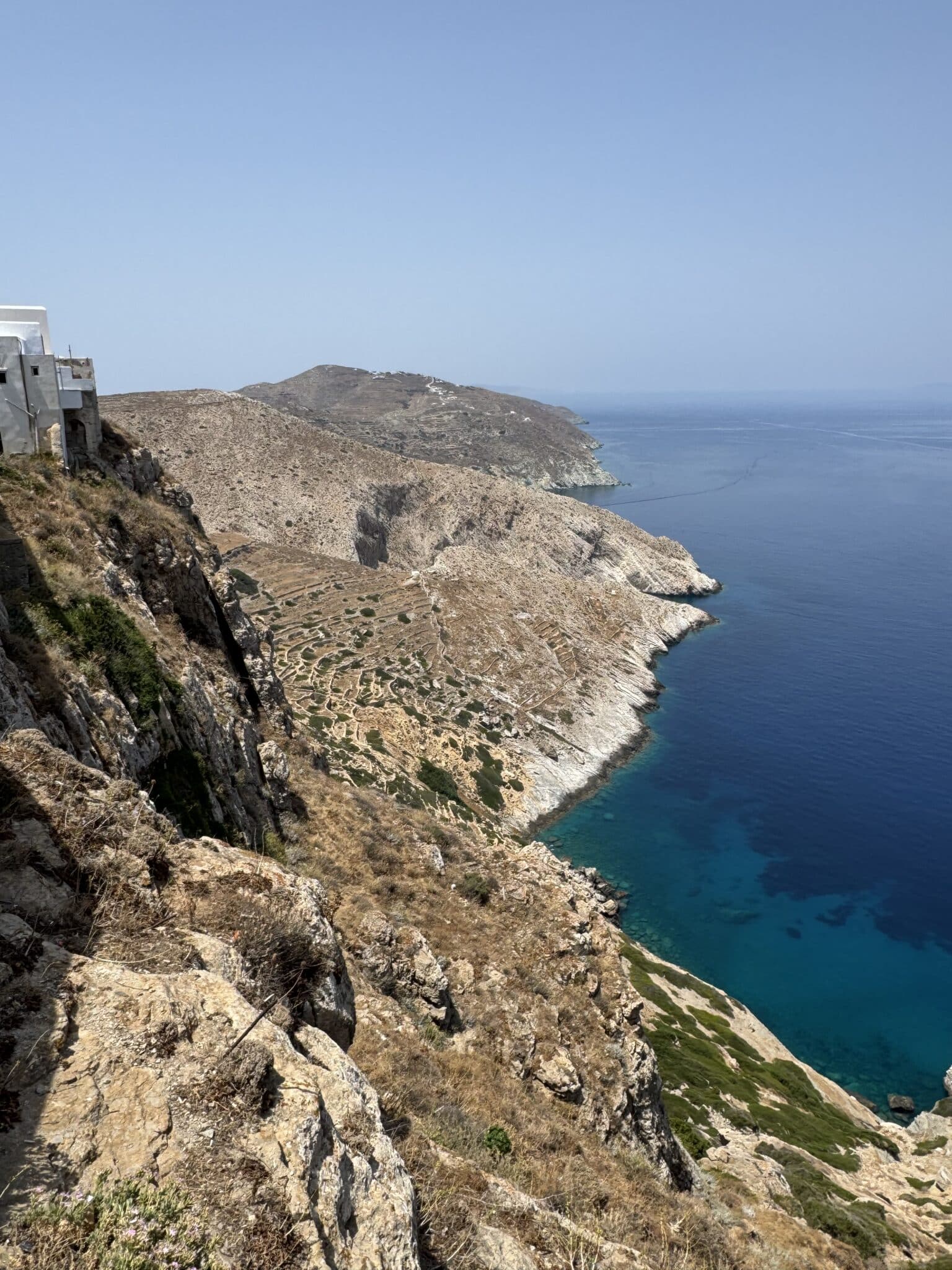
In the time of Cretan rule, King Minos used Folegandros as a place of exile. The Romans had the same idea. They banished criminals and prisoners here when they controlled the islands. Those early residents established Chora high above the sea. When the Venetians conquered the islands, they built a fortress and stayed for 300 years until the Ottoman-Venetian war. Turkish rule didn’t add prisoners, it collected taxes and the Turks remained in charge until Greek unification in 1830.
But Folegandros was used again as a prison island of sorts in 1930s. During this era the Greek government sent political exiles, communists and enemies of the authoritarian Metaxas regime.
Today, it is simply beautiful and peaceful and calm. Even the little grocery store looked lovely.
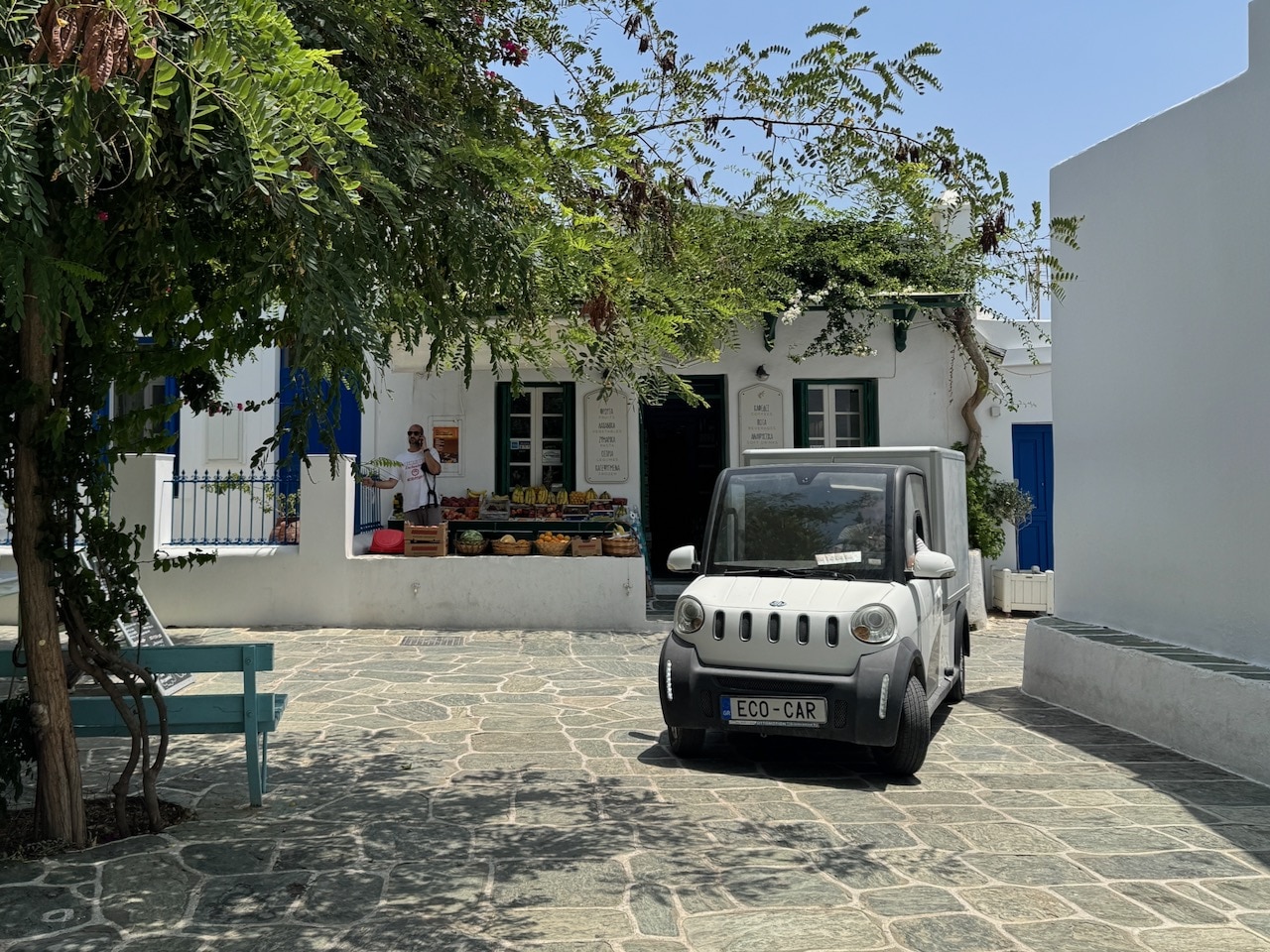
It’s home to fewer than 800 people. There’s plenty of breathing space here.
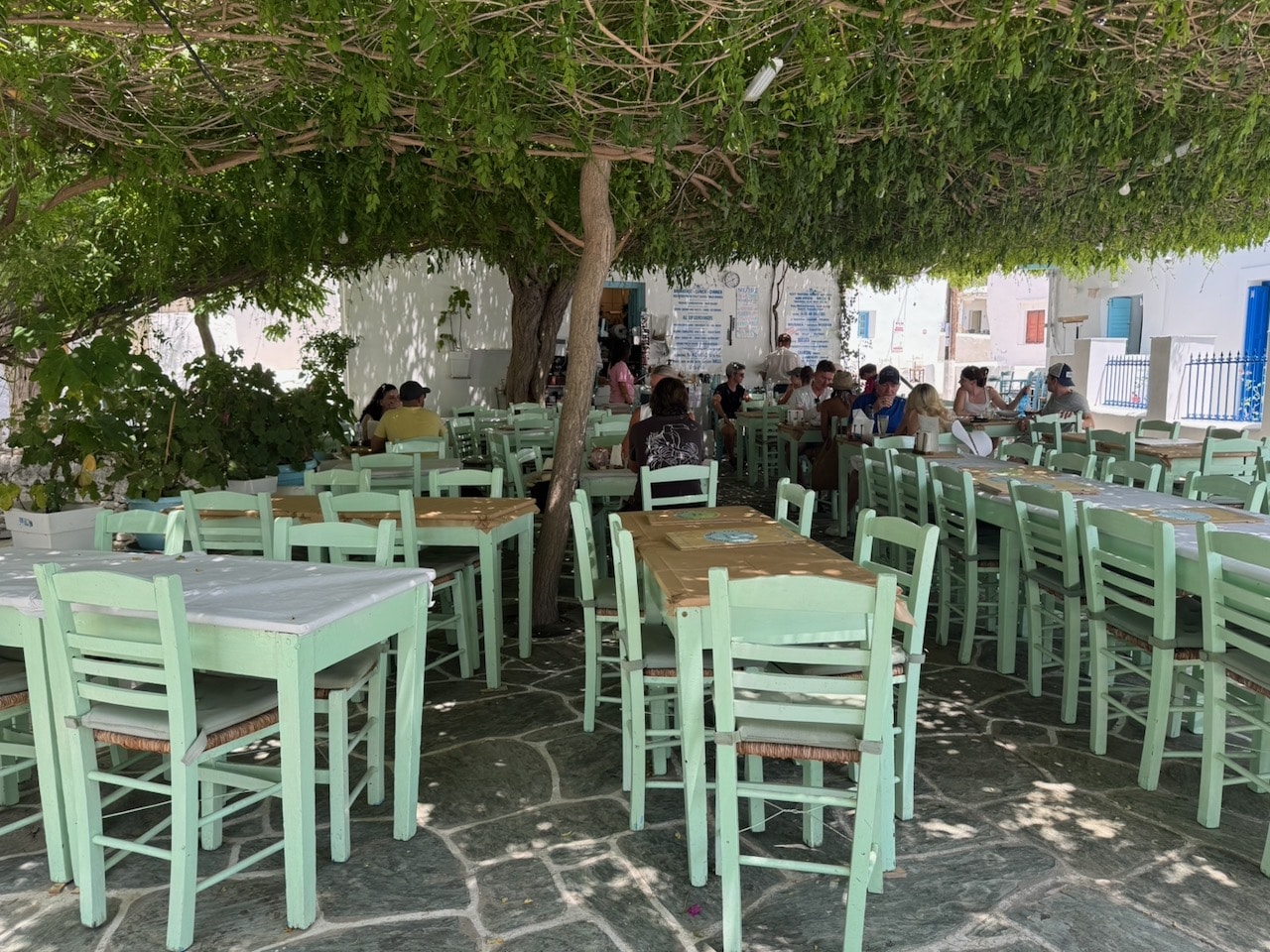
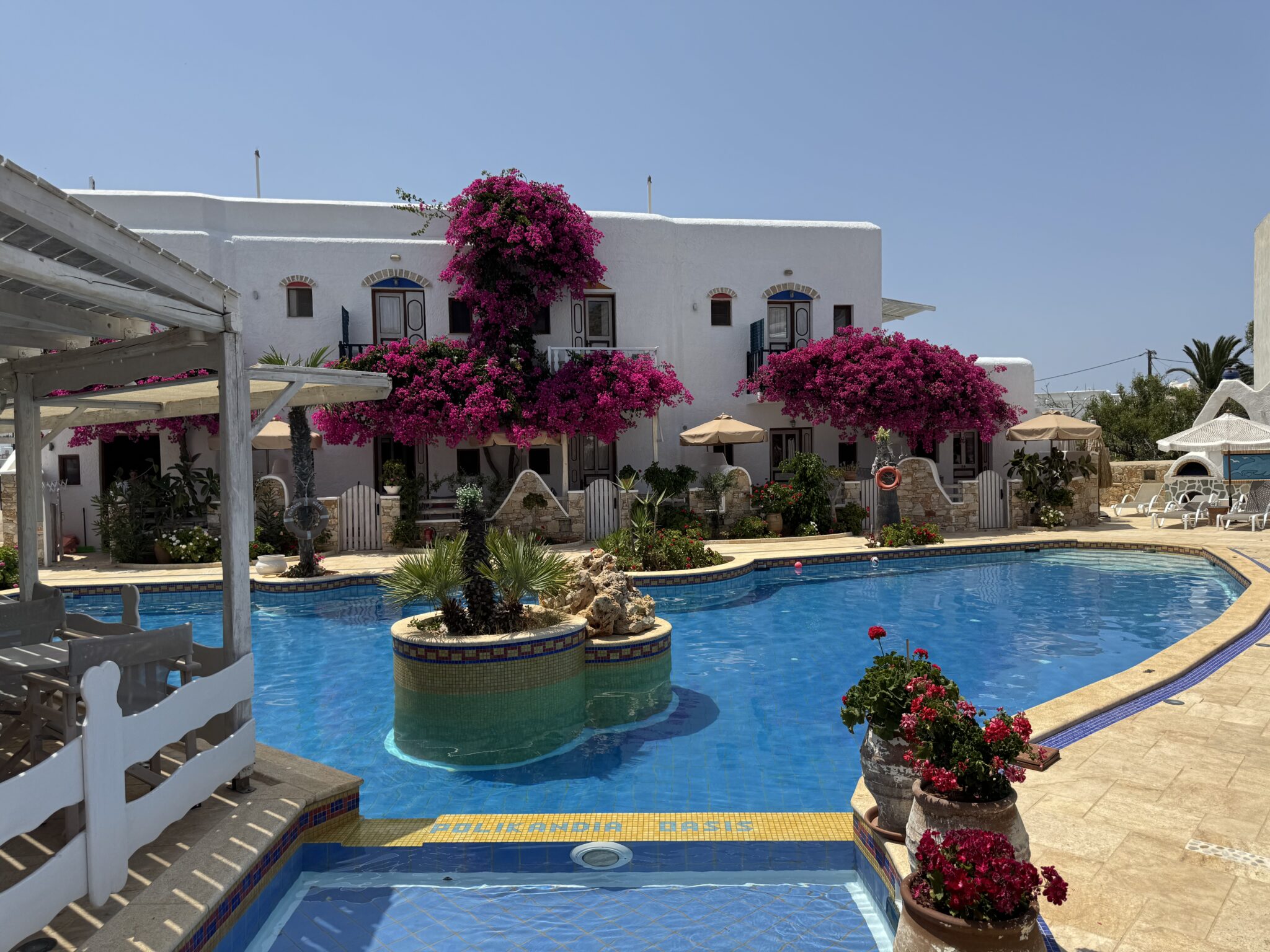
We thought we might want to return and stay for a bit and that idea was reinforced when we met a couple from Los Angeles. We shared a taxi back down to the port, and they explained that they had been coming to Folegandros for ten summers, each time staying for ten days. There are, we found, pretty hotels and B&Bs on this island that cater to vacationers seeking peace and quiet.
Before we left, one last photo.
Back on board the World Traveller, we hit the small salt water pool on the top deck for a swim. That night the boat’s cruise director Lucie, from Czechoslovakia, demonstrated her rare mix of talents by singing and playing her electric cello as we and our fellow passengers took to the dance floor. As we danced, the World Traveller moved north toward the Sporades islands and Skiathos.
We woke up on Thursday morning anchored off Skiathos.
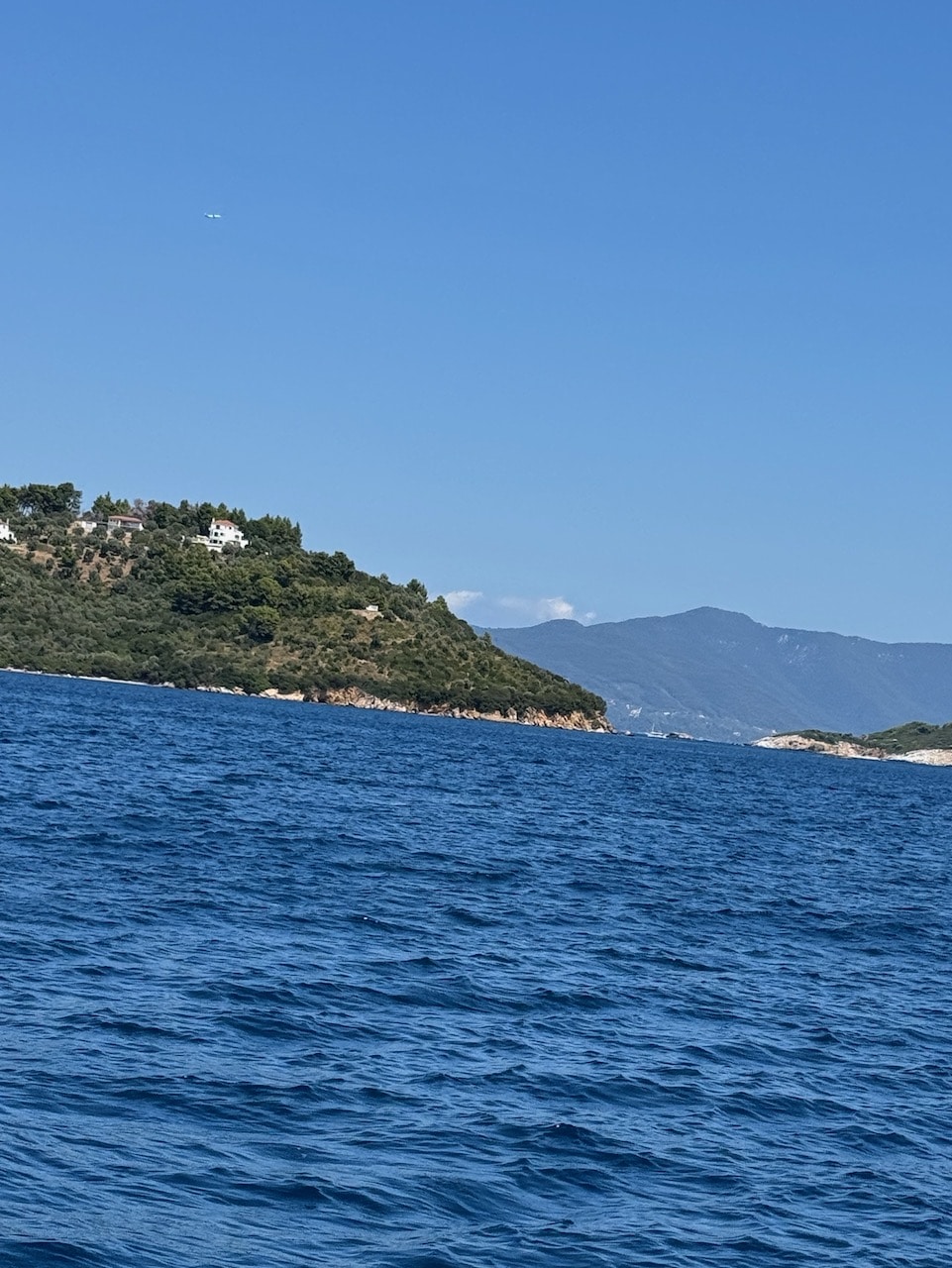
The greenery we saw immediately signaled that Skiathos was different than Folegandros. It’s close to the Greek mainland, with about 6,000 residents and is the island where “Mama Mia” was filmed. Yet when the tender dropped us off in the pretty port it seemed refreshingly normal compared to the chaos we had seen in Santorini.
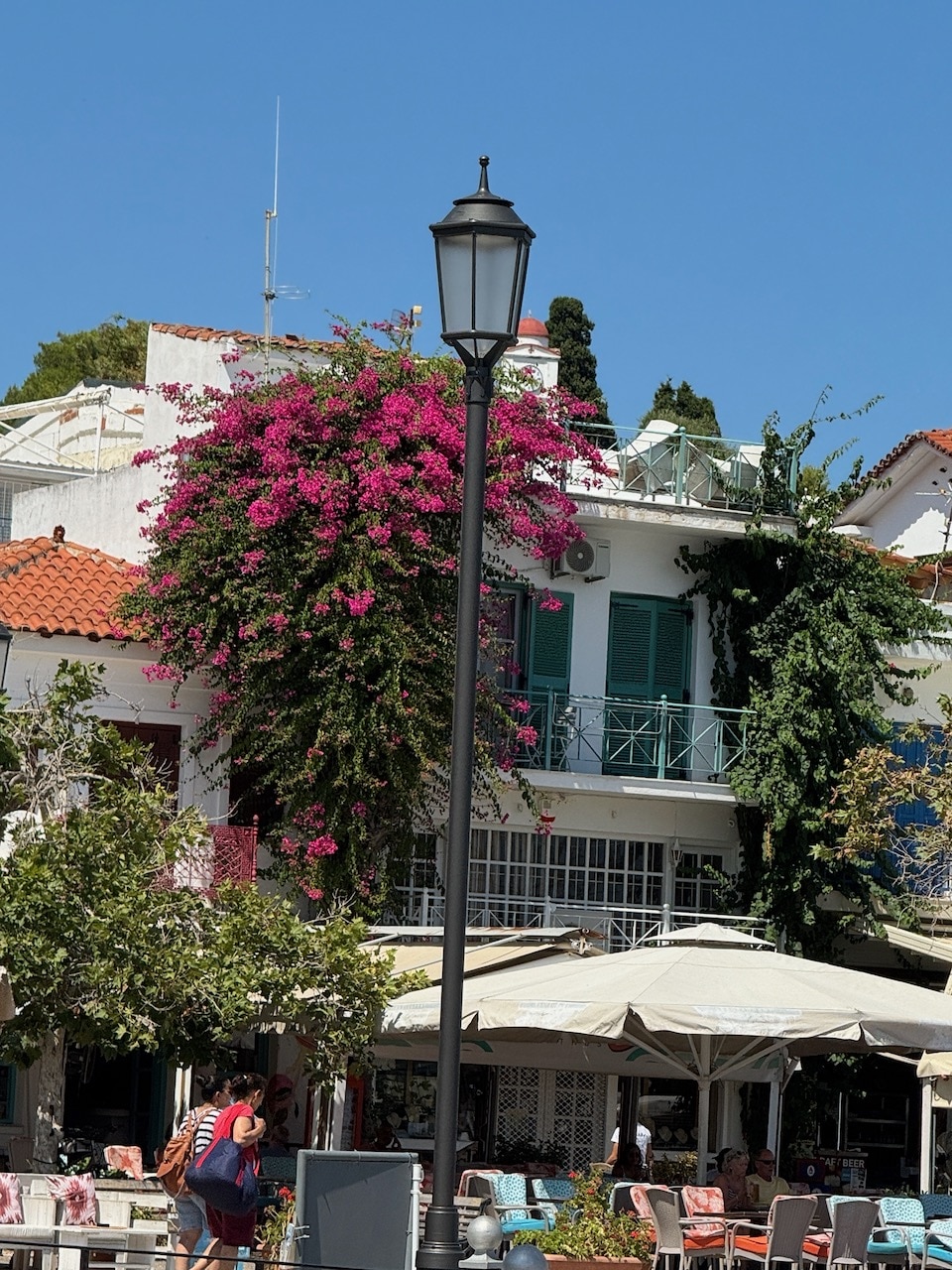
Still, plenty of places catered to tourists like us. The island seemed to absorb us all in a relaxed and enjoyable way. It didn’t feel overwhelming.
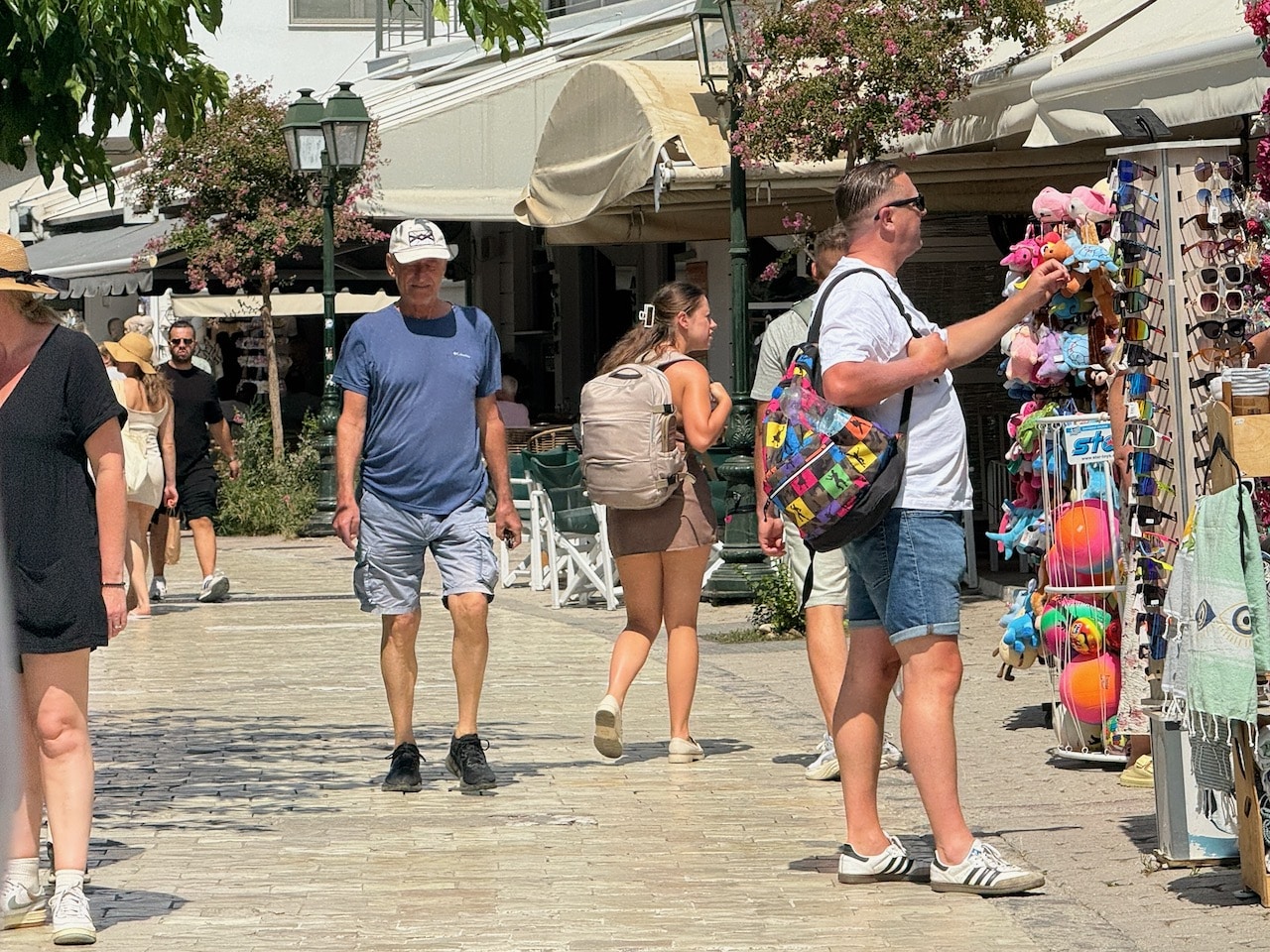
We did not join either of the 8:30 a.m. excursions to explore Skiathos and instead went off on our own. We found casual places where people congregate.
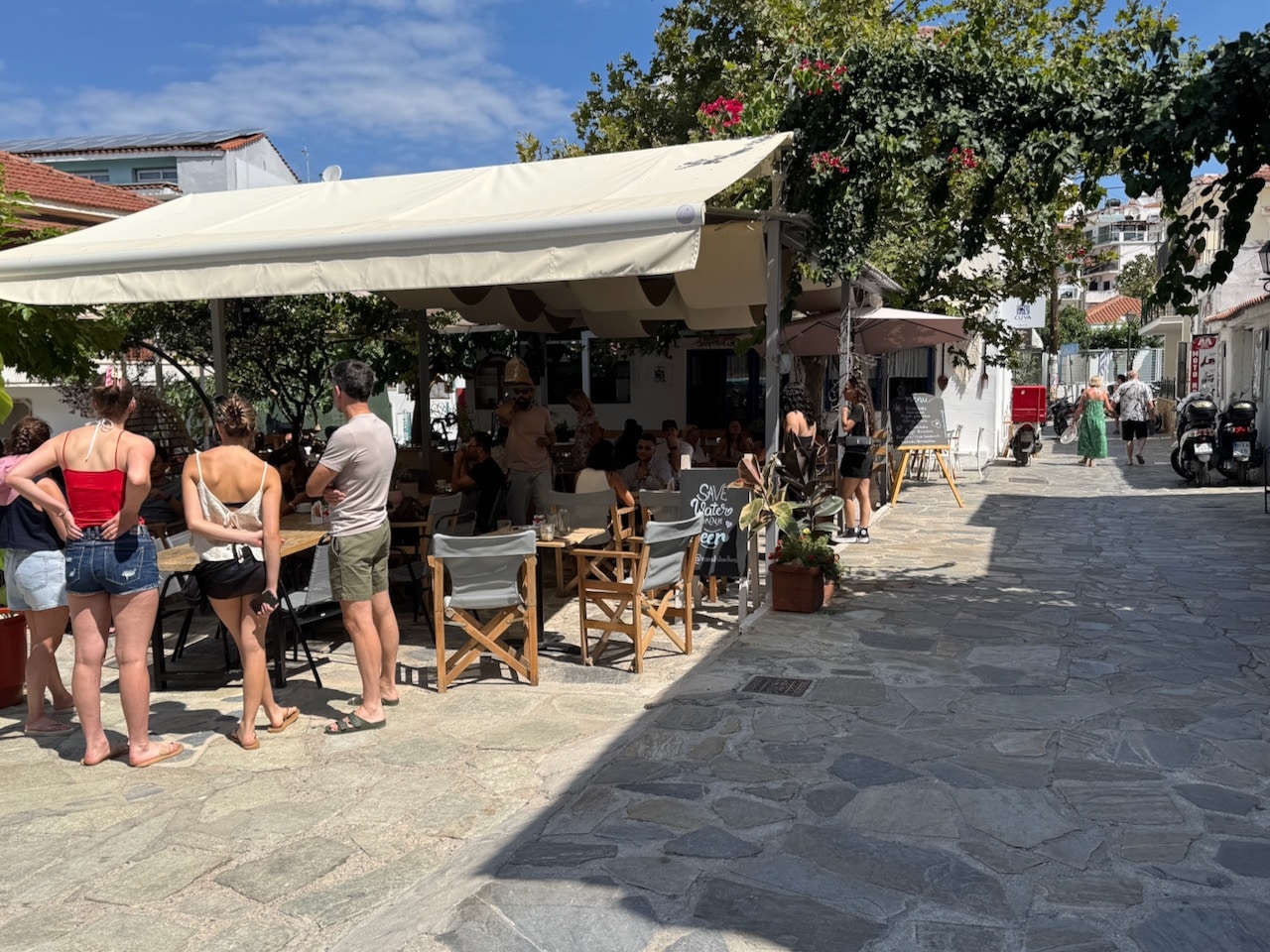
And we saw small restaurants on narrow streets preparing for the midday meal.
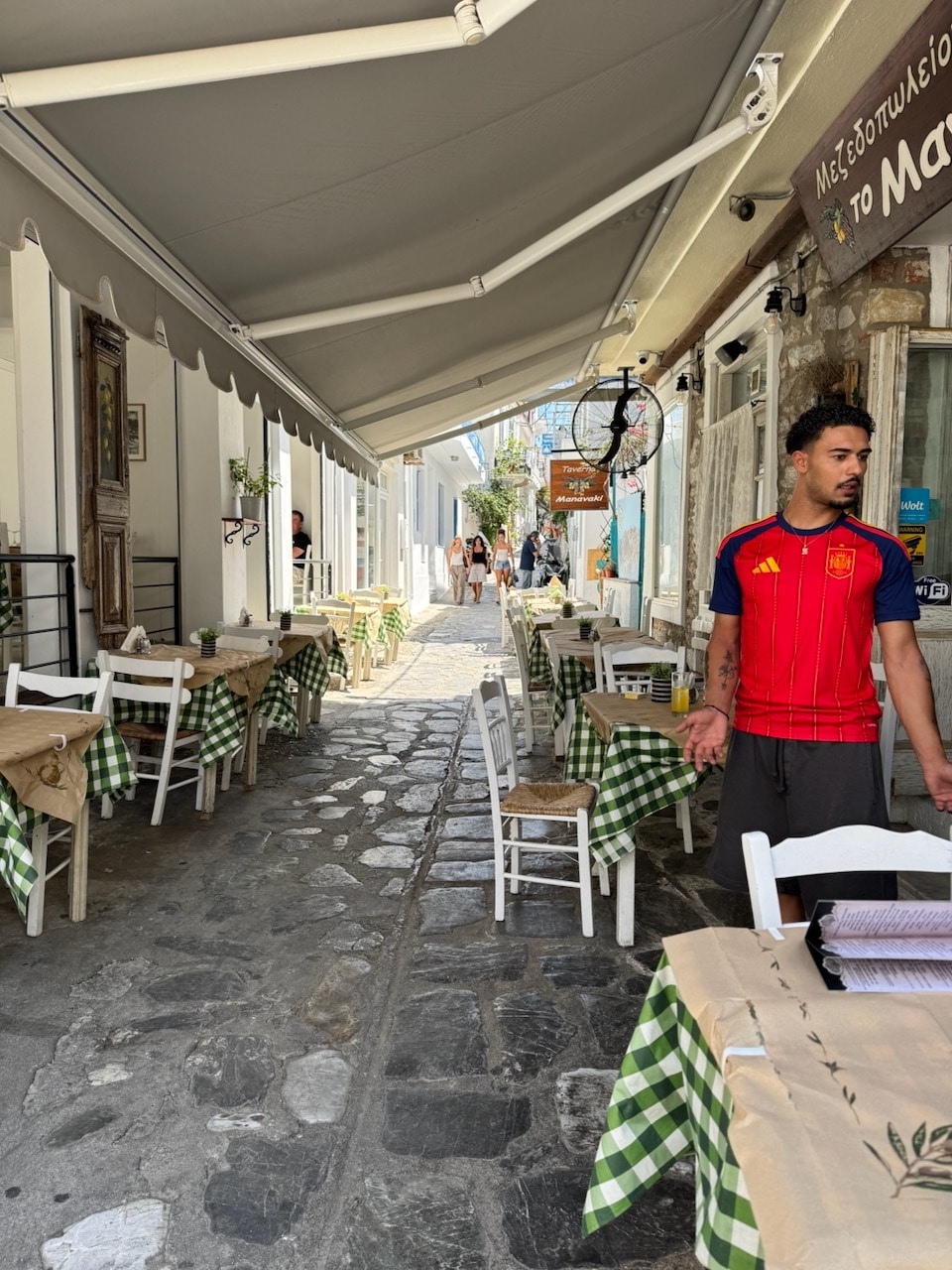
Motor scooters, the ubiquitous means of transportation, buzzed along the cobbled alley-like streets.
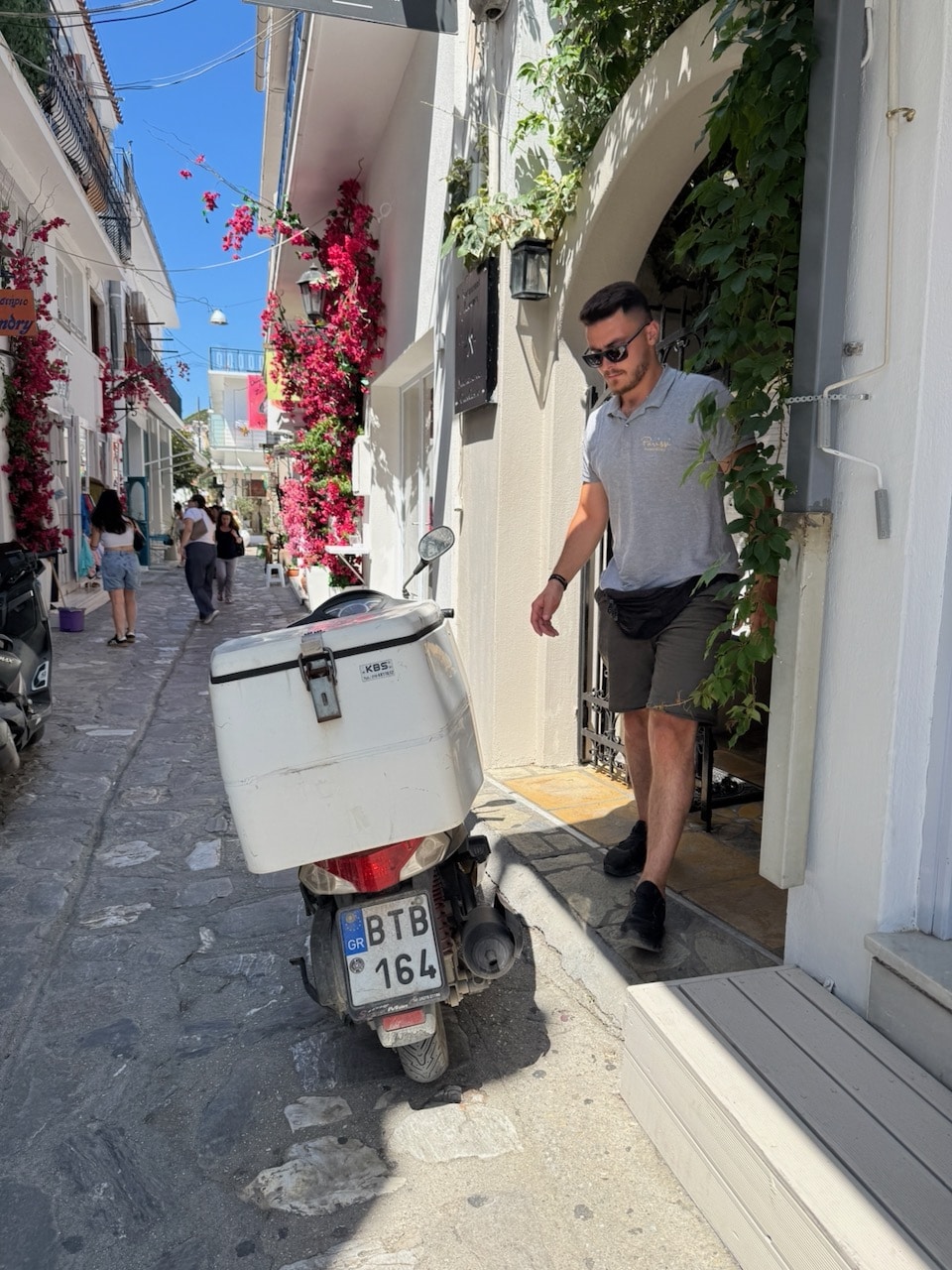
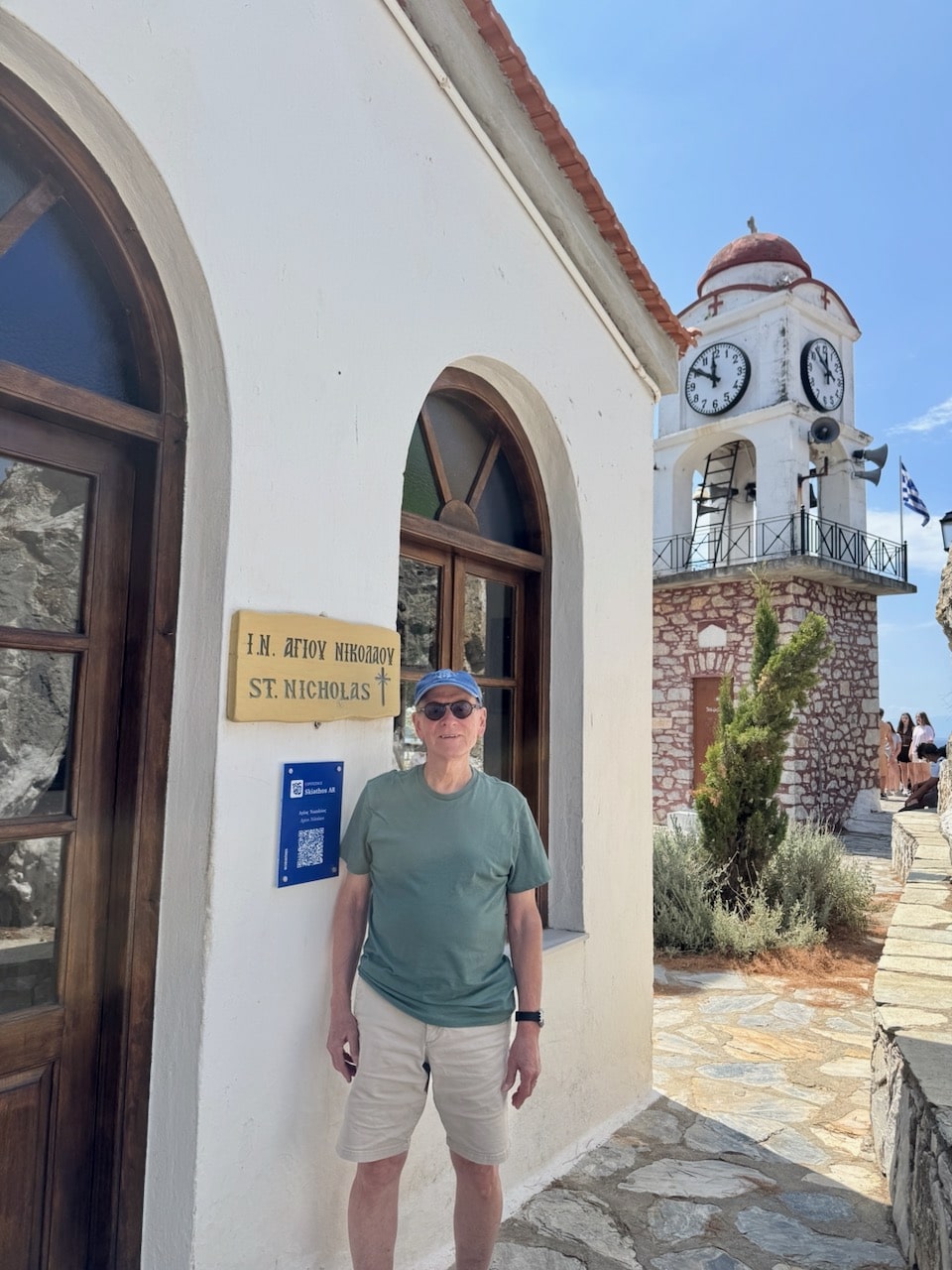
From the interior of the town we climbed winding, almost crumbling stairs with perhaps 200 steps to find St. Nicholas Church and the clocktower. The church is a featured player in “Mama Mia.” And Nick took a star-turn here for his namesake and the patron saint of sailors.
We also got a great view of the town and its whitewashed houses and red-tile roofs.
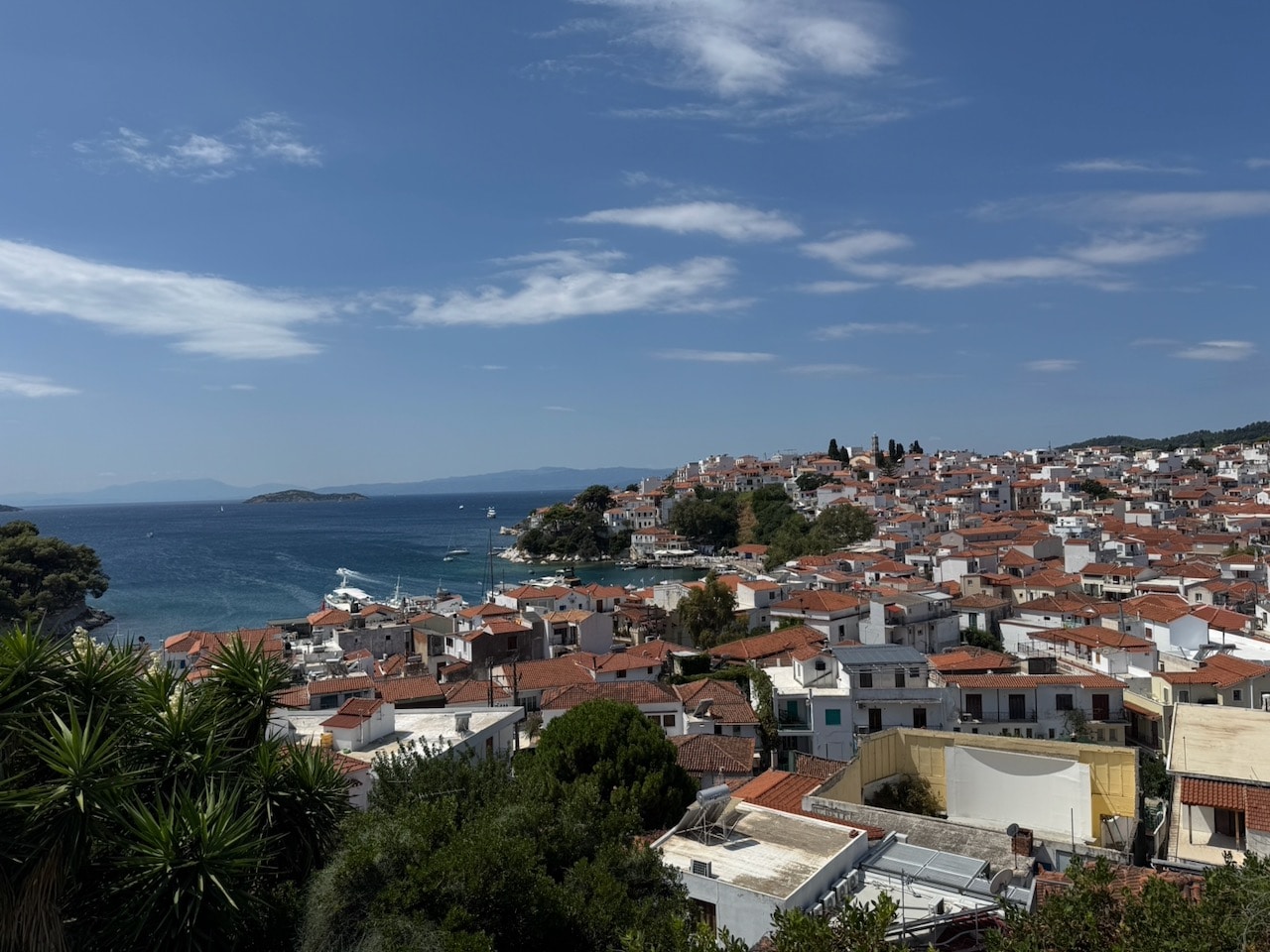
The hillside provided a good view of the ferry, the way many visitors travel between the Greek mainland, Skiathos and other islands.
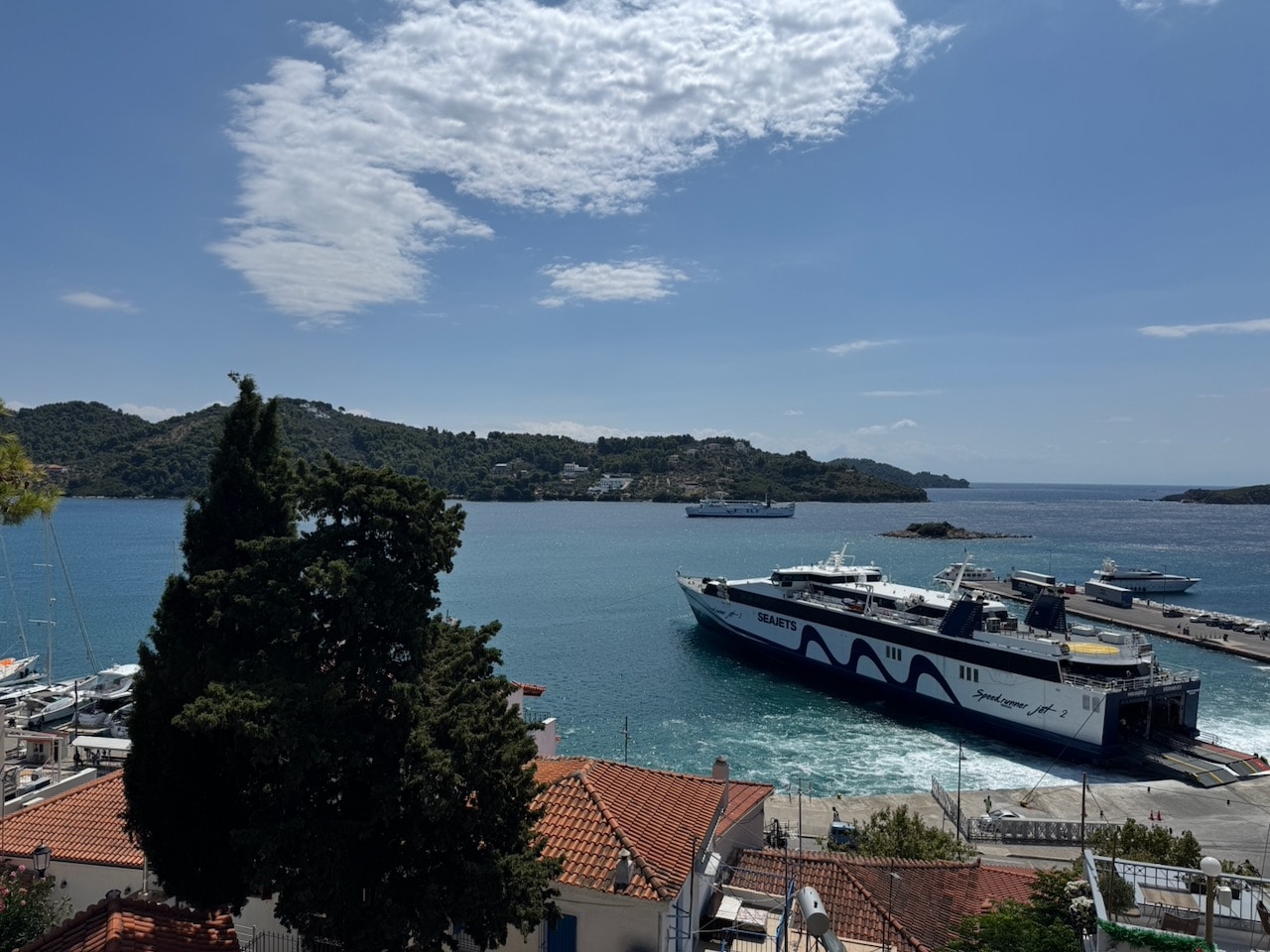
Going back down, we found another set of stairs that, while twisty, seemed less steep and led directly into the harbor area where we stopped at a café.
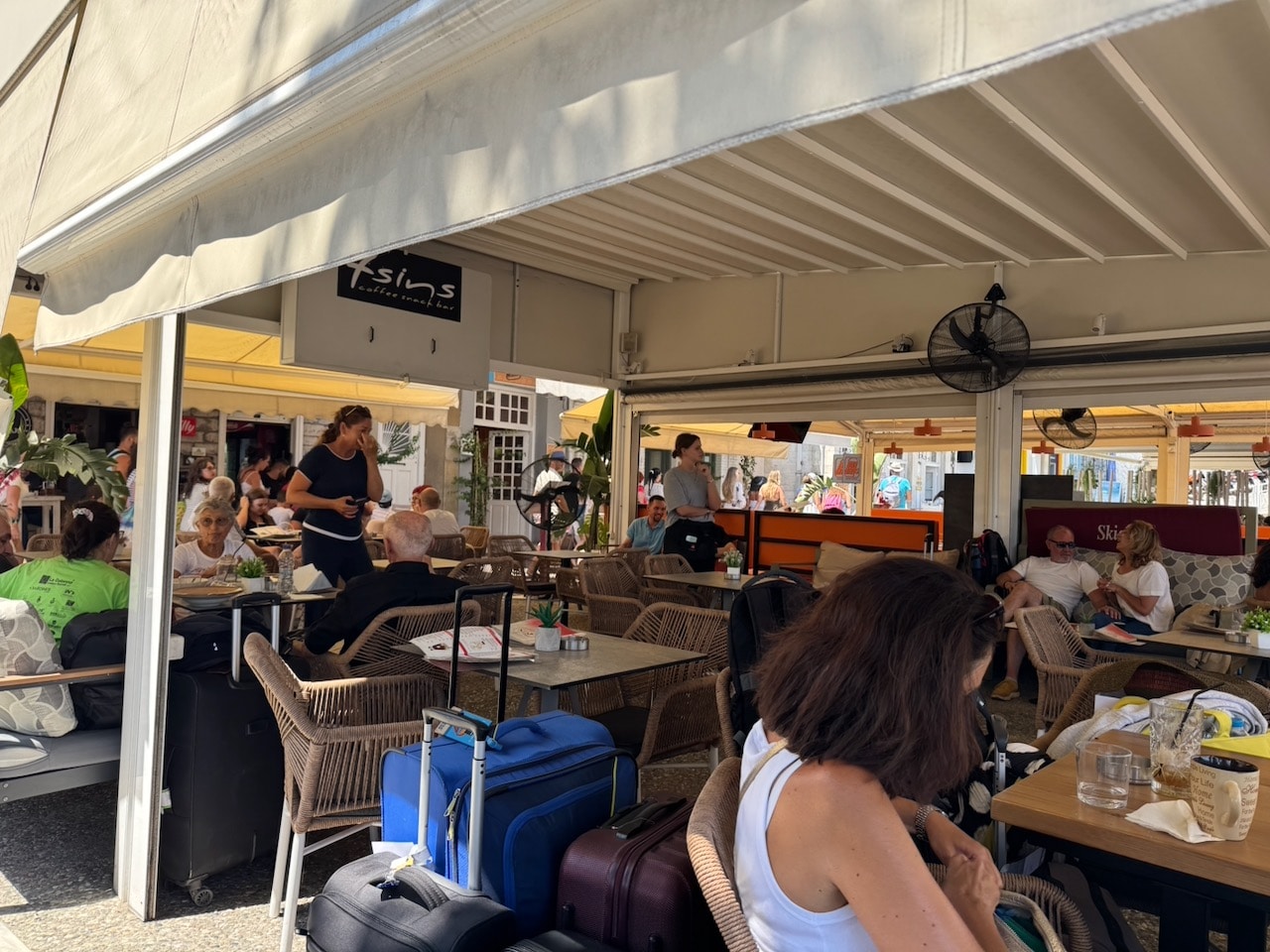
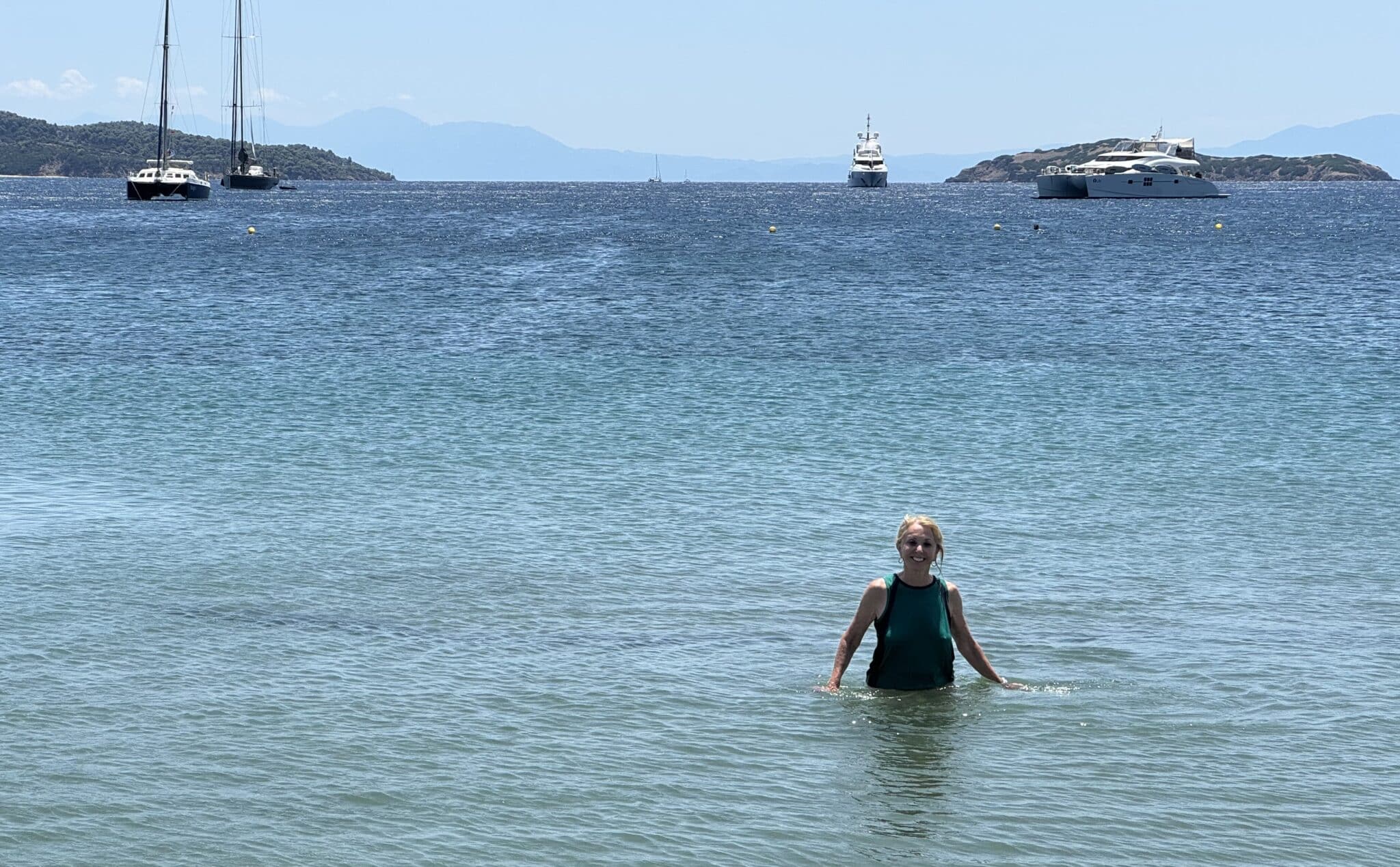
We wanted to go swimming in the Aegean and asked a server to recommend a convenient beach we could reach easily by taxi. Megali Ammos was the answer, and she called a taxi for us. The beach is a narrow crescent of sand along the Aegean.
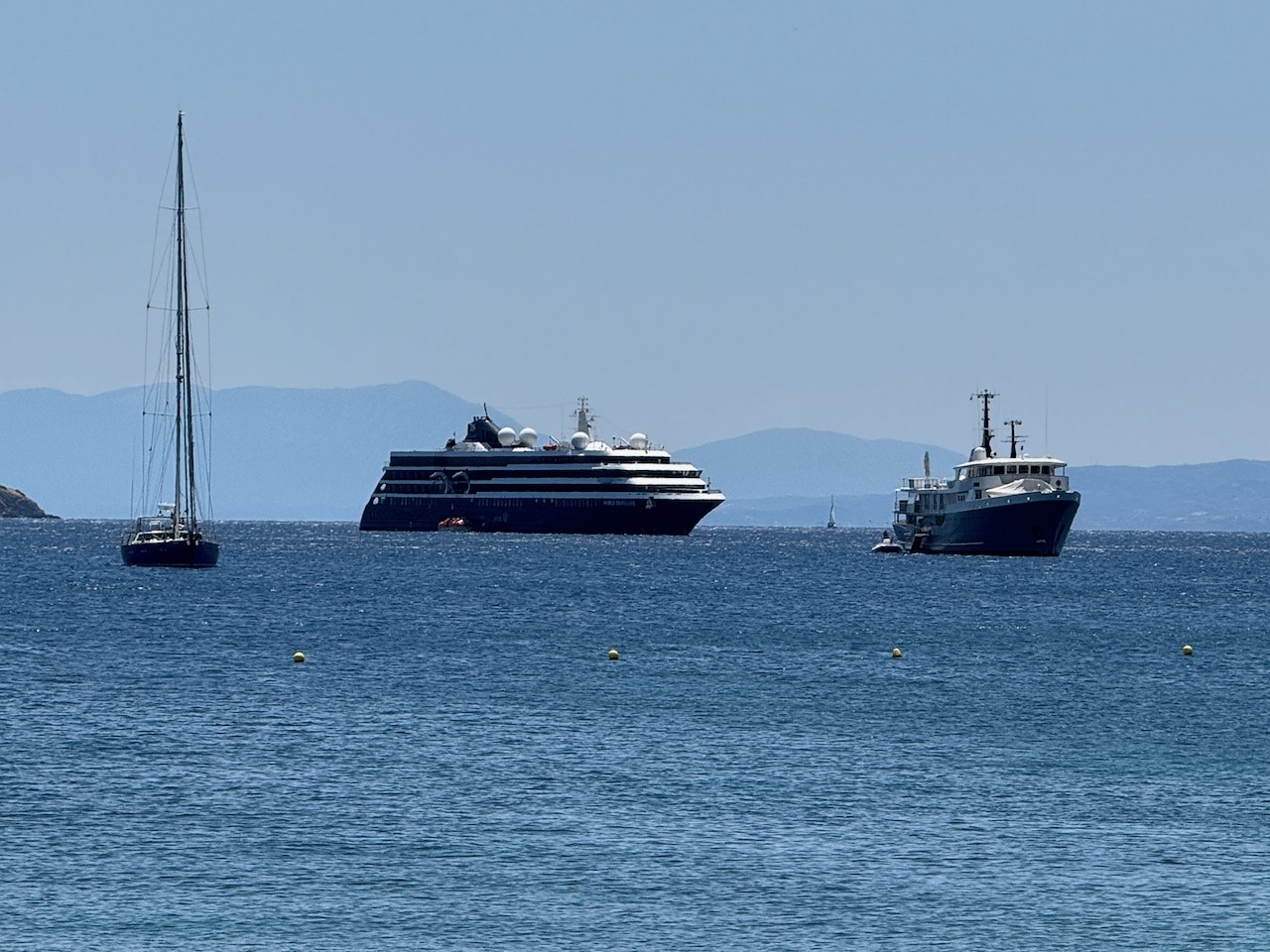
To our surprise, World Traveller, anchored offshore, was the first thing we saw when we arrived at the beach. Hotels and restaurants lined the cove.
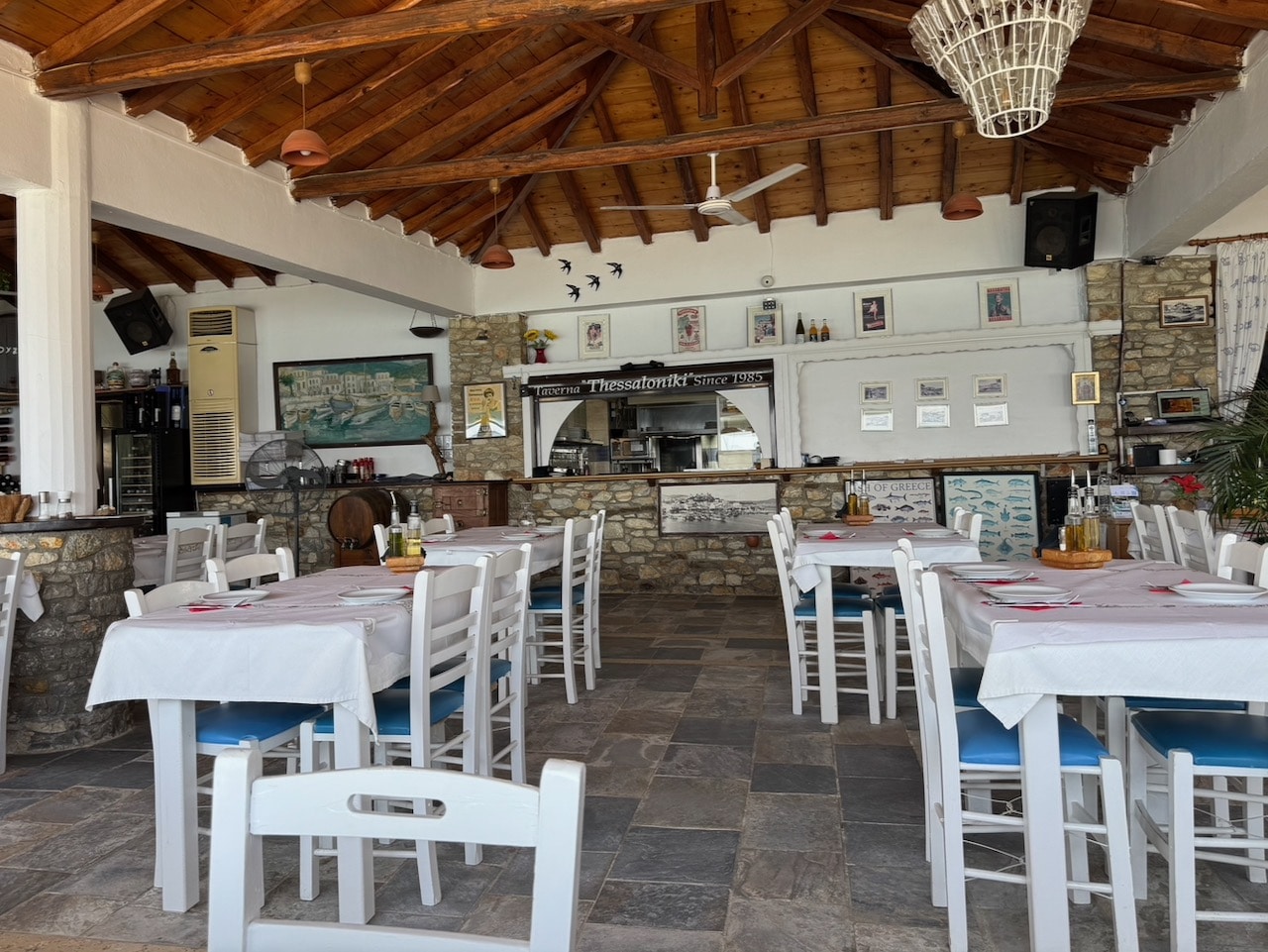
We spotted umbrellas and beach chairs in front of Taverna Thessaloniki, and sure enough were able to rent a set of chairs and shade.
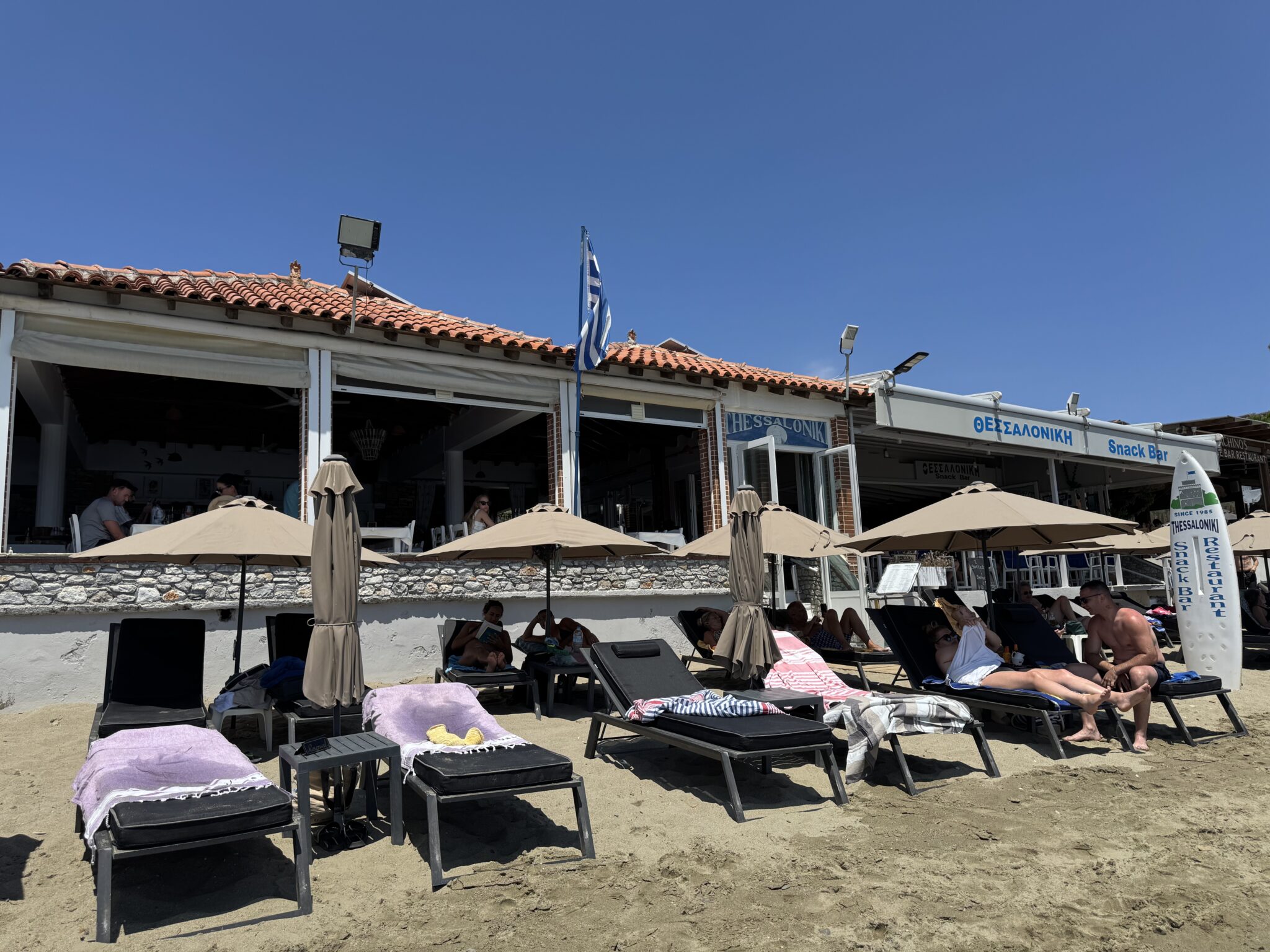
We learned the pleasure of renting the year before in Otranto, in Italy’s Puglia region, when we joined a beach club for two days so that we could swim and kick back. This time, we rented for the afternoon, and changed into swimsuits in the taverna’s restrooms.
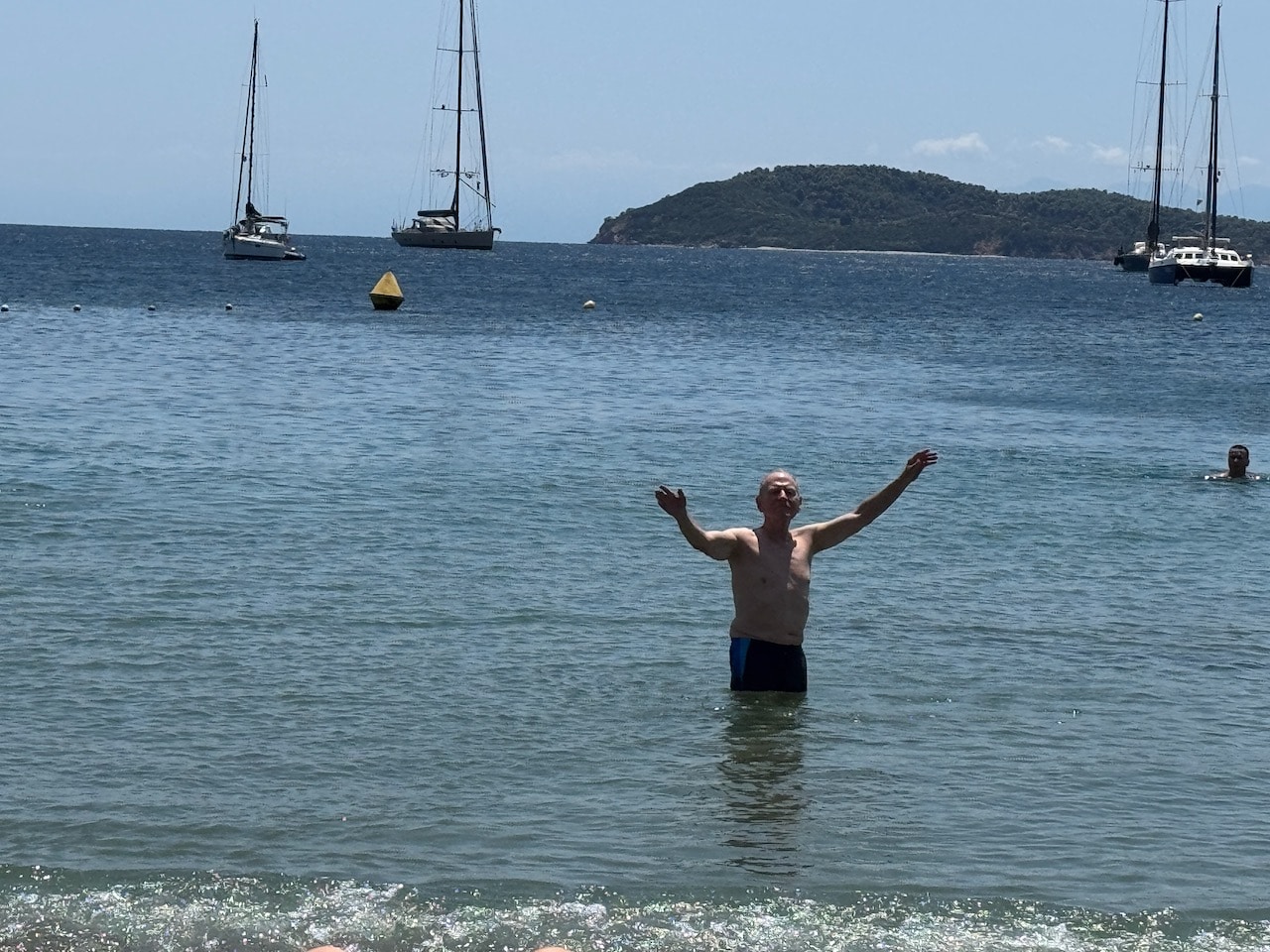
We took turns enjoying the sea.
We almost missed the lunch hour and had the good taverna Thessaloniki practically to ourselves.
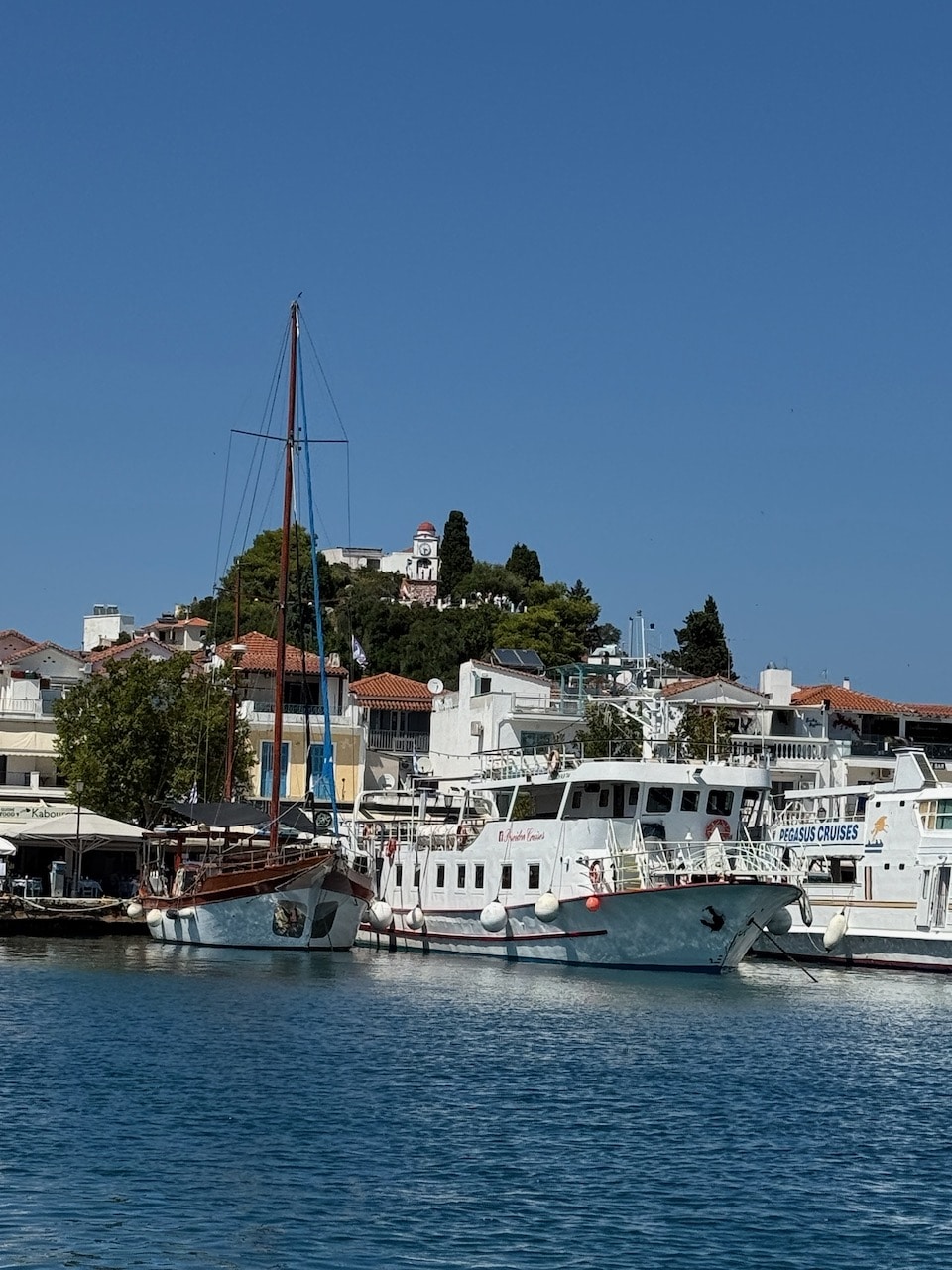
Back at the port, waiting for the tender to return us to World Traveller, we mused about returning to stay on Skiathos and getting to know it. The downside of visiting by cruise ship is that it gave us only a drive-by acquaintance of the islands. In a way, that was good because it left us wanting more. But still you wished you had a little more opportunity to really get to know the place and appreciate the culture and the food.
We also realized that a cruise is a lot about life onboard the ship and the easy pleasures that offers. There was no casino and no marquee entertainment, but this company worked hard to provide activities that suited its guests.
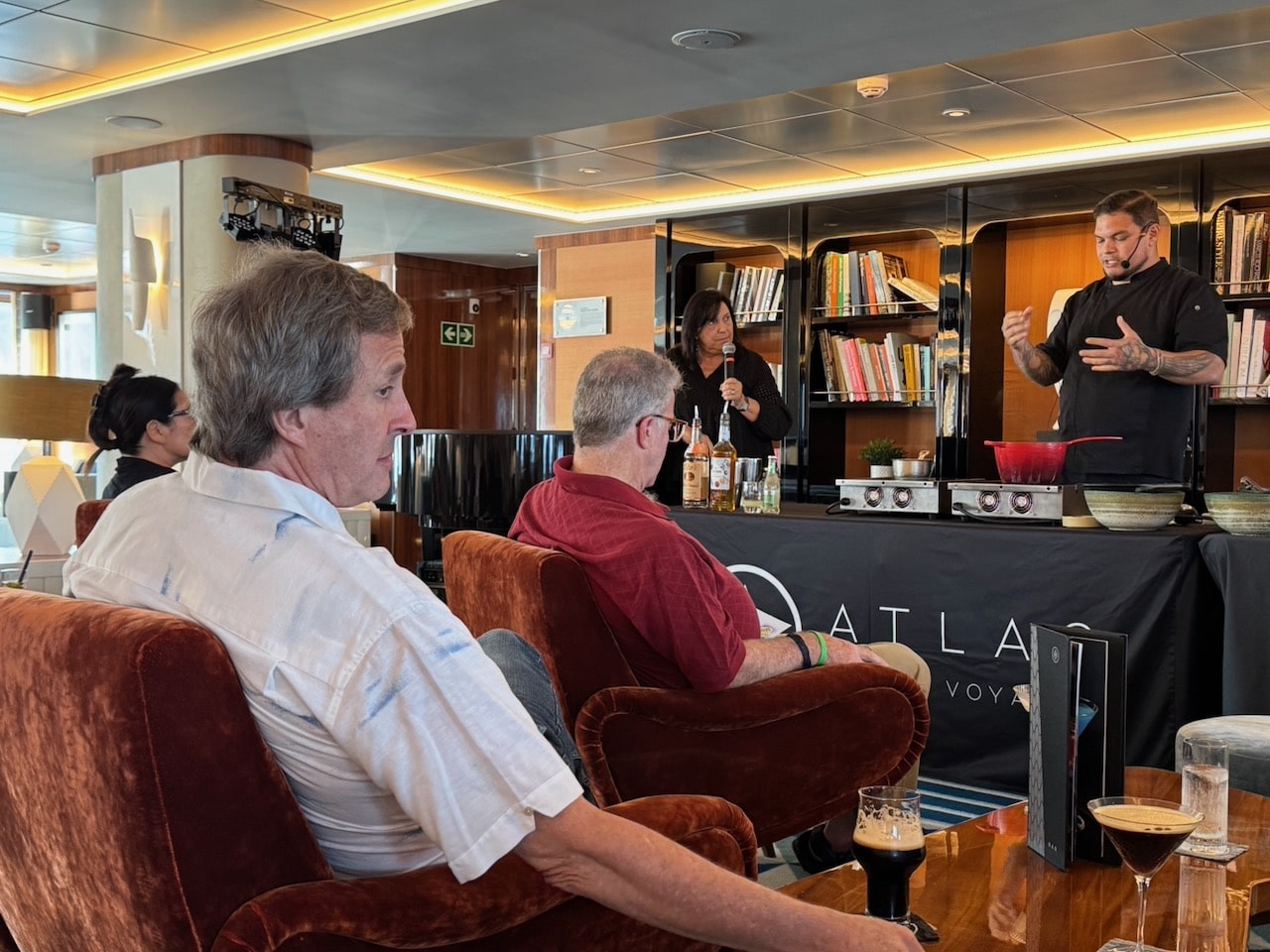
Atlas Ocean Voyages billed this trip as an Epicurean Expedition featuring Chef Ippy Aiona and food expert Mara Theodorou. If you’re wondering, Ippy’s given name is Philip. There were food talks, and restaurant visits ashore.
During cocktail hour, after the stop in Skiathos, they demonstrated how to make ricotta. Our short video at the end of this post will show you what they showed the guests.
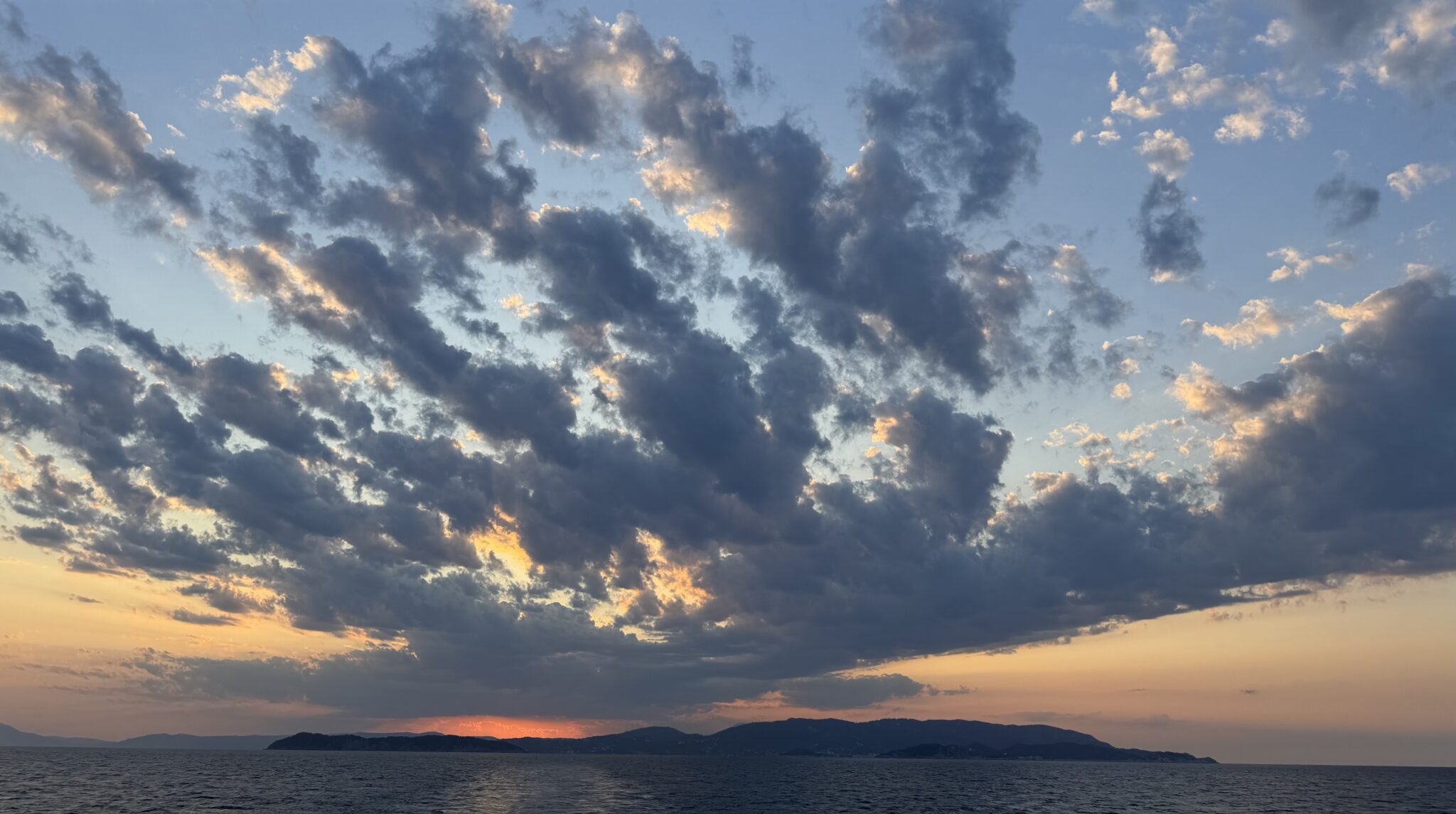
Leaving Skiathos heading back south to the southern Cyclades and Mykonos island, the sunset looked as if it was spreading out its arms to embrace us.
Here’s the cooking demonstration video we promised and instructions for making ricotta.




.jpg)