by Nick Taylor and Barbara Nevins Taylor
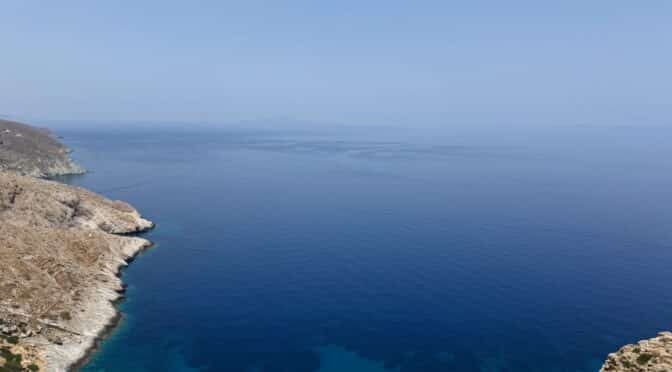
We awoke with the rising sun ready to find what the day offered. It felt glorious to stand on the terrace of our two-room cabin in the early morning staring out at the blue Aegean as Atlas Voyages’ World Traveller neared Santorini. The island was about 150 miles from our starting point in Piraeus just south of Athens and we expected to anchor at 8 a.m.
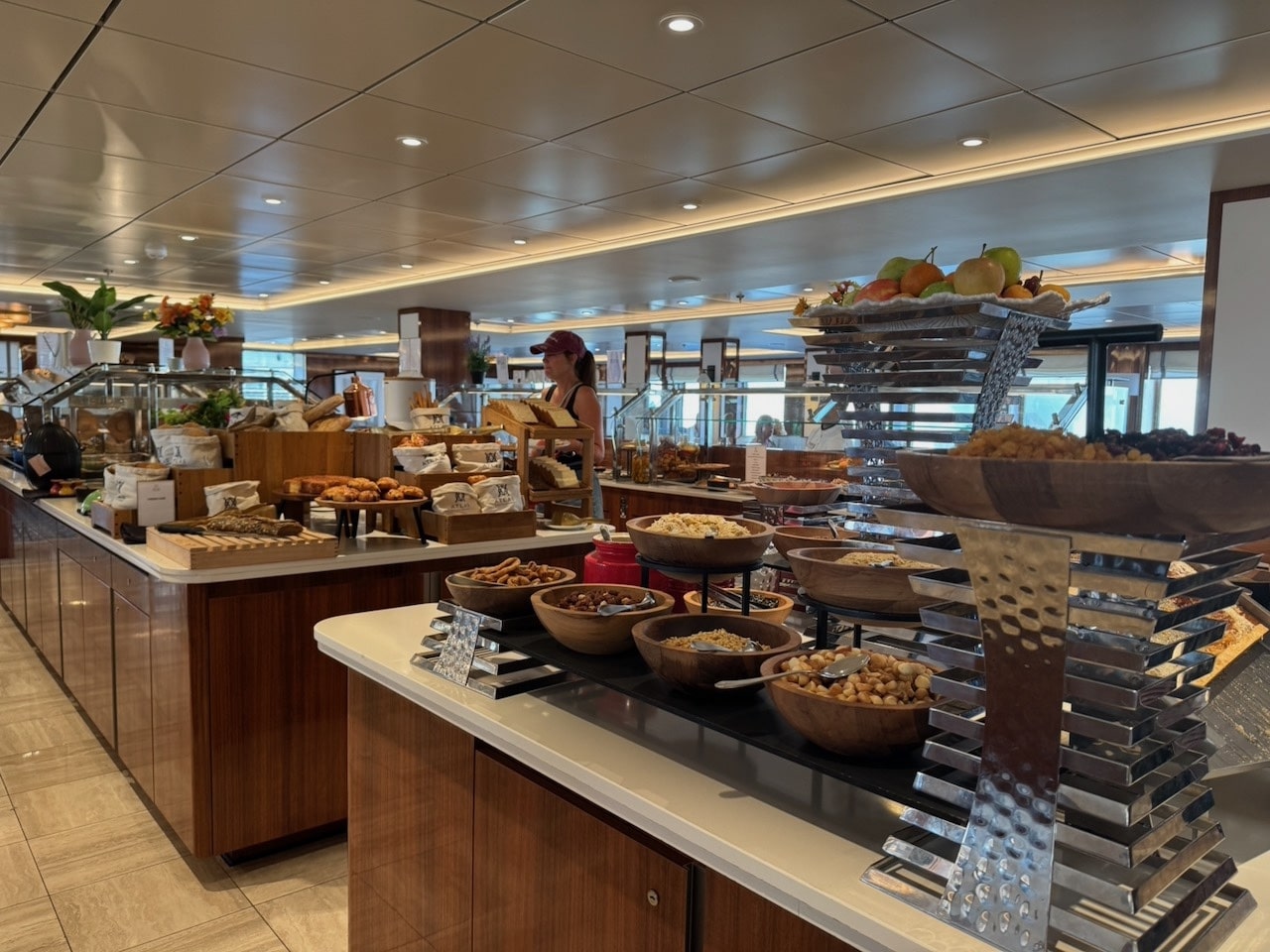
That gave us plenty of time for breakfast. We were on level five, of the seven-deck ship, and the dining room and common areas were one deck below. Midship toward the stern we found an elaborate buffet set up for breakfast with comfortable dining areas on each side. This is the Lisboa Restaurant.
We moved past the dining room and out on to the stern deck, aka Lisboa Alfresco, where tables were also set for breakfast. We sat down at a table facing the rail and ordered coffee from a smiling staffer, who told us we could also order from a breakfast menu. The smiling staffer bit is important. The wait staff and every service person on this ship was unflaggingly nice and helpful. Let us introduce some of the servers and you’ll get the idea. Atlas hires through staffing agencies in the Philippines, Indonesia and Central and South America. And quite a number hailed from Bali.
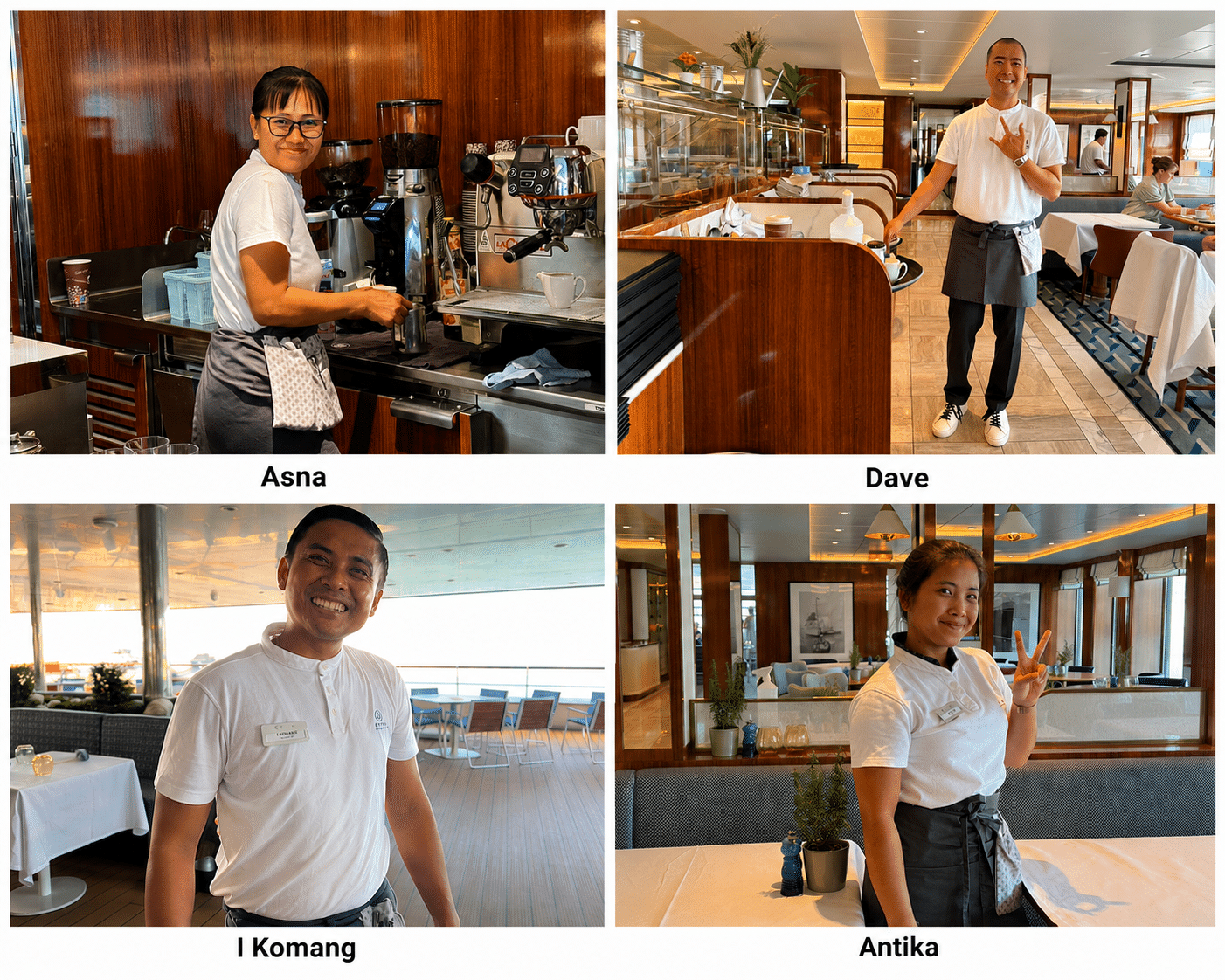
In addition to a man called Edi, these young people served and brought drinks for every meal. Alistair, the maitre d’, coordinated everything with a smile.
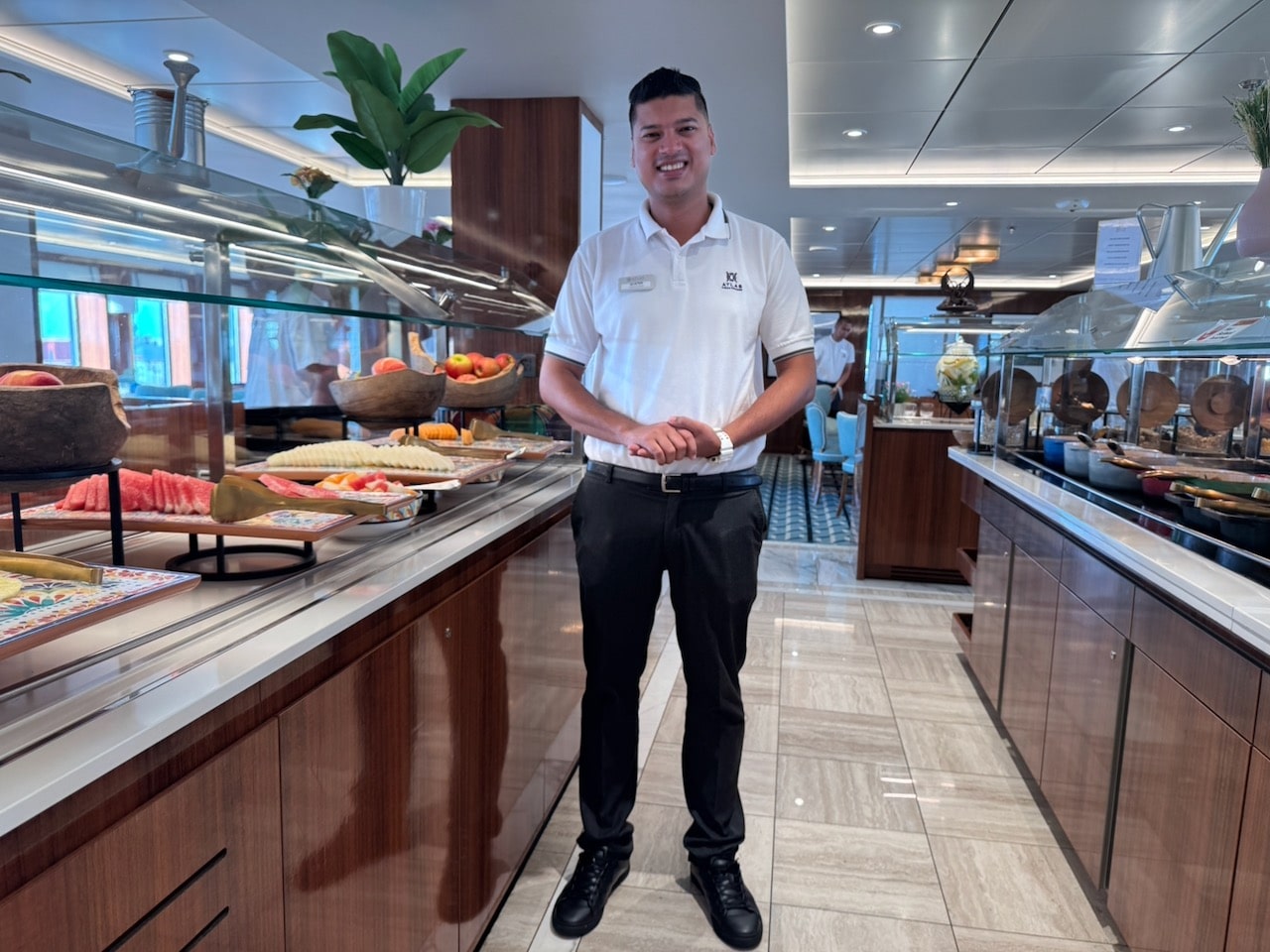
For our breakfast on the first day, we chose the buffet, with its wide assortment of eggs, oatmeal, sausages and bacon, potatoes, freshly baked bread, rolls and croissants, yoghurt, fruit, cold cuts including Italian and Spanish ham, chicken liver sausage, blood sausage and on and on.
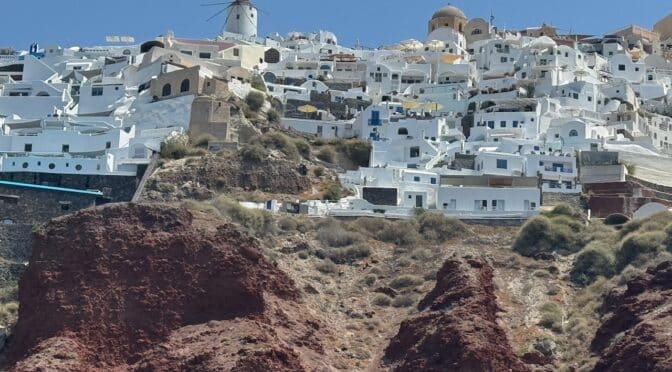
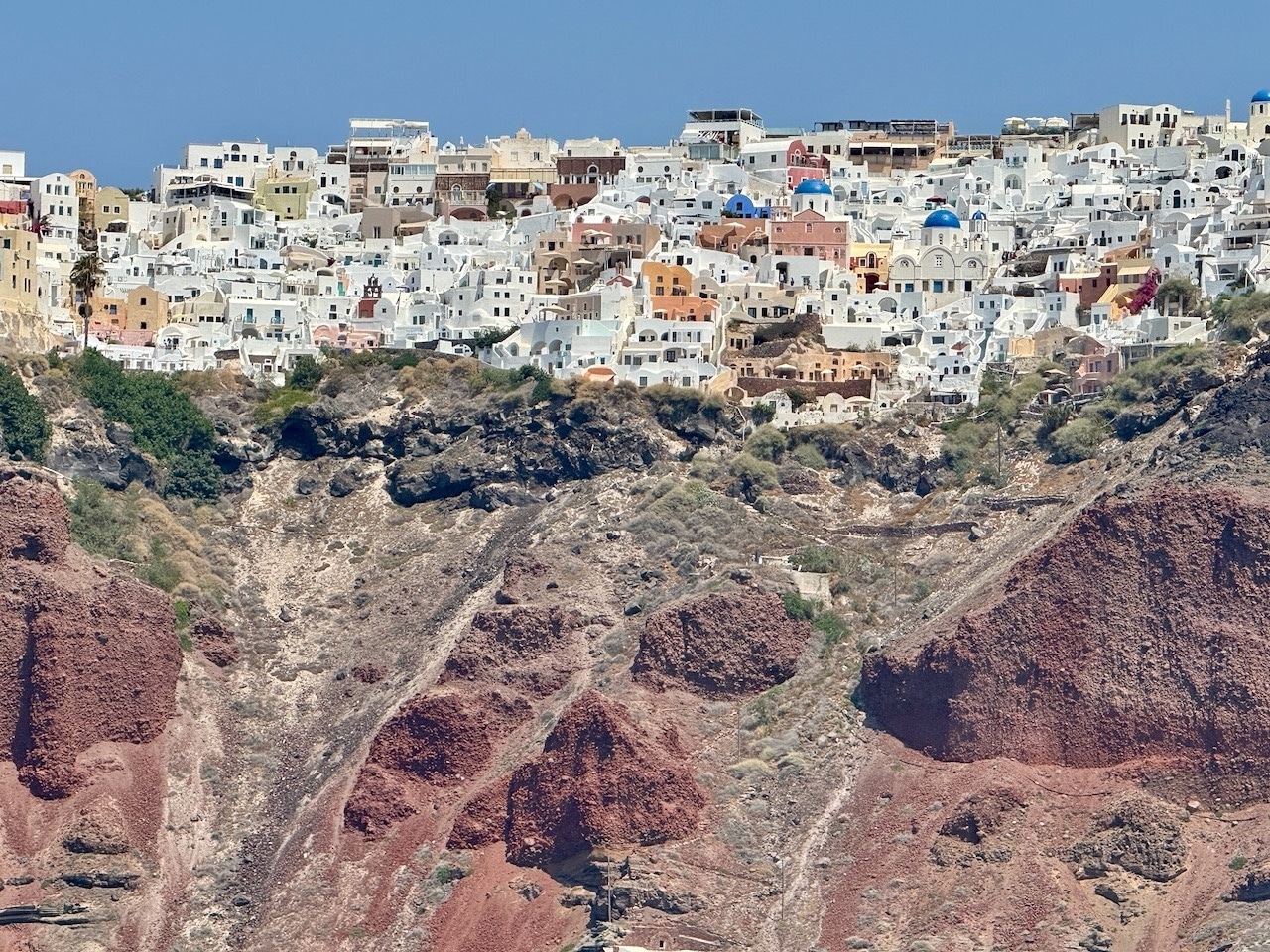
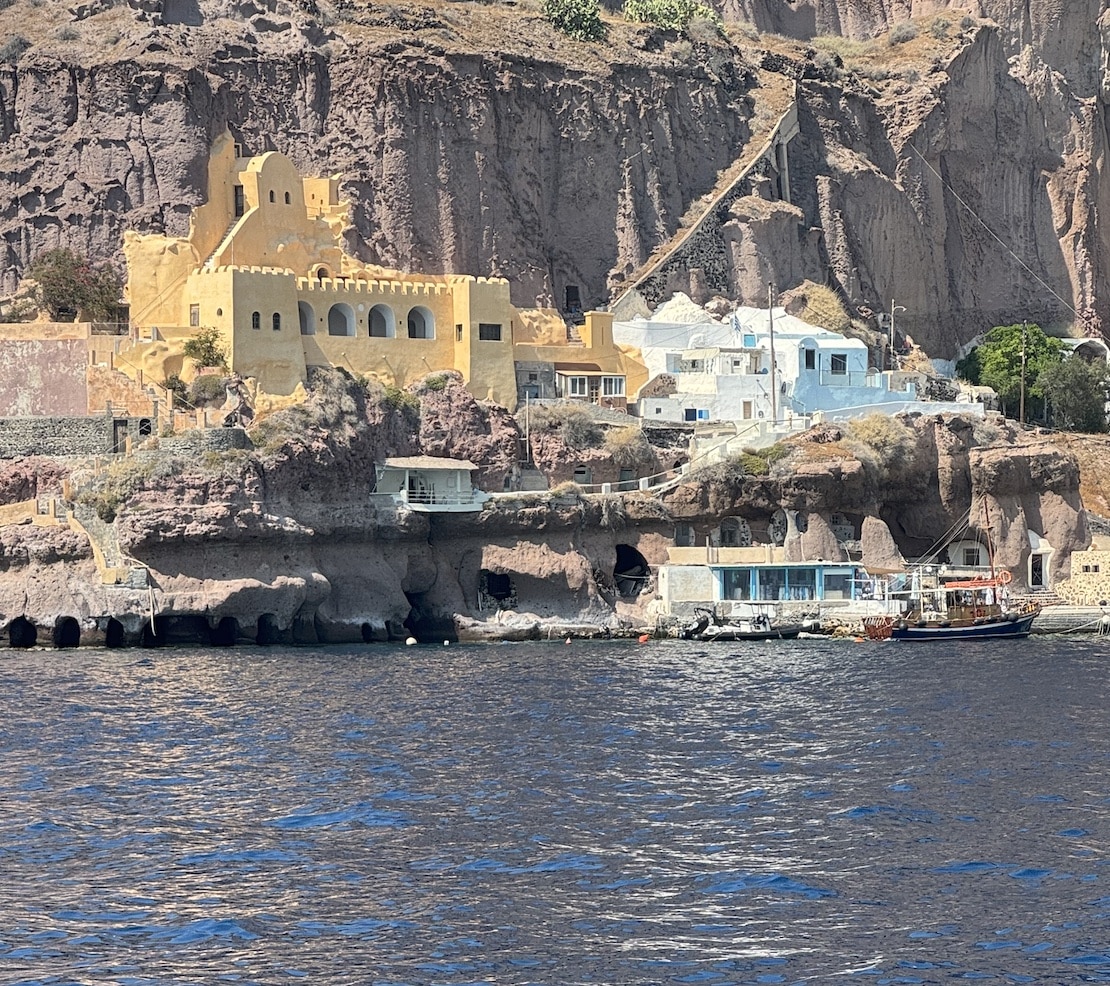
Sipping our coffee, we got our first glimpse of Fira, Santorini’s capital. From the sea the city looks like a mass of layered rock with white villages on top, dotted with iconic blue domed churches.
But a NASA photo of Santorini taken from the International Space Station tells a different kind of story. It shows Santorini and two smaller islands, Thirasia and Aspronsi, and they form a rough circle. The islands are what remains of a large volcano that erupted between 1600 and 1627 B.C. The explosion created a giant caldera or crater that reaches down under the Aegean 480 meters or about three city blocks.
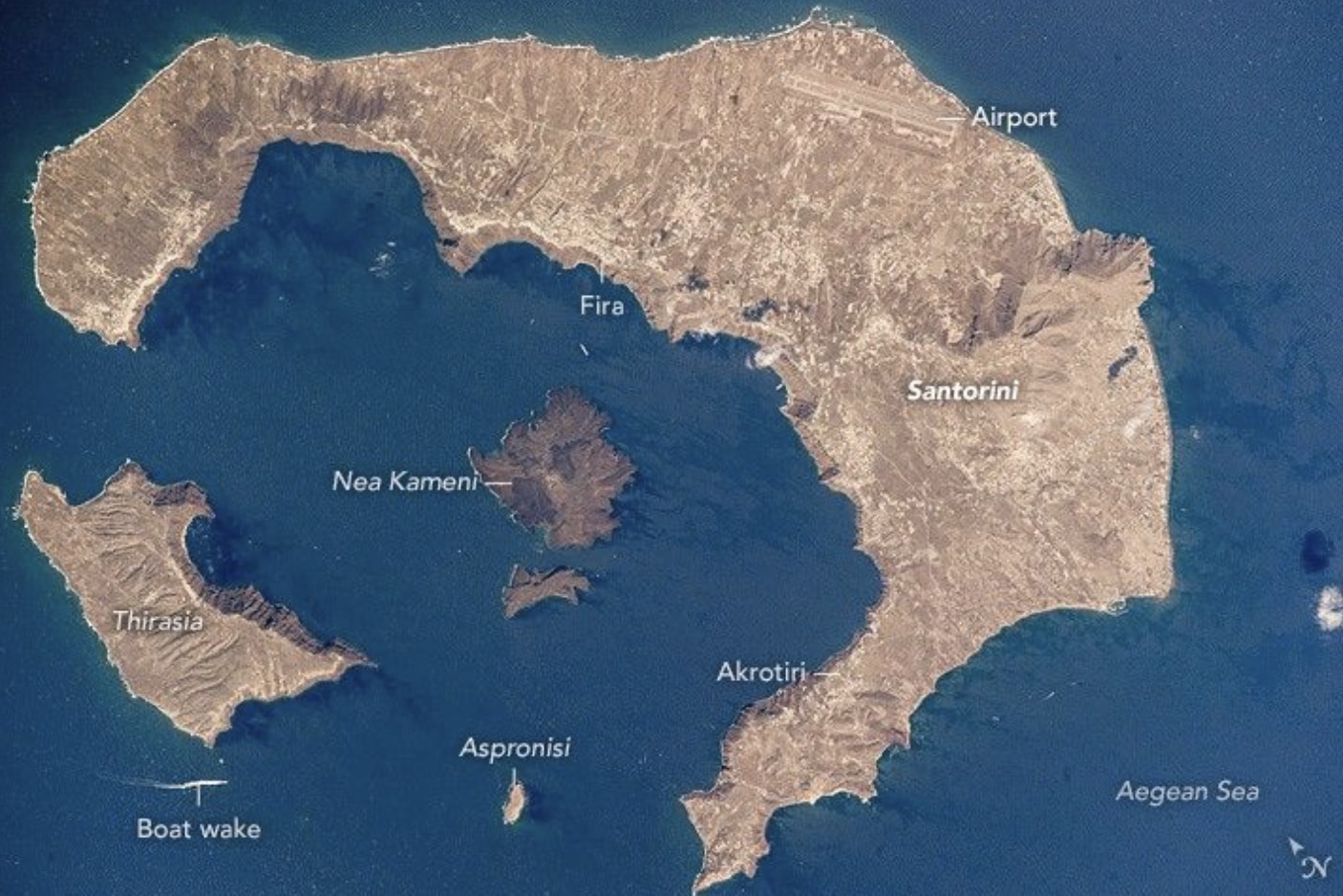
The gigantic eruption occurred during the the Minoan civilization centered in Crete, south of Santorini, during the Bronze Age. The ancient city of Akrotiri at the southern end of the island is thought to be the mythical lost Atlantis.
Generations of archeologists have been digging through layers of hardened ash to uncover Akrotiri since the 1870s. In recent years, they have found black and white painted pottery, necklaces made of beads, clothing and bronze artifacts.
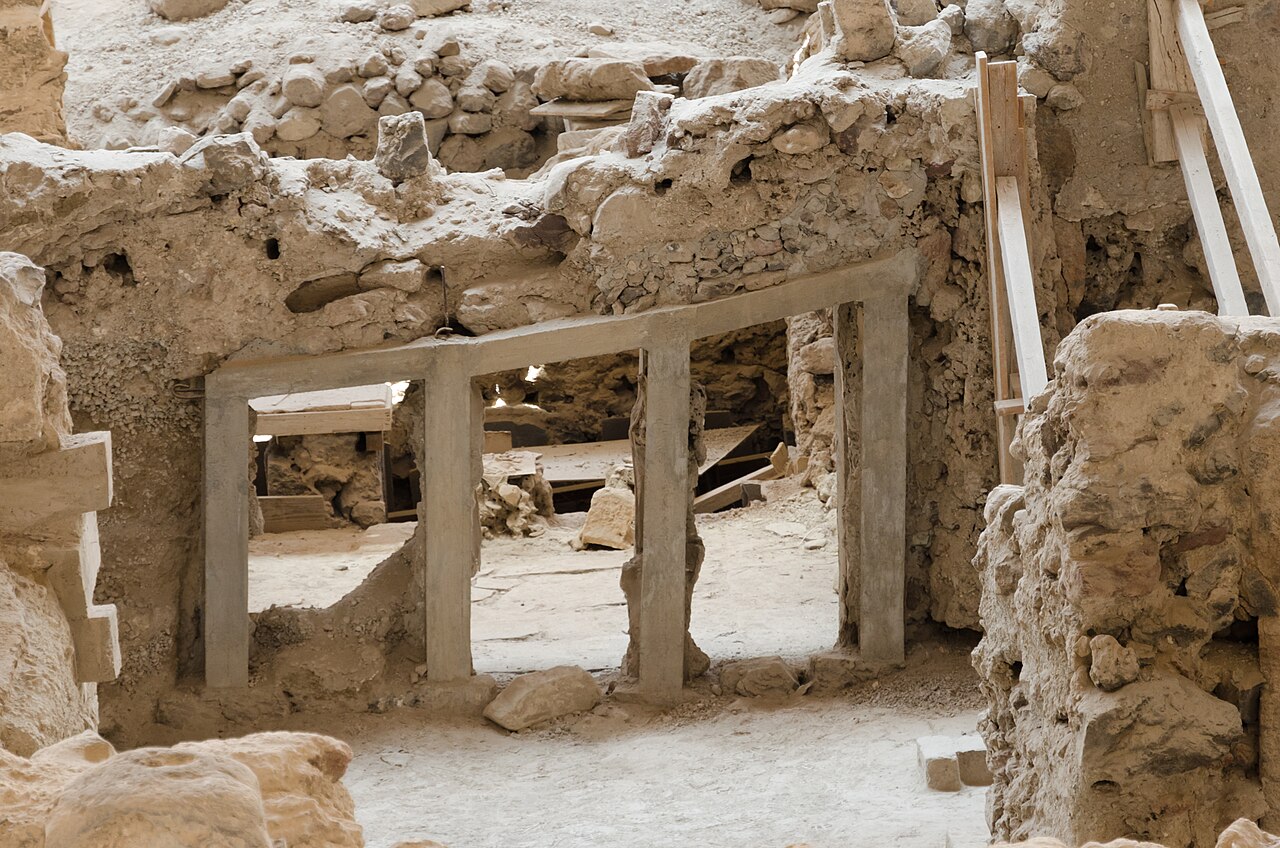
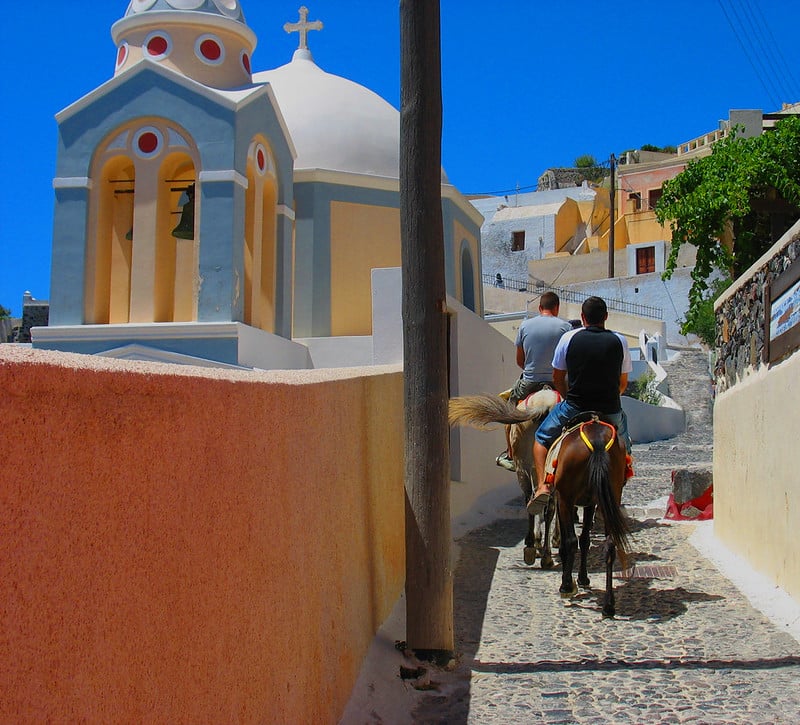
Whether Akrotiri is the lost Atlantis remains to be seen. But Fira, based on tourism alone, must be more busy than its Bronze Age counterpart. The tender from our ship took us to the Old Port 800 feet below the town of the Fira. We could walk up the Karavolades Stairs with 588 steps, or take a donkey ride like you see in this photo.
Or we could take the cable car up the 800 feet.
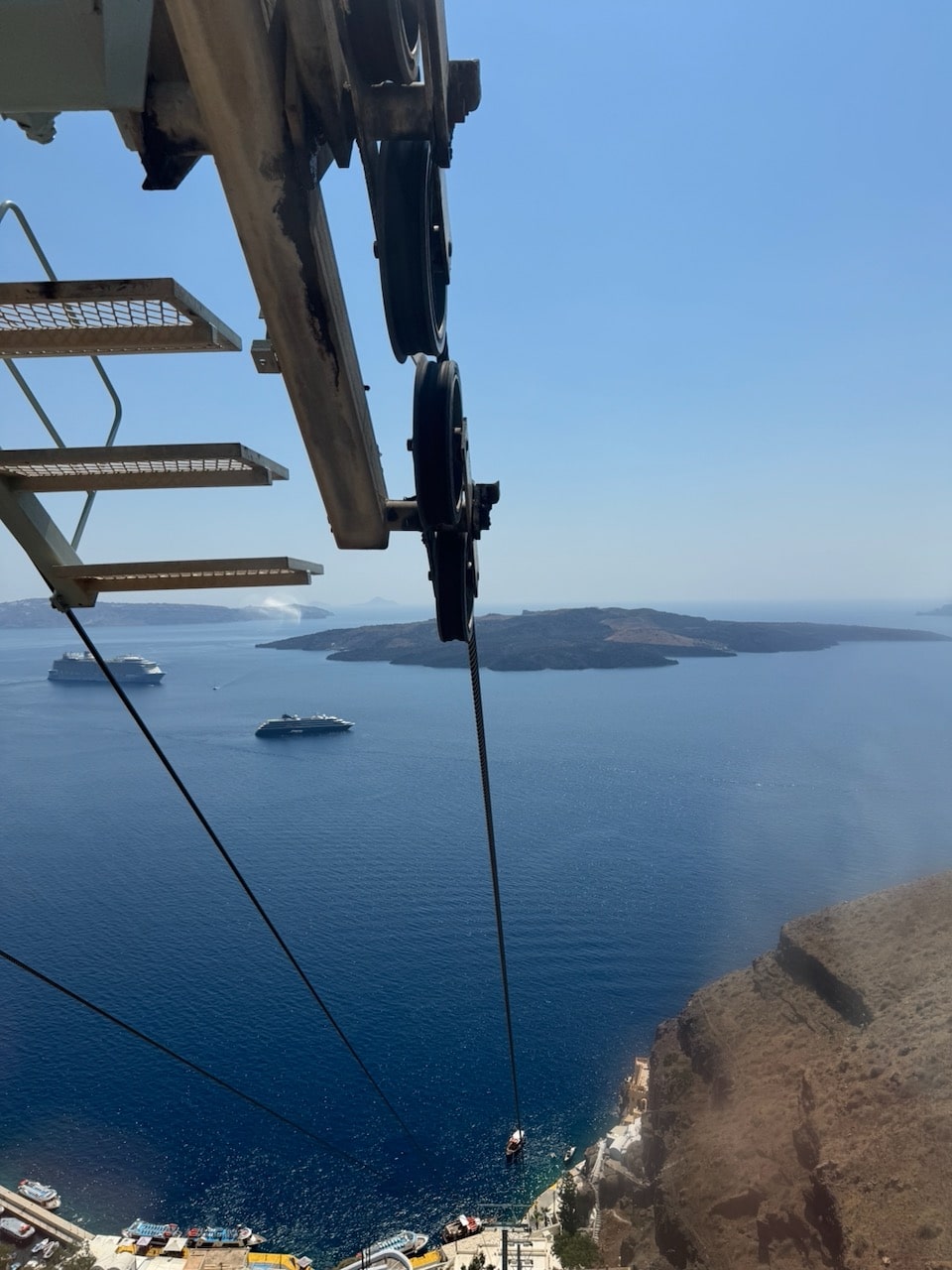
But the line was huge and it was hot.
Barbara, always quick to find a solution, saw a sign to a fast boat that would take us to Oia at Santorini’s northeast tip. We bought tickets and climbed aboard. A few minutes later, we were at another town of whitewashed houses perched atop crags of volcanic rock.
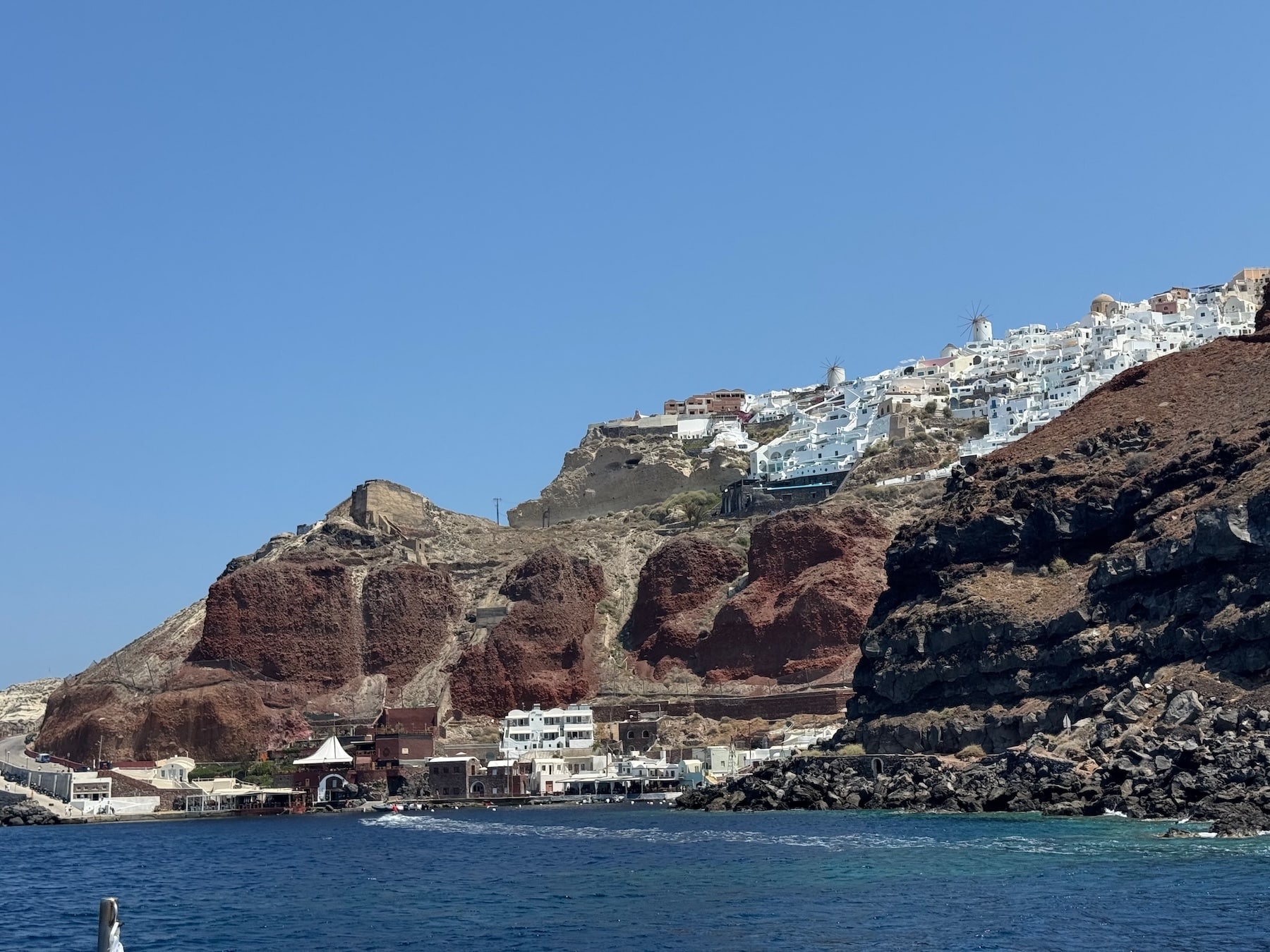
Oia, like Fira, was crowded, even overwhelmed with and by tourists. The narrow streets and a main plaza were jammed. Santorini and the Greek government have attempted to control over tourism especially with cruise ships. Santorini won’t allow more than 8,000 daily cruise ship visitors, and like other Greek islands charges a tourist tax, which is collected by the cruise lines. It costs each passenger 20 Euros a day to enter the island. Atlas Ocean Voyages wove the fee into the cost of the overall trip.
Despite efforts at control, Santorini is jammed wth people. In Oia’s main square we looked up to at the beautiful dome of a church.
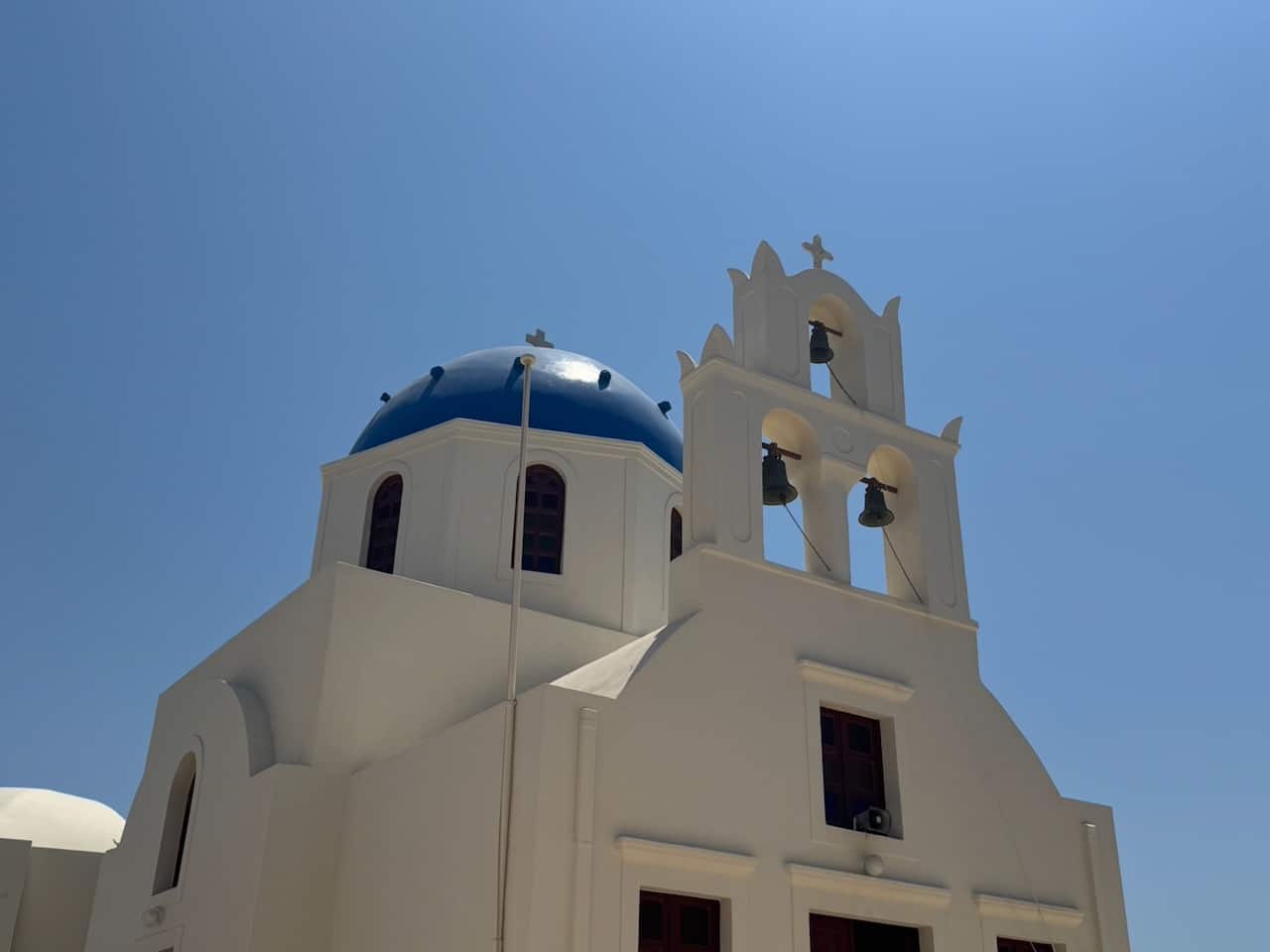
To find refuge from the crowd, we stepped into the Orthodox Church of Panagia Platsania, dedicated to the Virgin Mary, and were surrounded by beauty.
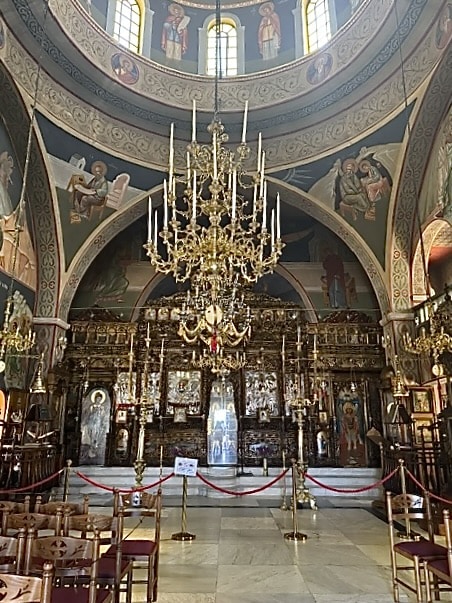
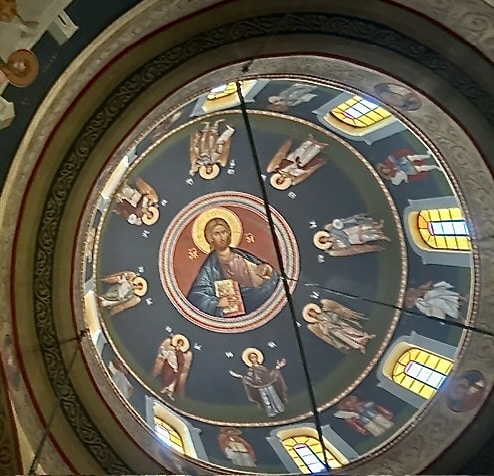
We approached the altar, looked up and craned our necks to see the painting on the interior of that blue dome.
Back outside, we climbed a little higher and ended up on a narrow street lined with stores and a parade of tourists. We each tried on a few things, and ended up with nothing. But did get a recommendation from a shop owner for a restaurant down the hill.
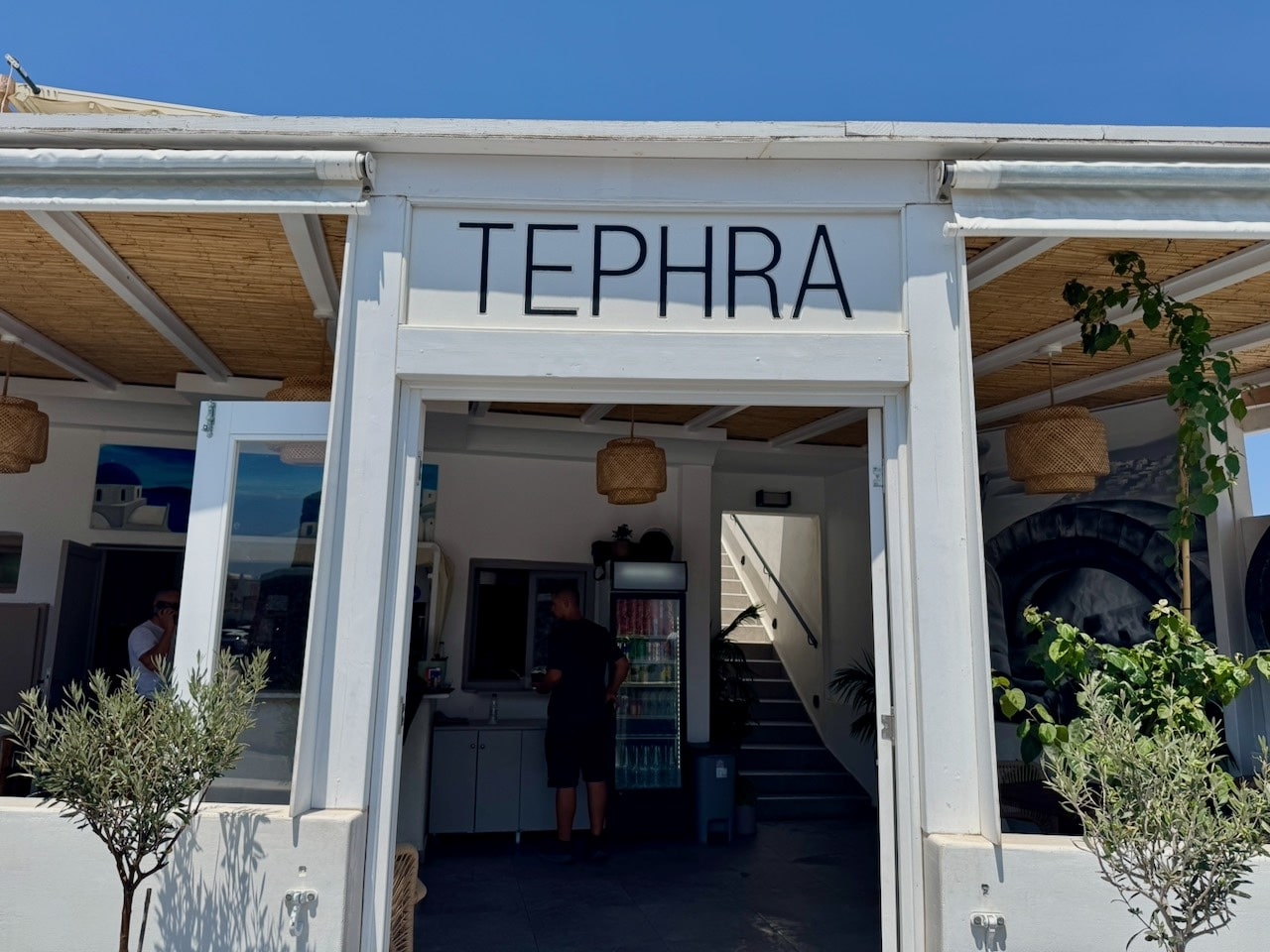
More climbing up Tephra’s stairs led us to a terrace that overlooked the sea and a nearby resort.
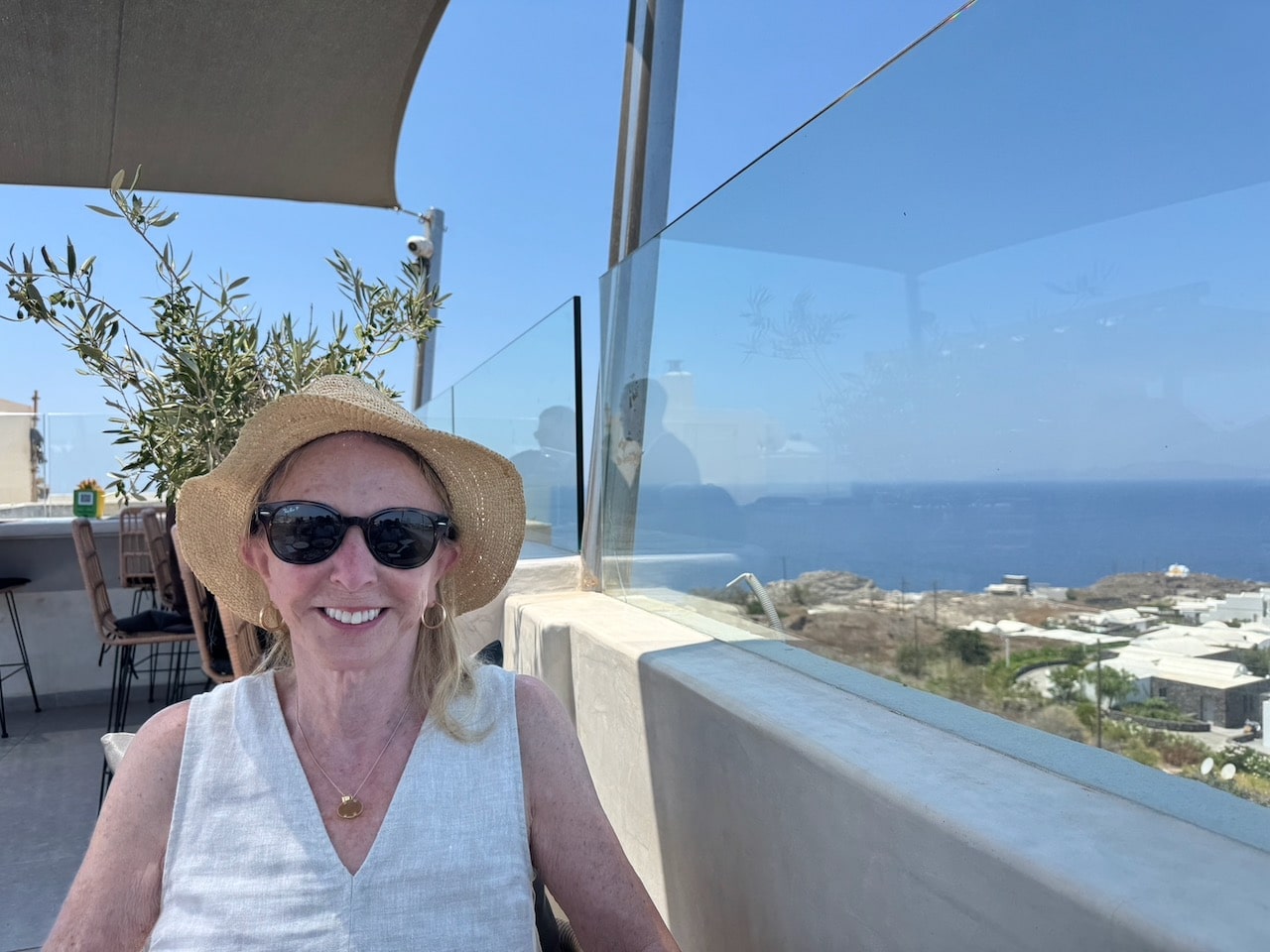
It gave us a good view of those famous blue domes.
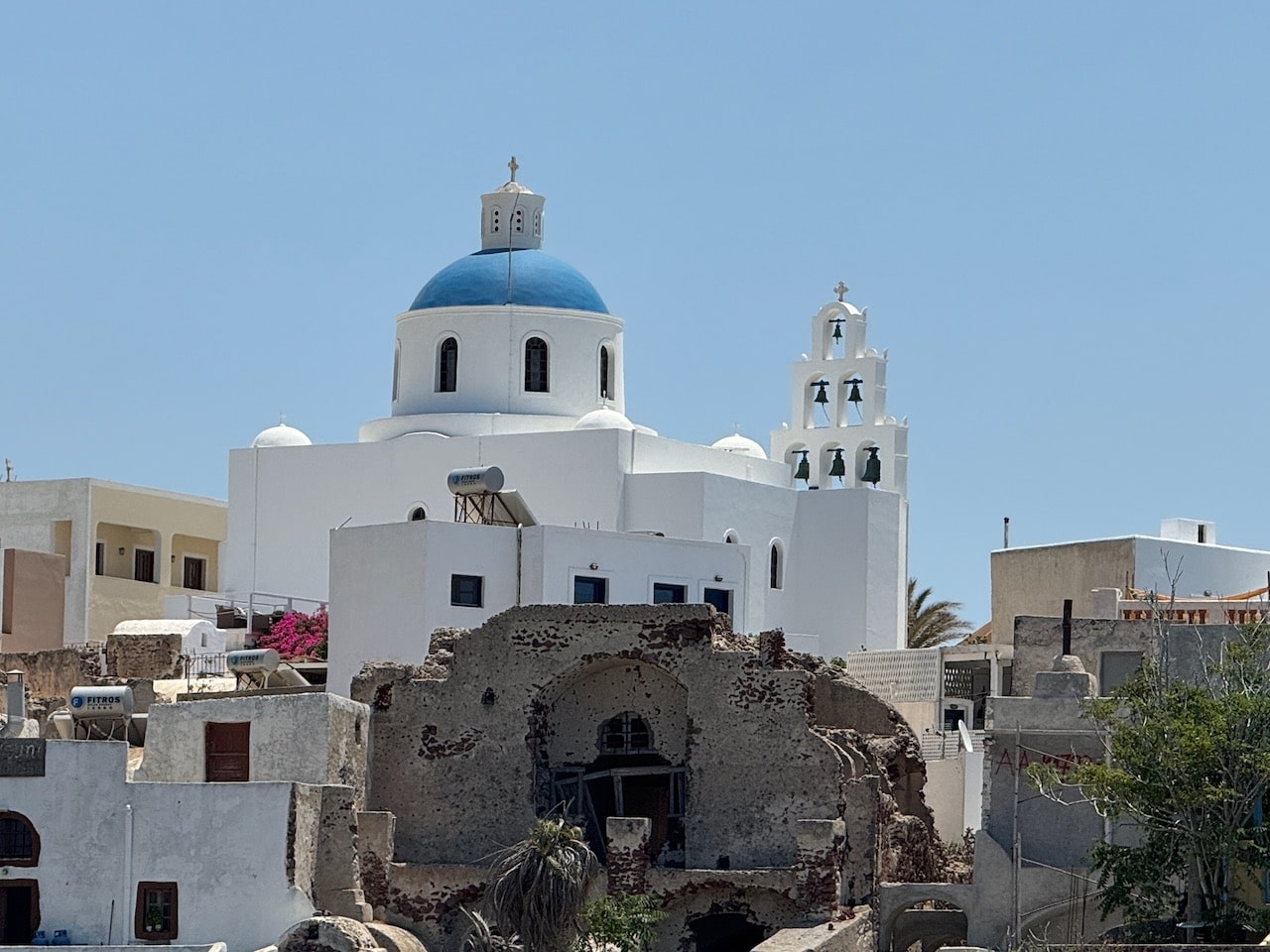
The blue domes and whitewash evolved as a deliberate architectural style after an earthquake and tsunami in 1956. Santorini had been primarily rural and poor, and the earthquake that killed 53 people also destroyed traditional cave dwellings, statelier houses along the cliffs, and buildings that had survived Ottoman and Venetian rulers.
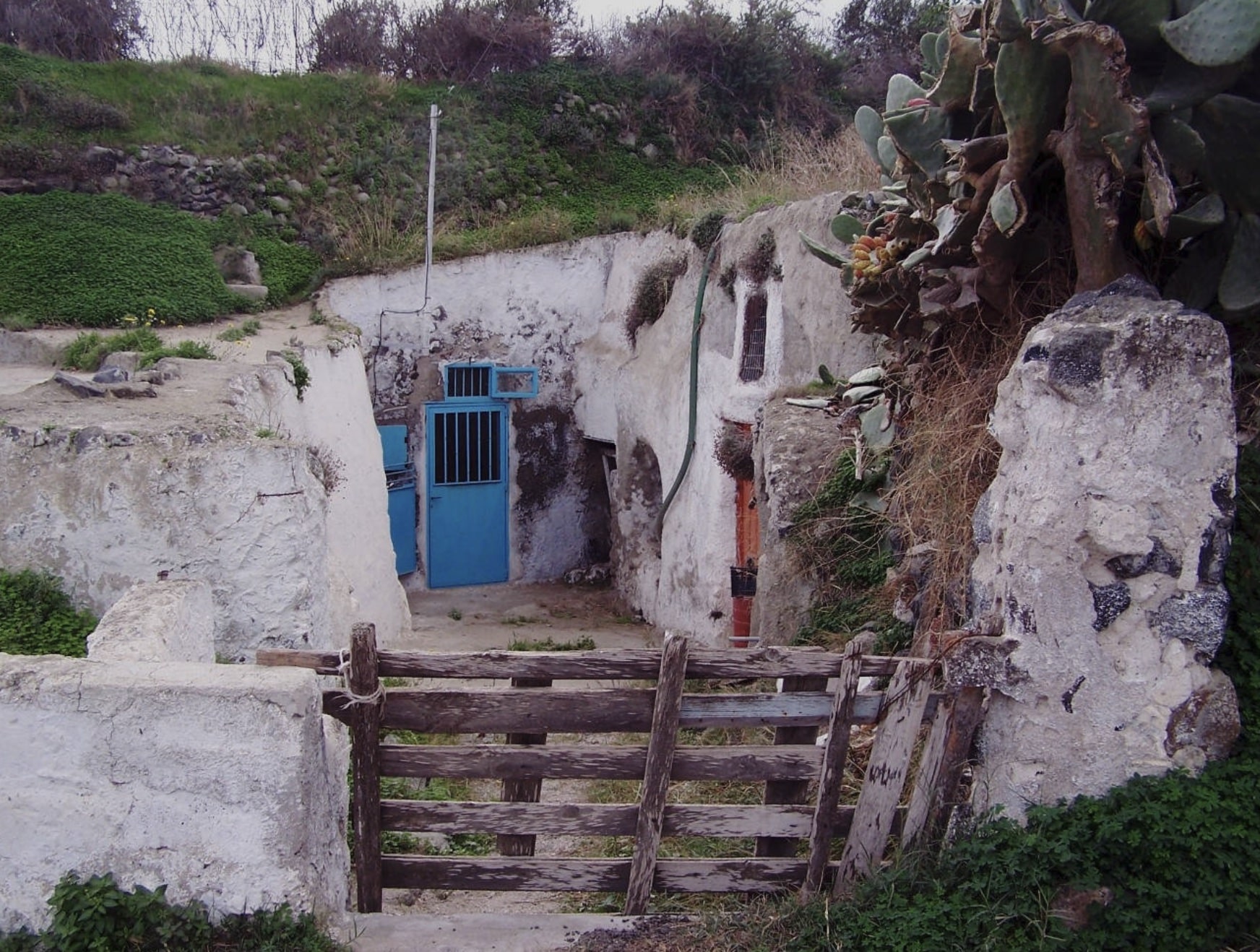
During rebuilding, new construction emphasized low, domed buildings that could withstand earthquake shock. Builders used the white limestone to reflect the sun and keep interiors cool. It was also used as a disinfectant to ward off diseases including cholera.
The bonus of course: the colors mirrored the sea and matched the Greek flag and created postcard pictures for the tourist industry that began to flourish in the 1960s and ’70s. Not everyone sticks with the color scheme.
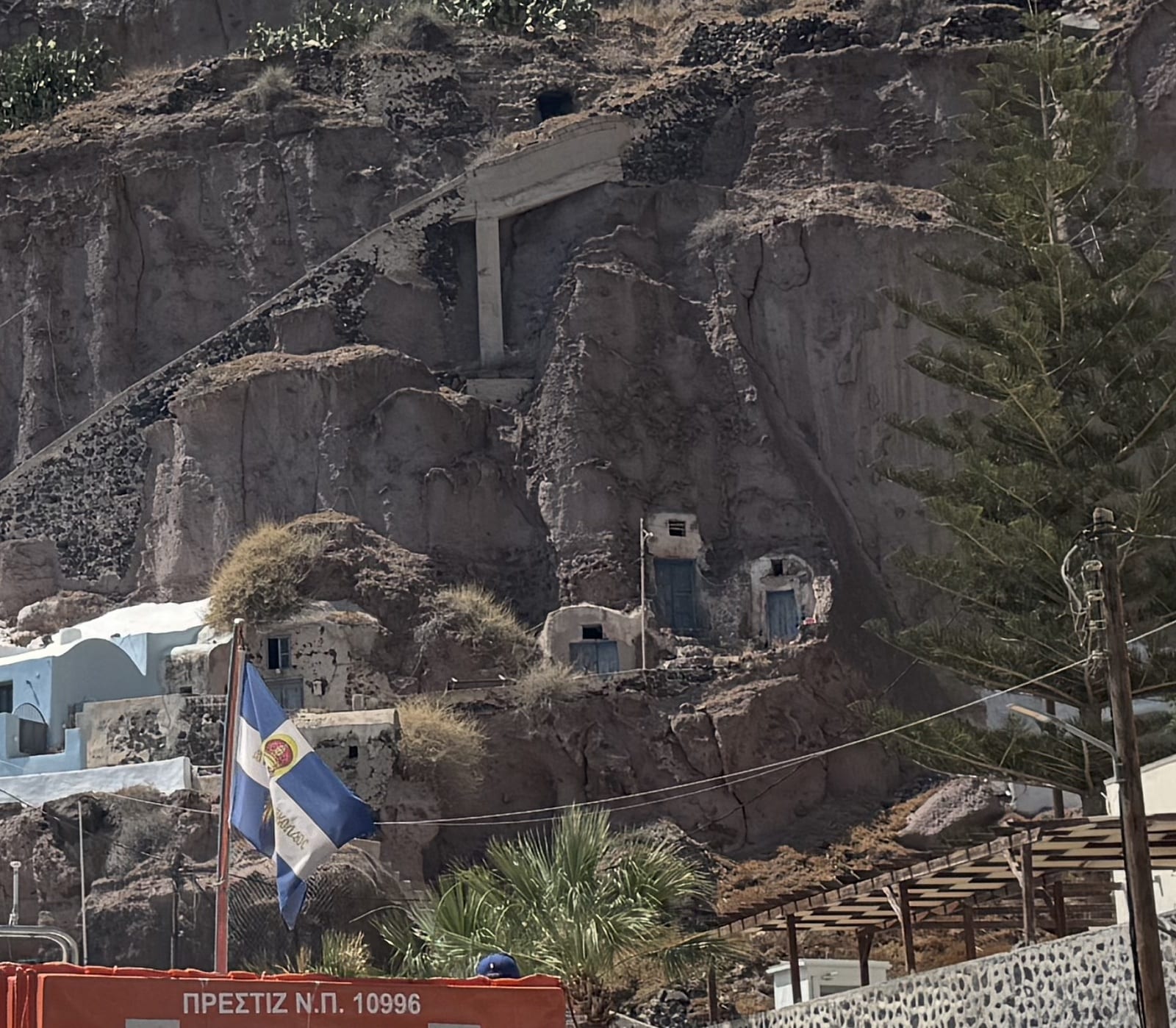
In some places, you can still see doors leading to traditional cave dwellings.
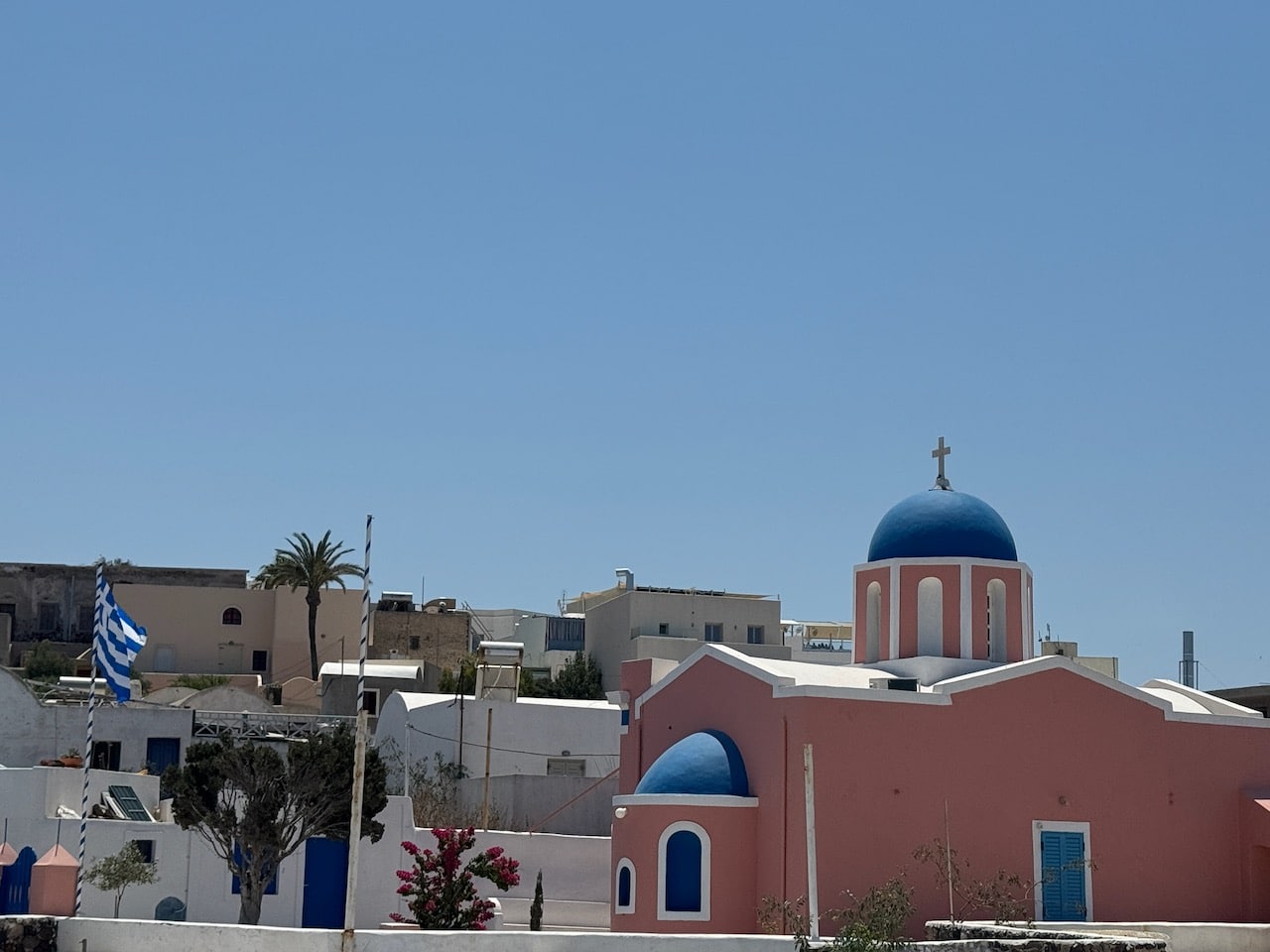
From our restaurant terrace, we also got a close up look at the salmon pink Church of the Resurrection or Anastasi Church.
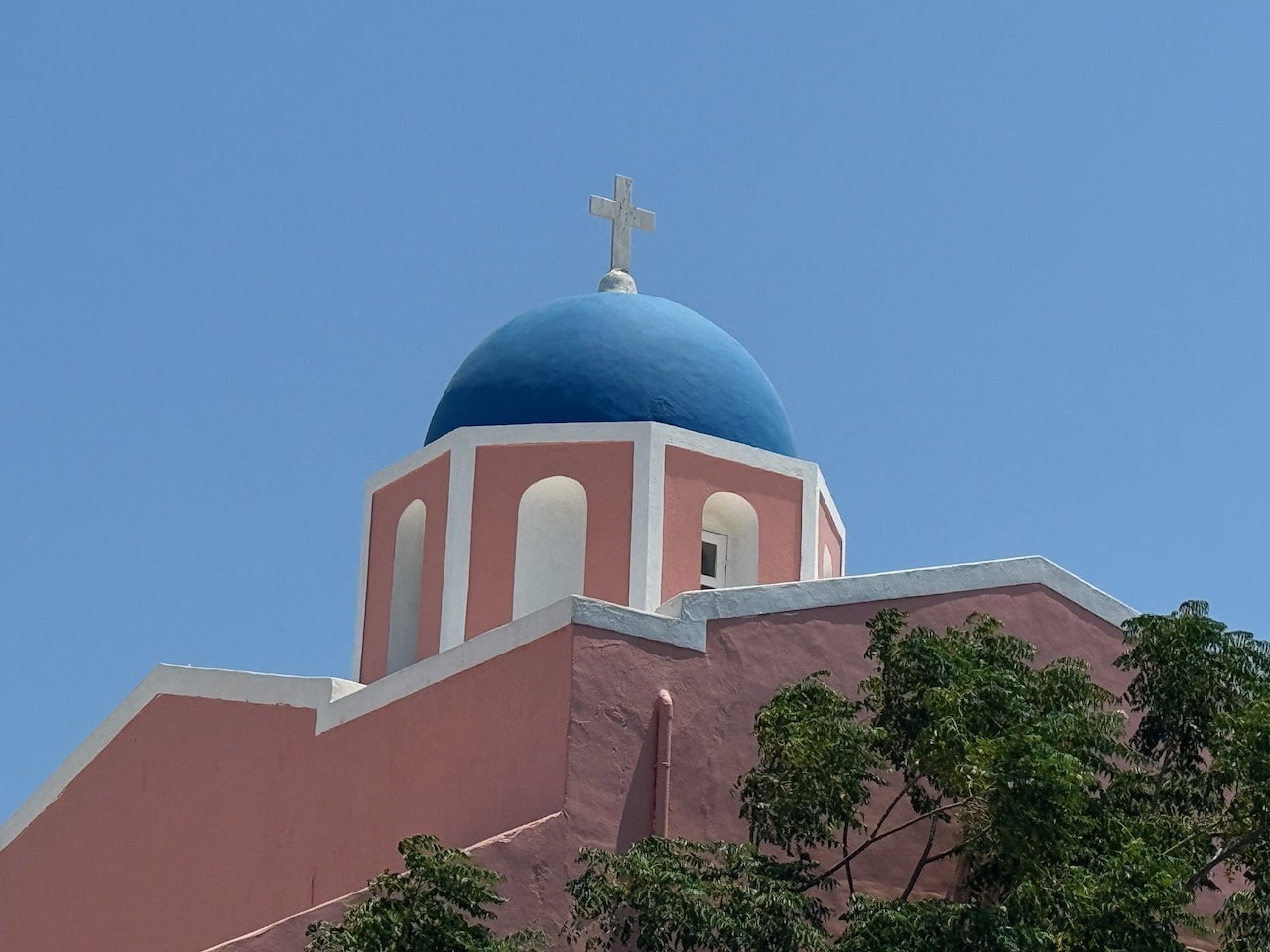
This church like others, including the Panagia Platsani in the main square, was destroyed during the 1956 earthquake. Each was rebuilt to duplicate and embellish the original.
After a lunch of Greek salad — what else? — and tzatziki (they didn’t have pita), the restaurant called a taxi for us.
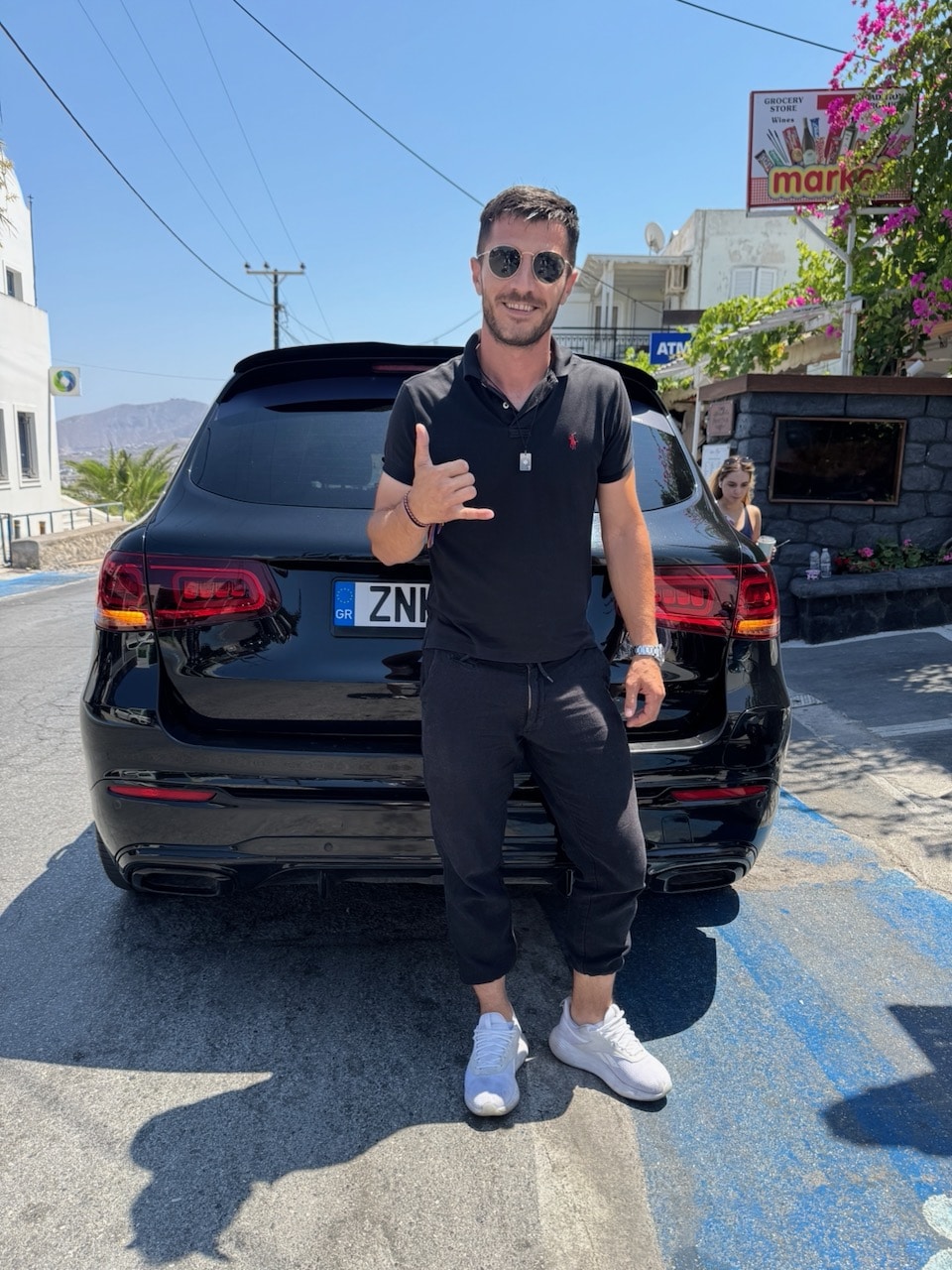
The taxi driver Nicholas Haremi, an Albanian by birth, grew up in Greece. He loves Santorini and drove us around giving a view of the island without tourists. “It’s beautiful in October. Not too hot,” he said. “I keep leaving, but I’ve come back six times. This is the most beautiful place.” We passed resorts overlooking the sea, and thought maybe Santorini deserved more time than we could give it from our cruise ship.
The island with its rich volcanic soil is fertile tomato and wine grape growing land. It may have as many as 20 wineries, and a top product is white from the local Assyrtiko grape. There’s also an underground wine museum that’s ranked among the top 10 wine museums in the world, and tells the story of centuries of Santorinian winemaking. We had booked a tour at a local winery, but ended up cancelling because getting to Oia had been a challenge. Next time, we thought.
The road curved around the farms and vineyards and wished we had more time to stop and explore them. Our driver dropped us off in Fira near the cable car and on the way down we saw a sandal maker at work.
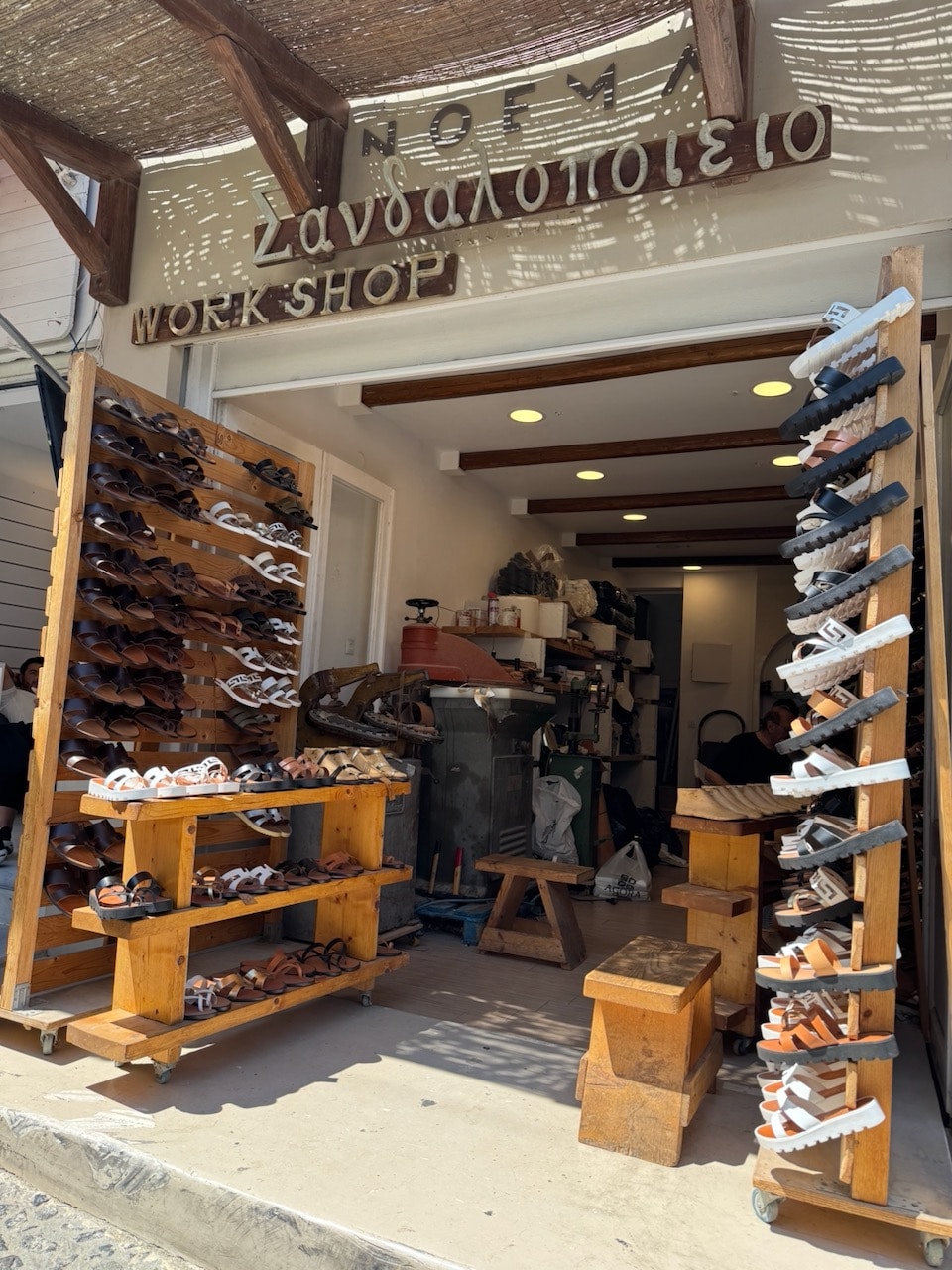
Barbara, a shoe-lover, found a pair and made a friend. The sandal maker told us he was 79.
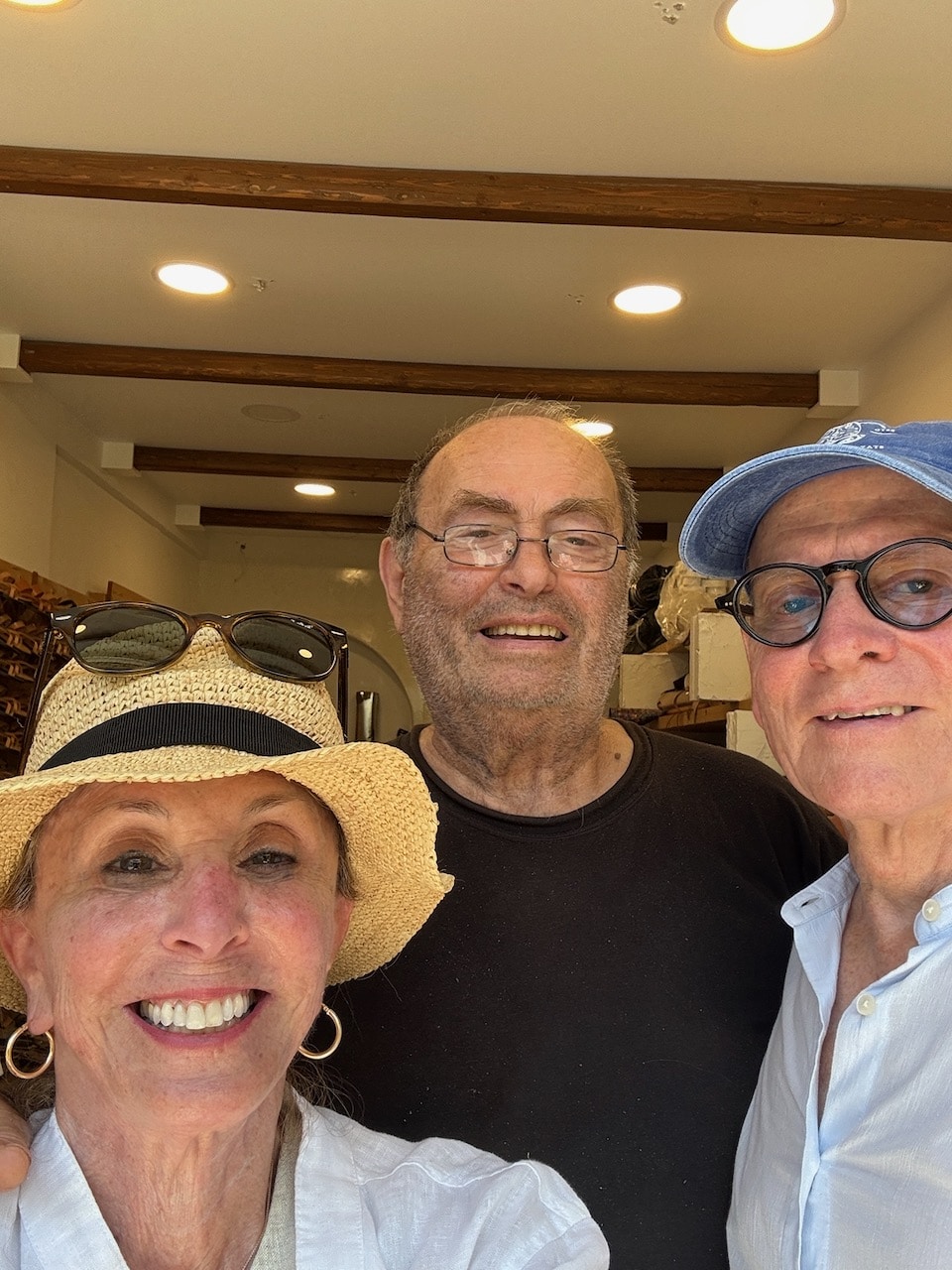
“I have been creative all of my life. I do not want to stop now,” he said. That seemed like as good a takeaway for the day as any. We headed to the cable car. And went all the way down.
Back on board World Traveller, we changed into swimsuits and splashed around in the small pool on the 7th deck. That evening at cocktail hour, Captain Yevgeniy Lebedenko welcomed us all and introduced the senior staff.
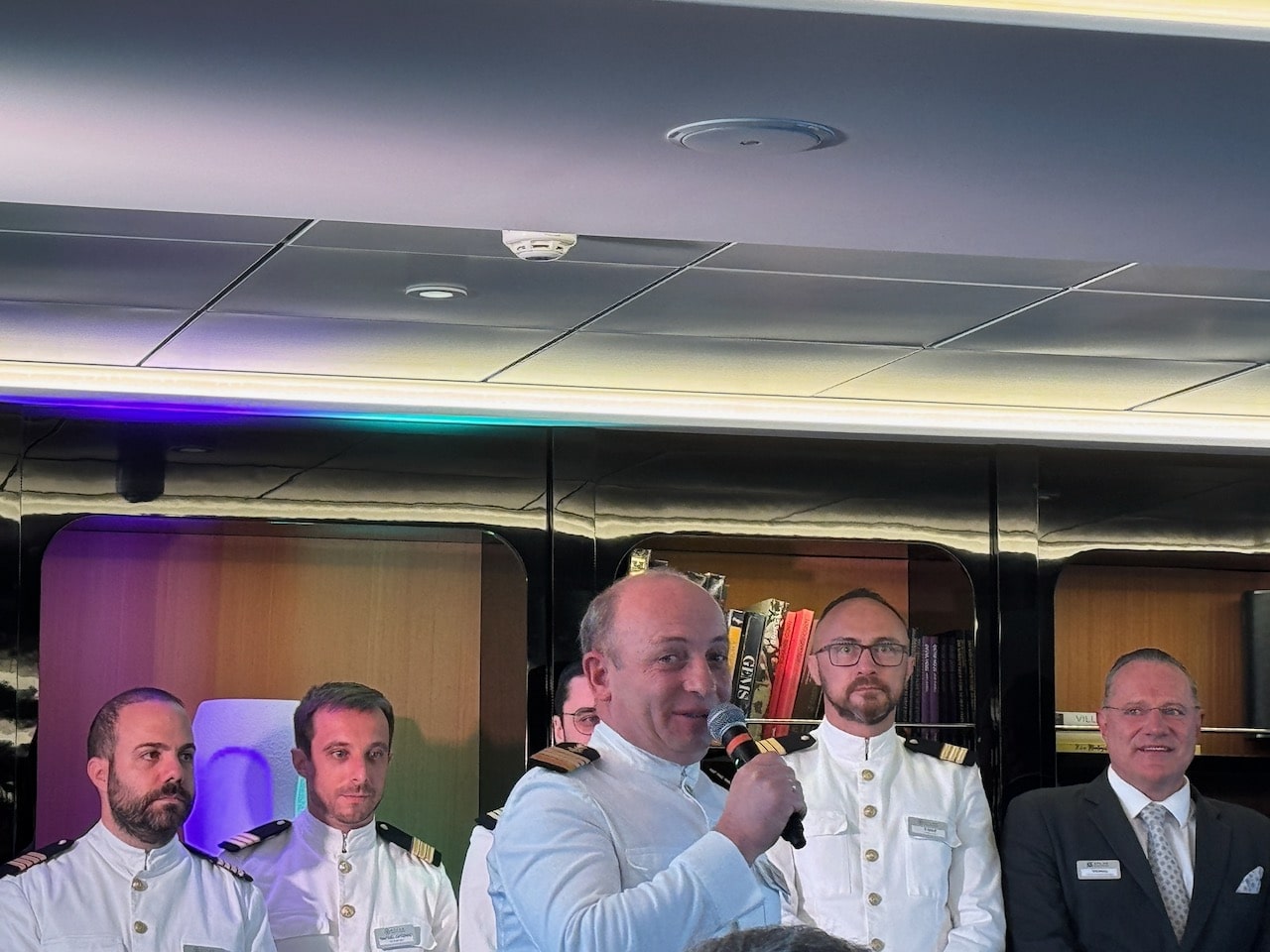
They work hard to make the cruise feel like a family outing, and mostly succed. That evening we joined the captain’s table with several other couples and two women, one from Texas, another from Boston, who had been roommates when they were young and still meet up from time to time to share experiences like this one.
If you’d like to see what it feels like to go up in the cable car at Fira, try this video.
And here’s a trip down in the cable car at Fira.