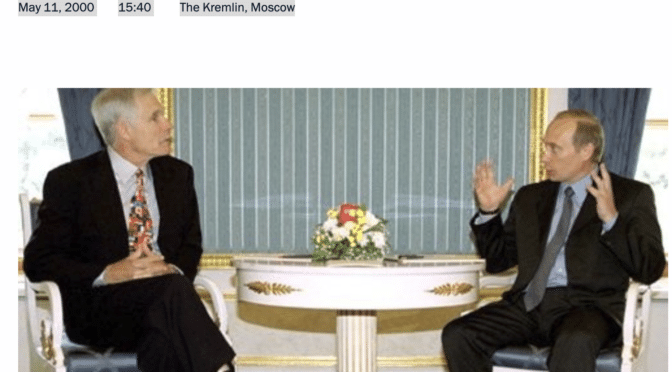
by Nick Taylor
I am in a New York taxi with Ted Turner. It’s May 1982, nine in the morning, and we just arrived from Atlanta on a Delta flight. Ted is all angles, his 6’2″ frame folded into the compact cab’s back seat. He’s tired of talking, something he does prodigiously. He’s already told me American TV networks will fail and their owners should be tried for treason, that Turner Broadcasting will soon be “the world leader in communications,” that humanity is on the brink of collapse, that being drafted “to save the country” is the only way he’d enter politics, and that he is on the verge of physical collapse.
Then he thinks of another extinction event that requires his attention. At the lake at his farm north of Atlanta, the catfish are eating all the bass and bream. There’s only one solution: “I’m gonna fish for catfish until I catch ’em all.”
I dutifully make a note of this. I’m writing a story on Ted for Atlanta magazine, which is why on I’m on this trip to New York with him. He’s here to speak to the National Academy of Television Arts and Sciences and — more importantly — drum up advertising support for CNN, the 24-hour news channel he’d founded just two years earlier, and his Atlanta “superstation” WTBS –the TBS standing for Turner Broadcasting System — beamed nationwide by satellite. A staple of WTBS programming is Atlanta Braves’ baseball games, rebranded as “America’s Team” now that WTBS reaches every crevice of the country. In the winter it broadcasts Atlanta Hawks’ basketball games. Turner owns both teams.
He is not just an owner, he’s a fan. At Braves’ games, he sits behind the dugout, chewing tobacco and spitting in a cup. If they win, he’ll vault onto the field to congratulate the players. For one game, he put on a uniform and managed them. They lost.
Turner allows that another baseball owner, shipping millionaire George Steinbrenner, has “done okay” but says his own influence is greater. “I’ll tell you what I want to do,” he says, and says no when I bring out my tape recorder. “I want to set the all-time greatest personal achievement record, greater than Alexander Graham Bell or Thomas Edison, Napoleon or Alexander the Great. And I’m in a position to do it, too.”
Our cab rattles along a cobblestone street and I wonder if I heard any hint of irony or jest in what he said. No. His blue eyes and his expression said he was perfectly serious. Turner was 43 then, almost half the age he’d reach before he died on May 6 at 87. He was just talking about more fields he wished, and expected, to conquer.
And why shouldn’t he? He’d introduced himself to the world outside Atlanta by winning the famous America’s Cup yacht race in 1977, beating an Australian yacht in four straight races. His boat was named Courageous, and the pundit world rhymed a name for him: Captain Outrageous. It didn’t help that viewers saw him conspicuously sloshed at the nationally televised victory news conference, but the name would have stuck anyway. He looked at the world, saw things he thought needed changing, and said so. Often.
If words were solutions, our problems would have disappeared. Little things like population control, world hunger, and nuclear disarmament were on his agenda. On the plane to New York, he talked about what humans have done to the environment: “Like a bunch of termites, we’re just going across the world, cutting down the trees, changing the ecology, siphoning coal and oil out of the earth’s surface and burning it in massive quantities and messing up the ozone layer and stopping the salmon going upstream and chopping down the forests and planting corn and the topsoil is no longer held and it’s going down the Mississippi River and we just . . . if you just look at it, we’ve done it all in 200 years, which is a snap!
“And on top of that, now we’ve gone into nuclear weapons. We oughta be in daily communications with the Russians about disarmament. We oughta be working like beavers on alternate energy.
“We got to the moon. We should learn to live on this beautiful planet we’ve got here until the sun burns out . . .”
It turned out viewers liked news broken out of set time slots the way the networks did it, and the movies and cartoons WTBS offered. As CNN and Turner Broadcasting grew more successful, Turner made more money, and he put his money where his mouth was. He became one of the country’s largest landowners with 2 million acres on ranches in Kansas, Montana, Nebraska, New Mexico and South Dakota, and he promised they’d stay undeveloped. He helped bring the American bison back from the verge of extinction and had herds totaling 45,000 of them. He donated a billion dollars to the United Nations to aid refugees and children, fight disease and to clear land mines.
His candor never failed him. Turner was diagnosed with Lewy body dementia, a progressive brain disease, in 2018 and announced it himself on a CBS Sunday morning show. He said it made him tired, exhausted, and forgetful, then groped unsuccessfully to remember what he had beyond the word “dementia.”
His death triggered a cascade of prominent obituaries, including the front page of The New York Times. “The Mouth of the South,” as he was also known, would have been famous for any one of his remarkable triumphs. but he had a lot of them. That early morning on our taxi ride his concerns sounded insurmountable, his ambitions far-fetched and fantastical. But what did I know?


So wonderful and helping us remember these type of details of Ted Turner thanks for your hard work and sharing.
“I want to set the all-time greatest personal achievement record, greater than Alexander Graham Bell or Thomas Edison, Napoleon or Alexander the Great. And I’m in a position to do it, too.”
Hmm. It is not hard to imagine Donald Trump saying those very same words today. But at least Ted had a functioning head, heart, and soul.