All posts by Barbara Nevins Taylor

De Blasio Visits Beauty Salons to Promote Expanded Pre-K

by Barbara Nevins Taylor

Gerta Lami and her four-year-old son Eli got lucky. They bumped into New York City Mayor Bill de Blasio and his entourage on Flatbush Avenue, in Brooklyn, just as the mayor held up a bunch of flyers to promote the expanded pre-K program.

de Blasio and flierHe leaned into the crowd and asked, “You know why were here? For you and your family. Full day pre-K. Free. Spread the word.”

Because the newly created pre-K slots in public schools filled up quickly, the mayor expanded city-funded pre-K to approved  neighborhood centers, private schools, pre-schools and museums.

Gerta and EliGerta heard the mayor loud and clear.

She  worked her way through the crush of shoppers taking photos with him and explained that Eli is on a waiting list for pre-K programs in several public schools. Mayor de Blasio motioned to Lucas, a  staffer, wearing a gold Department of Education t-shirt. Lucas explained the new opportunities and promised to help Gerta find an open slot. He said, “It’s not a problem. We’ll find a spot for him.”

Gerta hugged Eli and smiled. She’d been working hard to try to get him into school. “He’s number 6 on a waiting list at one of the public schools where we applied, and this is a relief. I hope it works,” she told us.

de Blasio, Mother, Daughterde Blasio treated the outing like a campaign event. He worked his way through the crowd  and up the stairs to Barry’s Beauty Bar, a popular Flatbush Avenue salon. He chatted up the ladies and asked them to share the news about the expanded pre-K program.

Jean Dorvil and his 8-year-old daughter Shamah stood on the sidewalk outside hoping to snap a photo with the mayor. “I want to see a superstar,” Shamah said.  For a little bit, de Blasio seemed like a superstar here as people shouted, “That’s my mayor.”

Jean and Shamah Dorvil told us he hoped to get information about pre-K for his four-year-old nephew Mike. And when father and daughter did get close to de Blasio the mayor suggested that those who know someone who needs pre-K should sign up soon. “Don’t wait,” he said repeatedly. “Promise me you’ll spread the word and get children signed up right away.”

Beauty salon woman taking selfieTowering above most everyone, Mayor de Blasio stopped to take photos and make his pitch to get the word out that pre-K slots are available now in the expanded community-based program.

de Blasio and beauty salon customerIn Total Hair Salon on  Church Avenue the beauticians and customers left their chairs to follow him around the big shop.

They gathered around him in a semi-circle and de Blasio explained what he wanted, “You can sign up for pre-K right now. It will make a huge difference in a child’s life. It’s available for free. Take advantage of it.”
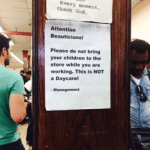
Beauty Salon SignHe certainly chose the right audience. A sign at the front of the shop read, “Please do not bring your children to store while you are working. This is not a daycare.”

If your child is eligible for pre-K, or you know someone with a child who needs it, you can call 311 or find a list of available community based pre-K programs at nyc.gov/prek.



Fallen FDNY Firefighter Defines Heroism


by Barbara Nevins Taylor


We talk a lot about heroism. And we can argue about whether superstar athletes and noisy politicians and even pundits fall in this category. But we can’t argue about the heroism of men and women who put their life on the line every day to help others. Lt. AmbelasThe funeral of 40-year-old New York City Fire Department Lt. Gordon Matthew Ambelas served as a reminder to us all of what heroism really means. The fallen FDNY firefighter defines heroism. Lt. Ambelas, a 14-year FDNY veteran, was overcome by flames and smoke searching for survivors in a high-rise fire in Williamsburg on Saturday, July 5. An estimated 7,000 firefighters from New York City, Philadelphia, Boston and Canada put on their dress blues and white gloves and came to Staten Island to mourn one of their own. They stood silent and still, in some places eight deep, shoulder-to-shoulder, on one side of the narrow stretch of Nelson Avenue that leads to St. Clare’s Church in Great Kills. Ambelas FuneralTwo fire trucks from houses where Lt. Ambelas worked led the funeral procession, followed by the Emerald Society Pipes and Drums wearing traditional kilts. They played a rhythmic dirge on drums covered in black and after them came firefighters who flanked the fire truck that carried the American flag-draped coffin of Lt. Ambelas. In the church, New York City Mayor Bill de Blasio gave the first eulogy. He said, “A historian wrote some years ago, ‘Every hero mirrors the time and place in which lives. He must reflect our innermost hopes and beliefs in a very public way.’ And that was certainly true of Matt. His life embodied the values that we as New Yorkers cherish most.


“He was very hard-working. We honor that hard work. He was dedicated. He was a man for whom diligence came easily. Dedication was pervasive in him. And through his hard work he won the rank of lieutenant. “

The loss is difficult for the FDNY and the city at large, but it is tragically personal for his widow Nanette and their beautiful daughters, eight-year-old Gabriella and five-year-old Giovanna. Nanette Ambelas asked a friend to read the eulogy she wrote for her husband. Margaret Gulliksen read the description of his warm, loving relationship with Mrs. Ambelas and their daughters and then read perhaps the most poignant lines, “How am I supposed to breathe without you? Who will pick me up when I fall?” Mrs. Ambelas wrote. I hope Nanette Ambelas and her daughter find their way.  Even deep in their tragedy they have a head start on many. Our real heroes pick us up when we fall and often provide the inspiration and courage for the rest of us to make our own way. It sounds like Lt. Ambelas did that and more for his family and the city. Flag draped coffinNext time someone mentions the word hero, think about  Lt. Gordon Matthew Ambelas.    


Mayor de Blasio Signs Immigrant ID Card Law

by Barbara Nevins Taylor

Mayor de Blasio assured naysayers today that the immigrant ID card legislation he signed into law will protect the privacy of undocumented immigrants.

The mayor used the backdrop of the Brooklyn Public Library, with City Council Speaker Melissa Mark-Viverito by his side, as he officially created the New York City Municipal Identification Card. The library will serve as one of the many walk-in enrollment centers where you can sign up for a card when the program kicks off in January 2015.

He said, “. . . this card is important for all New Yorkers. It is important for all of us to have a better city. Even for those who already have ID, we’re going to make sure that this card brings a lot to the equation, a lot of benefits that will go with it. But for those who don’t have ID, it’s going to be crucial. And that includes a lot of people.”

Almost half a million undocumented immigrants can apply for the card. In addition, those leaving prison and hoping to start again are eligible. The program also hopes to help older people without driver’s licenses, young people in foster care and transgender people.

The city plans to make enrollment widely accessible using an online site and mobile enrollment units that tour the city.

The idea is get those who need the ID card to enroll quickly and to get banks and other institutions to recognize it as a legitimate form of ID.

Mayor de Blasio said,  “A lot of work has gone into making sure that privacy rights are respected in this process. The information necessary to provide the ID cards will not be shared with any other government agency or third party, except in two situations. One, when verifying the individual’s path to eligibility for benefits they have applied for. The individual applies for benefits and that verification has to happen, that’s something that the individual chooses to act on. And second, of course, in response to a court order, subpoena or warrant. But the applicants will not be asked about immigrant status.”


Violence And the Elderly

By Barbara Nevins Taylor

67-year-old Thomas Yarnavick looked more like a nursing home resident than a killer when he appeared before Judge Dorothy Chin-Brandt in Queens Supreme Court and she sentenced him to 17 years in prison.

The facts were plain and he admitted to them. Yarnavick said he and his 71-year-old roommate at the Beacon Rehabilitation and Nursing Center in Rockaway Park argued about closing the white curtain that separated their beds.

When the argument in the early hours of October 2013 got too much for him, Yarnavick admitted he took off the metal footrest from a wheelchair and hit his roommate, Jailail Singh, in the head repeatedly. He then hid the bloody footrest in a hamper.

District Attorney Richard Brown said, “This was a particularly senseless and disturbing killing of a man living out his days at a nursing facility.”

It was disturbing and senseless. Certainly, it’s extreme. But if you spend any time in a congregate care facility for elderly people, you might not find this so surprising. 

My 90-something mom lived at a beautiful and well-run assisted living facility, but there was a man who was nasty and mean to some of the other residents. Staffers told me that one day, he was picking on a woman who started to cry.

My mom saw the woman crying and marched over, pushing her walker as fast as she could. She took the woman by the arm and pulled her away. “Stay away from him. He’s a bully. Don’t let him make you cry,” she said.

This made my mother a hero to her friend and the staff. But it’s also an insight into the human dynamics of a place where people live in close proximity and get on each other’s nerves.

Intervention is not always possible. Tempers flare and when they do, some resort to violence.

The  U.S. Department of Justice (DOJ),  the Department of Health and Human Services (HHS) and the Department of Aging are trying to raise awareness and prevent violence against the elderly and elder abuse. Researchers estimate that one in ten Americans over 60 experience abuse.

The numbers are muddy because crimes by and against the elderly often go unreported. But it’s thought that 5 million older people face some kind of abuse, whether it’s physical, psychological, financial, or neglect, annually.

For those of us in the Baby Boom generation, violence and the elderly is a serious concern. The Obama administration and advocates say they want to aggressively tackle the potential threat of violence to a huge segment of the population.

Kathy Greenlee, HHS’ assistant secretary for aging and administrator of the Administration for Community Living, said, “From now until 2030, every day, about 10,000 baby boomers will celebrate their 65th birthday. And the fastest-growing population is people 85 years old and older. Stemming the tide of abuse will require individuals, neighbors, communities, and public and private entities to take a hard look at how each of us encounters elder abuse—and commit to combat it.”

Advocates created what they call the Elder Justice Roadmapwhich highlights a government effort to combat violence. They plan a series of workshops and symposia to tackle the issue.  Two New York institutions, the Brookdale Center for Healthy Aging at Hunter College, the Harry and Jeannette Weinberg Center for Elder Abuse Prevention at the Hebrew Home at Riverdale, and the New York City Elder Abuse Center will be co-sponsoring a symposium in September 2014.


Payday Lender to Refund $5 Million

If you ever felt strapped for cash and were tempted to take a payday, or short-term, loan, you know what happens next. Interest rates spiral out of control, you may borrow a second or third time and you end up owing much more than you ever thought you would.

So it’s welcome news that the Consumer Financial Protection Bureau (CFPB) cracked down on ACE Cash Express, one of the largest payday lenders in the U.S. The bureau found the company’s 2011 training manual offers an outrageous example of how it lures consumers into loan after loan.

The CFPB says a 2011 ACE training manual describes the way the company operates.

According to the CFPB a training manual graphic says, “Consumers begin by applying to ACE for a loan, which ACE approves. Next, if the consumer “exhausts the cash and does not have the ability to pay,” ACE “contacts the customer for payment or offers the option to refinance or extend the loan.” Then, when the consumer “does not make a payment and the account enters collections,” the cycle starts all over again—with the formerly overdue borrower applying for another payday loan.”

The CFPB charges ACE used these illegal tactics:

  • Harassed borrowers.
  • Falsely threatened lawsuits.
  • Falsely threatened criminal prosecution.
  • Created a false sense of urgency about repayment so that people would borrow again.

Borrowers victimized by these payday loans will get something back. ACE will pay $5 million in refunds and pay a $5 million penalty.

The company based  in Irving, Texas offers payday loans, check-cashing services, title loans, installment loans, and other consumer financial products and services online. It also operates 1,500 retail storefront operations in 36 states and the District of Columbia. 

CFPB Director Richard Cordray said, “This culture of coercion drained millions of dollars from cash-strapped consumers who had few options to fight back.


Mayor Puts Spotlight on New York City ID Card For Immigrants

New York City Mayor Bill de Blasio held a public hearing and put the spotlight on the New York City ID card for immigrants.  The City Council voted, on June 26th, to create the municipal ID cards. Now the trick is figuring out how the largest ID program in the nation will work.

The cards will be available for undocumented immigrants, the elderly, homeless people and those who are transgender and have difficulty getting documentation.  The city will issue the cards in late 2014 or early 2015 at a cost of about $8.4 million to launch.

Critics of the program say that it will make undocumented immigrants easier for federal authorities to find and deport. But immigration advocates and those who will benefit embraced the plan. Juan Carlos Gomez, an undocumented immigrant with the activist group Make the Road By Walking, said, “I know what it is to not have an ID, and I know this card will go a long way to building trust and confidence with immigrant communities and local authorities.”

At the City Hall hearing, Mayor de Blasio thanked Nisha Agarwal, the commissioner for the Mayor’s Office of Immigrant Affairs. She’ll spearhead the initiative and put it into practice.

The Mayor said, “The need for a municipal ID program is clear. There’s a large percentage of New Yorkers who do not have a New York State driver’s license – probably disproportionate to any city in the country, since so many people here do not own a car and do not drive. So you have a lot of people who don’t have that most basic form of ID across all demographics. And then, for those who are undocumented, or for folks who have been in other ways left out in our society, the municipal ID card represents a ticket out of the shadows.

“For example, for undocumented immigrants, many just don’t have a universally accepted form of ID. This will be the first time for many many New Yorkers to have that basic document that makes it possible to get a lease, to get a bank account, to get a library card, to get so many of the things that make day-to-day life possible. Hundreds of thousands of our fellow New Yorkers – people who are part of our communities, our neighborhoods, but don’t have those basic opportunities – the municipal ID card is going to open up those opportunities to them.

“For transgendered people, this will be the first time they’ll be able to choose their own gender marker on an ID recognized by the NYPD and other city service providers.

“For homeless New Yorkers, this is going to be a card that will allow them to get access to city services and other help they need more easily.

“And a muni ID is going to be more than just a simple ID card. We’re working hard to create a card that New Yorkers across the spectrum are going to want in their wallets, because we’re collaborating with private institutions to develop an array of benefits and discounts that will come with having a municipal ID card. These are being worked on and all of this will be finalized and launched towards the end of this year. A lot of people in this administration are working very hard, led by Nisha, to bring all these pieces together so we can get this up and running for people who need it in New York City.

“Now that’s what the card is. Let me tell you what the card is not. It’s important to note that the municipal ID card will not conflict with state or federal legal limitations. We’ve taken those into account very specifically as we’ve built out this plan. And the municipal ID card is not appropriate for use in transactions involving interstate or international travel. It’s for people in New York City to use in New York City. And we think it’s going to make a big difference in their lives here.”


Keep The Home When A Loved One Dies


by Barbara Nevins Taylor

The sadness of a death in the family is often compounded when there’s a question about who can take over the mortgage of the family home. If your name is not on the mortgage when your spouse or a loved one dies, problems can arise. 

If there is an outstanding loan on the property, even if there is a will that transfers the home to an heir, a bank might not want to add the new name to the mortgage.  In addition, if you were in this position and wanted to refinance to lower the interest rate and your payments, a bank could refuse.

So the Consumer Financial Protection Bureau (CFPB) stepped in to make things easier for families and allow an heir or heirs to keep the home when a loved one dies.

The CFPB  clarified its mortgage rules to insure that “when a borrower dies, the name of the borrower’s heir generally may be added to the mortgage without triggering the Bureau’s Ability-to-Repay rule.”

What’s the “Ability-to-Repay rule?” It’s a rule the CFPB created to prevent banks from making bad loans, as they have in the past, to people who do not have the ability to repay.

The clarification, which allows an heir to skip this vetting process, is important.

CFPB Director Richard Cordray said, “Losing a loved one should not mean also losing your home. Today’s interpretive rule makes it clear that when family members inherit property, they can take over the mortgage without jumping through unnecessary hoops. This gives heirs an opportunity to work with the lender to pay off the loan or seek a loan modification.”

The rule clarification won immediate praise from consumer activists. Alys Cohen, staff attorney at the National Consumer Law Center, said, “We hope the CFPB will go further and build on its October 2013 guidance to make clear that mortgage companies should accept loan modification requests from successors’-in-interest before requiring that person to assume the debt.”

 Let us know about your experience. 

 Choosing a Pet When You’re Over 55readmore

Message At Gay Pride Parade

by  Barbara Nevins Taylor

A mostly young, happy crowd stood three deep along Christopher Street where the Gay Pride Parade strutted and rolled by the Stonewall Inn bar.  N.Y.P.D. officers along the route seemed more like tour guides for the out-of-towners enjoying the parade and the sunny day, than cops on the lookout for trouble.

Cops at Sheridan SquareIt was easy to get a good vibe.

And that says a lot because the New York parade celebrated the 45th anniversary of the Stonewall riot, which marked the beginning of the gay civil rights movement. Just a bit of quick history in case you’re unfamiliar: in the 1960s police raided gay clubs pretty regularly because it was illegal for gay people to dance with each other and it was illegal to sell them alcohol.

A little after 1 a.m. on  August 28, 1969, eight police officers  targeted the Stonewall and began to arrest the nearly 200 people who were there.

At the time, it was a popular, noisy bar filled with drag queens, transgender young men and other young people. The police lined everyone up to wait for wagons to take them away, and while they were waiting a crowd gathered. The crowd clashed with the outnumbered police officers. Their protest sparked other protests around the city and helped create the gay liberation movement.

The 2014 parade also comes almost a year after the U.S. Supreme Court struck down the Defense of Marriage Act, which banned federal recognition of same-sex marriage. Since then, seven states have legalized gay marriage to bring the total number of states where it’s legal to 19.

But something else caught our attention. It was also fitting that right across from Sheridan Square Park young men stood with signs to offer another kind of message at the Gay Pride Parade. Marketers Benjamin Sherman and Damian Charles brought their “Say It With A Condom” business to the street where it matters.

“We’re doing this for free today,” Sherman told us. “We think it’s a good message and important to be out here.”

Sherman began putting messages on condoms during the 2008 presidential campaign when he placed photos of Barak Obama and John McCain on condoms and sold more than a million. Since then, he launched a company that sells the marketing service to companies and anyone who wants to put a message on a condom.

I'm Gay and that's OkayAt Sheridan Square, Sherman and the crew carried signs that said things like
“I’m Gay And That’s Okay.”

“Being Gay Is Not Voluntary. Hate Is.”

” Gay, Lesbian, Bi-Sexual, Straight, Human.”

Important messages for sure. Promoting his business, yeah. But subtly, or not so subtly, reminding people to use condoms is a pretty good message, too.


GE Capital to Pay $225 Million

When a credit card company or bank wants to sell you things like “Credit Card Security” or “Debt Security,” be wary. You can bet you’ll get less than what you pay for. The federal government’s action requiring GE Capital to pay $225 million, to settle charges of illegal marketing and  discrimination, is the latest reminder.

The  Consumer Financial Protection Bureau (CFPB) and the Department of Justice (DOJ) found a pattern of deceptive marketing and outright discrimination by GE Capital, which provides credit card services for major retailers. The company changed its name to Synchrony Bank on June 2, 2014.

HERE’S WHAT HAPPENED

Telemarketers for GE Capital called card holders and offered five different debt cancellation add-on products: “Card Security,” “Account Security,” “Account Security Plus,” “Debt Security,” and “Debt Security Plus.” But they didn’t mention that they were selling these credit card add-ons and if you signed up, you’d have to pay a fee.

They told consumers that these credit card add-ons were free. But this was not completely true. It was only free if you paid off your balance before GE Capital issued a monthly statement.

Telemarketers also failed to tell some consumers that they didn’t qualify for the add-ons because they were retired or disabled, and consequently they wouldn’t be eligible for cancellation benefits. 

In addition, they made it seem like it was a great benefit that you had to rush and sign up for immediately.

As a result of investigators’ findings, GE Capital will pay $56 million to approximately 638,000 consumers who became victims of these deceptive marketing practices.

GE Capital will also pay an additional $169 million to about 108,000 Spanish-speaking borrowers, in Puerto Rico and elsewhere, who couldn’t take advantage of legitimate debt relief programs because the company discriminated against them. They were not offered plans to manage their debt if  they said they preferred to have a conversation in Spanish.

CFPB Director Richard Cordray said, “We will continue to take action against marketing tactics that trick consumers into buying credit card products they do not want or cannot use. Consumers also deserve to be treated fairly no matter where they live or what language they speak.”

HOW YOU GET YOUR REFUND 

 If you’re a GE Capital customer who became a victim of these practices, you don’t have to do anything. You’ll receive a credit to your account or a check.

FIX CREDIT REPORT INFORMATION

GE Capital will also work with credit bureaus to fix any negative information that might have resulted because of the purchase of the add-ons.

How To Work Out After 50


by Kevin May

I grew up in a family of thirteen children and we didn’t always have enough to eat. We needed money and when I turned nine, I got my first job. I worked in a pizza place for tips and all the pizza I could eat. I got so fat that my nickname became “Fat Slice.”

My weight embarrassed my older brother Anthony. He was on his high school gymnastics team and he made me run with him. I hated it. I was so heavy that my bulk slowed me down and made it painful to run.

But then something happened. Maybe it was because my brother was helping me with exercise, I don’t know. But I began to pay attention to the Jack LaLanne TV show. He really inspired me. I watched Jack turn household items into exercise equipment. He also used his own body as a source of resistance to build muscle and it made it seem like fun.

I began to follow his instructions and work out on my own. I continued to follow my brother’s coaching and work out with Jack and pretty soon noticed changes in my body.

The real turning point came during my first year of high school.  I decided to try the fitness challenge, which is a series of track-and-field-type events and exercises. My first attempt resulted in  failure.

But I didn’t give up. I continued to exercise, and by the end of the school year I passed the fitness challenge. I climbed the rope and ran the required laps around the indoor track. My gym teacher gave me a trophy for the most improved physical fitness and that’s when my obsession with exercise and fitness began. I became a motivated and confident athlete. I competed in wrestling, bodybuilding and football.

After I graduated from high school, I went to work for a Jack LaLanne Health Spa in New York City. For the next 15 years, I worked at major health clubs and gyms including Gold’s Gym, Crunch and Bally Total Fitness.  I taught aerobics, body sculpting, stretching, and one-on-one training.

I also began to study martial arts. Judo really appealed to me and I earned my brown belt within a few years.

But then things changed for me. In the late 1990s, my wife Kathy and I moved to the suburbs. I took a job in retail home improvement and later in telecommunications. My work schedule made it very difficult to establish a regular workout routine and I began to gain weight, lose motivation and energy. My health suffered and I no longer recognized myself. I felt like that fat little boy again. It was a very depressing time for me. I was smoking cigarettes and my overweight, out-of-shape  body dragged me down so much that I didn’t even enjoy walking with my wife in the park.

I felt as though my work life had taken over and killed my passion for fitness.

But about the time I turned 50 I started to get serious again about my health and fitness. I lost my job installing satellite TV dishes and after I got over that, I realized that I could finally think about working on myself.

I joined a local gym and created a simple routine with basic weight training and aerobics. My body did not respond the way it did at 25 or 35. I could not do the same routines. I realized I needed to reassess my fitness plan and create a new strategy.   

Here’s what I did to face the challenge of  how to work out after 50:

1.  Went for a physical to make sure I was healthy enough to start a fitness program.

2.  The doctor helped me assess structural imbalances that may have developed from old injuries and repetitive strains. These changes required me to adjust my  posture and alignment.

3. I began to strengthen my core because all movements originate from the core.

4. I started with basic body movements and used calisthenics including lunges, pushups and bodyweight squats.

5. I began a program of low-to-moderate intensity aerobics for 20 to 30 minutes and made that part of my regular warm-up routine.

6. I changed my eating habits. I reduced my sugar intake, began to eat regular meals with more vegetables, fruits and lean meats and allowed myself to have a treat one day a week. I also quit smoking, began to drink lots of water and started to get 6 to 8 hours sleep every night.

7. I also include regular acupuncture sessions from my talented acupuncturist wife Kathy Yocum. This helps with joint and muscle pain and strain, reduces  inflammation, increases circulation, and improves my energy level.

BIG IMPROVEMENT

After almost a year easing into the routine and going slow, I made a good amount of progress. I lost 15 pounds of fat.  Because I could move with agility again, I went back to my real passion, Judo. But I still had to learn to pace myself in Judo to accommodate my age. The Judo works my whole body out on every level.

Here’s the big pay-off. After seven months of Judo, I am preparing to compete in the world Judo championship in the over-50 category next year.

I also returned to personal training and fitness. I look forward to sharing what I learned and my experience with people who are starting back into fitness at this age, or just beginning.

It is possible to feel and look your best at any age. Here’s to the next 50 years of health and happiness.


My Dad Was a Complicated Guy

When I pulled out the 75th birthday photo of my dad, Zeke Segal, it reminded me of the party where we celebrated at Bones restaurant in Atlanta. He amazed us that afternoon, when he gave us a new definition of “best friends.”

My dad was a complicated guy. Two nights before his birthday  party, my husband Nick and I flew in from New York and took Zeke and his girlfriend to dinner at La Grotta, another of his favorite restaurants. We talked about politics, the world, laughed and ate the good food. He consumed great quantities of red wine. His girlfriend, a woman about twenty-years younger, was smart, interesting and seemed to really like my father.  The evening flew by and I enjoyed my father more than I had in years.  We all almost forgot one critical thing.  We never mentioned my dad’s wife Theo.

She was at home several miles away and had no idea we were in town enjoying an evening with Zeke’s girlfriend, whom I believe she didn’t know existed.

After dinner, Zeke  got into his Cadillac tipsy and happy and drove home to Theo.

Two days later, we joined Theo and the party she assembled at Bones for the big birthday celebration. Zeke, with a glass of red wine in hand, chatted up the guests and enjoyed the attention of his friends. Most of the people at the party were from the condo complex where they lived in an Atlanta suburb. They frequently gathered in Zeke and Theo’s condo at five in the afternoon for a pre-dinner cocktail.

So the convivial group laughed at Zeke’s jokes and happily drank with him. But most of the people who’d worked with my dad at CBS News, and with whom he strongly identified, were absent.

When it came time for the toast, Zeke raised his wine goblet and  thanked everyone for joining him to celebrate his 75th birthday. And then he toasted them. “To my best friends in the world, right now,” he said. He didn’t blink.

It was an interesting concept, and I guess it’s one of the lessons Zeke taught us. You can have “best friends in the world, right now.” Or can you?

Here’s to my dad Zeke Segal. Maybe not the best father, but the one I loved then and love now.


Debt Settlement Playbook And How to Spot a Phony

The unscrupulous debt settlement playbook seems filled with the same x’s and o’s all across the country.  These folks organize a group of companies, use robocalls to solicit victims who owe money, promise to help clear up debts, collect a fat fee and leave the consumer in financial ruin.

The latest crackdown by the Federal Trade Commission (FTC) charges an Irvine, California-based company with failing to fulfill promises to provide legal advice and settle consumers’ debts.  This company audaciously charged some consumers as much as $10,000.

The FTC alleged that “DebtPro 123 LLC defendants told consumers to stop paying and communicating with their creditors. As a result, although consumers hired the defendants in hopes of improving their financial situation, their debt often increased, causing them to lose their homes, have their wages garnished, lose their retirement savings, or file for bankruptcy.”

The group of companies and individuals, led by Bryan E. Taylor, used robocalls, website ads, promotional videos and marketing  companies to generate leads.  They promised consumers would “become debt free and enjoy financial independence” within 18 months. They said their attorneys could use relationships with all of the major creditors to negotiate the best possible deal and claimed consumers could reduce their debt by 30 to 70 percent.

They asked for a Limited Power of Attorney from consumers and debited their bank accounts for illegal upfront fees, monthly charges and the supposed payments to creditors. But the FTC complaint says they didn’t begin to negotiate with creditors immediately and, even in cases where they did make some payments, they did not pay all of the consumer’s debts.

Some people were told their debts were “resolved” only to learn later that they still owed money and were being sued by a creditor.

This nightmarish situation highlights a few things for the rest of us:

Ignore companies that make robocalls or advertise on the web or on TV and promise to help you fix your credit or settle your debts.

Look for not-for-profit groups in your community that help with credit counseling. 

How do you spot a phony debt settlement company? The Better Business Bureau suggests you stay away if a company:

  • Demands that you provide account numbers or other financial details before it will discuss its services or fees.  
  • Boasts that it can lower your monthly payments by a specific amount or percentage.
     
  • Promises that it can “get you out of debt easily.”  
  • Claims that it can remove negative information, such as bankruptcy, from your credit report. 
  • Insists that you make an immediate decision. 


How Kids Learn Focus

Here’s quick look at how kids learn to focus and a surprising  insight into concentration provided, unwittingly, by a little boy. 

 We stumbled upon 6-year-old Miles playing chess in Washington Square Park.  At first, we thought he was adorable and stopped to look. Then we realized there was something more going on. This child was engaged by the game and used the kind of single-minded focus that’s really important in every thing that we do.  It really got us thinking.

We watched Miles play a game of speed chess with Omar, one of the park regulars. The boy kept his eye on the chess pieces and the moves Omar made. We looked around for Miles’ father and found him watching someone else play.  When I asked about Mile’s game the dad said, “He’s got chops but he’s still learning.”

What you see is what really happened. Miles paid no attention to the people walking by or  those stopping to talk and people like me taking photos and shooting video.

We were impressed because Miles kept his eye on the chess pieces and didn’t look or dart around. He zeroed in on the board  and the moves he might make instead of letting his thoughts wander.  He paid attention when Omar encouraged him to move and asked him commit to an  even deeper focus “Come-on Miles, ” he urged. And the kid responded by taking Omar’s king.  It doesn’t matter whether Miles won or lost. What counts is that at six  he understands how to concentrate on one thing at a time.

I don’t want to sound cranky, but distractions threaten every thing we do and the myth of  multi-tasking really messed a lot of people up.  We all have to focus to do something well.  Life really is a one thing at a time proposition and requires putting one  foot in front of the other to move forward.  And this little chess player is a great example. Miles was right there with the game, and that’s the kind of focus we all  need for everything  that we do. 

I’m looking for more examples of the ability to zero in on one thing at  at time. Recommendations anyone?

Pension Advance Company Changes Name

by Barbara Nevins Taylor

What’s in a name? that which we call a rose

By any other name would smell as sweet; Shakespeare wrote.

By the same token a pension advance company that changes it’s name and continues to do the same thing is pretty much the same company and raises the same alarm bells for people who think about borrowing money against their pensions.

We reported about Darren Scott in our story Pension Advance Plans Take a Big Bite.  Darren thought he was borrowing $5,000 on his pension and wound up owing over $24,000. He tells us now that he received an email from Pension Annuities and Settlements, the company he borrowed from, announcing a name change.

They wrote: “Pension Annuities and Settlements is pleased to announce the new name of our company, Future Income Payments LLC. This is simply a name change for the consistency of branding. Our Management Team, Processing, Collections Team, methods of payment by you, etc., remain the same.

We are not a new company, we are the same company with a new face.”

The email goes on to remind Darren and others that he, and they, are still obligated to pay the debt to this company, by whatever name it calls itself. 

The old face of the company was attracting a good deal of scrutiny.

We recently reported,  the Washington State Department of Financial Institutions (DFI) Consumer Services Division  filed charges against Pensions, Annuities and Settlements, LLC (PDF), and Pension Funding, LLC (PDF). The called the companies  unlicensed lenders and accused them of making illegal loans with excessive interest rates that ranged as high a 129.9 percent

Washington’s  DFI Director of Consumer Services Deborah Bortner said, “Loans that are made by unlicensed companies with interest rates exceeding the legal limit are particularly harmful when large loan payments cut into retirees’ limited monthly pension income.”

 And on the East Coast, as ConsumerMojo previously reported, New York and other states are investigating pension advance companies. New York State subpoenaed records from  Pension Annuities and Settlements. 

So stay tuned.


Auto Loan Servicer and Debt Collector Will Pay Millions

Here’s the kind of thing we like to hear.  An auto loan servicer and  debt collector will pay millions to consumers it allegedly cheated and harassed.  And 128,000 people who financed a car or vehicle through a dealer and were serviced by this company will get money back.

Consumer Portfolio Services, Inc. (CPS) will pay more than $5.5 million to settle Federal Trade Commission (FTC) allegations that it overcharged these customers.  

The Irvine, California company worked for auto dealers and banks all across the U.S.and it sounds like they were a nightmare for consumers.

The FTC says CPS  collected money it wasn’t owed, harassed consumers, falsely threatened to repossess vehicles and told employers and family and friends about consumers’ debts.  The list of alleged wrong-doing is long. Here’s what the FTC says the company did:

  • Misrepresented fees consumers owed in collection calls, monthly statements, pay-off notices, and bankruptcy filings.
  • Made unsubstantiated claims about the amounts consumers  owed.
  • Improperly assessed and collected fees or other amounts;
  • Unilaterally modified contracts by, for example, increasing principal balances.
  • Failed to disclose financial effects of loan extensions.
  • Misrepresented that consumers must use particular payment methods requiring service fees.
  • Misrepresented that the company audits verified consumer accounts balances.

 CPS agreed to refund, or adjust, 128,000 accounts more than $3.5 million, and stop collections on an additional 35,000 accounts to settle the FTC’s charges. It will will pay another $2 million in civil penalties.

HOW DO YOU GET YOUR MONEY?

Refunds should go out within 90 days to people who were victimized. Others should see adjustments on their accounts in that time period. If you have a  questions about your eligibility you should  contact CPS directly via telephone at 1-888-806-2367, email FTCsettlement@consumerportfolio.com

Payday Lending Bullies

If you or someone you know is tempted to get a quick cash loan from one of the online companies that offer short-term loans,  or if you’re thinking about  a local payday lender, here are some good reasons not to do it.  There’s also some equally unpleasant evidence that debt collectors use illegal techniques.

The Consumer Financial Protection Bureau (CFPB), during the past year, reviewed the practices of companies that make  fast cash, short-term loans. It found a pattern of payday lending bullies in the industry who use harassment and deceptive techniques to try to collect money.

Here’s what they discovered:

  • Payday lenders sometimes threatened to take legal action to collect a debt when they know they won’t do it.   The CFPB says the threats are “unlawful deceptive practices.”
  • Some payday lenders threatened to impose additional fees or to debit borrowers’ accounts at any time, when this was not allowed by their contract.
  • Some payday lenders lied about non-existent promotions to lure borrowers to call back about their debt.
  • Payday lenders also called borrowers a number of times a day and  sometimes employees of the companies visited borrowers’ workplaces.  The CFPB says, “Such practices by lenders can violate the Dodd-Frank Act’s prohibition on unfair practices.”
  •  When payday lenders hired outside collection agencies, the CFPB says, employees of those companies harassed and threatened borrowers.        

The CFPB also looked at the practices of more than 4,500 debt collection agencies in the U.S., and the the picture they paint is as creepy as the payday lending world.

DEBT COLLECTORS

The CFPB found debt collectors intentionally and illegally mislead consumers about taking them to court and filing lawsuits when they had no intention of pursuing them. If consumers challenged the debt collectors they invariably dropped the lawsuits because they didn’t have the evidence to prove their claims. 

Some debt collectors, like the payday lenders, make “excessive and illegal calls to consumers.” Investigators found one debt collector made about 17,000 calls to people outside of the time that’s established by federal law. 1,000 consumers were called as often as 20 times within two days.

WHAT THE REPORT DOES

The CFPB says it aims to put companies on notice and pressure them to clean up their operations. The Bureau also alerted law enforcement officials who can take action against the worst offenders.

In the meantime, it’s wise to stay away from payday lenders and important to report harassment by debt collectors.