All posts by Barbara Nevins Taylor

Celebrate Labor And Raise Wages

by Nick Taylor

We need to honor American workers once again by committing to paying them a living wage.  Otherwise, we might as well drop Labor Day and substitute a holiday dedicated to low prices. We could call it Underwater Worker Day.

Labor Day began in 1894 to celebrate the American worker. Lately, however, American workers have lost ground on jobs, wages, and union representation. One result is depopulation of the middle class and an erosion of the traditional American dream — that we can all find a spot on the ladder to a better life.

Our economy now takes advantage of workers in the name of providing cheap consumer goods. Saving money is great! Everybody likes a bargain. But what’s the advantage when those bargains come at the expense of people who can’t afford to buy what they’re employed to produce or sell? Henry Ford understood this contradiction. It’s why he took the unheard-of step of doubling his assembly line workers’ pay to $5 a day in 1914 so they could buy the Model T’s they were making.

The U.S. House of Representatives and many employers continue to resist President Obama’s call to raise the federal minimum wage to $10.10 an hour from the current $7.25. It’s been the same since 2009 and even the proposed increase lags far behind worker productivity. At the same time, according to The New York Times, some employers manipulate time sheets, pile on unpaid overtime and commit other forms of wage theft. And some anti-regulation politicians think bringing back child labor would be a good idea.

We get it that employers need to stay in business if they’re to provide jobs. But a rush to the bottom, where workers are squeezed for every penny, leaves families poorer financially, emotionally, and in terms of opportunity.

Or, better yet, we could rededicate ourselves to celebrate labor and raise wages.

End of Summer Garden

by Barbara Nevins Taylor


The season is just too short and I always try to keep the color in my end-of-summer garden for as long as possible.

Purple Asters 2So I just cheated and added a big pot of purple asters. But beyond the brick walls of my tiny urban garden, it’s always a pleasure to see other people’s gardens hanging on, too.


Camden WaterfallThat’s why during the second week of August, when my friend Jeanmarie Woods said she wanted to look at gardens in the hills above the harbor in Camden, Maine, I joined her eagerly.

Jeanmarie plans to remake her garden in Mt. Desert, Maine, next year and hoped to find some good ideas, and I enjoy seeing what people like to grow.

Lynette WaltherMidway through our walk, we spotted Lynette Walther, working away as though it were May or June. Lynette, on her hands and knees, struggled to dig up an old bush she considered a predator.  She was eager to substitute a friendly type of rhododendron.

She greeted us like old friends when we stopped to admire the wide variety of colorful perennials and annuals  that surrounded her white frame home. “My husband said, ‘You’re moving things again,'” she laughed. “You always have to move things. Sometimes they outgrow a spot, or they don’t work where you put them.”

We had discovered a true garden expert. Lynnette  won the National Garden Bureau’s Exemplary Journalism Award. She’s a retired college professor and writes about gardens in Maine and Florida where she divides her time.  She’s the author of Florida Gardening on the Go, a guide to planting small gardens.  She’s also written a cookbook and contributed to the Brooklyn Botanical Garden’s Gourmet Vegetables.

But she didn’t tell us any of that. We learned the backstory later.  The day we met, she was happy to show us around her strategically planted garden and point out what she liked.

HydrangeasEverything gave her pleasure, from the seasonal lantana to Rose of Sharon,  her clematis, which still bloomed, to oak leaf hydrangea and other hydrangea varieties,  purple worts, a multitude of ferns, rapidly fading Echinacea, which is very popular in Maine, phlox, plants that looked like purple salvia and a small  cascade of Japanese Hakone grass that grabbed our attention.

Hakone


StargazersI loved the purple stargazer lilies that took center stage in the front of her home.


Stargazer VarietyThe care Lynette Walther took with the plantings surrounding them made the lilies look like the prize in a beautiful bouquet.


Lynnette gave Jeanmarie simple, straight-forward advice.

Lynette and Jeanmarie“Don’t be afraid to experiment and move things when you don’t like them in a particular place,” she said.  She surprised us when she didn’t tick off a list of fancy growers to supply plants. Instead she suggested the growers whose plants you can find practically anyplace, “Proven Winners. I always have a lot of luck with them,” she said. Then she got back down on her hands and knees to continue her struggle with the bush.


Scam “IRS” Phone Calls Continue

by Barbara Nevins Taylor

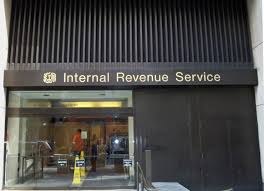
An alert from the IRS warns that “IRS” scam phone calls continue to plague consumers despite government efforts to track down and arrest the people behind them. The warning is important, but it also means that those of us who get the calls must make sure we don’t fall for threats and demands for our money.

Scammers may call anyone. But they frequently target people over 55.

Usually, a caller will demand money you owe. Or they may say that the IRS owes you a refund. They want you to wire money or give out your personal information such as bank account or Social Security numbers. They sound convincing, offer fake IRS badge numbers and sometimes the caller I.D. even pops up as IRS.  That’s another part of the scam. It’s called phone spoofing. They figure out ways to make the calls seem legitimate.

But the IRS doesn’t call you to demand money, or to say you have a refund coming. That’s the first thing you should remember, even if you get a little rattled by the call.

IRS Commissioner John Koskinen says,“These telephone scams are being seen in every part of the country, and we urge people not to be deceived by these threatening phone calls. We have formal processes in place for people with tax issues. The IRS respects taxpayer rights, and these angry, shake-down calls are not how we do business.”

The IRS created this list of 5 things that it never does:

1. Call you about taxes you owe without first mailing you an official notice.
2. Demand that you pay taxes without giving you the opportunity to question or appeal the amount they say you owe.
3. Require you to use a specific payment method for your taxes, such as a prepaid debit card.
4. Ask for credit or debit card numbers over the phone.
5. Threaten to bring in local police or other law-enforcement groups to have you arrested for not paying.

What To Do if You Get a Scam Call

  • If you know you owe taxes or think you might owe, call the IRS at1.800.829.1040. The IRS workers can help you with a payment issue.
  • If you know you don’t owe taxes or have no reason to believe that you do, report the incident to the Treasury Inspector General for Tax Administration (TIGTA) at 1.800.366.4484 or at www.tigta.gov.
  • If scammers called you, also contact the Federal Trade Commission and use their “FTC Complaint Assistant” at FTC.gov. Please add “IRS Telephone Scam” to the comments of your complaint.

Auto Insurers Overcharge Loyal Customers


by Barbara Nevins Taylor

Your auto insurer make take advantage of your loyalty by charging you too much. Newly revealed practices show that many auto insurers overcharge loyal customers and get away with it because we don’t shop around.

The Consumer Federation of America (CFA) says insurers play a statistical game that takes advantage of long-time customers’ reluctance to change companies. You may dismiss this and say, “I get a loyalty discount.” That’s true. Customers with good driving records who stay with an insurer generally get a 5 to 10 percent loyalty discount.

But companies use your personal data to calculate whether you are likely to stay with them, even if the rates go up. Then they factor in the discount and raise the rates higher than they should.

CFA’s Director of Insurance J. Robert Hunter warns,“Watch out!  Your insurer may be increasing your premium by far more than your loyalty discount, precisely because you have been so loyal.”

Insurers call the practice “price optimization,” or “PO.” The CFA says,  “Many insurance companies, including about half of the larger ones, raise a driver’s premium if they conclude that the driver is not likely to leave their company.  This means millions of drivers are possibly being charged a premium that is higher than the amount considered appropriate and fair for their risk profile.”

How Do They Get Away With It?

Most consumers don’t shop around for insurance:

  • 24 percent of drivers don’t shop for insurance.
  • 34 percent rarely shop.
  • 16 percent shop every few years

That means insurers can target three-quarters of policy-holders with price optimization.

What Should You Do? 

1. Even if you don’t want to do it, shop around for insurance. You may find lower rates with a different insurer.

2. The CFA asks you to get in touch with your state insurance commissioner and complain. State officials can tell insurance companies to stop using price optimization to unfairly raise rates.

You can find you state’s commission here: http://naic.org/state_web_map.htm

My husband and I plan to shop around immediately.  Comment and let us know how much your rates went up.


Take Care When You Choose a Nursing Home


by Barbara Nevins Taylor

Few of us want to think about the quality of nursing homes until it’s time to help a parent or relative or maybe use one yourself for rehab. But a recent story in the New York Times (NYT) by Katie Thomas found the Medicare watchdog system doesn’t always work.  That’s why it’s important to take care when you choose a nursing home.

I found this out the hard way with my cousin Marilyn. Before she moved into assisted living, she’d call an ambulance every time she had a back ache. Each hospital stay resulted in some kind of infection and when she was ready for release, they’d send her to a nursing home.  For a year or two she bounced between her Queens apartment in New York City, where she lived alone, the hospital and two nursing homes.

Both nursing homes were imperfect. They seemed to warehouse their patients and, in Marilyn’s case, to give her little care.  One nursing home embarked on a dusty construction project while she was there. The other just seemed grimy, and I had to ask for cleaning solution and rags to wipe out the set of drawers before I put her things in them. I couldn’t wait to get her out of there and into an assisted living facility where she finally agreed to move.

But the nursing home had Medicare’s seal of approval with a five-star rating, and my complaints did little to improve anything for Marilyn or anyone else.

The NYT story found that across the nation, the Medicare five-star rating system doesn’t ensure five-star treatment.  Although more than 15,000 nursing homes earned Medicare’s top rating, many may have potentially dangerous problems like inadequate staffing.

That’s what we found at the Queens facilities where Marilyn stayed. Medicare relies on nursing homes to self-report about staffing levels and other things and apparently some nursing homes figure out how to work the system. In addition, the NYT’s Thomas reported that the Medicare ratings don’t include negative information that states compile.

The last time Marilyn was in the hospital, I wanted her to go to a good rehab facility so that she could return to her assisted living apartment.  By this time, I was a pro. I asked the social worker for a recommendation for a good nursing home. She refused to endorse one. But when I named a  facility she said, “We don’t send anyone there.”

That was a good enough for me. I could strike a place from my list and ask about others. The social worker urged me to visit several nursing homes before I selected one. Honestly, I dreaded the visits and the time that it would take.  But this was great advice.

There’s a lot to consider if the nursing home will be a long-term residence, and we’ll cover those concerns in a separate post. But here are some suggestions for choosing a temporary nursing home.

10 Tips to Choose a  Temporary Nursing Home

1. Ask medical professionals or a social worker for suggestions of nursing homes that are close to where you live or work so that you can visit often.

2. Consult the Medicare list of nursing homes in your area even though it may be imperfect:  Medicare.gov/nursinghomecompare/search.html. And again, try to find a facility that’s close to where you live or work so that you can drop in at your convenience.

3. If the “professional” you ask for a referral won’t give you  a straight answer, use the back door approach and ask where they don’t send people.

4. Visit more than one nursing home so that you can make your own comparison. This is time-consuming, but worth it.

5. Check to see if the rooms and bathrooms are clean and free of foul odors.  I’m smell-sensitive and this was really important to me.  Check to see if drawers and closets for personal possessions are clean.

7. Look at the other patients. Are they cared for? Are they dressed appropriately?  Are they free of restraints?

8. Find out about staffing and how much attention each person gets from the nursing staff.

9. If it’s a rehab facility, visit the rehab area and see how the therapists and patients work together. Ask how much time is given to rehab and ask patients and family members if they are satisfied.

10.  Ask about the food. This is really important. Ask other residents, or family members if they can eat the food.

Always try to find a nursing home resident or a visiting family member who can tell you about their experience. It’s true that some people are always unhappy, but you are bound to find some who will talk honestly and share their knowledge with you.

Comment and tell us about your experience.

readmoreYou might also like: Advocate for My Mom


Steps to Ensure Contraception Coverage

by Barbara Nevins Taylor

The Obama Administration took a bold step to ensure contraception coverage for women under the Affordable Care Act  (ACA) when their non-profit employers won’t provide it because of religious convictions. It’s also trying to deal with the problem created by the Supreme Court Hobby Lobby ruling that allows closely-held private companies to opt out of providing contraceptive coverage.

If a religious organization or a non-profit decides it won’t provide contraception coverage because of its religious beliefs, that’s its right according to a recent Supreme court ruling. But the Obama Administration’s new regulation aims to protect the rights of women employees.

Health and Human Services (HHS) Secretary Sylvia Burwell said, “Women across the country deserve access to recommended preventive services that are important to their health, no matter where they work.”

Here’s how they’ll get coverage.

Non-Profits

If a non-profit objects to providing contraceptive coverage on religious grounds, they can notify HHS in writing about their objection.

HHS and the Department of Labor will then notify insurers and third party administrators so that women enrolled in their plans can get separate coverage for contraceptive services at no additional cost to the employee or employer.

Closely-Held Companies

The Obama Administration also wants comment about a proposed rule that would give employees of closely-held for-profit companies like Hobby Lobby the opportunity to get coverage when their employer opts out.

In a news release, HHS said, “Under the proposal, these companies would not have to contract, arrange, pay or refer for contraceptive coverage to which they object on religious grounds. The proposal seeks comment on how to define a closely-held for-profit company and whether other steps might be appropriate to implement this policy.”

What do you think?  Comment and give your opinion.

Trapped in NYCHA Housing

by Barbara Nevins Taylor

Amadou Gueye raises his arm toward the ceiling and peels back the tape holding down the plastic. “It’s been like this for five months,” he says. The squarish hole, stuffed with bits of plasterboard, stares down at us. “It started leaking from the bathroom in the apartment above and my little boy was touching the water. I complained but they said I have to wait.”

But bigger problems dwarf the potentially dangerous ceiling leak. The family’s New York City Housing Authority (NYCHA) studio apartment on West 144 Street in Manhattan is just too small. Every corner, every surface, every corner of the room bursts with their possessions. Amadou Gueye’s family seems trapped in this 350 square foot studio apartment and trapped in NYCHA housing.

Amadou says he asked for a transfer to a larger apartment in 2009. Yet, NYCHA seems to have forgotten his family, leaving them in an apartment that is much too small. “I’ve always been told to wait. I’m on a waiting list. I’m tired of that. I’ve been going more than five times, back and forth to the office and the housing manager told me I have to wait,” he says, almost embarrassed.

Dejeume and baby2Two-year-old Muhammadou, neatly dressed in a striped Calvin Klein tank top, green shorts and sandals, looks like his 6’4″ dad’s Mini-Me. He tugs at his Amadou’s legs and grins showing all his tiny teeth. There’s almost no clearing for the toddler to play without bumping into his father or mother. His four-year-old sister Mame was sent to stay with family in Senegal because the apartment is too small to hold the four of them.

“When we talk to her, she says, ‘Dad, why you left me here? Are you mad with me, that’s why you left me here?’ She thought that we abandoned her,” he explains. It’s painful for him. They talk via video chat services, but he wants her home.

“We can not bring her back in this situation. We are waiting until we get a bigger apartment. School is going to open soon and we want to get her here.

Amadou first moved into the studio in June 2005. For a single man with a union job at a private midtown Manhattan club, the apartment was fine and convenient. Four years later, it still worked after he married and his wife came to New York from Senegal.

But the studio began to close in on them after Mame was born in 2010. By that time, his wife Djeumbe had her green card and she and Mame were added to the lease. Amadou also applied for a transfer.

NYCHA seemed indifferent to his request. He was told the computerized system would decide when and if he could have a transfer to a larger apartment in his building. He waited and waited and then after Muhammadou was born, he tried again. “Living in a studio with four people is not good for the welfare of the child,” he says.

A beige and brown sectional couch takes up about a quarter of the room. A big bed and dresser sit beside it. The galley kitchen is hidden behind the TV and a separate space for a child to sleep is curtained off in a tiny corner.

Amadou and his wife follow all the NYCHA rules  and they try their best. But these conditions can strain any relationship. “We do everything in one room. My wife cooks in the kitchen, I sleep here, my son plays around here. It’s bad for my son,” he says.

Even when he works the nightshift, it’s a hardship. “They can’t do anything because they don’t want to disturb me while I’m sleeping,” he explains.

When we asked the obvious question about why he doesn’t look for an apartment outside of the NYCHA system, he dips his head and looks down sheepishly. He’s afraid of spending more on rent than he can afford. “If I go outside and I try to get a bigger apartment for $1500 or  $1400, if I cannot afford it I may end up on the street. That’s what I’m upset about,” he says.

ConsumerMojo, on behalf of Amadou and his family, called Lucy Newman, a Legal Aid lawyer. She advocates for families in NYCHA apartments who need help. “It’s a nightmare,” she told us. “Very few families get transferred.”

Nevertheless, she asked Amadou to return to the office where he had filed his transfer request to learn the latest about his status. To his amazement Amadou discovered that his request was turned down. But no one in NYCHA had notified him.

It turned out Amadou’s $55,000 a year salary disqualifies him for an apartment for a family of four in the development where he now lives. The manager he spoke to told him he’d qualify for other NYCHA developments and gave him a list.

So Amadou picked another complex in Harlem and his computerized information, first filed in 2009, was updated.

“He said I will hear from them soon,” Amadou said hopefully. He knows that he is not alone in his quest. Although there are 178,000 NYCHA apartments,  Legal Aid attorney Newman says, “There were only 100 transfers in 2013 through NYCHA’s developments.


 

Spotlight On Dangerous Payday Loans

We’re glad to see the spotlight on dangerous payday loans.  John Oliver recently did a withering take-out on unscrupulous payday lenders that charge interest rates that can reach 850 percent, or more, and essentially force you to take loan after loan.

Typically, the small amount of money you borrow online or through a storefront payday lender may get you through a rough patch. But you’re likely to end up deeper in debt than when you started. The Consumer Financial Protection Bureau (CFPB) says 75 percent of people who borrow once borrow again and again.

Many of our readers ask about companies like Cash Mojo. You can draw your own conclusions. But it appears to be a referral service for payday lenders. And just remember, with these guys there’s no easy answer regardless of what they say.

Back to John Oliver. The comedian looked at the staggering interest rates and said, “Even the most demanding football coaches only ask for 100 percent.” He also focused on Texas lawmakers who protect the biggest payday lenders in the country.

Some states do have laws banning usury and limiting outrageous interest charges. But companies get away with marketing in those states with their online lending offers.

New York State has aggressively gone after payday lenders who work the Internet to hook people who think these loans will answer their prayers.

Recently, Attorney General Eric T. Schneiderman reached a settlement with Forster & Garbus. The company collects debts for payday lenders and Attorney General Schneiderman got them to agree to stop payday loan collections against New Yorkers.  The maximum interest rate allowed in New York is 16 percent.  But Forster & Garbus collected on loans that topped 850 percent.

Attorney General Schneiderman said, “Debt collection firms must make certain that the underlying loan is not a payday loan before filing a lawsuit, and they will be held responsible if they fail to do so. Ignorance is no excuse.”

But payday lenders don’t quit marketing and they spend a lot to get you to borrow. It’s easy to say, “Don’t do it.” But think of it as jumping into shark-infested waters. It’s dangerous.

You might also check out what John Oliver had to say.

Fee Scam That Targets Military Members Shut Down

Sure, free enterprise makes our country tick and we like it.  But we hate it when ripoff artists use “business” to target anyone, especially members of the military.  That’s why we applaud the Consumer Financial Protection Bureau (CFPB). It  shut down a fee scam that targets military members.

USA Discounters, Ltd., a company that operates a chain of retail stores near military bases, offers financing for purchases.  The CFPB says, “Discounters tricked thousands of servicemembers into paying fees for legal protections service members already had and for certain services that the company failed to provide.”

The Norfork, Virginia-based company operates retail stores across the country and sells furniture, electronics, bedding, and appliances. Most of the stores are located within a few miles of military bases.

When service members bought something on credit, USA Discounters asked them to pay a $5 fee to a company called SCRA Specialists LLC to represent them if they couldn’t pay the full bill.  Active duty service members are protected, by law,  from being harassed by creditors.

The CFPB says, “Discounters portrayed SCRA Specialists as an independent representative that would be available to receive notices of lawsuits filed by USA Discounters, inform USA Discounters of changes in the service members’ addresses, and verify service members’ military status to determine whether the service member was eligible for protection.”

But service members didn’t need the protection and those $5 fees added up. The CFPB got more than $350,000 in refunds for service members harmed by the scam.  USA Discounters will pay an additional $50,000 civil penalty.

CFPB Director Richard Cordray said,  “Targeting service members with scams disguised as legal benefits is unconscionable, and we will not allow this injustice to continue.”


Time to Recycle Clothes

by Nick Taylor

Controversy about for-profit companies that sell “donated” used clothing clouds the really important issue. Recycling clothing works on a number of important levels. First and foremost, it keeps millions of pounds of fabric out of landfills.

And then, of course, we satisfy our impulse to clean out a closet and maybe do some good by donating to a charity that can resell and make money and incidentally, we can claim a tax deduction.

 We’ve all bundled up clothes we no longer wear and dropped them at the Salvation Army, the Housing Works AIDS charity in New York City, or in a Goodwill Industries donation bin.

What most of us don’t know is that very little of that clothing is sold to thrift shop customers. Housing Works, where I donate regularly, and other charities, sell only a small percentage of what they collect in their stores. They sell the rest by the pound to for-profit companies for recycling or shipment for resale overseas.

Lately, though, those companies have been cutting out the middle man.

Viltex logo Companies like Viltex, a for-profit recycler based in Newark, NJ, puts its own bins out on city streets.
Here’s the problem, or problems.

In some communities, the recyclers plunk down the collection boxes without regard to whether people can get by, or even want them in their neighborhood. Many community zoning laws don’t cover this kind of obstruction. When people complain, the boxes get moved down the street or to another neighborhood.

In New York it’s illegal to place collection bins on public sidewalks, city property, or private property without permission. The law went into effect because theses boxes become  obstructions and eyesores that overflow and attract trash and graffiti. 

The bigger problem, though, is that the for-profit bins still give off that charity vibe with vaguely generous slogans written on the sides. There’s nothing to say they’re part of a profit-making operation. It’s a good bet that most clothing donors think they’re donating to the less fortunate instead of a company’s bottom line.

Deception aside, however, recycling clothing in whatever form is a good idea.

New York City has collected half a billion tons of recyclables so far in 2014 but there’s a lot to recycle beyond bottles, cans and paper and clothing is the next frontier.

Re-fashioNYC,  a clothing and textile recycling initiative, puts recycling bins into office and large apartment buildings and sends donations to Housing Works where they are sold to the public or recyclers. So far this year the program has collected 823,000 pounds of clothing.

And we city dwellers know that if you leave anything that’s even vaguely re-useable along with your garbage on the sidewalk, it’s likely to be scarfed up in minutes. Now, the NYC Stuff Exchange lets you go online to find locations citywide to donate, sell or buy used clothing.

And on Friday, August 15, ReuseNYC Thrift Store Day will encourage second lives for used clothing with discounts at thrift stores throughout New York.

Telemarketing Calls Plague Consumers

Do telemarketers keep your phone ringing? It’s likely that even though you listed your number on the Do Not Call Registry, unwanted telemarketers still work the phones and find your number. These telemarketing calls plague consumers nationally. 

The Consumer Federation of America (CFI) and the North American Consumer Protection Investigators (NAPI) found Do Not Call Registry violations and telemarketing abuses filled the fastest growing complaint slot in the  consumer complaint survey for 2013.

Do Not Call Registry“Despite the national Do Not Call Registry, strict rules concerning robocalls, and other protections, unwanted and fraudulent phone calls are still plaguing American consumers,” said Susan Grant, Director of Consumer Protection at CFA.


The groups used state and local consumer officials to help gather complaints.  And all seem to agree that we can blame innovations in technology for the barrage of phone calls.

Amber Capoun, president of  North American Consumer Protection Investigators and a legal assistant in the office of the State Banking Commission in Kansas, said, “Internet phone service, Caller ID spoofing software, prepaid cell phones that scammers buy anonymously and discard, auto-dialers and other technology make it easy and inexpensive for crooks to contact U.S. consumers from anywhere in the world.”

The top 10 consumer complaints for 2013 are:

1. Auto: Misrepresentations in advertising or sales of new and used cars, lemons, faulty repairs, leasing and towing disputes

2. Home Improvement/Construction: Shoddy work, failure to start or complete the job

3. Credit/Debt: Billing and fee disputes, mortgage modifications and mortgage-related fraud, credit repair, debt relief services, predatory lending, illegal or abusive debt collection tactics

4. Retail Sales: False advertising and other deceptive practices, defective merchandise, problems with rebates, coupons, gift cards and gift certificates, failure to deliver

5. Services: Misrepresentations, shoddy work, failure to have required licenses, failure to perform

6. Utilities: Service problems or billing disputes with phone, cable, satellite, Internet, electric and gas service

7. Landlord/Tenant: Unhealthy or unsafe conditions, failure to make repairs or provide promised amenities, deposit and rent disputes, illegal eviction tactics

8. (tie) Home Solicitations: Misrepresentations or failure to deliver in door-to-door, telemarketing or mail solicitations, do-not-call violations

  1. 8. (tie) Internet Sales: misrepresentations or other deceptive practices, failure to deliver online purchases
  1. 9.  Health Products/Services: Misleading claims, unlicensed practitioners, failure to deliver

10. Fraud: Bogus sweepstakes and lotteries, work-at-home schemes, grant offers, fake check scams, imposter scams and other common frauds

The two groups also put together a separate list of the worst complaints. These complaints either are the most unscrupulous, meanest, or cost the victims the most money.

Top 5 Worst Complaints 

1. Scams against the elderly.
2. Home improvement and construction.
3. Sudden business closings that left consumers in the lurch.
4. Phony sweepstakes and lotteries.
5. Landlord and tenant disputes.

Fleeced Military Members Get Debts Forgiven

You’d think military members might automatically get a fair shake when they go to buy something or try to finance it. That, apparently, is the naive view.  

And New York Attorney General Eric Schneiderman, 12 other state attorneys general and the Consumer Financial Protection Bureau (CFPB) remind us, once again, that some make millions preying on men and women in the military.

The latest outrage involves Colfax Capital Corporation and Culver Capital, LLC, known as Rome Finance.

An investigation found that more than 17,000 service members and other consumers came up on the short end of the stick with Rome Finance. Now the fleeced military members will get debts forgiven to the tune of $92 million.

Rome Finance set up kiosks near military bases and offered  computers, TVs, games and other electronic devices and equipment with an irresistible lure of no money down and instant financing.  They used typical predatory lending tactics.

The devil was in the small print of the contracts consumers signed. The CFPB says, “Rome Finance . . . masked expensive finance charges by artificially inflating the disclosed price of the consumer goods being sold. Rome Finance also withheld information on billing statements and illegally collected on loans that were void.”

It started innocently enough when a buyer filled out a credit application at the kiosk and signed financing agreements that did not accurately disclose the amounts they would have to pay for that financing.

CFPB Director Richard Cordray said the company’s, “. . . long run of picking the pockets of our military has come to an ignominious end.”

 It turns out the California based company was not licensed to lend money in any state and charged higher annual percentage rates than some states allowed.

 As a result of the Rome Finance settlement with the CFPB and 13 state attorneys general, service members can keep what they bought, but they won’t have to pay the debts.  All collections will be stopped on the $60 million contracts owed by 12,000 consumers and $32 million more owed by more than 5,000 consumers who had financing agreements.

Rome will also have to notify credit reporting agencies and service members that the debt is no longer owed.

The company filed for bankruptcy, is out of business, and its owners Ronald Wilson and William Collins are permanently banned from conducting any business in the field of consumer lending.

Tell us if a company picked your pocket.


Bad Guy With Gun Starts Wild West Shootout in West Village

by Barbara Nevins Taylor

It’s quiet, even a little sleepy, on West 4th Street on Mondays in July.  Tourists usually take the day off.  And that was a good thing on July 28. Innocent bystanders didn’t get hurt when a bad guy with a gun started a Wild West shootout in the heart of the West Village.  The gun violence left him dead and three law enforcement officers wounded.

Shooting on West 4th 5 The law enforcement officers,  two U.S. Marshals and an NYPD detective, part of the fugitive task force,were doing their job.  They  followed a lead to a head shop on West 4th to arrest suspected child molester Charles Mozdir.
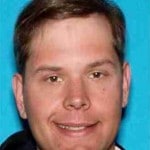
charles-mozdir1Two years ago, the Coronado Police Department in the San Diego, California area put out a fugitive alert for him. It’s safe to say that  Mozdir was the worst kind of creep.  He’d  been taking care of friends’ four year old son while he was ill, and the little boy told his parents that Mozdir abused him.

He was arrested, released on bond, and then failed to show up in court. Recently, the case gained national attention when the new CNN show, “The Hunt,” with John Walsh, featured Mozdir and showed his photo.

A tipster called and provided the address of the smoke shop on West 4th where Mozdir worked. The Coronado Police alert warned that Mozdir had a handgun registered to him and possibly a second handgun. He’d also made threats to take his own life and kill the father of his victim.

Shooting on West 4th 3The Fugitive Squad found Mozdir working in the smoke shop.  Investigators, as of this posting, are still figuring out what happened. But it’s thought that NYPD detective Mario Munoz entered the store first. He saw Mozdir and went out to get the marshals waiting on the narrow sidewalk.  When the three went in, Mozdir opened fire, according to Police Commissioner William Bratton.


Mozdir fired at least four shots from a 32-caliber gun and the law enforcement officers fired back, killing him. But the officers were wounded and are reportedly in stable condition. Mayor Bill de Blasio said their injuries don’t appear life-threatening.

Here we have a case of a bad guy with a gun, wounding three good guys. And it’s yet another reminder that guns do hurt people, good people.

The group Everytown for Gun Safety points out 86 people in the U.S. are killed by gun violence every day.  One of the law enforcement officers could easily have been a victim on West 4th Street.  NYPD Police Commissioner Bill Bratton said the bulletproof vest saved this detective.

But two big questions remain: what was a man like Charles Mozdir doing with guns? And when will we have sensible laws that keep guns out of the hands of bad guys?


Capitol Hill Hearing On The Future Of Medicare Advantage

Medicare Advantage seems to work for the 16 million who signed on to this form of managed Medicare.  And it’s appealing to many more.

More than half of those who enroll in Medicare for the first time, choose a Medicare Advantage plan. Private insurers like United Healthcare or Humana set up and run the plans.  But this year insurers made surprise changes and dropped doctors and healthcare providers in some areas. That prompted a public outcry.

The House Ways and Means Committee held a Capitol Hill hearing on the future of Medicare Advantage. With Republicans and Democrats at odds about practically everything, you can bet there was little agreement about what works and doesn’t in the world of Medicare Advantage.

Texas Republican Congressman Kevin Brady opened the hearing with the dire analysis that the Affordable Care Act has harmed Medicare Advantage and will continue to do so.

The Affordable Care Act called for lower payments to insurers and sharpened the rating system about performance and delivery of services. You’d think that would be a welcome idea. Instead, critics of the Obama administration suggest this will lead to higher payments for Medicare recipients.

At the hearing,  Dr. Robert Book a health policy analyst with the right-leaning, think tank, American Action Forum said, “Every beneficiary will experience some combination of higher co-payments, higher deductibles, a higher premium in excess of the Part B premium, reduced plan benefits services, and or smaller network providers.

But the sky is falling theory was challenged by the testimony of Medicare Rights Center President Joe Baker. He said, “The ACA (Affordable Care Act) strengthened the program for future and current enrollees. In addition to improving Medicare’s overall financial outlook, the ACA enhanced MA (Medicare Advantage) through added benefits, fairer cost sharing, and improved plan quality.”

Baker pointed out that streamlining the system wouldn’t hurt. And in fact, callers to the Medicare Rights Center’s helpline, and those who’ve talked to ConsumerMojo complain about the complexity of choices that leads to confusion.

Baker suggested that Congress fund state health insurance assistance programs fully so that they can help confused consumers. In addition, he also called for the passage of the Medicare Advantage Participant Bill of Rights Act.

The bill was introduced in June of 2014 by Democratic Congresswoman Rosa De Lauro of Connecticut and Democratic Senator Sherrod Brown of Ohio.

The act aims to prevent insurers from dropping doctors and other healthcare providers from their plans mid-year and causing havoc for consumers who are locked into Medicare Advantage plans.

When they introduced the plan Senator Brown said, “This bill would protect patients by making sure Medicare Advantage plans do not remove providers without warning or during the middle of a plan year.”

And Representative De Lauro suggested money, not quality, affected decisions to drop doctors and providers. “Congress has to hold these companies accountable, and make sure they are putting the care of their enrollees ahead of their profits.”

Citi $7 Billion Settlement Hits Home

by Barbara Nevins Taylor

Citigroup’s $7 billion dollar settlement comes long after many homeowners hurt by bad banking practices and their own optimism lost their pride, their homes and the sense that they can invest in the American Dream.

For years, I reported about homeowners who signed up for mortgages they couldn’t afford with interest rates that would ultimately sink them. They borrowed from Citi and practically every other bank you can name. Often these deals were done through mortgage brokers and no one seemed to care about the long-term consequences for the new homeowners. They practiced mortgage fraud, and got away with it for a long time.

The story of a man name Jeffrey stays with me. He bought a house he couldn’t afford in Brooklyn and began to renovate it. Pretty soon, his work on the home pitched him deeper into debt. When he approached a mortgage broker about refinancing, the broker suggested that Jeffrey, whose credit was bad, get a straw buyer to take a mortgage for him. In other words,  he asked Jeffrey to turn over the deed to someone else and ask that person to get a new mortgage.

Jeffrey asked a waitress at the diner where he had breakfast every morning to help him, and the 22-year-old agreed to apply for the loan.

There was no way that she qualified for a mortgage. She made the minimum waitress wage at the diner and tips. She told me she didn’t earn more than $24,000 a year. Yet the paperwork went through and she got the mortgage. The broker took a big chunk of the cash that came with the refinancing and the lawyers involved received their fees. The young woman never made a payment and found her credit was ruined.  Jeffrey couldn’t pay the mortgage and he faced the real prospect of losing his home.

I met Jeffrey after the home went into foreclosure. When I called the bank involved and asked how a loan like this could ever have been made, I was told, “It’s our business model.”

That’s the same model banks big and small used, because whether a man like Jeffrey or a young woman like the waitress could repay the loan didn’t matter.  Banks made the mortgages quickly and just as quickly bundled them and sold them as securities. If anyone looked at the paperwork, they would have discovered that many individual borrowers couldn’t possibly repay their loans.

So now here we are years later, and the Citi $7 billion settlement hits home. The bank takes responsibility for packaging, securitizing, marketing and selling residential-backed securities and misleading investors before January 1, 2009.

The court papers include internal emails like this one where a Citigroup trader stated that he “went through the Diligence Reports and think[s] [they] should start praying . . . [he] would not be surprised if half of these loans went down. . . It’s amazing that some of these loans were closed at all.”

The settlement requires Citigroup to pay $2.5 billion to help consumers hurt by the bank’s practices.  This will include:

  • Loan modifications.
  • Refinancing for distressed borrowers.
  • Down payment and cost assistance to others.
  • Donations to organizations assisting communities to develop affordable housing or rehabilitate existing buildings.

Attorney General Eric Holder said, “This historic penalty is appropriate given the strength of the evidence of the wrongdoing committed by Citi. The bank’s activities contributed mightily to the financial crisis that devastated our economy in 2008. Taken together, we believe the size and scope of this resolution goes beyond what could be considered the mere cost of doing business.”

In addition to money for consumers:

$4.5 billion will be paid to settle federal and state civil claims including $102.7 million to settle claims by the state of California, $92 million to settle claims by the state of New York, $44 million to settle claims by the state of Illinois, $45.7  million to settle claims by the Commonwealth of Massachusetts, and $7.35 to settle claims by the state of Delaware.

This settlement is part of the ongoing efforts of President Obama’s Financial Fraud Enforcement Task Force’s RMBS Working Group, which has recovered $20 billion to date for American consumers and investors.

Tell us your story. We want to continue to report about what happened.