Another slap for a big bank. Wells Fargo will refund some New York consumers for the questionable credit practices of one of its companies. Everything on this page sets out out the facts about the Wells Fargo refund settlement with New York State, but if you live in another state we have the latest information here.
It will provide $2 million in restitution to people who hold Nowline Visa Platinum credit cards. New York’s Department of Financial Services found that a company affiliated with the bank enrolled people with shaky credit, falsified credit applications and used their homes as security.
That’s a no-no in New York State. In addition, the company also failed to give the card holders discounted interest rates they promised.
But the bigger issue involves using people’s homes to guarantee their credit. That’s almost like using your home as collateral to gamble. New York State’s Financial Services Commissioner Benjamin Lawsky said, “Our investigation uncovered that this Wells Fargo affiliate put borrowers’ homes on the line for routine credit card purchases – creating substantial and undue risks for consumers.” I
f you are one of those people you might ask, “Does Wells Fargo Owe You Money?” In a settlement, Wells Fargo agreed to repay about 1300 people throughout New York. Each may receive about $1600.
The agreement requires Wells Fargo to reduce interest rates on these cards and release its hold on mortgages. It must also notify the bankruptcy trustee for all New York holders of the Nowline Visa Platinum Card that Wells Fargo is no longer a secured creditor.
What do you do?
The Department of Financial Services agreement with Wells Fargo requires the bank to do all the work. It must reach out to you and let you know that it will provide payment, reduce the interest rate, and contact the bankruptcy trustee.
You get Medicare when you turn 65. Seems simple enough. But how we wish that Medicare were really simple, clear and easy to navigate. Many of us find it too complicated and feel confused and frustrated by the choices and the sign-up procedures.
All of the above was true for me when I signed up. That’s why I began to research and we laid things out here to provide clear Medicare basics for Boomers and everyone.
Even if you are signed up already, you continue to have choices and you may want read on.
Medicare runs open enrollment periods when you can change your plans without any kind of penalty. It’s important to review your plan every year to make sure you are getting what you need. Every year’s open enrollment period begins October 15th and ends December 7th.
Most of us get Medicare Part A at 65
Part A covers:
Hospitalization
Nursing Care
Nursing Home Care
Hospice
Home Health Services
That’s the easy part. It gets complicated because anyone who doesn’t have a full-time job with health insurance needs to sign up for Medicare Part B within three months of turning 65.
Part B covers:
Doctor Visits
Routine Medical Care
Preventive Care
Ambulance Service
If you don’t sign up for Part B within three months of your 65th birthday, you won’t be able to get insurance immediately and you’ll have to pay a monetary penalty. The Medicare Rights Center’s Joe Baker explains, “If you don’t enroll in that initial enrollment period, you have to wait for January or March of that particular calendar year that you enroll in Medicare for coverage that begins on July 1st of that year. And you would have a 10 percent premium penalty for every year that you could have, or should have, signed up for Part B.” We explain more about this in ConsumerMojo.com’s video and post Boomers, Medicare Part B and Costly Mistakes.
Once you sign up for Part B, you confront a range of options because Medicare only covers 80 percent of your health care costs. Jennifer Cohen Smith of United Healthcare says, “When you buy additional insurance, it will cover that 20 percent.”
One of the options is Medicare Advantage. This plan coordinates basic Medicare Part A and Part B and it’s referred to as Medicare Part C.
Generally, you pay about $35 a month. Diane Wenzler of the Benefits Plus Learning Center at the Community Service Society says, “One of the good things about Medicare Advantage is that there is typically no premium, or there’s a low cost premium, and a co-pay.
Medicare Advantage is run by insurers like United Healthcare. An analysis by the Kaiser Family Foundation shows that 15.7 million signed up for Medicare Advantage plans in 2014. Insurers offer HMO plans where you get all your health care from their doctors, hospitals and providers. They also offer PPOs or Preferred Provider Networks where you have a wider choice of doctors, hospitals and the rest.
UHC’s Jennifer Cohen-Smith points out, “With every single Medicare Advantage plan there is a maximum out-of-pocket limit. It will vary by plan. But there is a dollar limit that you can count on that will the very most you can spend.”
Medicare Advantage plans generally include:
Dental
Vision
Hearing
Some offer gym memberships and more
They may offer access to a 24-hour nurse helpline and disease management program to help you manage chronic conditions. But your pool of health care providers is still limited and you may want more. That brings us to Medicare (original) with the Medicare Supplement, or Medigap. It’s call Medicare Part F. You pay a higher monthly premium in addition to the basic Medicare fee, but there’s generally no co-pay.
Diane Wenzler says, “With a Medicare Supplemental plan you can go to a provider that accepts Medicare and see the doctors of your choice.
So who should sign up for Medicare Supplemental?
Medicare Rights Center’s Joe Baker says if you are somebody who travels a lot, or has a second home in another state, you might want to think about original Medicare with Medicare Supplemental because that has no geographic limitations. It covers 90 percent of the doctors across the country.
Medicare Supplemental also includes travel abroad in some plans.
If you take Medicare Supplemental you also need prescription drug coverage. That’s called Plan D, and you’ll pay an additional monthly fee for that. Still, when we asked Joe Baker what he’d advice he’d give his father he said, “I have advised my father. He’s in the original Medicare program with the Supplement and the Part D plan. He travels a lot. He want to have access to as many providers as possible.”
But United Healthcare’s Jennifer Cohen-Smith has a different take for her family. She says, “I do advise my mom and I suggest a Medicare Advantage plan. We’ve grown up in the era of HMO’s and PPO’s and it’s a form of health care that people are comfortable with.” She also likes the fact there are extra benefits that include vision, hearing and wellness coverage.
TIPS TO FIGURE OUT WHICH MEDICARE PLAN WORKS FOR YOU
Make a list of your priorities.
Do you travel? If you do a Supplemental Plan might be best.
Check the plans to see which include your doctors, hospitals and prescription medications.
INSIDER’S TIP
Diane Wenzler of the Community Service Society offers an insider’s tip. “With a Medicare Supplemental, even if they don’t accept Medicare you can ask them if they will accept Medicare for you because doctors can accept Medicare patients on an individual basis.”
If you got a call from the IRS recently, you may worry and ask the logical question: Why is the IRS calling me? Don’t worry. The IRS never calls to collect taxes. And yet this IRS scam seems to get bigger and bigger targeting more and more people.
The scammers take advantage of our concern that a government agency like the IRS may swoop down on us. They understand that a call from the IRS stirs up the same sort of feelings you get when you spot a blue light flashing in your rearview mirror when you’re driving on the highway. It’s scary and intimidating.
These scammers call people in every part of the country. They can sound pretty convincing. They demand payment for taxes that you probably don’t owe, and ask you to wire the money immediately or put it on a pre-paid card.
Often the caller ID will say IRS. That’s as fake as the phony badge number the caller gives you. Just hang up.
The problem is so serious that more than 50,000 people took the time to complain to the Federal Trade Commission (FTC) in 2014, and those complaints went up 24 percent from the previous year.
The IRS suggests 5 tell-tale signs the call is a scam:
The IRS doesn’t call demand payment. They mail a bill.
The IRS doesn’t threaten or pressure. It gives you the opportunity to question and appeal the amount that it says you owe.
The IRS doesn’t require you to use a specific payment method to pay taxes. It wouldn’t ask you to wire, or use a pre-paid card.
The IRS doesn’t ask for credit or debit card numbers over the phone.
The IRS doesn’t threaten to bring in local police or other law-enforcement groups to have you arrested for not paying.
IRS Commissioner John Koskinen says, “We have formal processes in place for people with tax issues. The IRS respects taxpayer rights, and these angry, shake-down calls are not how we do business.”
If you get a phone call from someone claiming to be from the IRS and asking for money, here’s what you should do:
If you know you owe taxes or think you might owe, call the IRS at 1.800.829.1040. The IRS workers can help you with a payment issue.
If you know you don’t owe taxes or have no reason to believe that you do, report the incident to the Treasury Inspector General for Tax Administration (TIGTA) at 1.800.366.4484 or at www.tigta.gov.
You can file a complaint using the FTC Complaint Assistant; choose “Other” and then “Imposter Scams.” If the complaint involves someone impersonating the IRS, include the words “IRS Telephone Scam” in the notes.
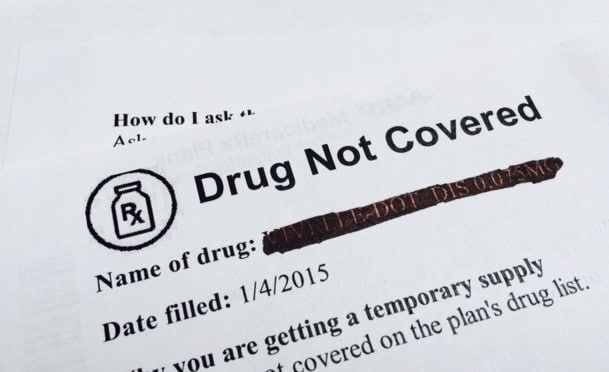
Alice recently opened a letter from her Medicare supplemental plan and groaned. The letter explained she would get a three-month, temporary supply of her prescription, and then it was over. The back of the letter told Alice (not her real name) the whole sad story in three simple words: “Drug Not Covered.”
The drug was covered the previous year, but the insurer said it would not cover it this year. Unfortunately, covered medication doesn’t roll over into the next year. Insurers change the drugs they offer, in what they called their “formulary,” every year. And last year, Alice neglected to review the new formulary to make sure the medication was on the company’s list of approved drugs for the coming year, when she re-signed with its Part D plan during the fall Open Enrollment period, which generally runs from about October 15 through December 7.
Okay. She and the many, many others like her can do something. And so can you when you get a Medicare “Drug Not Covered” letter.
Here’s How to Appeal When You Get A Drug Not Covered Letter.
1. Appeal
You may want to throw up your hands and do nothing when your insurer says it won’t cover a drug, but a little effort can help you get what you need.
2. The back of the letter should include contact information for an appeal. Your doctor has to make the appeal for you.
3. Email or fax your doctor’s office the information about the appeal and have the doctor explain why you need the medication as opposed to a similar drug that the insurer covers.
4. The insurer must respond with 24 to 72 hours. They will send you written notification about the decision.
5. If you and your doctor don’t like the decision, you can appeal again and ask for an exception.
6. In some cases, your doctor may ask you to try the substitute medication to see if it is effective. If it doesn’t work for you tell your doctor and ask him to make another appeal.
7. If you need the specific medication, appeal, appeal and appeal.
8. If you need help you can contact the Medicare Rights Center. It runs a free helpline: 800-333-4114.
Watch this video and Joe Baker of the Medicare Rights Center will explain more.
College graduates in New York State in 2015, and years to come if Governor Andrew Cuomo has his way, may get a gift from New York State. Governor Cuomo plans to introduce legislation for student loan forgiveness for NY State grads.
Cuomo’s idea will help freshly minted college graduates begin their careers and adult lives without worrying about their student debt. The governor proposed the Get on Your Feet Loan Forgiveness program so that you won’t have pay anything on your student loan for two years.
To qualify:
1. You must graduate from a college in New York State.
2. You must live and work in New York State.
3. You must earn $50,000 or less.
4. You must enroll in the federal Pay as You Earn Program (PAYE).
Governor Cuomo will announce the details of the program in his upcoming State of the State speech. He understands there are plenty of compelling reasons to help students in the state.
60 percent of New York students graduate with debt and
the average New York State four-year college graduate leaves school with about $28,000 in debt.
Study after study shows that college debt makes it difficult to move forward with your life. And our ConsumerMojoreports show that student debt prevents young people from buying a car, renting an apartment and buying a home.
Opportunity Agenda as it represents another step forward in our goal of growing economic opportunity for New Yorkers.”
If the programCuomo said, “By alleviating the weight of student loan debt, we can give our recent graduates a better shot at establishing themselves right here in the Empire State. I’m proud to include this item in my 2015 becomes reality, when a recent grad meets the qualifications, New York State will pay the difference between what the federal government covers and your loan payment. The state will cover 100 percent of a graduate’s loan payments for two years.
About 7,100 graduates are expected to enroll in the program in its first year and more than 24,000 will participate annually by 2019-20. It will cost the state about $41.7 million.
When New York City rolled out the new program to provide immigrants and others with legal documentation, Mayor Bill de Blasio predicted hundreds of thousands of people would apply.
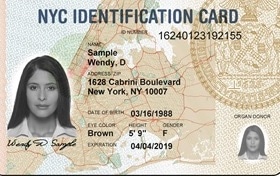
But he didn’t predict that enrollment centers where you apply for the card, called IDNYC, would have big lines and long waits. To make things smoother for people who want a New York City ID, the administration has now set up a way for you to make an appointment.
2. You can make an appointment for the closest enrollment center near you.
3. If you go to an enrollment center, a staffer there can help you make an appointment. But going online or calling seems like a better bet.
You can apply for a card any time and New York City promises to protect your confidentiality.
Human Resources Commissioner Steven Banks said. “The strong demand for IDNYC shows just how important this is to thousands of New Yorkers. We are committed to providing excellent customer service, no matter how many New Yorkers apply for the card. We are assigning extra volunteer staff with tablets to help make the process easier. We do ask for patience, given the huge volume of applications.”
Anyone who lives in the five boroughs can apply for IDNYC. You need to prove that you live in the city and you can do that with a telephone bill, a lease or other documentation.
You can read more about what you need to show in our previous post.
If your plans include buying a new home or refinancing, there’s a good reason why you need to shop around for a mortgage. Banks really do compete for your business and you can take advantage of the competition to get a better deal on the terms of the mortgage.
Yet a recent study by the Consumer Financial Protection Bureau (CFPB) found that almost half of those who apply for mortgages visit one bank or mortgage broker and take the offer they receive.
CFPB Director Richard Cordray said, “Consumers put great thought into the choice of a home, but the mortgage process continues to be intimidating.”
Fewer than one out of four borrowers submit a loan application to more than one lender or broker.
70 percent of consumers say they rely on their lender or mortgage broker to get information about mortgages. While lenders and brokers can offer valuable information, they have a stake in selling the mortgage. Consumers and lenders don’t always have the same best interest.
Borrowers who said the terms of the loan were more important than a “banking relationship” were more likely to shop around and get a better deal.
Consumers who mortgage shopped saved money. The CFPB says, “For example, interest rates can span more than half a percent for a conventional mortgage for borrowers with a good credit rating and a 20 percent down payment. For a borrower taking out a 30-year fixed-rate loan for $200,000, getting an interest rate of 4 percent instead of 4.5 percent translates into almost $60 saved per month. Over the first five years, the borrower would save about $3,500 in mortgage payments. In addition, the lower interest rate means that the borrower would pay off an additional $1,400 in principal in the first five years, building greater equity.”
The Consumer Financial Protection Bureau (CFPB) found that almost half of those who get a mortgage, don’t shop around. They visit one bank, or mortgage broker and take the offer on the table. But when you shop around, it’s likely that you will find a better deal.
To help you figure it out, we put together 7 tips to get the best mortgage deal.
Because it’s the American dream to own a home the federal government has programs to make it possible for you to buy a home using a relatively small down payment. Most of these loans are made through the Federal Housing Administration (FHA), which is part of the Department of Housing and Urban Development.
FIRST TIME HOMEBUYER
Mike Copley, Executive Vice President of TD Bank says, “The FHA is the most popular type of program for the first-time homebuyer.”
SEASONED HOMEBUYER
Yet even if you are a seasoned buyer, and have owned a home before an FHA mortgage may work for you. “FHA loans are good for anybody who wants to buy a house,” explains Manny Alvarado, a housing specialist with HUD. With an FHA mortgage you need only 3.5 percent down if your credit rating is good.
1. REVIEW YOUR CREDIT REPORT BEFORE YOU APPLY FOR A LOAN.
You can get a free copy of your credit report at AnnualCreditReport.com. Check to see if there are errors on the report. If there are write letters to the companies that have made the mistakes and write letters to the 3 credit bureaus, Experian, TransUnion and Equifax. Keep copies of everything that you send. Mistakes on your credit report will affect your credit score.
Banks use your credit score to determine what your down payment and interest rate should be. Banks generally use the FICO Score and you will pay a fee to the bank so that they can order your credit score. You too can see a copy of that before you apply for a mortgage. But you’ll have to pay for it. You can order a copy at MyFICO.com
How Banks Use the FICO Score
Every bank has slightly different criteria. TD Bank’s Mike Copley says, “If you want to go with 3.5 percent down, your FICO score has to be a minimum of 580. If it is below that you have to come in with 10 percent.”
You can learn about what goes into a FICO score and its importance in ConsumerMojo.com’s What’s the First Step to Get a Mortgage video and the accompanying Quick Downloads.
2. PUT TOGETHER YOUR DOWN PAYMENT
You can get help from others to assemble the down payment. “It could be gifted funds from friends and relatives. But it has to be gifted funds. It can’t be monies borrowed against a credit card,” says HUD’s Alvarado.
HUD uses a formula to determine if you have enough income to make your monthly payments.
You can’t spend more than 31 percent of your monthly income on mortgage payments. But if others will share the mortgage and financial responsibility with you, their income can be included in the calculation of that 31 percent. “You can have up to four people on an application. But they all have to be contributing the household,” says Alvarado.
3. CONSIDER AN FHA LOAN WITH A LOW DOWNPAYMENT
Bankers like FHA mortgages because the loans are insured, and there’s no risk to the bank if you can’t make your payments and default.
But to cover the cost of that insurance, FHA mortgages carry higher fees than most other types of mortgage loans. You pay an Upfront Mortgage Insurance Premium (PMI) of 1.75% of the loan and a monthly insurance fee of 1.25% of a loan that $625,000 or less. The fees are slightly higher for loans over that amount. It’s possible to roll these fees into the mortgage so that you pay them over the life of the loan.
FHA officials insist their mortgages are competitive. HUD’s Alvarado says, “If you go to a lender and you come in with less than 20 percent, they are going to say you have to have private mortgage insurance. With us, we call it the mortgage insurance premium and it’s comparable to anybody else.”
While FHA does finance homes over $625,000, it limits the price of the home you can buy with an FHA insured mortgage. The number varies from community to community. Go to www.hud.gov and click on “Buy a Home” to find what FHA will finance in your area.
HUD also encourages homebuyers to visit its website to find a local housing counselor at a not-for-profit agency to help navigate the home buying process. You can find a list of housing counselors at www.hud.gov. Click on resources and there’s a link to housing counselors.
3.CONSIDER A VA LOAN
The Department of Veterans Affairs also insures mortgages. This is great deal, if you qualify, because you don’t put any money down. That means you get 100 percent financing.
4. CONSIDER A USDA LOAN
The U.S. Department of Agriculture insures loans in rural communities. This program is similar to what the VA offers. You put no money down and you get 100 percent financing.
5. CHECK YOUR STATE, COUNTY AND LOCAL GOVERNMENT FOR HOMEBUYER GRANTS
State and local governments often offer grants for down payment assistance and closing costs. In some areas a homebuyer can get as much as $25,000 toward the purchase of a home.
6. APPLY FOR THE FIRST HOME CLUB, IF IT’S AVAILABLE IN YOUR AREA.
It was created by theFederal Home Loan Bank of New York, and you can find a complete list of participating banks in New York, New Jersey, Ohio and Connecticut at FHLBNY.
Kenneth Totten, Vice President and Chief Lending Officer of Metuchen Savings Bank, explains how it works: “You set up a savings account and for every dollar that you save on a monthly basis there’s a four-to-one matching grant.”
Banks use The First Home Club to get you to bank and borrow with them. It works well for those who qualify. If you save $200 a month for ten months you get a grant of $7500 from the bank. “That money is interest-free and it is forgivable over a five-year time frame. If you sell it (the home), you have to pay a portion of the money back, butonly the principle. There is no interest being charged,” Totten explains.
7. TAKE A HOMEOWNERSHIP COURSE THROUGH A NOT-FOR-PROFIT. THEY CAN HELP WITH GRANTS AND PROGRAMS THAT OFFER MONEY.
You are required to take a homeownership course at a HUD-certified not-for-profit counseling agency to get the money. The participating banks want to make sure you know what homeownership entails.
“Many people don’t know what they are getting into. They don’t know the expense of owning a home. It’s not just taxes, principal and insurance. Those are big-ticket items. You also have to pay for heat, water and electricity. If you own a house, if something breaks you have to fix it,” says HUD’s Manny Alvarado.
Housing counselors provide a reality check, and give you the information you need to succeed as a homeowner.
New York City’s new municipal identification program for residents of the five boroughs comes with solid benefits. Mayor Bill de Blasio said banks, credit unions and some other financial institutions will accept the card, called IDNYC, as a valid form of ID.
The city created IDNYC to provide immigrants, and others, with a legal form of identification and the Mayor expects hundreds of thousands of people will get a big boost from the opportunity. At a news conference to launch the card he said, “I don’t care if they happen to be an American citizen or if they happen not to be-it’s good to have ID.”
Because you can use one of the five major libraries to apply for a card, you also get a bonus benefit: you can get a library card that gives you access in every public library in the city.
In addition to library privileges, the card allows you to present legal ID to an employer, gets you discounts at museums, and cultural activities and some city tourist attractions. And that makes the card appealing to a wide range of New Yorkers.
“I’m applying as well as considering that it gives me access to resources of education, museums and cultural institutions,” Duke Nagrampa, a recent college graduate, told us. When we put out the word about the card on Facebook, David Rosenberg messaged, “I’m probably going to sign for one, if only because it’s a good thing to have.”
Here’s how to get an ID from New York City that will include your photo and date of birth.
You can apply for the free card if you are fourteen or older and you can use IDNYC for five years.
3. You can make an appointment for the closest enrollment center near you.
4. If you go to an enrollment center, a staffer there can help you make an appointment. But going online or calling seems like a better bet.
You can find applications in 25 languages at the libraries and twelve permanent enrollment centers across the five boroughs.
Enrollment Centers:
1. Brooklyn Public Library branch on Grand Army Plaza, the Queens branches in Flushing and Jamaica, the Bronx Library Center on East Kingsbridge Road and the Mid-Manhattan branch, or at Make The Road, 92-10 Roosevelt Avenue, Jackson Heights; Neighborhood Trust Federal Credit Union, 1112 St. Nicholas Avenue, Manhattan; or at one of the city businesses centers.
What You Need To Bring:
You need to provide proof of your identity and proof that you live in New York City.
You can use foreign passports, consular identification cards, foreign birth certificates, military identification, Electronic Benefit Transfer cards, and U.S. high school diplomas and U.S. voter registration cards. You can use an expired passport, as long as it isn’t more than three years out of date.
To prove that you live in the city, you can use New York City cable, phone or utility bills, bank statements, and residential leases.
If you are homeless you still will be able to get a card. You will apparently have some flexibility with what you can show.
Once the enrollment center verifies the document, they will take your picture and you should get the card in the mail within 10 to 14 days.
Council member Carlos Menchaca, the council’s first Mexican-American member, proposed the idea of the card last year. He says, “The IDNYC program continues to push the boundaries of possibility as it relates to government enfranchisement of local communities.”
City council members who endorsed the idea hope that New Yorkers will take advantage of the chance to sign up and use IDNYC at museums and other attractions including the Bronx Zoo.
“The benefits attached to the IDNYC card are spectacular and also include a free one-year membership to 33 cultural institutions from around the city. All New Yorkers should hurry up and get an IDNYC card now!” said Council Member Daniel Dromm.
It’s easy to overlook collecting a refund that you have no idea you deserve. So we’re happy to tell you how to collect your T-Mobile cramming refund.
Cramming? We reported about mystery charges that appeared on T-Mobile phone bills for services like flirty tips, gossip, horoscopes and more.
The Federal Trade Commission (FTC) filed suit against T-Mobile in July. The agency alleged that the company placed millions of dollars in unwanted third-party charges on its customers’ mobile phone bills and received 35 to 40 percent of every charge they placed. Apparently the practice began in July of 2010 and, according to the FTC, continued until at least December 2013.
T-Mobile did not admit guilt, but the company agreed to settle the case with the FTC and pay at least $90 million in refunds.
Even if you never noticed the charges, you may be due a refund. Here’s how to collect:
1. You need to submit a refund claim.
2. You can submit a refund claim and ask for a flat payment of $40. You don’t need any supporting documentation for this refund request.
3. You can also ask for an account summary that should show the extra charges and how much, if anything, the company owes you.
3. If the charges add up to more than $40, you might want to ask for a full refund. But you need to attach supporting documentation.
a. You can highlight the unwanted charges on the account summary T-Mobile sent you and send that back.
b. Or you can attach your bills and highlight the unwanted charges.
DEADLINES
Be aware that April 30, 2015 is the deadline to request an account summary.
The deadline to submit a refund claim form is June 30, 2015.
We all make these well-intended resolutions to exercise and yet to quote the 18th century Scottish poet Robert Burns:
“The best laid schemes o’ mice an’ men,
Gang aft agley, . . .”
Translation: Often go wrong.
Physical trainer Kevin May teaches a combination that you can do sitting or standing and it’s easy to get it right. The three-in-one exercise is good for everyone and perfect to maintain over 55 fitness.
We demonstrate the standing version. But if you feel you need to take an easier route, sitting works. Remember the caution to check with your doctor before doing exercise, especially if you think you may have a medical problem.
Here’s Kevins’ advice:
by Kevin May
These days, we all are pressed for time. I love this three-in-one exercise in the morning. You will only need about 10 minutes to complete this total workout, and you can do it in your own living room.
I came up with this combo when I was working a 9-to-5 job and had no time to go to the gym. These moves provide many benefits.
Primarily they improve muscle tone and strength in the major muscles of the body: the arms, shoulders, gluteals, core, and legs.
The movements increase circulation to your heart and throughout the whole body. You can get a light to moderate aerobic workout depending on the pace you keep while doing the moves.
You will need a pair of 2-pound dumbbells or a resistant cord with handles. You will need a chair if you are doing the modified version of this movement.
With the more advanced version the squat do the squat without the chair.
The sequence of movements is:
1. Stand in front of the chair or without a chair for the more advanced version. Make sure your alignment is correct. Your feet should be hip width apart. When bending your knees make sure you can see your toes when doing the squat or sitting in the chair.
2. Holding the dumbbells, one in each hand, palms and forearms facing forward. If you are using a resistant cord, secure the cord under both feet and hold the handles palms up.
As you sit in a chair or squat without a chair, flex your forearms onto your upper arms, completing a bicep curl.
3. When you stand up from the squat or chair, change the position of your arms to move into an overhead shoulder press.
Forearms will be facing your body and palms will face forward and out as you press your arms overhead.
Do not crunch or raise the top of your shoulders towards your ears when raising your arms overhead. This completes one repetition.
Then begin the movement again starting from step 1.
Start with 10 repetitions. You can work up to 3 sets of 10 repetitions. You can also increase your pace or speed, to get a more aerobic effect. This kind of movement is most beneficial to do one day on and next day off. Try to do it at least 3 times per week.
Good luck, keep moving a little every day and feel your body change.
Watch the videos! They can help you perfect your form.
Maybe you don’t let your dog get behind the wheel. But does your auto insurer charge you as though you might actually let your dog drive?
The price of auto insurance always seems a little mysterious. We know we need it. So we get it and generally continue to renew with the same insurer year after year. But the Consumer Federation of America (CFA) shook things up recently when it revealed that your insurance may be based on factors other than your driving record. It wants state insurance commissioners to ban this new practice.
The CFA found some of the most popular insurers use what the companies call “marketplace considerations,” and “price optimization” to charge customers more money, knowing they’re unlikely to shop around.
The consumer watchdog group sites a rate filing by Allstate in Wisconsin that breaks down how it assigns policy holders to these complementary groups, and then determines premiums that CFA claims range from “. . . a 90% discount off the standard rate to increasing his or her premium by 800%, depending upon Allstate’s analysis of the individual policyholder’s marketplace considerations.”
CFA sent letters to all U.S. state insurance commissioners and asked them to review whether Allstate and other insurers filed rate increase plans that include price optimization. CFA’s J. Robert Hunter, a former Texas insurance commissioner, wrote, “CFA believes price optimization will always result in unfairly discriminatory pricing that is illegal everywhere.”
Maryland has asked insurers to revise their plans if they use rate optimization and the CFA asks other states to do the same.
HOW DO YOU KNOW IF YOUR INSURER CHARGES TOO MUCH?
1. Ask your insurer if the company uses price optimization or market considerations. If the answer is yes, it’s a clue that you may be paying too much because your insurance bill is based on things other than your driving history.
High interest rates and high fees swamp military members even though the Military Lending Act aims to protect them from predatory lenders. That’s why the Consumer Financial Protection Bureau (CFPB) wants Congress to adopt a Department of Defense proposal to expand protections and close loopholes in the law. We know 4 good reasons to change the Military Lending Act.
HOW IT WORKS
The Military Lending Act bans short-term payday loans up to $2,000 that you must repay within 91 days, auto title loans that you have to repay in 181 days and short-term tax refund loans. But it fails to ban other types of loans with high interest rates
REASON 1-
HIGH FEES
Turns out military members borrow from banks and credit unions more often the rest of us. And they use the deposit advance programs that financial institutions run. This means they borrow where they deposit money and pay high fees to get the loans.
A CFPB report found service members borrowed more than $50 million using deposit advances in a 12-month period. They typically paid fees of $10 on every $100 that they borrowed. Under proposed regulations, fees would be significantly less.
REASON 2-
HIGH INTEREST RATES
Some companies charge military members an annual percentage rate of more than 300 percent.
REASON 3-
COVERS ALL LOANS
The law would cover any payday loan or auto title loan, for any length of time and any amount. The CFPB report found many examples where people pay far more than they should.
In one case, a military spouse spent $5,720.24 to borrow only $2,575.
In another instance a California company charged a service member $3,966.84 to borrow $2,600 for a year.
REASON 4-
HIGH TIME
It’s high time to get serious about protecting military members who don’t get paid enough and often scramble from paycheck to paycheck. Men and women who serve the country and in many cases risk their lives should at the very least deserve the full protection of U.S. law from companies and institutions that take advantage of them.
UNTIL THE LAW CHANGES YOU MIGHT WANT TO WATCH THE VIDEO:
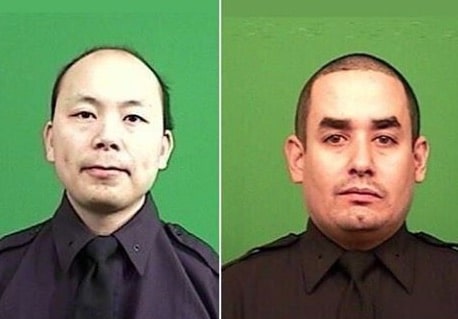
As a Latina, I join with others in the community of New York to mourn NYPD officers Rafael Ramos, 40, and Wenjian Liu, 32. I live in Bushwick not far from where Ismaaiyl Brinsley gunned them down in Bed-Stuy.
And those of us who live near the Tompkins Houses know the area is sometimes tough. We fear gangs and random gun violence and we know we need the police to patrol.
Many of us participated in the protests and “die-ins,” that hammered the city for days, after grand juries failed to indict white officers in the Eric Garner case on Staten Island and in the death of Michael Brown in Ferguson, Missouri.
Many Latinos told me they attended the protests because they dislike and fear racial profiling. But there’s more to it. We also support the police. We do not want to have an adversarial relationship with police officers who work in our neighborhoods.
And this seems to reflect the thinking of many Latinos all across the nation.
A Pew Research survey released after the Ferguson protests found 46 percent of Latinos trust their local police force to treat them the same as they do white people. 63 percent say the police do a good job enforcing the law and 45 percent have confidence in the police not to use excessive force on suspects.
Yet we march in New York and elsewhere because we found the use of stop-and-frisk and racial profiling excessive and we want fair treatment for people of color. But we do not want to encourage the crazed actions of someone like Brinsley and we do not want police officers attacked.
Leading voices in our communities reflect what we think.
Jose Lopez, a community organizer at Make the Road By Walking, a group that helps Latinos, said, “This is a time when we must all stand together against senseless violence.”
City Council Speaker Melissa Mark Viverito wrote on Twitter, “I am truly horrified at the acts of violence perpetrated against our #NYPD officers. I’m praying for officers shot & their families.”
Officers Ramos and Liu and every other good cop on the job deserve our respect for their efforts to protect our communities. It’s time to mourn the two officers and take the opportunity to work on improving police-community relations.
We mourn the murder of New York City Police Officers Rafael Ramos and Wenjian Liu — heroes who were attacked for the uniform they wore and the badge they carried.
Saturday’s killings were an attack on not just two of our finest men, but an attack on our democracy and our values — an attack on every single New Yorker.
But more than anything else, the murder of Officers Ramos and Liu are tragedies for their families, and I urge all New Yorkers to stand in solidarity with them. These families are now our families and they are suffering unspeakable pain.
There will be a time to return to debates of past weeks. But let me be clear: Now is not that time.
I ask all sides — those who have protested and those who have been vocal against protests — to step back and turn our thoughts to our shared identity as New Yorkers and to honoring the memories of the two fine men we lost.
First and foremost, let us remember our obligation to protect our police just as they protect us. If you hear or see a threat against the NYPD, call 911 and report it immediately.
But let’s also aspire to do more. One member of Officer Ramos’s family called for “peaceful coexistence” in our city. We can and must honor his memory and the memory of Officer Liu by being the best city we can be. Our strength has always been our incredible diversity, and within that diversity a bond that unites us far more than it divides us.
In these challenging times, let us rededicate ourselves to the common values we cherish: respect for all people, the rule of law, and the principle that the best way to move forward is by doing it together.
The assassination of New York City Police Officers Wenjian Liu and Rafael Ramos is heartbreaking and despicable. We feel for their families and for us as a community.
Who really knows what was in the mad mind of Ismaaiyl Brinsley when he traveled from Baltimore to kill cops, even though his Instagram posts shouted his intent? We do know these murders highlight the potential danger that men and women who sign on as police officers face every day. You never know when something crazy, dangerous or lethal will happen.
NYPD Commissioner William Bratton correctly says, “When you put that blue uniform on . . . you become part of that thin line between us and anarchy.”
And we know that some will jump at every opportunity to breach that line. I heard it in Washington Square Park last week, after the Eric Garner decision, when a woman with a bullhorn urged peaceful demonstrators to take lawyers’ numbers in case they changed their minds and decided to disrupt the protest.
The police are not our enemies. We need them in our neighborhoods and we need to feel that they are neither an occupying nor oppressive force.
We applaud Mayor De Blasio and Commissioner Bratton for their efforts to change the culture and weed out “bad apples” whose first instinct is to use force, or slam an innocent person of color.
But we also think this is a time to ratchet down the rhetoric and hope that the Patrolmen’s Benevolent Association (PBA) President Pat Lynch takes a breath. His anger at the mayor seems knee-jerk and destructive and blocks efforts to build new bridges between the people and the police.
13-year-old Jaden Ramos suffered the overwhelming loss of his father Rafael. But he had the presence of mind to write eloquently on his Facebook page. And I hope we all can hear him.
“Today I had to say bye to my father. He was their (sic) for me everyday of my life, he was the best father I could ask for. It’s horrible that someone gets shot dead just for being a police officer. Everyone says they hate cops but they are the people that they call for help. I will always love you and I will never forget you. RIP Dad.”