All posts by Barbara Nevins Taylor

Help For RushCard Holders

The Consumer Financial Protection Bureau stepped in on Friday to help people who have prepaid Visa RushCards and can’t get their money. Earlier in October, hundreds of thousands of cardholders discovered that although they knew they had money in their accounts, they couldn’t use it.

The CFPB says it plans to “get to the bottom of this situation that may have harmed thousands of innocent consumers already.” 

RushCard Instagram

On Instagram, RushCard apologized to cardholders and explained that the company switched to a new processing system that caused the problems. It also promised to eliminate fees during the upcoming holiday season.

But that does little for the people who need their money now. A woman on Facebook said, “I have missed a day of work due to this and have had lots of stress.” Another asked, “Where is my direct deposit? I’m a single mom and need the money.”

The Consumer Financial Protection Bureau says promises of RushCard officials fall short.

CFPB Director Richard Cordray said he spoke with UniRush CEO Rick Savard to make sure they “address harm that has occurred, the harm that may still be occurring, and the cascading financial effects of consumers not having access to their funds for more than a week.

The CFPB insisted that consumers need to have access to their money and told the company that it will use “all the appropriate tools at our disposal to help ensure that consumers obtain the relief that they deserve.

The CFPB will work with other government agencies, including the Comptroller of the Currency and the Federal Trade Commission, to try to make sure people are held accountable and cardholders are compensated for losses.

If you have a problem or continue to have a problem with the RushCard, file a complaint directly with UniRush and for backup with the Consumer Financial Protection Bureau (CFPB), or you can call the CFPB directly, toll-free at 855-411-2372.

File a complaint.

Tell us what happened to you. 


Why A Bank Turns You Down

Suspicions confirmed. And yes, sometimes you can justify a little healthy paranoia especially when it comes to big banks and even your local credit union. If you ever had trouble opening an account at a bank or credit union and thought the deck was stacked against you, you might have been right.

Wonder no longer why a bank turns you down.

A new report from the Cities for Financial Empowerment Fund (CFE Fund) and the National Consumer Law Center (NCLC) found that account screening agencies hired by banks use unfair criteria to rate your worthiness for a bank account.

Researchers learned that financial institutions originally hired the screening agencies to pinpoint customers who might commit fraud. But now, with about 80 percent of the banks using the screening services, the agencies check your history of  bounced checks  and overdrafts and make recommendations based perhaps on your mistakes. That’s a far cry from fraud or abuse.

Chi Chi Wu, an attorney with the National Consumer Law Center, said, “To accuse a consumer of committing account abuse by overdrawing her account is bad, given how bank practices have exacerbated overdrafts. But then to shut a consumer out of the banking system for years afterwards is unfair and egregious.”

The report raised concerns about how the agencies approach screening and it suggests:

  • Screening fails to take identity theft into account.
  • The screeners don’t have standard definitions of what constitutes abuse, or guidelines about the size or frequency of overdrafts.
  • Financial institutions don’t make it clear how they use the information they receive from the screeners. 

The Cities For Financial Empowerment Fund and the National Consumer Law Center want the screening agencies to create uniform standards for the way they collect and interpret information.  They also want the screeners to take identity theft and other types of fraud into consideration.

They also call upon regulators like the Consumer Financial Protection Bureau to step in and provide oversight.

Jonathan Mintz, President and CEO of the Cities for Financial Empowerment Fund, says, “…millions of consumers are excluded…not because of a lack of financial education, but because of the little-known and deeply flawed account screening agencies.”

 What do you think? Let us know.

 FIND OUT WHY YOUR CREDIT REPORT MAY NOT BE AVAILABLE ONLINE.


How Changing Medicare Plans Can Save You Money (2)


by Barbara Nevins Taylor


In the bewildering array of Medicare choices, Medicare Advantage stands out and seems to work well for the nearly 30 million Americans who chose to sign on to one of these plans. But plans vary, and change from year to year, and it pays to shop around. The Open Enrollment period in the fall gives you the chance to do just that.

Mitchell Clark of the Medicare Rights Center says, “If there’s one mantra for the open enrollment season, it’s “review your options.” We advise people with Medicare to carefully consider how they get their Medicare benefits.” 

From October 15 to December 7, 2015 you can switch your 2016 coverage in a Medicare Advantage plan also known as Medicare Part C. Keep in mind, loyalty doesn’t pay off in the medical insurance world. Insurers change-up their offerings every year and that’s why it pays to compare plans every year even though you wish you didn’t have to do it.

The booklet called “Annual Notice of Changes,” you should have received from your insurer will tell you what the insurer will charge for co-pays, fees and which prescription medication(s) it will include.

You have the chance to pick a cheaper plan, one that more of your medical providers accept, or one that offers the medication(s) you need and more benefits.

WHAT MEDICARE ADVANTAGE OFFERS

Medicare Advantage typically includes a lot of extras including vision, dental, and wellness programs including gym memberships and some include prescription drugs.

You pay the regular Part B premium of $104.90 a month and then you want to compare prices. Insurers have different requirements. Some may charge a monthly premium and others may charge different fees.  

You do want to make sure that you pick a plan that works for you. Medicare Advantage comes in several forms with different options. You can choose: 

A Health Maintenance Organization, or HMO – It will require you to choose doctors and providers from a specific network and you must get a referral to see a specialist.

A Preferred Provider Organization, or PPO – You pay less if you use doctors and hospitals in the insurers network. And you pay more for those you use out of network.

A Private-Fee-For-Service plan, or PFFS – You can go to any doctor or hospital as long as they accept the plan’s fees and the plan determines how much it will pay.

WHO SHOULD USE MEDICARE ADVANTAGE 

Experts say a Medicare Advantage program can work for you if the doctors, hospitals and medical providers accept the insurance, and if you don’t travel often. Generally, the plans do not cover doctors out-of-state or out of the country. 

HOW TO FIND A PLAN

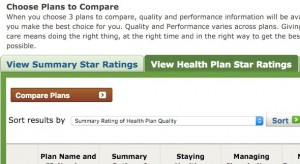
Medicare.gov offers a tool that will help you compare the plans available to you. It also provides ratings for plans and gives a plan one to five stars based on what it offers and how it actually works for consumers.

Star Ratings

You can also call Medicare directly at 1-800-633-4227 and say “agent” if you need additional help.

Insurers also compete for your business and offer seminars and community meetings where you get to ask questions.

Medicare Rights Center‘s Mitchell Clark offers this last bit of important advice: “If you decide to enroll in a new plan, we advise you to do so by calling 1-800-MEDICARE rather than the plan itself.” That way you can get additional information you may need.

← Previous


How Changing Medicare Plans Can Save You Money


by Barbara Nevins Taylor 

Loyalty. Those of us old enough to use Medicare tend to share an ingrained sense of loyalty about brands and the companies that serve us. But this is 2015 going on 2016 and it turns out that loyalty to insurance companies doesn’t pay. That’s why you might consider how changing Medicare plans can save you money.

And with open enrollment starting on October 15 and running through December 7, 2015 for insurance for 2016, this is the time for a serious review and maybe a change.

“Health needs can change in a year, so it’s important for people with Medicare to check to see if they are getting the best price and the best plan available,” suggests Andy Slavitt, Acting Administrator for the Center for Medicare and Medicaid Services (CMS). 

During the open enrollment period, you can change insurers for your Part D prescription drug plan and your Medicare Advantage plan.  More about that here.

Almost 40 million of us get prescription drugs through Medicare Part D. But how many of us get the most for our money?

Medicare Part D

Turns out seven out of ten of us ignore our best interests and spend more than we need to because we don’t switch plans, according to analysis by the Henry J. Kaiser Family Foundation of the data from 2006 to 2010.

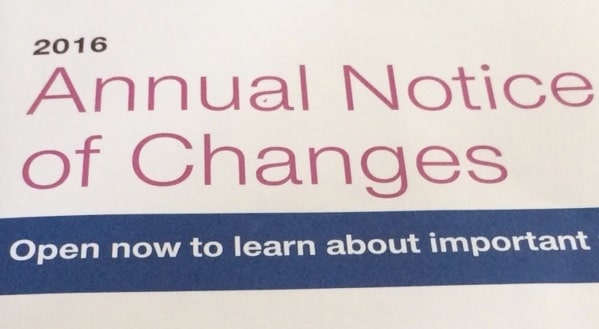
By this time, you should have received a booklet called something like, “2016 Annual Notice of Changes.”  Within the first few pages it tells you what your Part D insurance costs this year, and what it will cost next year. My monthly Part D premium of $52.10 will go up to $64.70 in 2016.

About 4.4 million will face at at least a $10 a month increase if you don’t shop around, according to the Kaiser Foundation.

That’s why Mitchel Clark of the Medicare Rights Center says, “It is very important that you read your ANOC (Annual Notice of Changes) and consider all of your options, since many plans make changes every year, and your current plan may not be your best choice for 2016.”

We’ll explain how to shop for a new insurer in just a second.

The Annual Notice of Changes also includes a section called, “Formulary,” and includes the list of covered medications. If you don’t find the medication(s) you use on this list, you really might want to find another insurer that covers your prescription drug(s). 


Medicare Plan Finder


SHOP AROUND


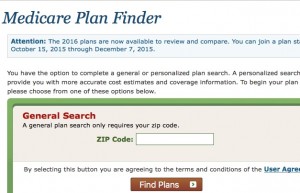
The Medicare.gov website offers an extremely useful tool. Follow the prompts and you can find out which companies offer the medication(s) that you need and then compare which offers the lowest monthly premium, copay and the overall best deal.

TIP: 

The steps on the website may seem daunting at first. But if you go through the instructions, or prompts, slowly,you can get every bit of accurate information that you need. 

If it all seems too confusing for you to sort out, check with one of the Medicare advocacy groups like Medicare Rights Center – 1-800-333-4114. Real people answer the phone and work hard to get the information that you need. 

And the Medicare Rights Center’s Mitchell Clark says,”If you decide to enroll in a new plan, we advise you to do so by calling 1-800-MEDICARE rather than the plan itself.” 

Continue →


WATCH: 


Great Moisturizer For Over-Fifty Faces

I admit it. I have spent a lot of money on expensive facial moisturizers and tried the most expensive brands. Sometimes I even liked them. But about six months ago, I tried something new and relatively inexpensive and found myself blown away by how well it works.

During the winter of 2015, nothing helped my skin. Dry and lusterless, it seemed to shout my age. (It’s a secret.)

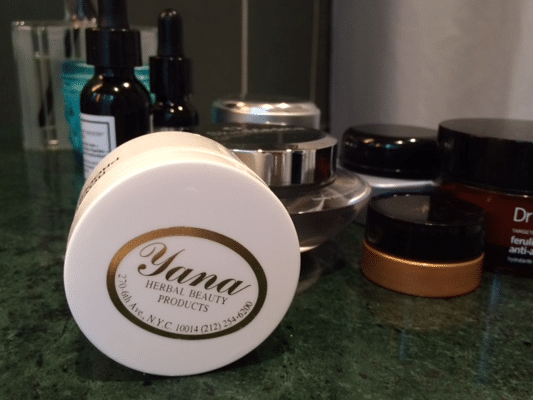
So one day, I stopped in to see Yana Yusupidi, a facialist who works out of a small shop in my neighborhood. She recommended Hydro Cream, something her mother developed in Soviet Georgia in the 1940s. At $35 it seemed like a bargain, certainly far cheaper than anything that I usually bought.

Yana Yusupidi and Cream


I began to use the cream regularly and the skin softened and seemed less flaky. I also use RetinA several times a week, so my skin tends to get very dry. But the Hydro Cream with SPF 15 kept me moist. I bought it again, and again and I still like it.

My skin certainly looks just as good as it did when I used the most expensive creams. I’m not on the payroll and get nothing for the recommendation, but the Hydro Cream does work as a great moisturizer for over-fifty faces. And I’m told younger women like it too.

You can buy the cream at  yanaherbalbeauty.com

And as you might guess, there’s a charming backstory of invention and immigration.

 Yana’s mother Emma Glaustova trained as a pharmacist in Tbilisi, Georgia. And as Yana tells it, “My mother was very beautiful and very vain. She wanted to protect and improve her own skin and that led her to make her own creams and lotions.”

Emma began to experiment on herself and her friends. She combined  natural ingredients that many top brand products contain today, like honey, pressed sweet almond oil, cold pressed peach oil, tea tree oil and rosemary oil.  

She also reached out to a chemist in Latvia and he helped her refine her formulas to develop products that she could sell. The chemist disappeared during World War II, a victim of the Nazis or the Soviets, Yana’s mother never learned which. “My mother even went to Latvia to look for him after the war. But there wasn’t a trace. She was always was grateful and talked about him often.”

Initially, Emma focused on two types of face creams: one for dry skin and one for combination and oily skin that tends to break out. She learned how to give European style facials and opened a shop in the Georgian capital where she also sold her products.

Eventually, Yana also studied European skin care and began to work with her mom. But in 1991, war and political conflict forced Emma, Yana, and Yana’s husband Igor Narimanidze and their two daughters, to flee Georgia. Yana’s brother Vladimir had settled in the U.S. in 1975. As a U.S. citizen he helped them immigrate to the states. 

Once the family settled in, Emma handed the commercial baton to Yana and Igor. They opened a small spa in the Village and Yana began to offer her European facials with the special products that her mother created  and expanded on over the years.

Yana says that she consulted with her mother to update the products and include sun protection and other important ingredients. Emma died in 2013 but her formulas live on.


An Adventure At Lululemon

“Great! Perfect choice! Goood!”  

Two salespeople in a Lululemon store in Manhattan made me laugh when they put exclamation points on the art of positive selling.  Whether or not the company manual teaches them to sell this way, the experience kept me laughing even after I shelled out an outrageous sum of money for a pair of yoga pants.

For a long time, I avoided Lululemon stores for a lot of reasons: too pricey, too trendy, too much controversy.  I do own a pair of the brand’s yoga pants that I bought years ago at the Shala, a New York yoga studio, before there was a retail store in the city. Honestly, I liked the way they fit.

So feeling giddy after a good meeting, my worst instincts led me through the door. Two young women, each with beautiful, shiny, streaked chestnut-colored hair falling gently to her shoulders, lounged against a table filled with folded workout clothes.

“Can you recommend a pair of pants for me?” I asked. “Sure,” they responded in unison.

“What are you looking for?” asked one of the women who introduced herself as C.

“I think I want a pair of cropped pants.”

“Great! What size? You look like a 4, maybe a two.”

“No. I have a big butt. Probably a 6.”

“Oh. Good!” she said.

I thought a minute and re-assessed. “An 8 probably to be on the safe side.”

Both women smiled and seemed to approve.

“An 8. Great! That’s good!” C said.

Even if I was fat in the butt, it didn’t matter. It was still “Good!”

She pointed to one half of the display on a high shelf. “This side has the tighter fitting styles.”Do you want something really tight that holds you in?”

“No. I can use a looser fit.” 

“That’s great! Then you’ll want something from this side.” 

Her coworker nodded and continued to beam at me.

 Every thing I said won enthusiastic nods, smiles and an effusive “Great!” or “Good!”

For a couple of minutes, they swept me away with the power of their radiant positive energy. My choice today would turn out perfectly.

C ran through a list of options from the right side of the platform. One style, even on the looser side, offered extra slimming

“I probably need it, but I don’t like to feel pressed in,” I said. 

A big smile spread across her face. She seemed to understand completely.

“Sure. That’s great!”

 “These are a new fabric and really good if you sweat,” she said.

“I don’t really sweat that much.”

“Ooh, good!” she said.

“Maybe I want to try a full length pant, even though my legs are short.”

“Great idea!”

“And I don’t want anything that sits below my waist. I hate it when it feels like my pants are falling down.”

They smiled and nodded again. “Oh good! Absolutely!” C said.

She handed me three pairs of pants and introduced me to the person in the dressing area, who also had great hair and continued to enthuse about everything that I tried on. 

“These look perfect!” 

“The fit is great!”

“What about the crotch on this one?” I asked.

“Looks great!”

“We can hem them for free!”

In the quiet of the little dressing area, I ultimately rejected the pair with the questionable crotch fit and chose one that I thought looked best. I ignored the price tag.

I have no idea if this is always the vibe in Lululemon stores. But I began to think about the history of positive selling and found that retail pioneers John Wannamaker, Marshal Field and Harry Selfridge built their empires on the notion that if you make people happy, they will buy.

In Philadelphia in 1868, Wannamaker opened what’s described as the first department store. He supposedly said, “When a customer enters my store, forget me. He is king.”

And in Chicago in 1880, Marshall Field expanded the department store idea in a six-story building that catered to women. He used the motto: “Give the lady what she wants.”

 Harry Selfridge helped Field develop the modern, customer service- oriented department store and then built his own retail palace when he moved to London in 1909. Selfridge promoted the idea that “The customer is always right,” and that everyone deserved “Service with a smile.” And his exceptional and entertaining story gets told in the Masterpiece series Mr. Selfridge.  

Meanwhile, in brick and mortar stores more than a century later, a smile still goes a long way toward making a customer, at least this one, inclined to buy.

Advertisement


States Where The Fattest People Live


Despite the best efforts of the White House and First Lady Michele Obama, Americans still tend to get very large. Statista took a look at the Robert Wood Johnson Foundation’s “State of Obesity Report” for 2014 and crunched numbers to break down the states where the fattest people live. 

While the report says obesity rates seemed to have stabilized for adults and children, we have grown much, much fatter since 1980 when no state showed an obesity rate higher than 15 percent.  In 2014, 20 states reported obesity rates of at least 30 percent.  And 9 out of the 10 states with highest obesity rates are in the South.

Baby Boomers, it turns out, have the highest obesity rate of any age group. Take a look and see how your state ranks.

Infographic: America's Fattest States | Statista

Get The Most of Your Medicare Dollar

You can get the most out of your Medicare dollar for your Part D plan if you take a few proactive steps. And as we officially move from summer to fall, it’s the season to reassess.

Your insurer for your prescription drug plan should have sent you a relatively thick booklet or brochure entitled something like, “2016 Annual Notice of Change.” Your first instinct may lead you to dump it and forget about it. But you’ll help yourself and maybe save money if you actually go through it and look for specific information.

 This does not concern your basic Medicare plan, your supplemental Part F plan, or Medicare Advantage insurance. It only involves your Medicare Part D plan.

The brochure probably looks gray and unappealing, but it spells out important facts about your drug coverage for 2016. You have from October 15 to December 7, 2015 to change your drug plan if you don’t like what your current insurer will offer.

Don’t worry about changing insurers for your Part D plan. It doesn’t affect anything else. You can do it relatively easily and you don’t owe loyalty to the company that serves you now. You can switch freely from company to company, but only in this time period.

Questions to answer for yourself

Check how much your insurer plans to increase your monthly premium. That information should appear pretty close to the beginning of the publication.

  • Can you get a better deal?

My Medicare Part D premium, for example, will go up from $52.10 to $64.70. Even if you can handle the increase, shop around and compare prices to see if you can get a better deal.

  • Does the insurer cover my medication(s)?

Beyond the monthly premium, you’ll save yourself a big headache and possibly a lot of money if you find out whether the insurer plans to cover the medications that you use. They generally list the drugs and the uses in a section called “Formulary.”

Insurers change their formularies every year and what they covered this year might not get covered in 2016.

Now if you stick with this company, and they don’t offer your drug(s), your doctor can write a letter explaining why you need that specific medications. But that doesn’t always work.

If you want to get the most of your Medicare Part D plan, begin the research now and make sure that the plan you pay for delivers what you need. 

The Medicare.gov website offers an extremely useful tool. Follow the prompts and you can find out which companies offer the medication(s) that you need and then compare which offers the lowest monthly premium, copay and the overall best deal.

TIP: 

The steps on the website may seem daunting at first. But if you go through the instructions, or prompts, slowly,you can get every bit of accurate information that you need. 

If it all seems too confusing for you to sort out, check with one of the Medicare advocacy groups like Medicare Rights Center. Real people answer the phone and work hard to get the information that you need. 

WATCH: 


7 Things To Know Before You Buy A Vehicle Online

It seems logical that buying a used car online should work for you, until you run into a scammer. That’s why we want to share 7 things to know before you buy a vehicle online.

New York Governor Andrew Cuomo issued an alert to buyers about the dangers of purchasing vehicles online because investigators spent the summer looking into consumer complaints.

As a result, they arrested six people in August in connection with vehicle sales scams.

The investigators found a common pattern. They say scammers claim:

  • They want to sell because they need quick cash after a divorce, loss of a job or other big life change.
  • They advertise extremely low prices and will take “cash only.”
  • They provide phony titles, or titles that belong to another vehicle.
  • They alter or conceal the vehicles’ brands on the titles.
  • They roll back the odometer.

Here’s what you need to know:

  1. Find out if the car was damaged by a flood, hurricane or other natural disaster. Check under the carpets, dashboard and undercarriage to see if you spot mold, rust or other tell-tale signs.
  2. Find out if a serious crash damaged the vehicle. Look for body damage repairs and variance in paint colors. Check out the engine compartment and the trunk for signs of damage.
  3. Start the vehicle to make sure the airbag and other warning lights come on and then switch it off to ensure the systems are operating correctly.
  4. Make sure a mechanic, not connected to the seller, checks out the vehicle.
  5. Don’t pay with cash.
  6. Get proof of ownership like a state title and make sure the name of the person selling is on the title.
  7. Make sure the seller removed the registration sticker.

Also, be aware that while it seems like you may get a better deal online, you don’t have the protections you might have if you buy through a dealer. Most states including New York have Used Car Lemon Laws that require dealers to give consumers warranties that cover repairs if you find defects within the first 30 to 90 days depending upon the vehicle’s mileage.  

New York State Department of Motor Vehicles Executive Deputy Commissioner Terri Egan said, “Buyers should take some extra time to make sure the car they are buying is a car that can be sold legitimately. Buyers should consider the red flags. If cars are priced very low, if sellers can’t meet you in person or want cash only, and if postings are missing personal information for sellers, take extra caution.’


Debt Collectors’ Big Lies And 140,000 Complaints A Month

Image Courtesy TaxRebate.org.uk


It turns out debt collectors tell big lies. Surprised? And what about a debt collector that generates about 140,000 complaints a month. Read on.

The Consumer Financial Protection Bureau (CFPB) charged the two largest debt collectors in the U.S. with using deceptive and illegal tactics to collect outdated debts and money that consumers might not have owed. 

Encore Capital Group and Portfolio Recovery Associates won’t call anymore. Instead the companies will refund consumers money, stop collecting the disputed debts and overhaul their practices.

Encore, the largest debt buyer in the country, will refund $42 million and pay a $10 million penalty.

Portfolio Recovery Associates, the second largest debt buyer in the country,  will refund $19 million and pay an $8 million penalty. 

Just to give you an idea of the scale, Encore paid $4 billion for 60 million accounts theoretically worth about $128 billion dollars.

In a consent agreement, the CFPB says that from 2009 to 2015 Encore, based in San Diego, California, bought debt that credit card companies and telephone companies stopped bothering to collect. Encore and its subsidiaries Midland Funding, Midland Credit Management and Asset Acceptance Capital paid pennies on the dollar for each account and then attempted to collect the full amounts.

The CFPB said the Encore companies did very little to determine whether the records of these accounts actually reflected what people owed. Consequently, the debt collectors demanded payment of money people might not have owed or legally should not have been collected because the statute of limitations had passed.

When consumers didn’t pay, Encore used harassing and persistent phones calls and launched lawsuits that often ended in the company’s favor because consumers didn’t show up to defend themselves in court.

The CFPB says Encore:

  • Began lawsuits when they had no intention of proving that people owed money.
  • Used misleading affidavits and illegal robo-signed documents to churn out lawsuits.
  • Failed to let consumers know that the debt collectors had to prove consumers actually owed the money.

And people did complain. At one point, Encore received about 140,000 consumer complaints a month.

Portfolio Recovery Associates, headquartered in Norfolk, Virginia, according to the settlement with the CFPB bought more than $4.7 billion of old debt from banks, consumer finance companies, and auto finance companies. It too failed to make sure that the debts were owed or legally collectable.

The company pressured consumers to pay debts they might not owe by threatening lawsuits. It also violated the law by making harassing calls to consumers’ cell phones early in the morning or at inconvenient times and misleadingly told consumers they had to accept those calls.

The CFPB says Portfolio Recovery Associates also filed lawsuits it never intended to pursue, knowing that most consumers wouldn’t fight them.

No one goes to prison here. But consumers do get refunds and ConsumerMojo.com will stay on top of the story to let you know how the process works. 


Pension Loaners Busted


A lawsuit against two pension advance companies may bring relief to military retirees and others who borrowed against their pensions and ended up deeply in debt.  And we’re happy to see these pension loaners busted.

The Consumer Financial Protection Bureau (CFPB) and the New York Department of Financial Services (NYDFS) filed a lawsuit in federal court against Pension Funding, LLC and Pension Income, LLC, and three of the companies’ individual managers for “deceiving consumers about the costs and risks of their pension advance loans.”

The lawsuit claims that the California-based companies, from 2011 until about December 2014,  offered consumers lump-sum cash advances for agreeing to redirect all or part of their pension payments over a period of eight years to repay the loans.

New York State and the CFPB say that Steven Covey, Edwin Lichtig, and Rex Hofelter designed and ran the scheme and:

  • Misrepresented the product as a sale and not a loan.
  • Failed to disclose or misrepresented the interest rate and fees for the loans. The complaint alleges that sales people claimed the fees were much lower than credit card fees and home equity lines of credit.
  • Violated New York State usury laws by charging illegally high rates.  

The CFPB and New York State asked the judge in the U.S. District Court in the Central District of California to prevent the companies from doing business and to repay the people who bought into the scheme.

Anthony J. Albanese, Acting New York Superintendent of Financial Services, said in a statement, “We are seeking to deliver relief to the pensioners on whom the defendants preyed.”

ConsumerMojo will keep you updated on what happens in court.

11 Good Reasons To Change Your Passwords


Reminders about the need to change your passwords come often and just as often we ignore them.

Some people, no names, use the same password or combination of passwords for everything. And while that’s an easy way to remember a password, it’s basically a bad idea and makes you easy prey for hackers. Once they get your personal information or passwords, they can clean you out.

Recently, a friend traveled to Spain and used his bank card to get cash repeatedly at ATMs outside a variety of banks.  He banks with HSBC in the states because it’s an international bank and he can usually find a branch with relative ease.  On this trip, he used the ATM’s of Spanish banks close to his hotel.

When he returned to the U.S., he found his card was frozen and he received an urgent message from HSBC.

The bank’s security operation detected a purchase on his debit card for $1.22 at a store in the Bahamas, and an 88-cent charitable contribution in Mexico.  In a phone conversation, a security officer told him, “We think someone stole your card and pin numbers when you used an ATM in Spain.”

The banks bots spotted the small charges and the security staff connected it to a pattern.  Scammers get your information, charge a little and if you don’t notice they go to town with your money and  steal everything.

So following the bank’s advice, our friend changed his pin number and the generic password that he used for other accounts. The idea that someone could steal all his money by hacking his account, brought the reality of password safety home to him.

Statista, the people who turn statistics into graphics, came up with a chart that basically gives you 11 good reasons to change your passwords and your pin number often.

The chart demonstrates how the number of people affected by  significant hacks over the past decade have increased.


Infographic: Large-Scale Data Breaches Affect Millions of Users | Statista
You will find more statistics at
Statista

What Your Grocery Store Says About Home Values


Love Whole Foods, or do you swear by Trader Joe’s? Turns out your preference for grocery stores may say something about your home’s value and the real estate prices in your neighborhood.

RealtyTrac did an analysis of home values, appreciation and property taxes in zip codes where Whole Foods and Trader Joe’s do business.

It looks like Trader Joe’s sets up shop in pricier neighborhoods or maybe pricier neighborhoods grow up around the stores.

VALUE

Homeowners near Trader Joe’s saw a 40 percent increase in their property values since they purchased, compared to 34 percent for neighbors of Whole Foods.

The average value of a home near Trader Joe’s comes out to about $592,339.

That’s 5 percent more than the $561,840 average for homes near a Whole Foods.

PROPERTY TAXES

And guess who pays higher property taxes?

Trader Joe’s neighbors pay an average of $8,536 in property taxes. That’s 59 percent more than the $5,382 average for homeowners near a Whole Foods.

Ann McGovern And Her Bliss


Our friend Ann McGovern died at 85 on Saturday August 8th.  She died as she lived, her way.

Tiny cancerous tumors tangled in her brain, but she kept her thinking straight. After battling cancer for several years, and believing the tumors had disappeared, an MRI revealed that they’d come back.

She called the tumors Octopuses and started a blog in their name: Annie’s Octopuses.  As they multiplied, she wrote on her blog:

What I’m going for is Quality of Life. Fun and reading and writing this and music and movies and theater and art and helping and family and friends always. I wish I could make peace in the world happen but methinks I need more time!

I plan for a good Quality of Life, however long or short it will be.

She did it all, and even traveled to Paris this past spring.

Annie In Paris


We had dinner at her home on a warm evening at the beginning of July with her children Charlie and Jill, who traveled from East Timor to stay with her, and her lover Ralph.


Ralph and Annie  A week later, we enjoyed her company at a Bastille Day party and then on August 3, 2015 she wrote on her blog:


Since the journey has become difficult I have chosen the option of “no eating and drinking” to have closure on my beautiful, rich, life. All of my family are here, including my grandchildren, and Ollie the cat.

She imagined her descent into death as a kind of “bliss.”

Six days later, Ralph emailed: “Annie left us early Saturday morning. Rest peacefully, my sweet Annie.”

While she laying dying Ralph wrote a poem that explains his love and how hard he found it to sit back and watch her die as she chose. You can read that poem here: “Annie” by Ralph Greenberg.

Annie and Family

 THE LIFE OF ANNIE      

We profiled Annie in our series “LivingI” when she was 83. As soon as we turned on the camera and Annie began to talk, we felt the power of her extraordinary story. Annie served as an inspiration for all. She found new avenues instead of dead-end alleys, and made the most of every thing she did.

As a child, Annie created an inner sunshine that propelled her escape from a narrow life in the home of an abusive mother. She used the public library as her refuge and the stories that she read stimulated her imagination and impelled her to make up her own.

Her quest for something new led her to the University of New Mexico and a bad young marriage, which produced her beloved son Peter.

She brought her baby back to New York and started to try to make a living to support them. She realized she could put her love of stories and adventure to work. She found a job at the publisher Golden Books,  taught herself to write and with the help of senior editors wrote popular children’s books about TV characters like Roy Rogers.  She worked so hard and so effectively that Scholastic Publishing offered her a job as an editor and her career took off.

Ann McGovern’s books sold more than 30 million copies.  She authored memorable titles  like “Stone Soup” and “Too Much Noise.”

She luckily met, fell in love with and married Marty Scheiner. She said he believed in her so much that he helped her to cure a lifelong stutter.

They adopted each other’s children and formed a big family. She brought them her judgment-free thinking and creative magic and they taught her how to scuba dive and share their passion for the sport. She and Marty traveled the world, entertained their friends and family and spread their love wherever they went.

Marty died young, leaving Annie to push on and continue to reimagine her life again. She became a poet, a collagist and diorama artist, a philanthropist who created a reading space at her childhood library, and an adventurer who explored the world.

We met Annie late but we are glad we had the opportunity to join the party.

Annie By Ralph Greenberg


Ralph Greenberg wrote this poem as Ann McGovern lay dying after she realized she could not win the battle against the cancer in her brain. She lived her life fully and he stayed with her and her family until the end.

Ralph and Annie met in online dating site in the third part of their lives and their relationship proved that you can find love at a great companion at any age.

by Ralph Greenberg

                            Annie


To see the life of one you love just slowly slip away,

Not by nature’s final call or a dream that’s gone astray,

Not by malice, not by greed, not by war or other deed,

But by her wish to keep control, to ring the bell and make it toll.


It’s very hard for me to watch the process that unfolds,

That slowly dims the light I knew and wish I still could hold,

The pain is real, the pain persists, the pain that won’t let go,

I can’t resist or shake my fist, I’m caught up in the flow.


It’s said time heals, it all will end, this too shall pass away,

I hope not all of this is true, that a part of it will stay,

The part that keeps the glow alive of the Annie that I’ve known,

The Annie that was full of life and made it all her own.