by Nick Taylor and Barbara Nevins Taylor
We hoped three days would work for a visit to Pompeii, Sorrento and the Amalfi Coast. It seemed ambitious, but doable if we used the Sorrento area as a base. So on a Sunday morning, we boarded a high speed train from Rome to Naples. Once we sorted out the difference, basically not much, between the state-owned rail line Trenitalia and privately owned Italo, we booked first class seats on Italo because the Sunday morning schedule worked for us.
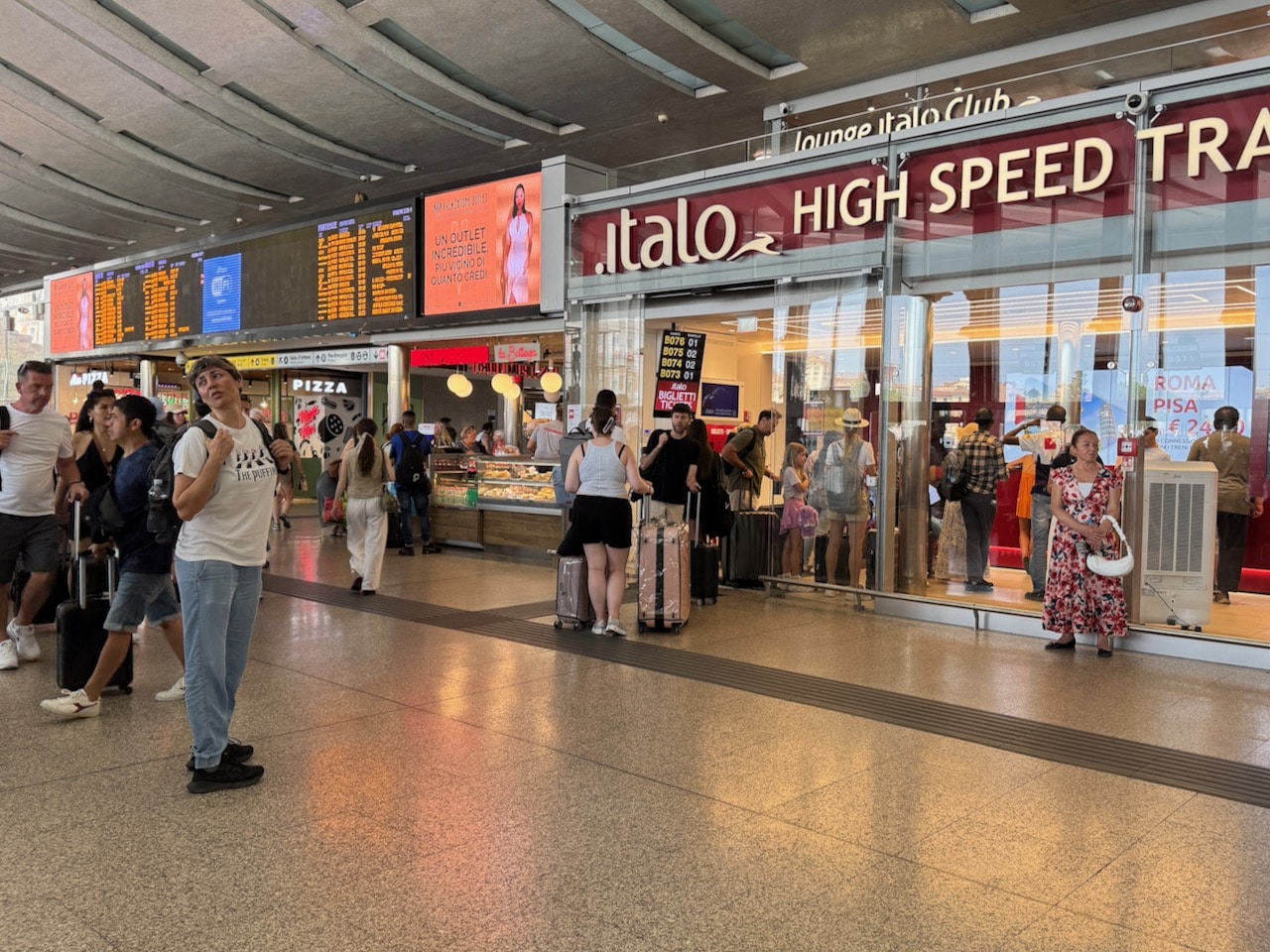
An hour and 10 minutes out of Rome, the train pulled in to Napoli Centrale. We’d arranged to have a driver pick us up there and take us to Vico Equense near Sorrento for the next part of our Italian adventure.
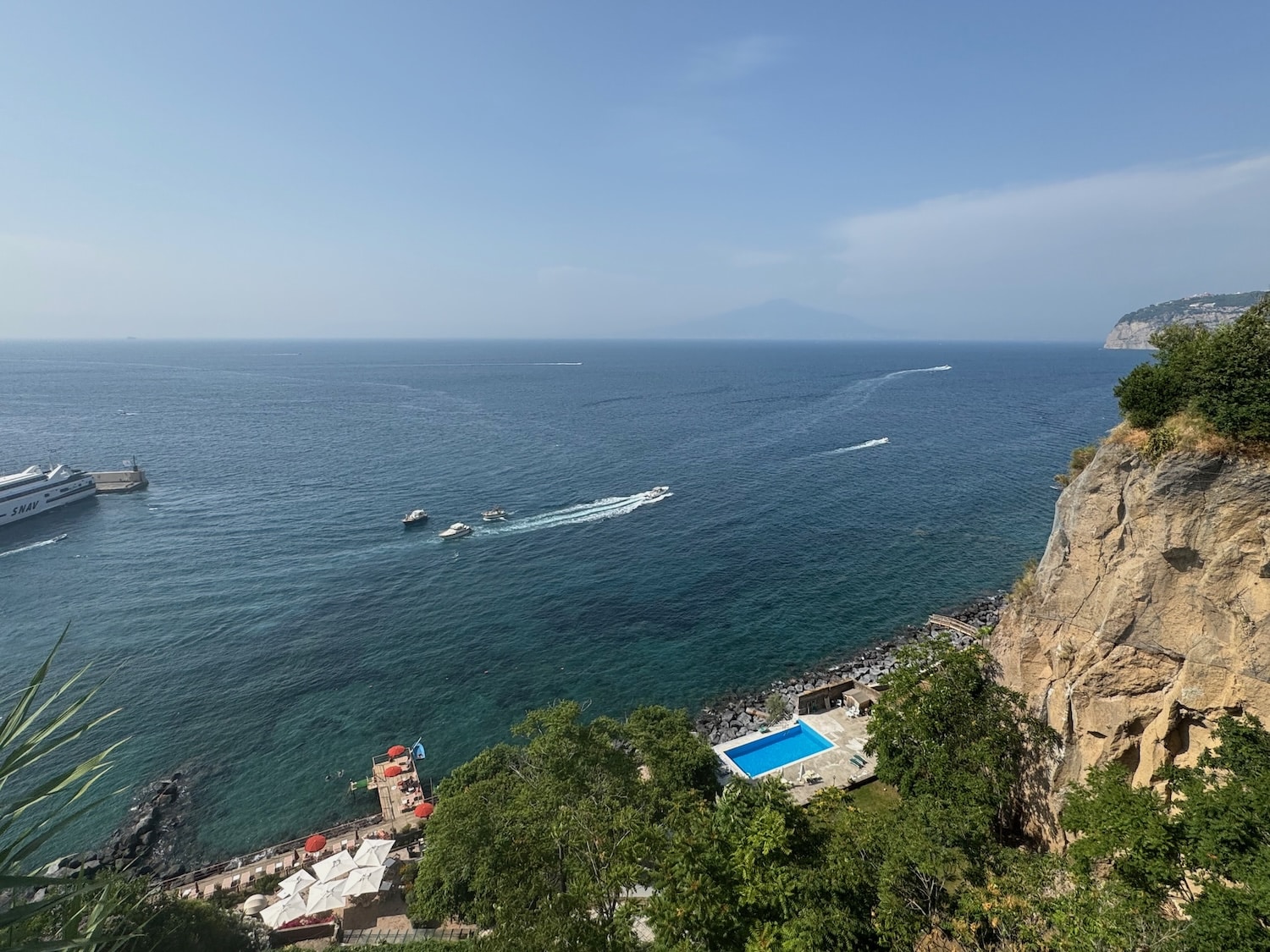
We chose the Hotel Torre Barbara as our base. We picked the hotel not just for the name but for the view we saw online. The reality when we arrived was more spectacular than the photos. Our room had a terrace that hovered over the main Sorrento Coast road and the beautiful Bay of Naples. A persistent mist shrouded Mt. Vesuvius at first, but it cleared as time went on.
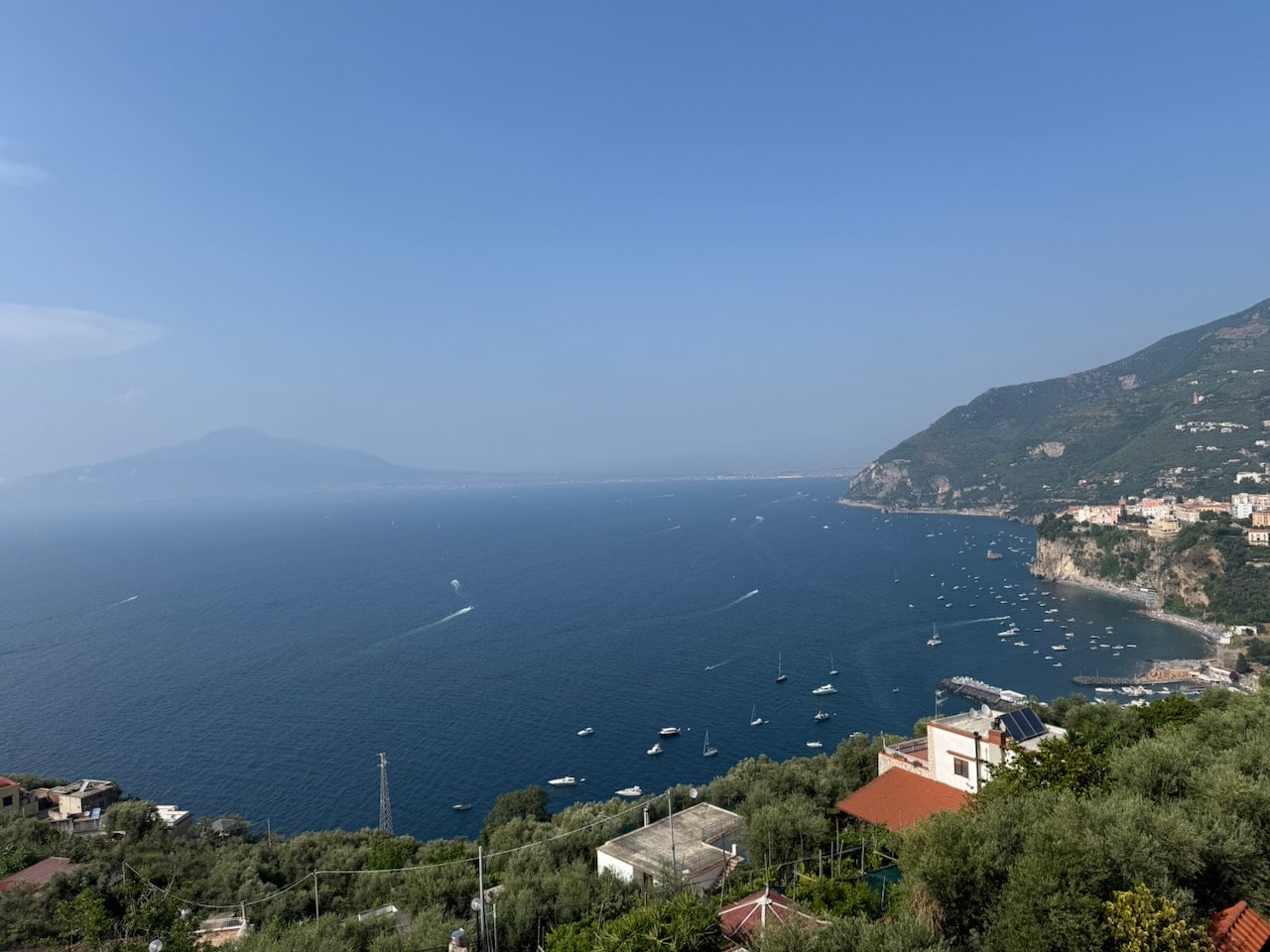
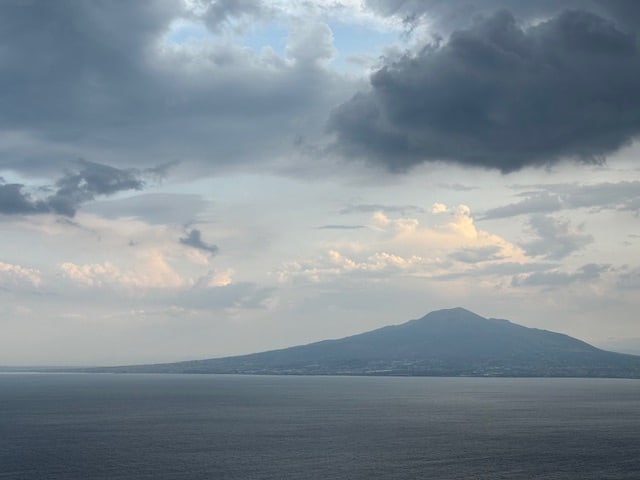
Staffers at the small hotel made us feel like we were in a family place, although a thoroughly professionally one. Benedetta Torrico checked us in and right off the bat told Barbara the correct Italian way to pronounce her name was BAArbAArA, as if each A was an Ah! said when you’re enjoying something very much. She and the other staffers live in neighboring towns, loved the Sorrento Coast and were warm, knowledgable about the area and extremely helpful.
We decided to enjoy drinks and dinner on the hotel terrace.
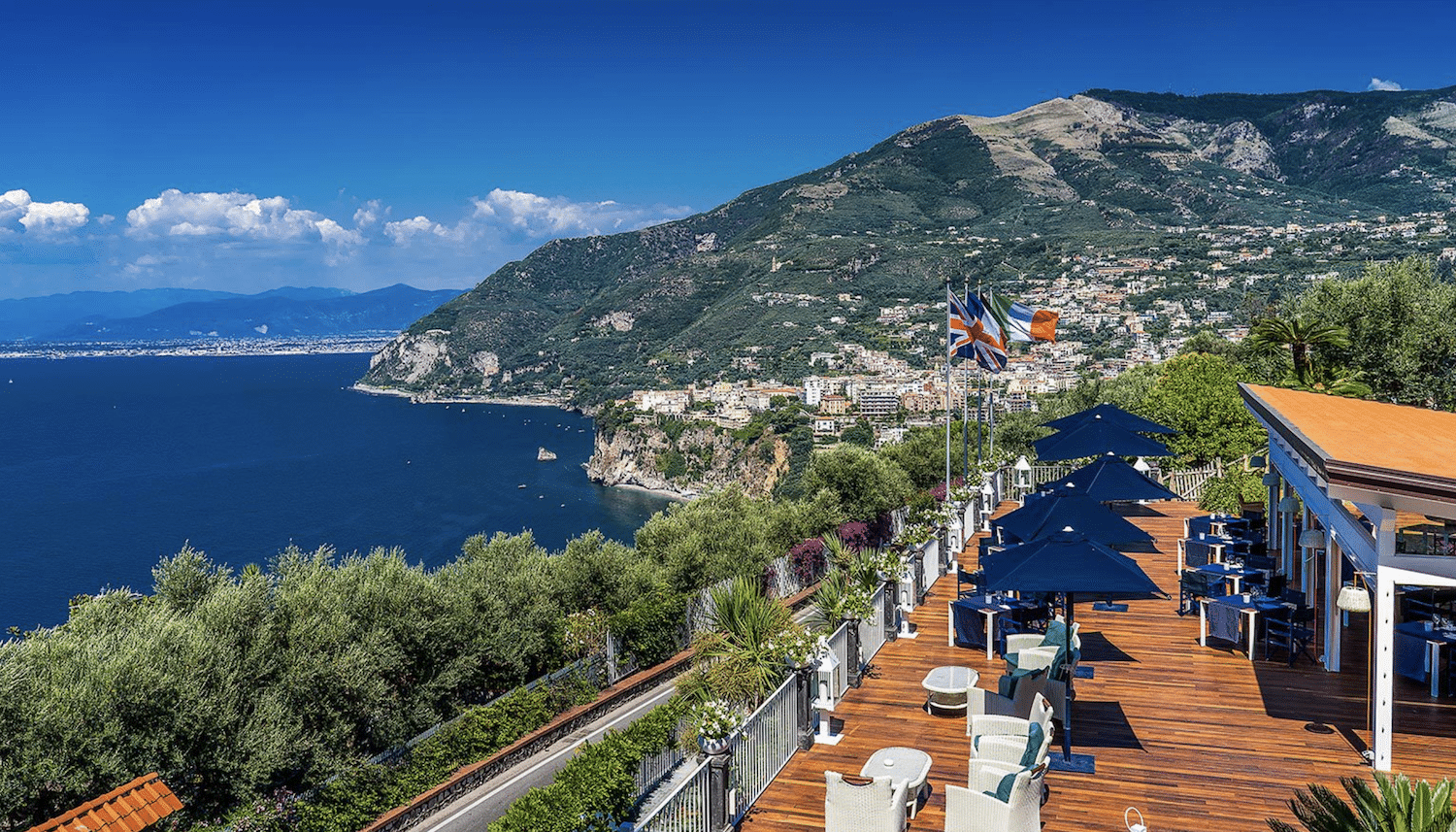
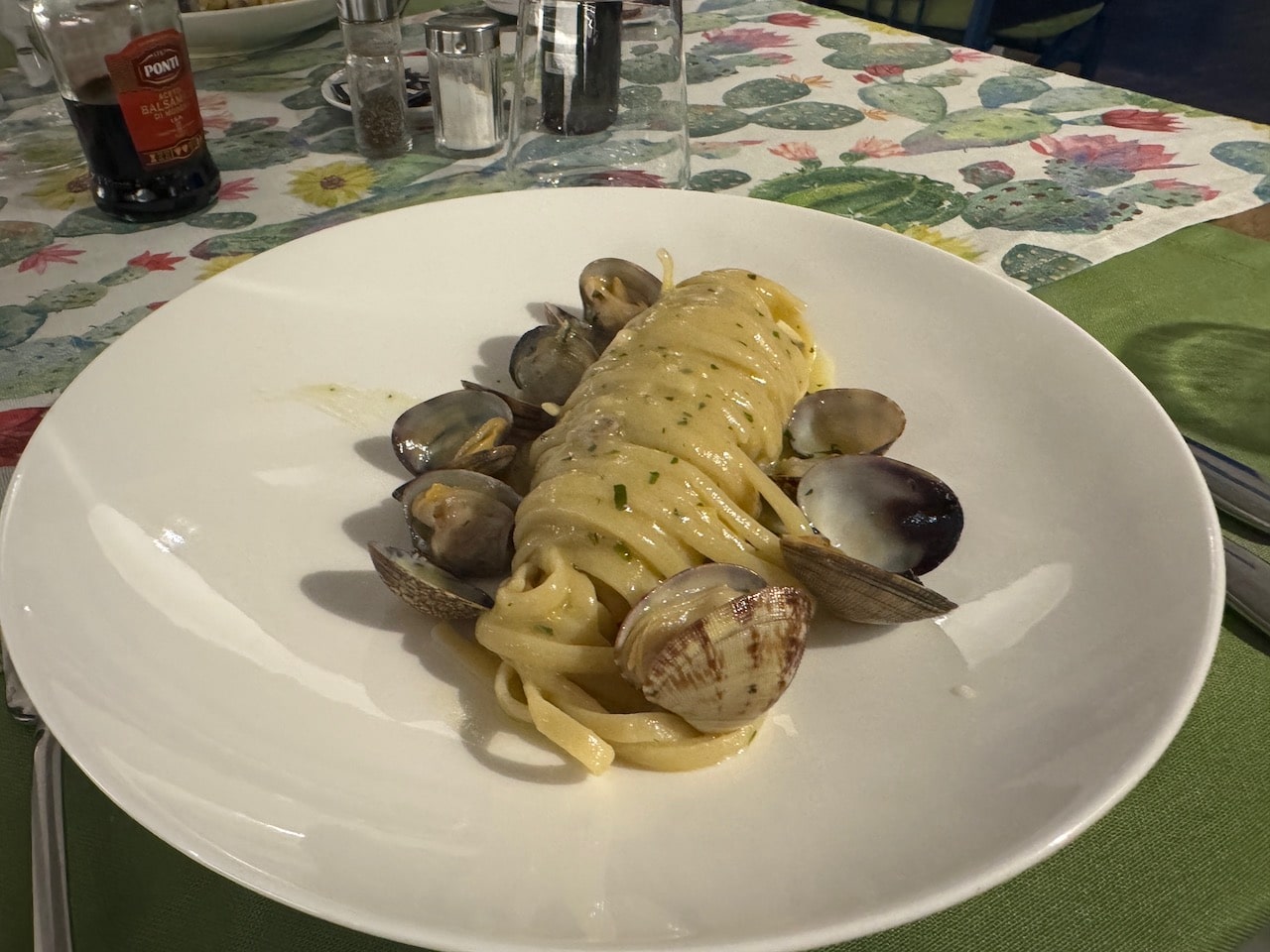
That first night Maria Ercolano, an enthusiastic server, became an instant friend. The linguine vongole tasted as good as it looked.
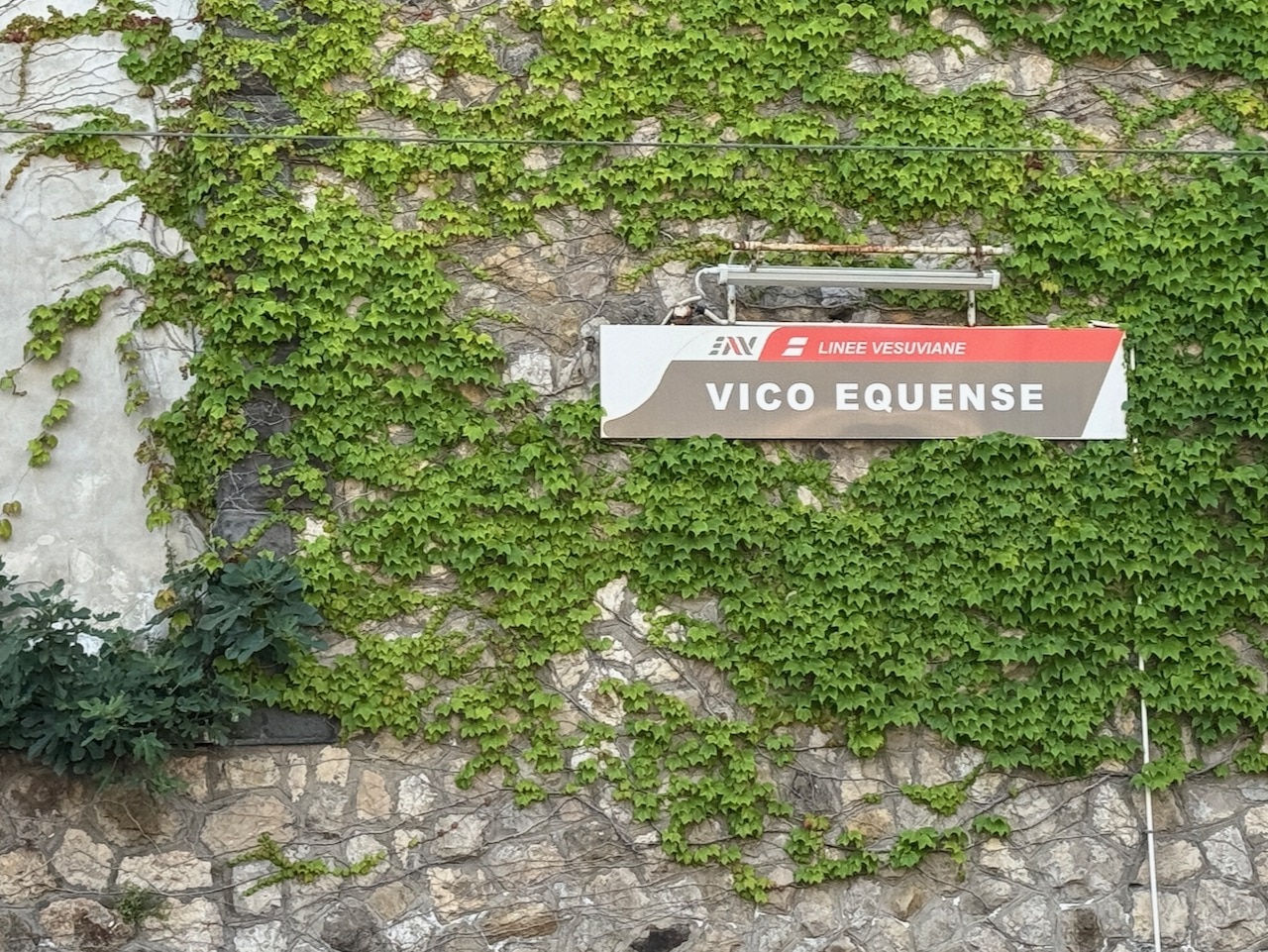
Early the next morning, we took a taxi into Vico Equense and caught a train for the 25 minute ride to Pompeii.
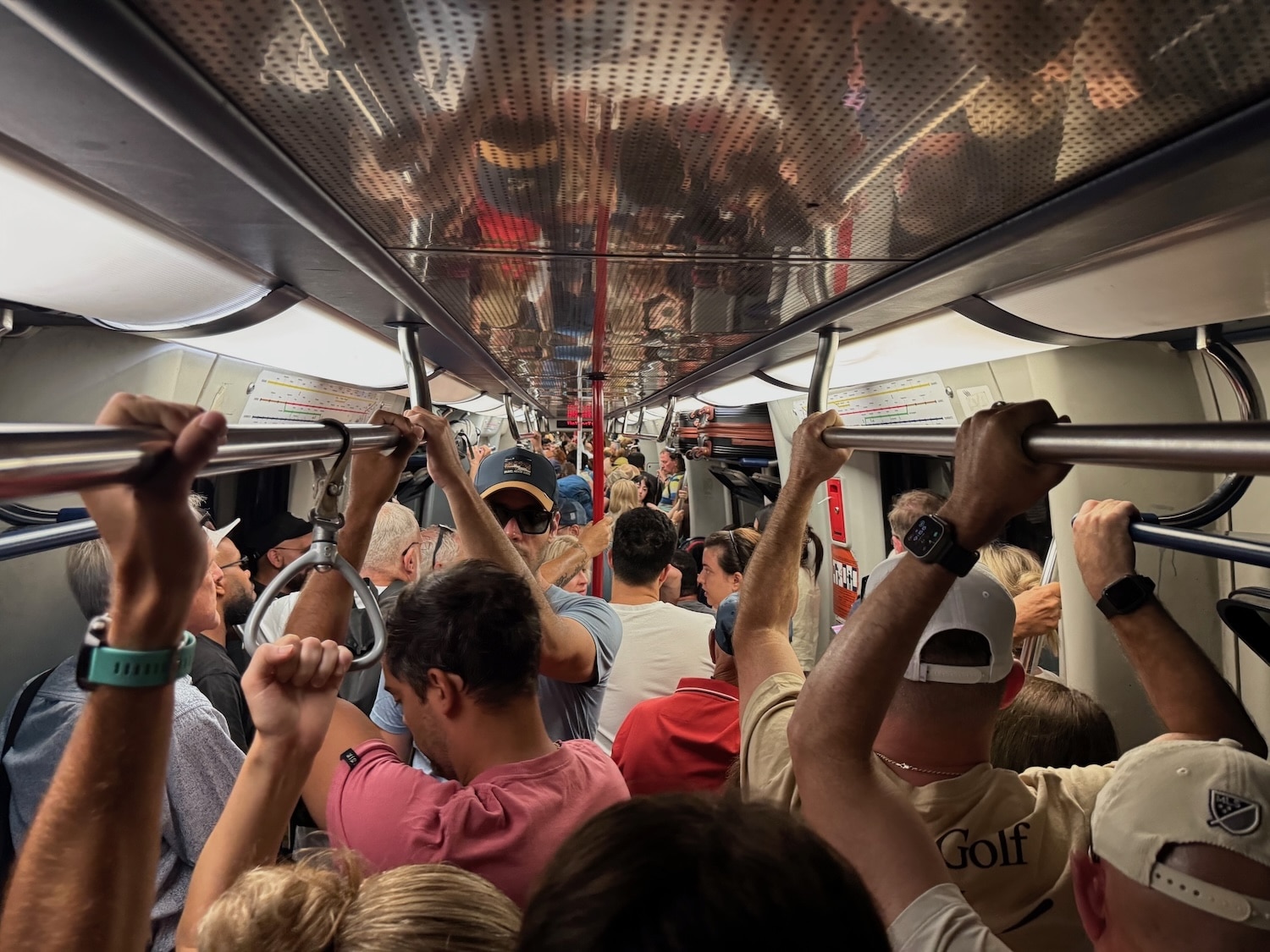
It turned out we weren’t the only people who wanted to stay on the southern coast and travel back up to Pompeii. The train was as packed as the A train in Manhattan.
Pompeii was the main reason for this part of our trip. Before we left home in New York, we read Robert Harris’ gripping novel Pompeii that imagined the days and hours leading up to the eruption of Vesuvius and the city’s burial under ash and lava in 79 AD. With this fictionalized history under our caps, we signed up for a tour with Walks of Italy so that we could hear from an expert and get more of the real story. How did people live on the Bay of Naples nearly 2,000 years ago? We also hoped to see more of the Roman mosaics and frescoes we’d seen and admired on previous trips
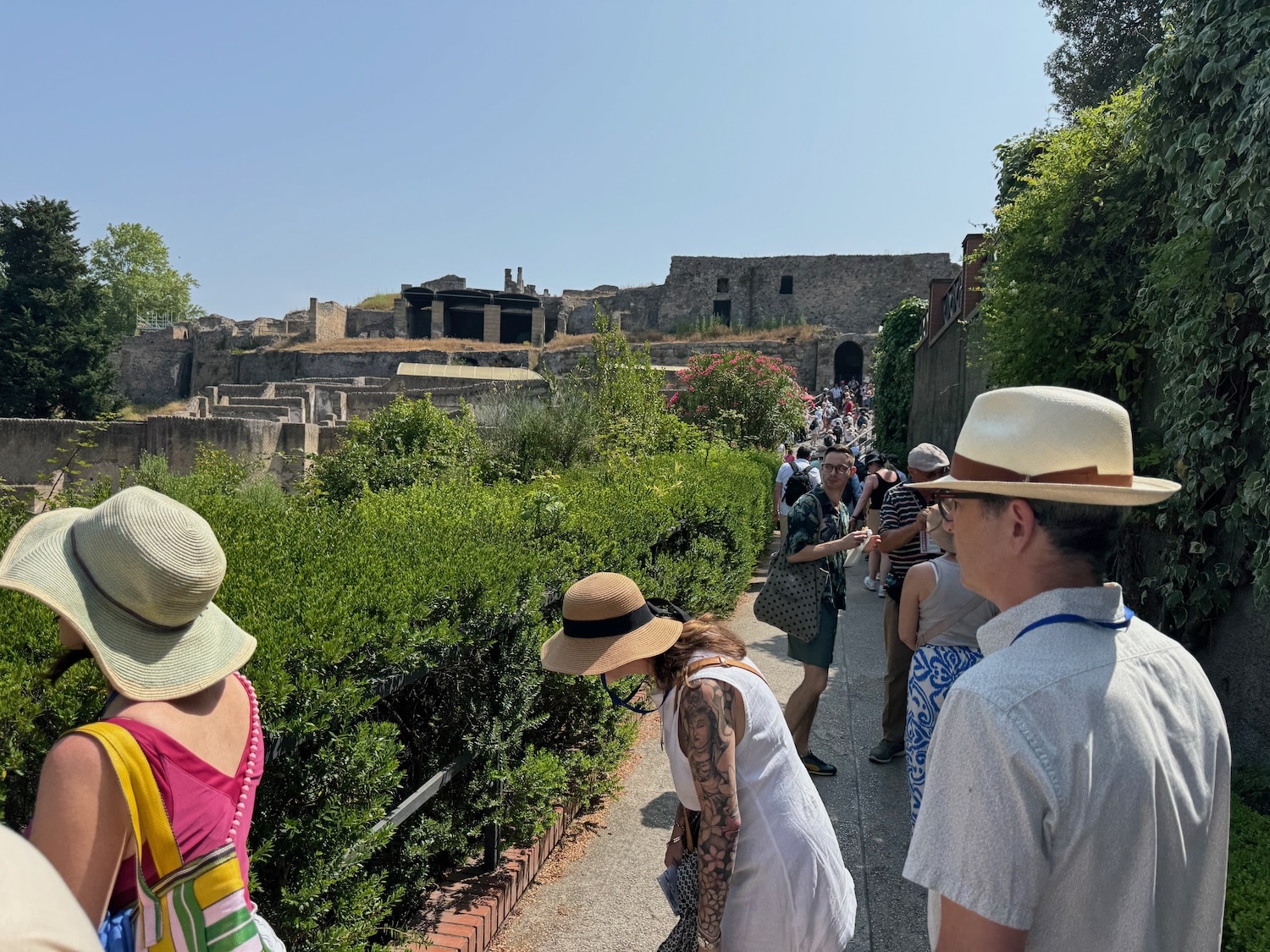
We met our guide Vincenzo Di Mauro, who had degrees in archeology and anthropology, at the main gate just a short walk from the train station. He introduced himself to our small group of twelve or so people and spoke excellent English. We entered the main gate, Porta Marina, and began an short uphill climb.
The Sanctuary or Temple of Apollo, built in 120 BC, was our first big stop.
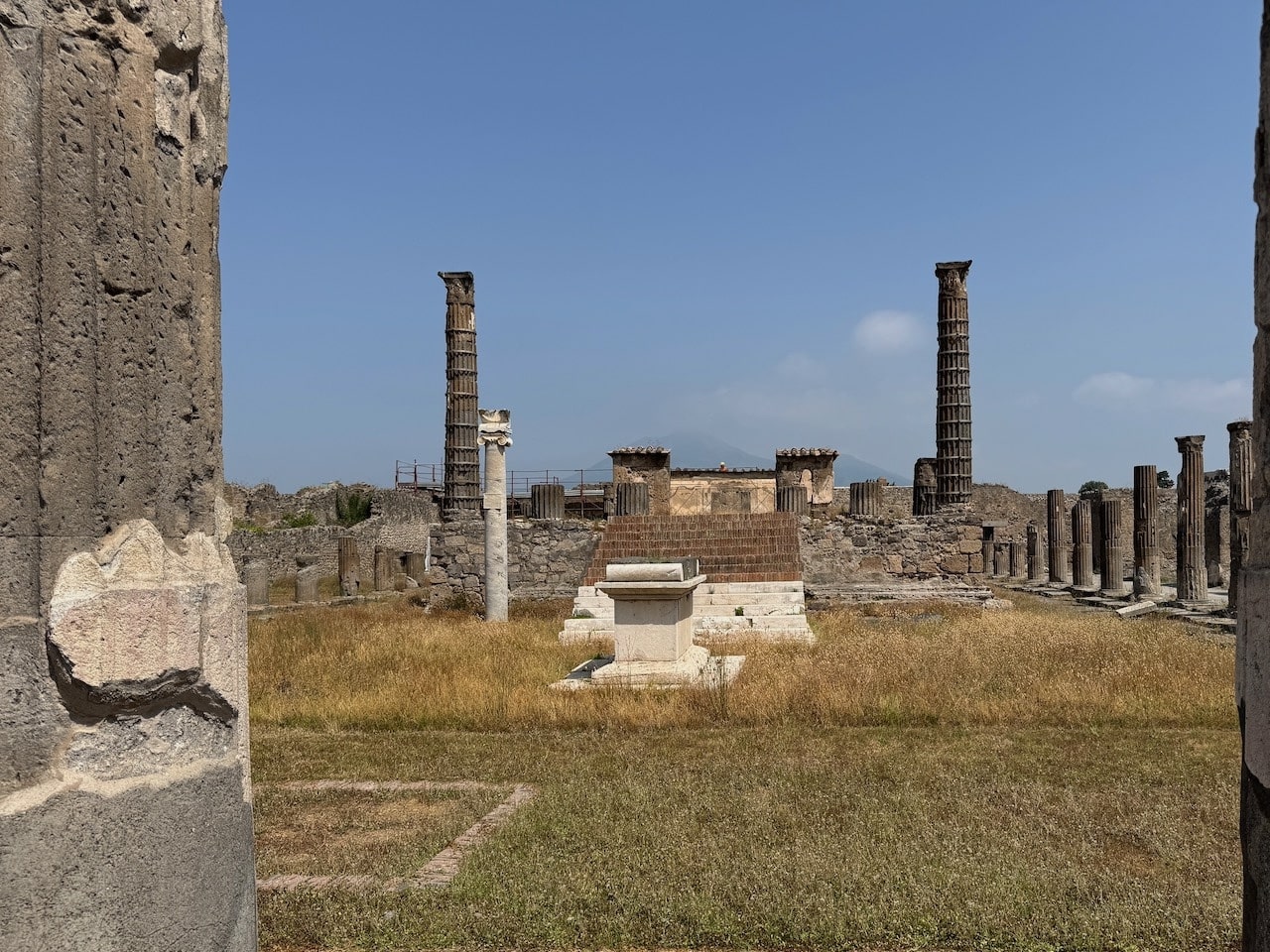
The sky looks bright, but it was hazy and if you look closely you can spot Vesuvius, five miles away, in the background. The sanctuary is part of the Forum, which was the center of life in Pompeii.
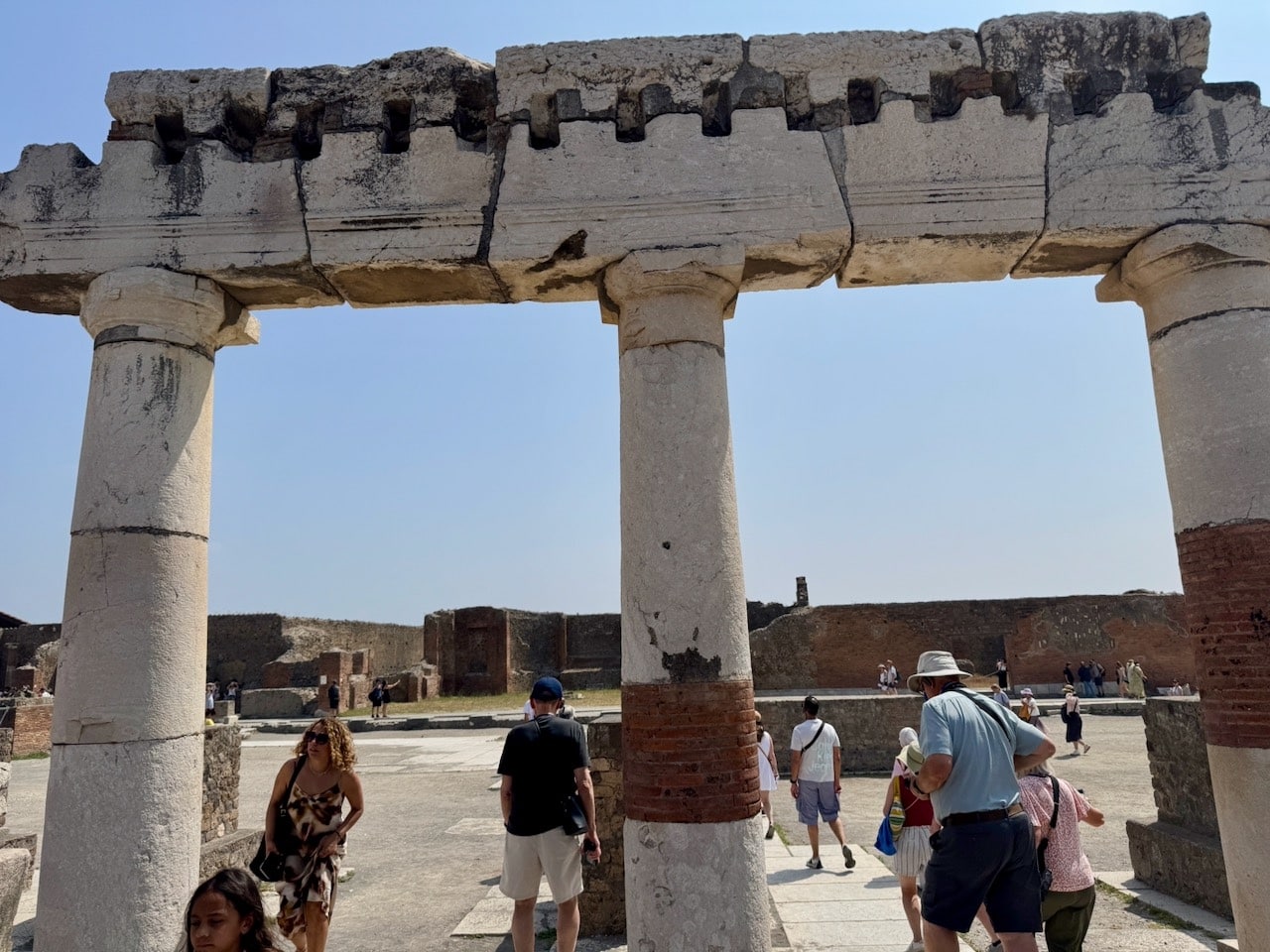
Today, tourists take the place of Pompeiians. But you do get an idea what it must have been like. The size of Pompeii surprised us.
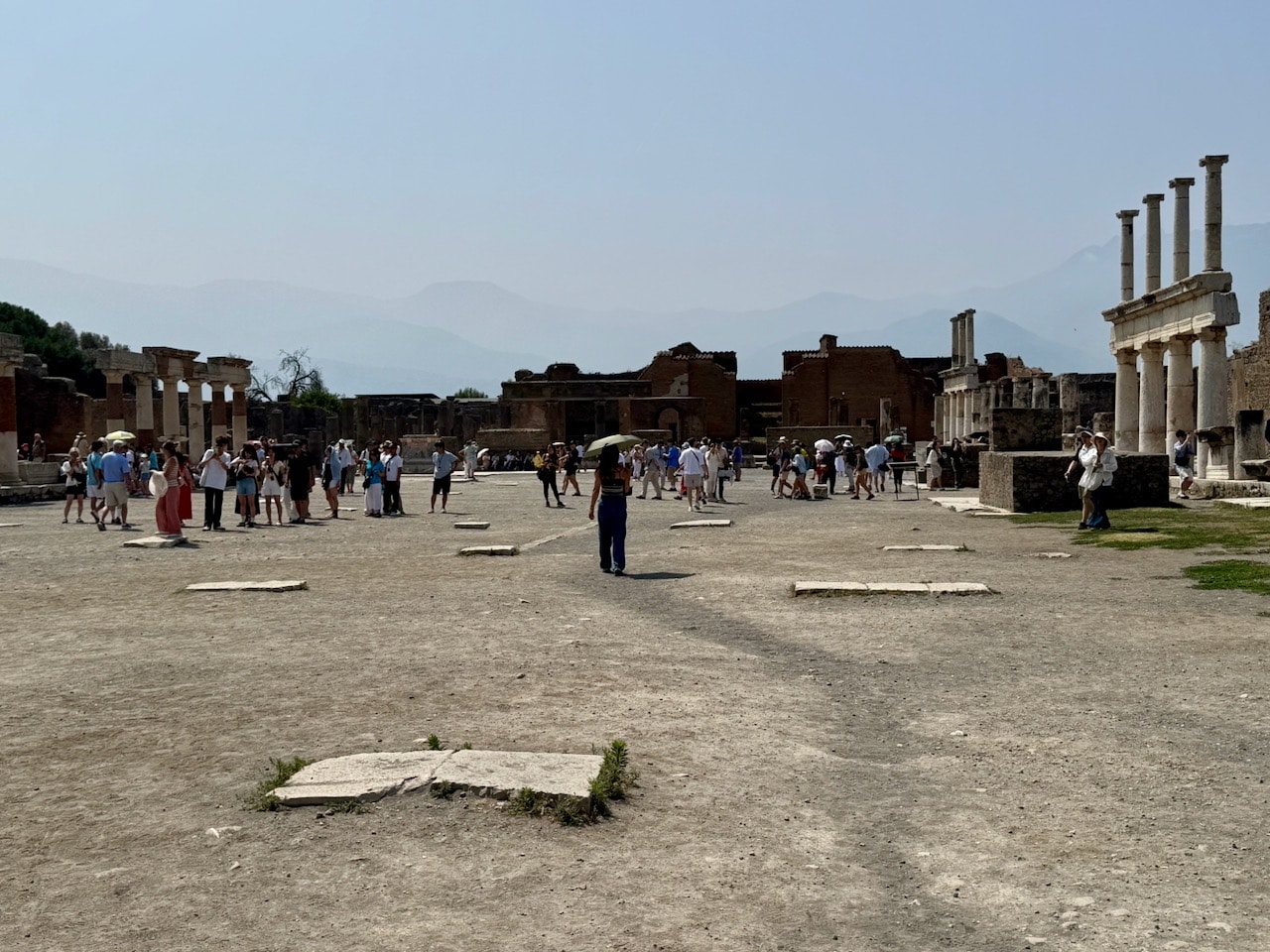
Through our reading and the tour, we learned Pompeii was a thriving commercial seaport on the Bay of Naples, where rich Romans visited and came to vacation.
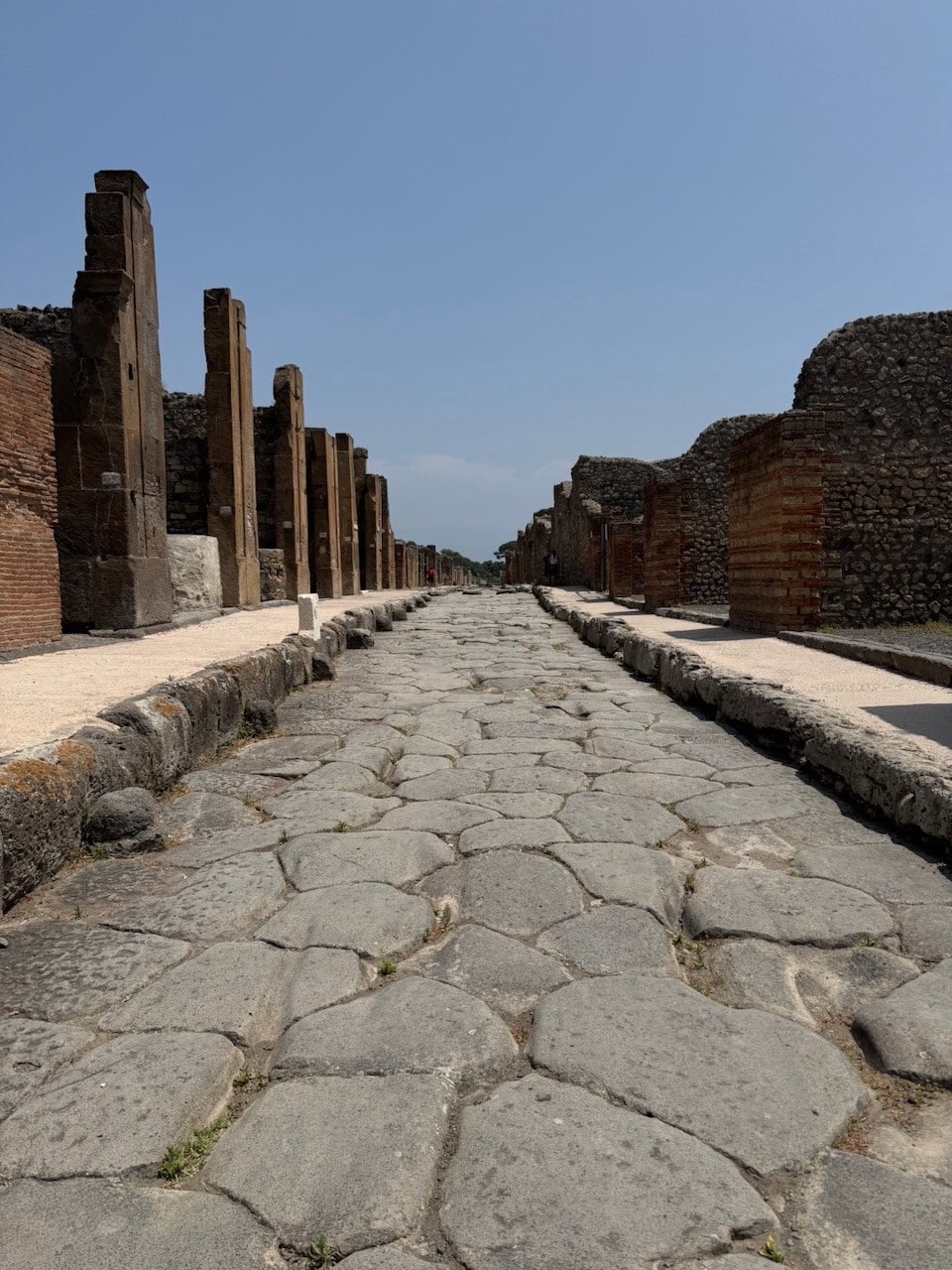
Aristocrats and politicians vacationed in villas outside the city, but about 12,000 people lived within the walls of Pompeii when Vesuvius erupted over two days and buried it in ash, pumice, and lava. Thousands were killed.
The first exploration began in 1594 when traces of buildings and coins were found. More serious excavations began during the time of Charles III, the Bourbon king of Naples and continued. In the past, frescoes and precious objects were looted or sold off to wealthy patrons and museums. That apparently has stopped.
This fresco of the Dancing Lares and the Genius, for example, might have disappeared into a private collection if unearthed in a previous era. It was a household shrine and offers insight into the way people worshipped and what they believed in Pompeii and Imperial Rome.
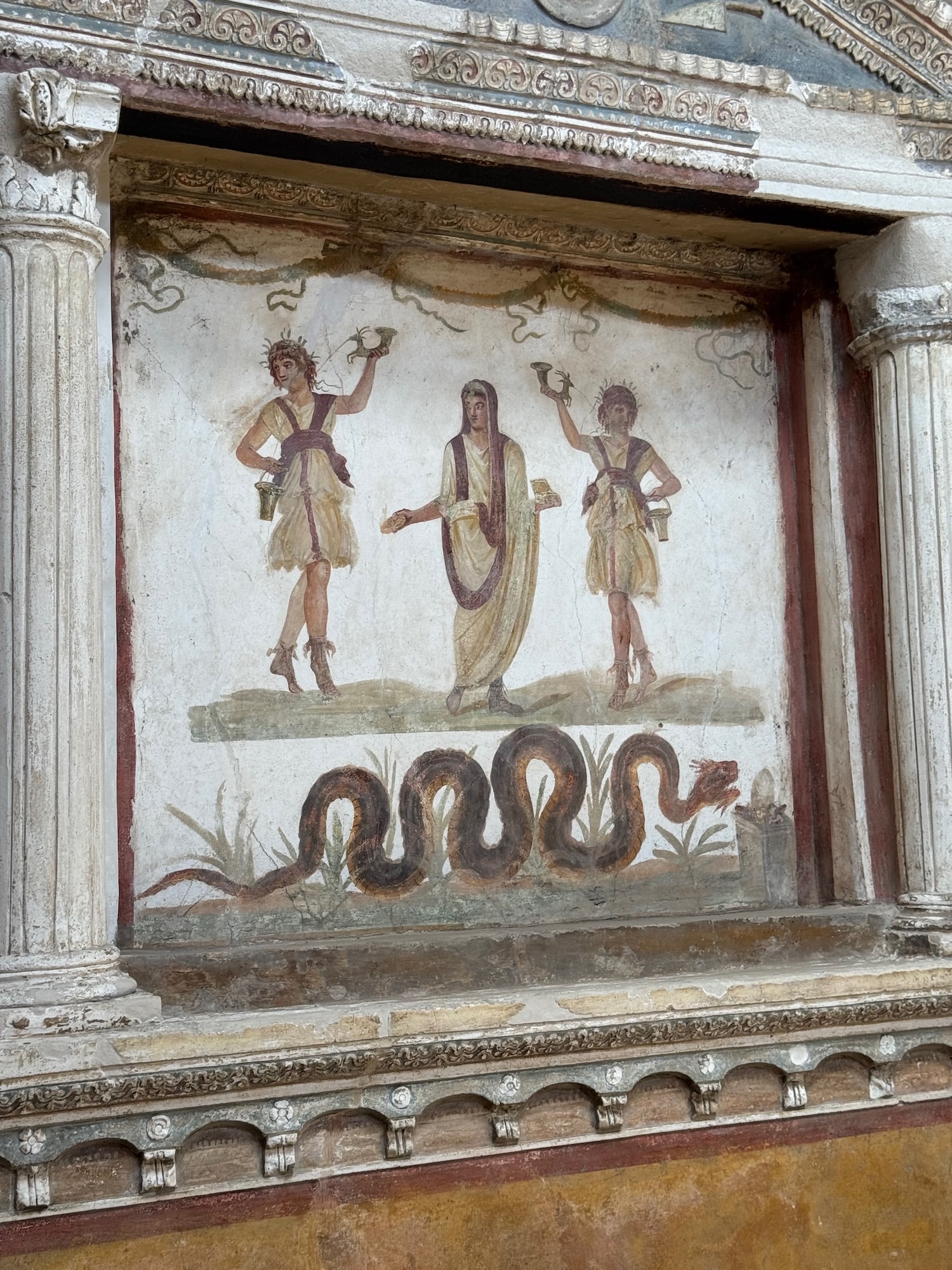
The three figures represent household gods. The two dancing lares, or gods, hold drinking cups over the genius, another type of god. They symbolize prosperity and that’s reinforced by the snake at the bottom, who also represented a family’s prosperity.
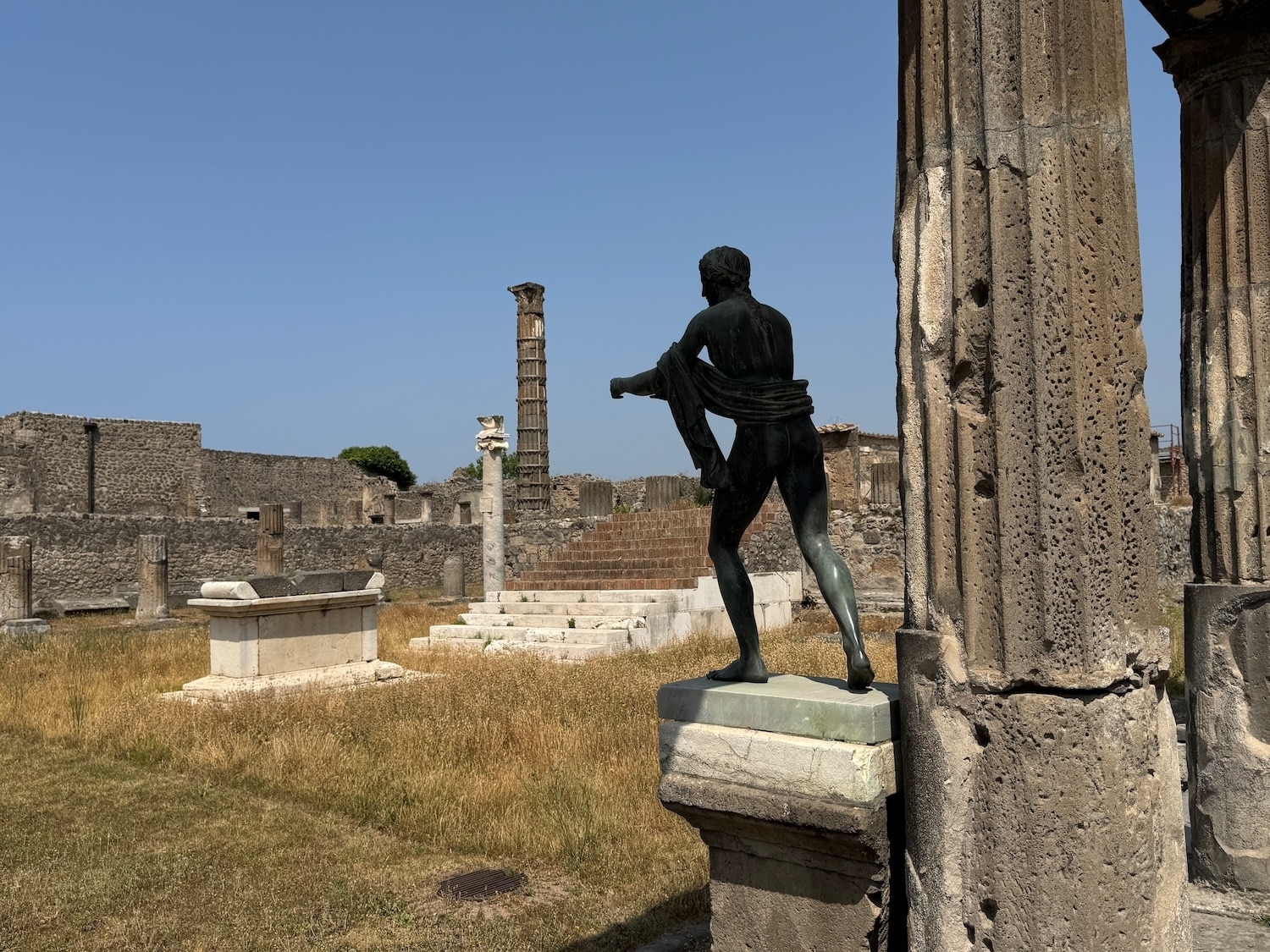
Restoration work has also put this large bronze statue Apollo Saettante, or Apollo the archer, in a prominent place. The rare surviving ancient bronze dates to 100 BC. Pieces of it were first discovered in 1817 and more was found the following year. Nineteenth century restorers put it back together, and in 2009 the National Archeological Museum in Naples sent it to Getty Museum restorers in Los Angeles for cleaning and restoration.
About two-thirds of Pompeii has been exposed by excavations — that’s almost 119 acres — and the work continues now supported by the Italian government and the European Union.
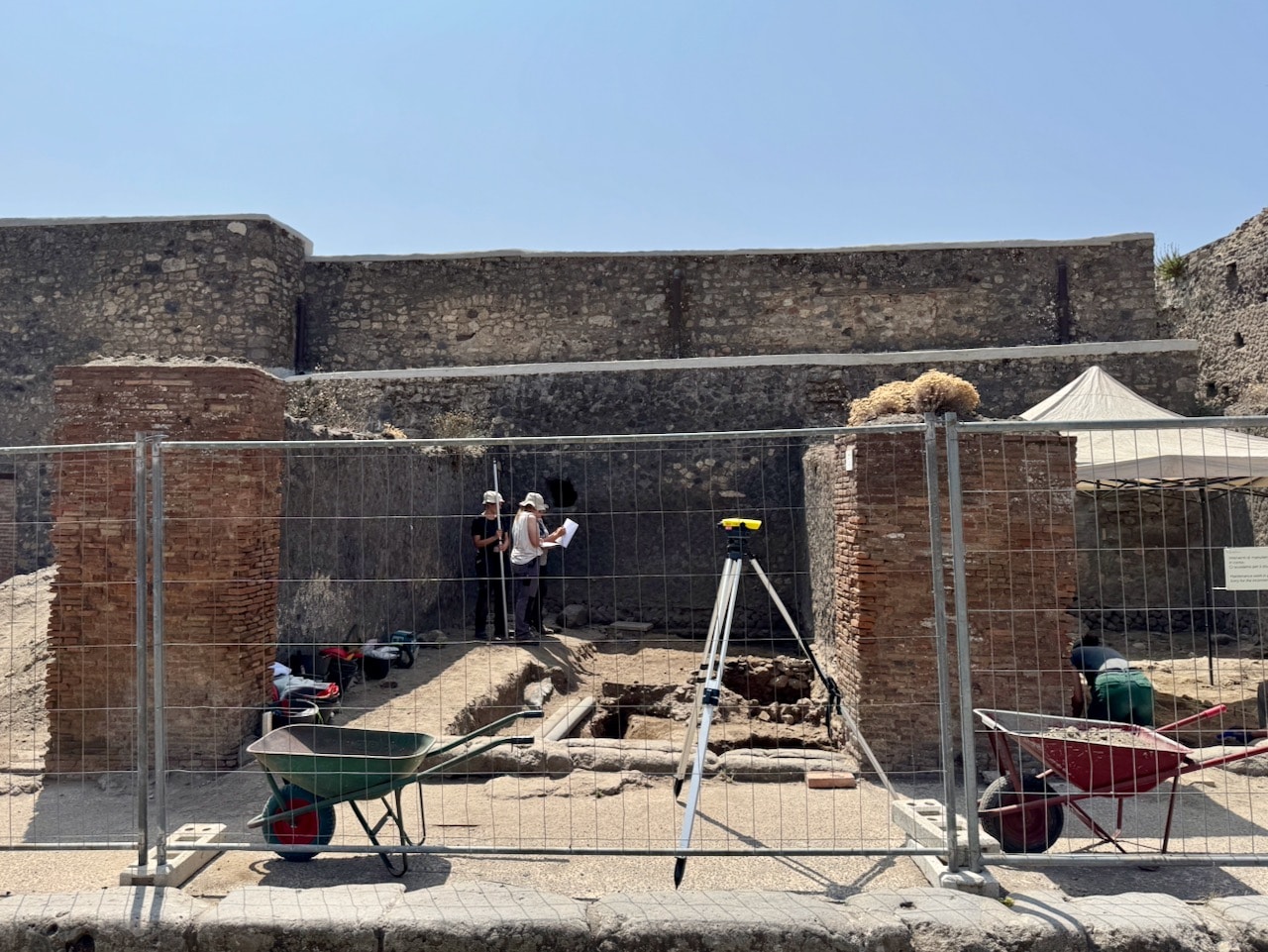
Our guide Vincenzo explained that the Archeological Park, part of the Italian Ministry of Culture, takes great pains to make sure that archeologists work with precision and care.
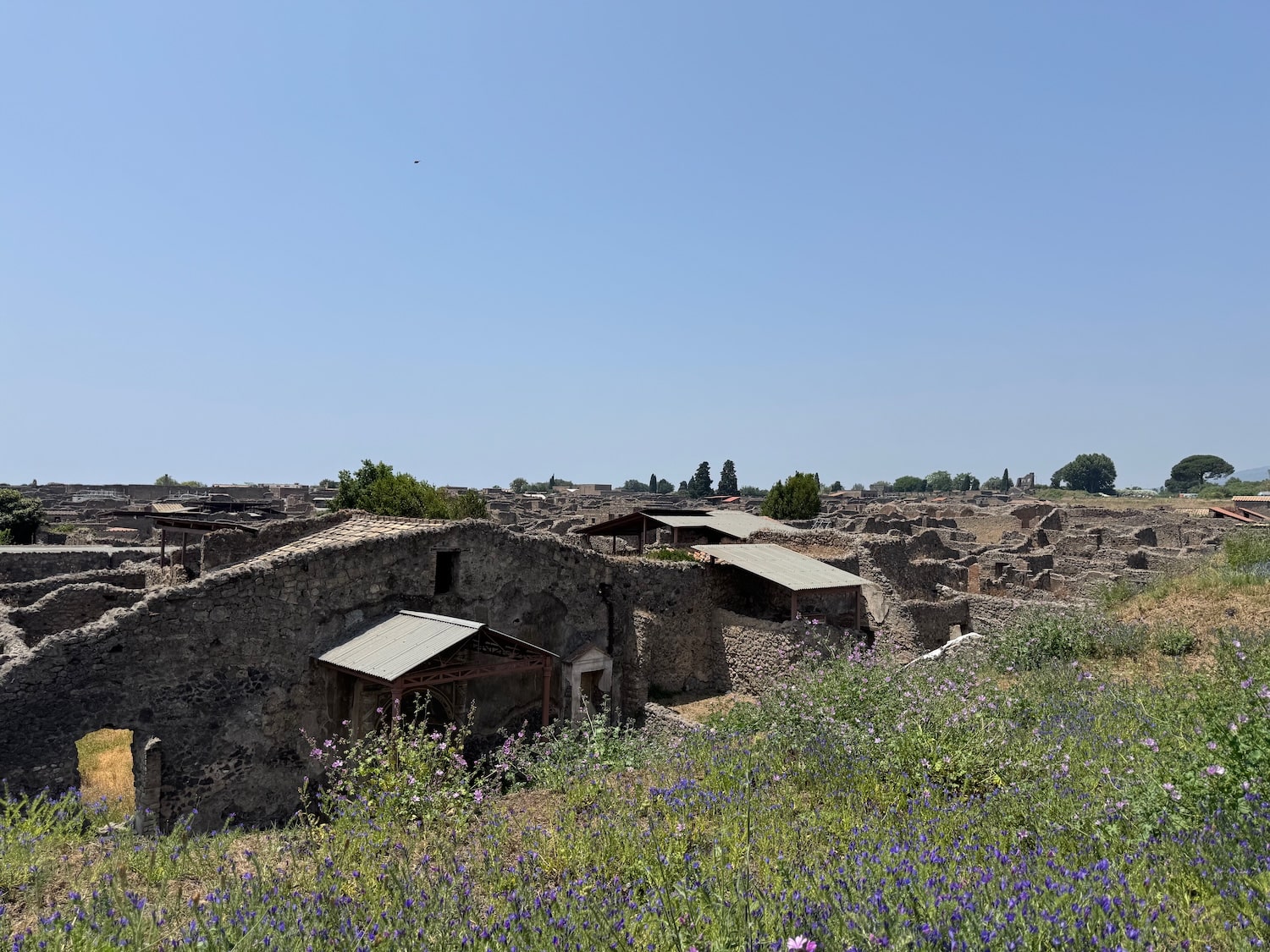
Pompeii is a treasure because the layers of ash and pumice preserved much of what it buried and there are still often surprises.
There was so much to see, and the three-hour tour gave us the highlights. We wandered in the Vettii House, the home of two brothers, freed slaves, who became wealthy wine merchants. Restorers worked for 20 years to try give historians and visitors a clear idea of the way it once looked.
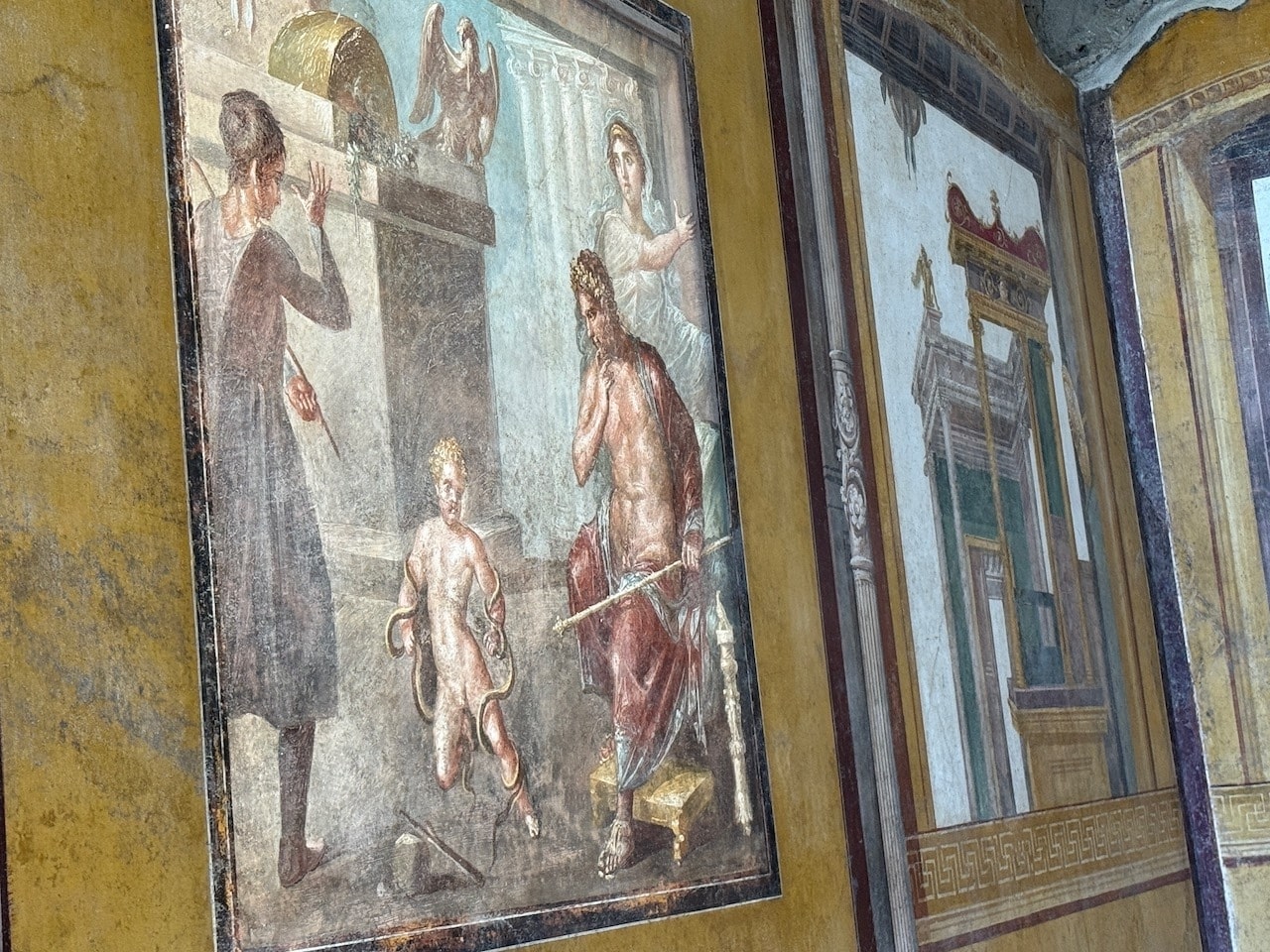
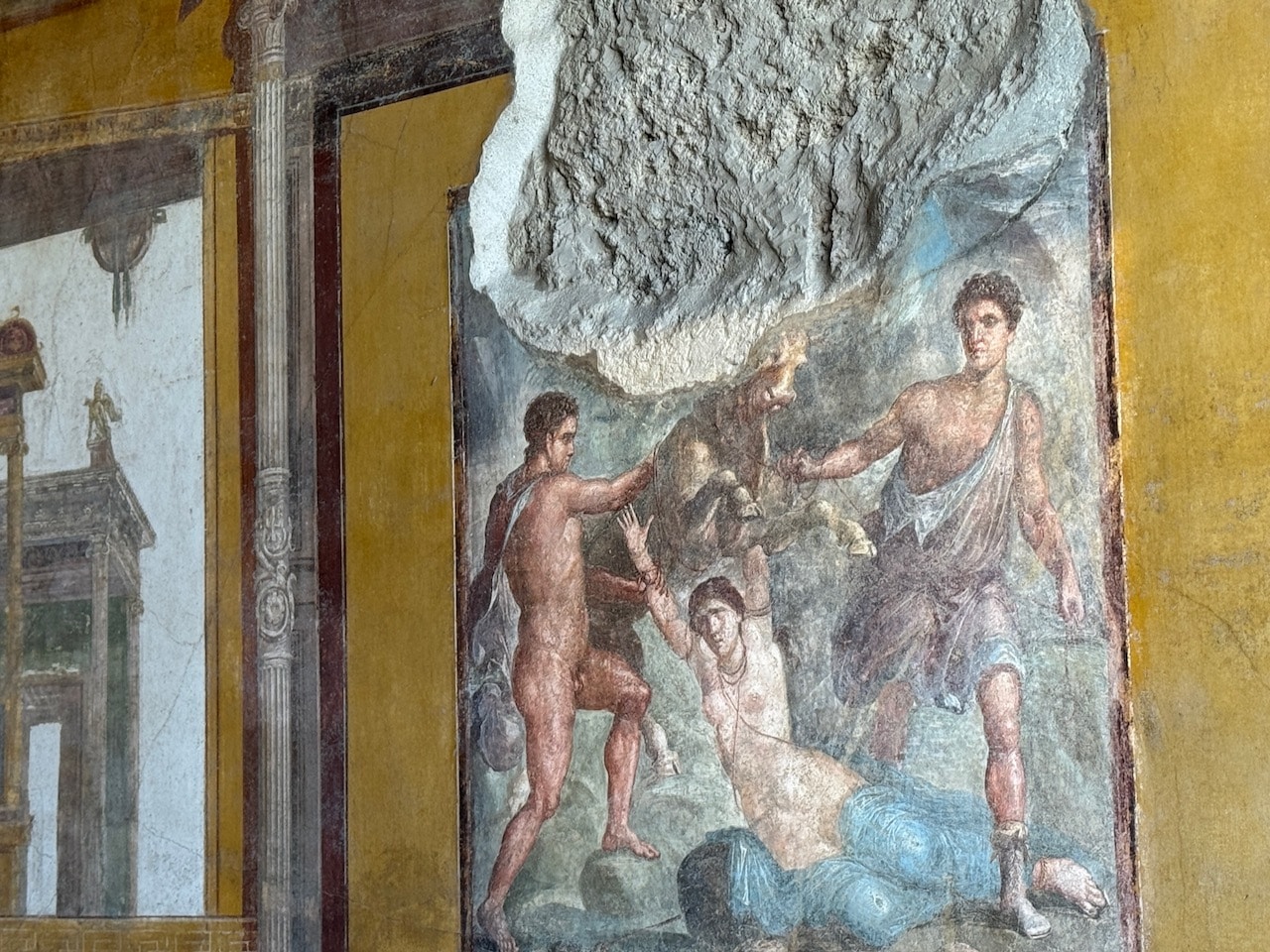
The home reopened in 2023 and the frescoes are really the show pieces. The walls of one room are covered in frescoes depicting Greek myths, including the punishment of Dirce. It graphically illustrates the revenge of twin brothers on a woman who wanted to kill their mother.
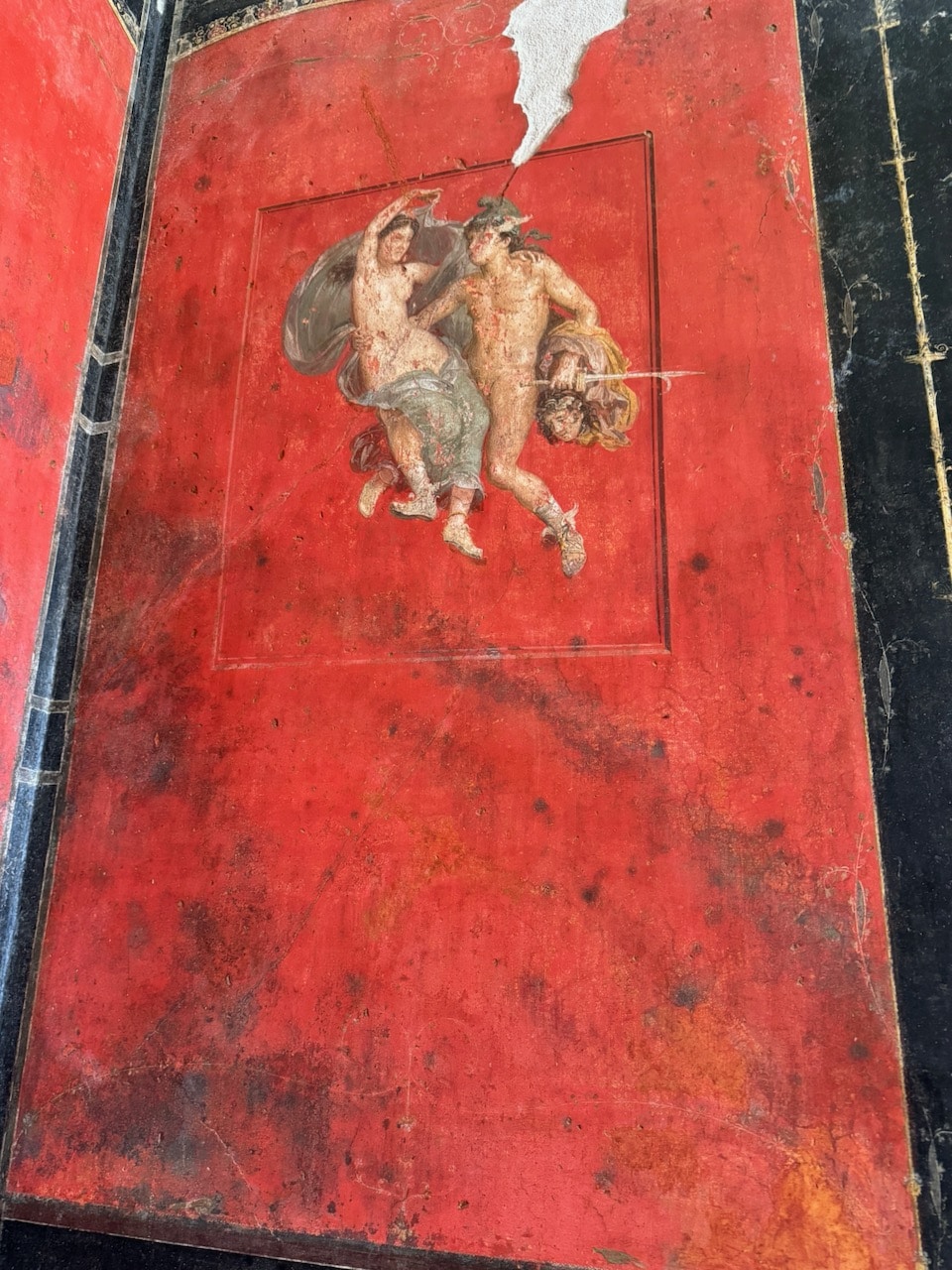
In another room, cupids lined the red walls.
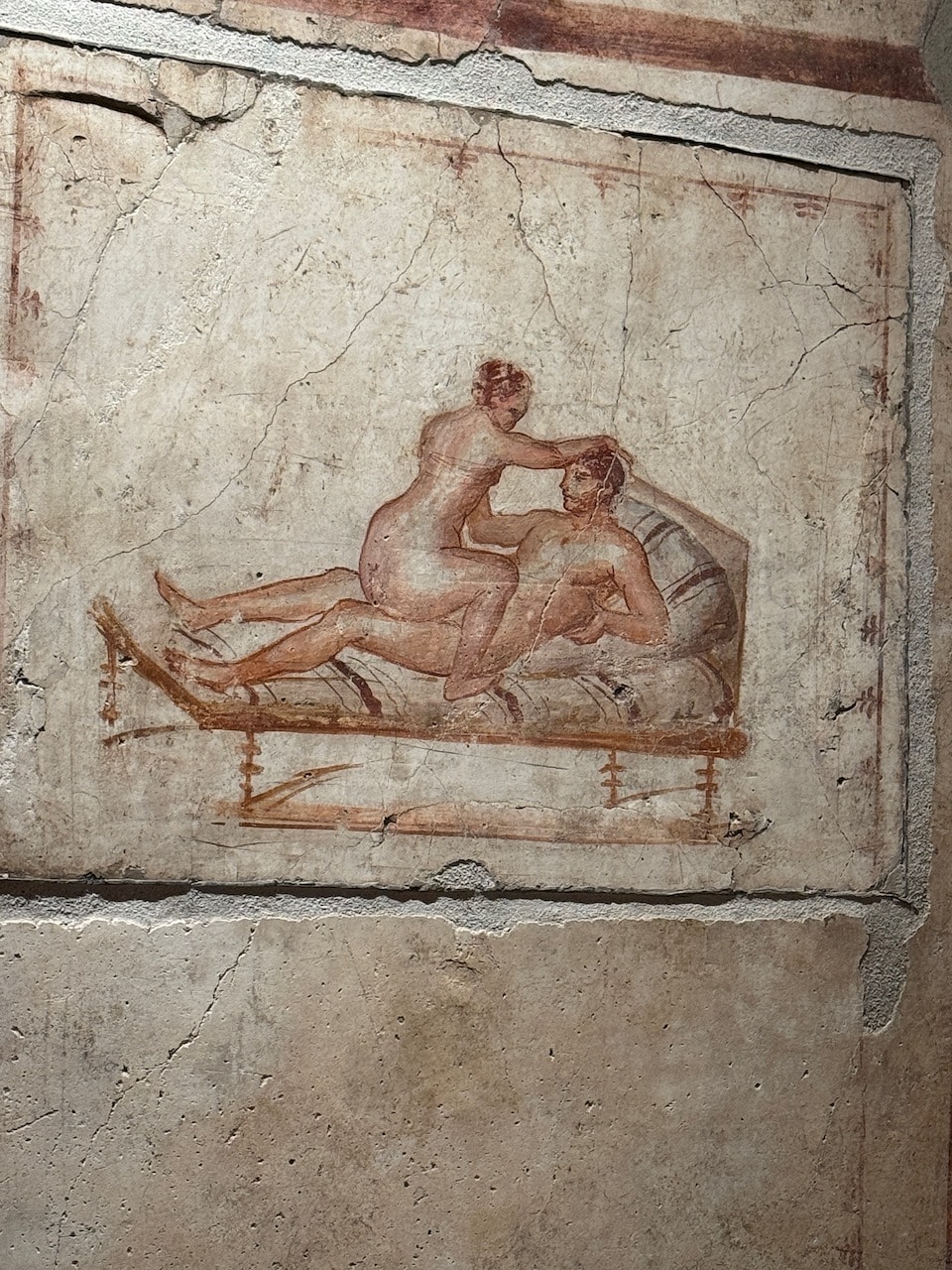
And in one small room we learned that a prostitute worked in the house.
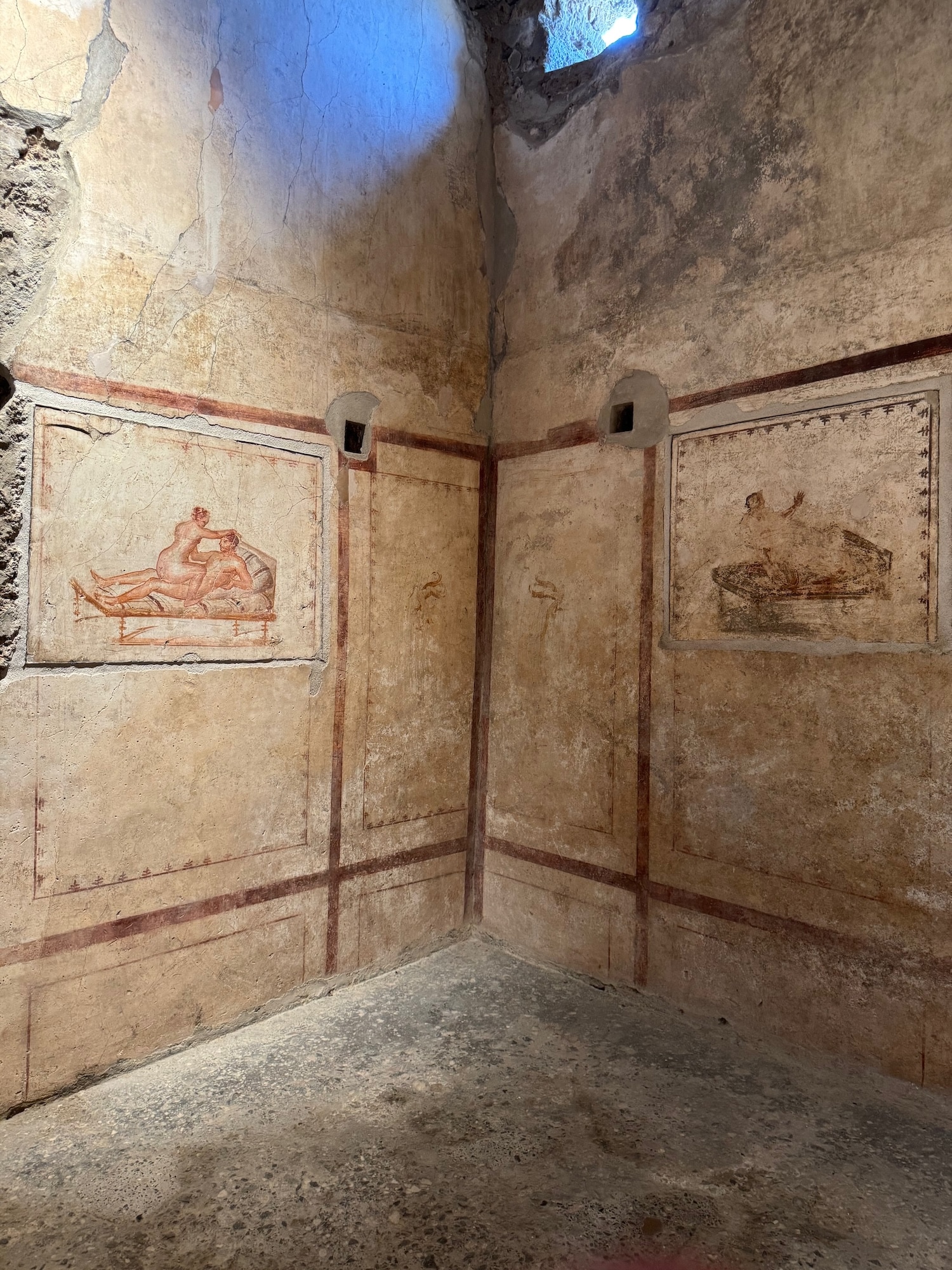
In a vestibule archeologists found an inscription that read: “Eutychis Graeca a(ssibus) II moribus bellis.” The Greek woman Eutychis was described as having pleasant manners and charged two copper coins.
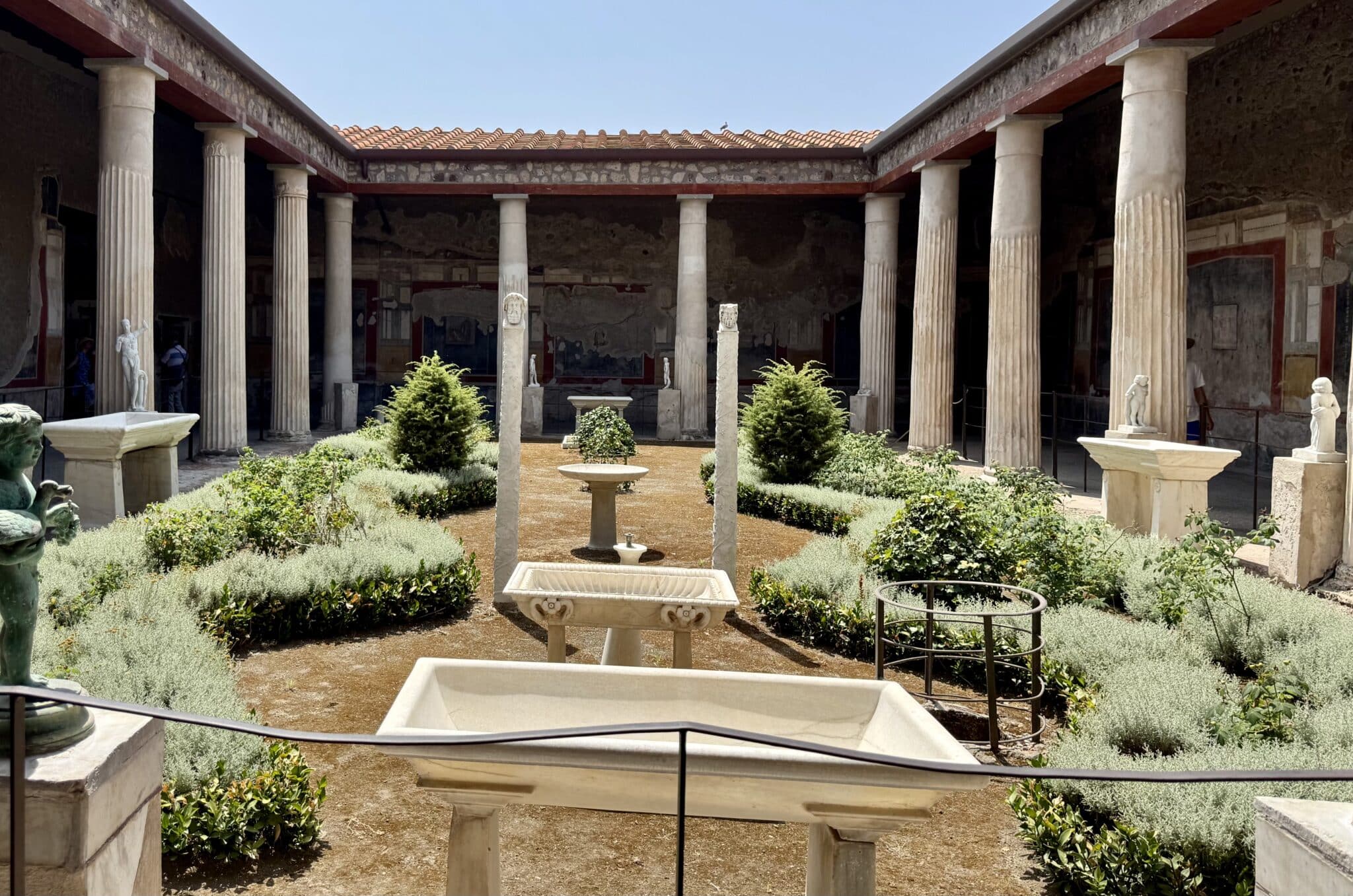
In addition to sex, the Pompeiians embraced the benefits of a good garden. This garden, surrounded by columns and filled with fountains, sat in the middle of the Vettii house. And that was apparently typical.
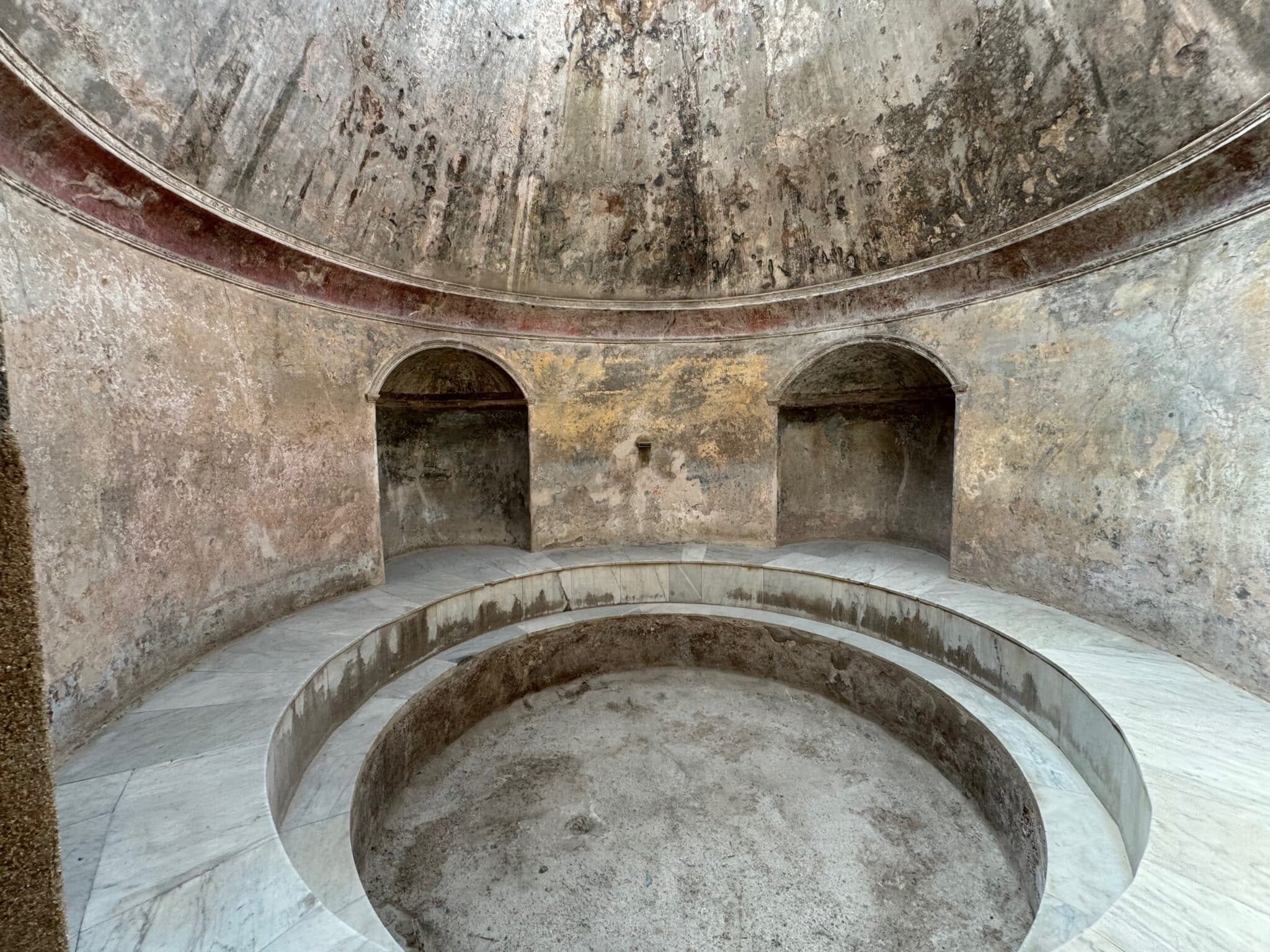
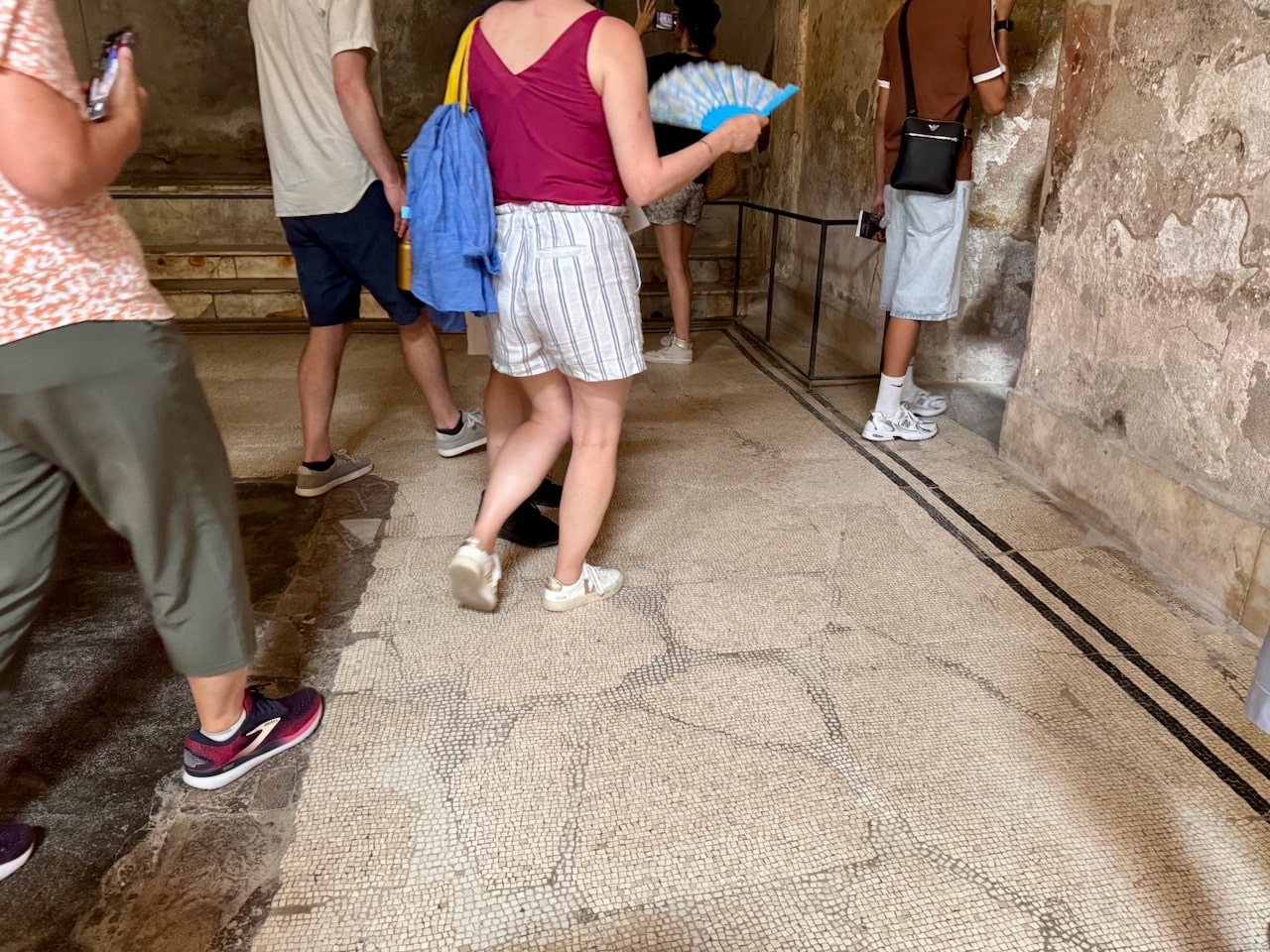
Some wealthy homes had private baths, but five public bathhouses have been found and restored to some extent. The Stabian Baths date to 125 BC and display the Pompeiians’ love of embellishment and beautiful decoration, but also the Roman engineering genius.
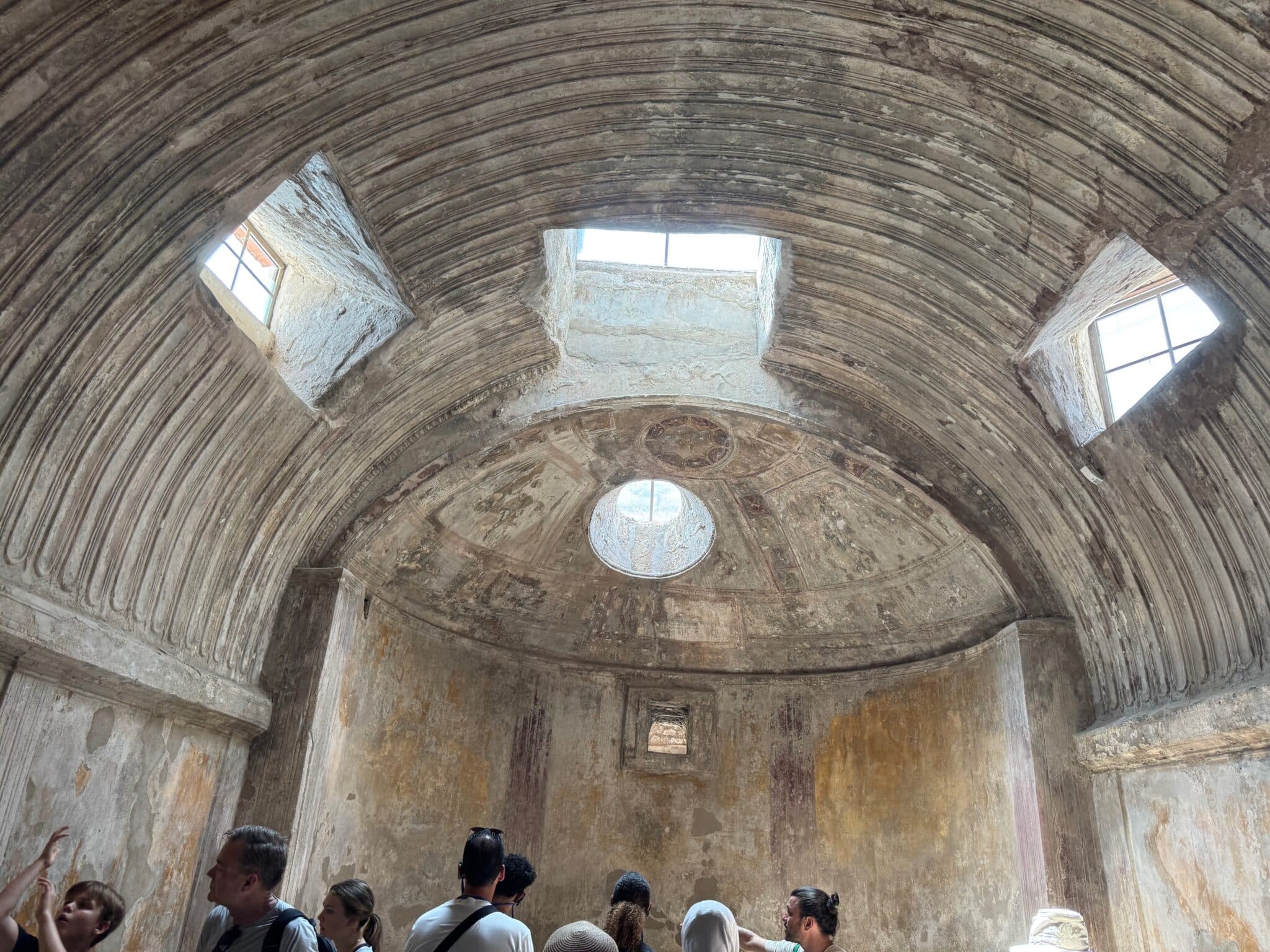
Vincenzo explained that the windows provided light, while the channels in the arched ceiling helped keep moisture from dripping on the patrons,
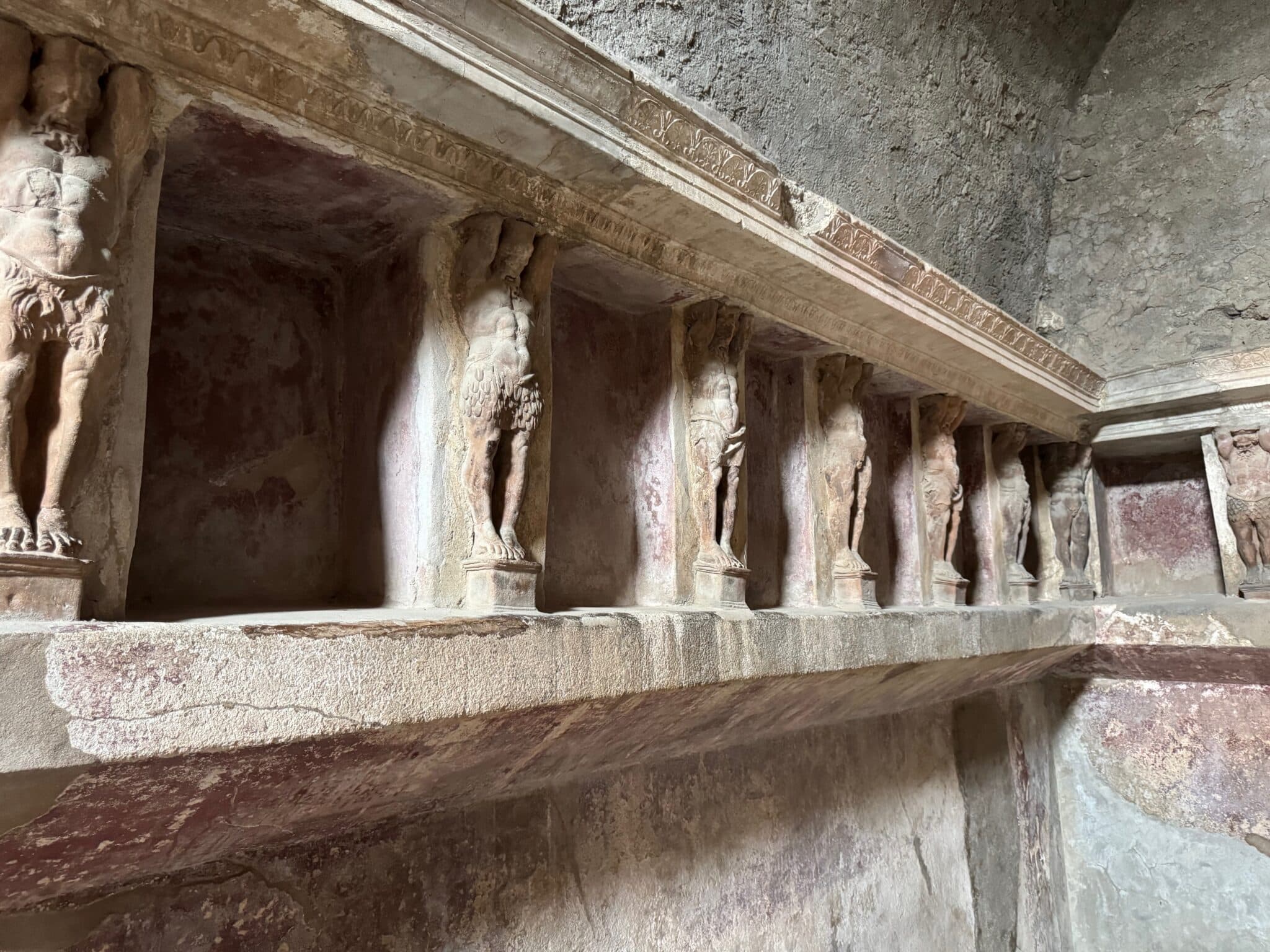
Men and women had separate areas that included changing rooms with lockers and areas for massage. Under the mosaic floors and along the walls engineers used a hypercaust heating system that sent hot air into the room.
We were asked not to take photos of an excavation in progress during the last part of our tour. But we were mesmerized as we walked along a catwalk bridge and watched from above as workers, in sectioned off areas, gently whisked away pumice to unearth new discoveries. It made us want to return to see more. But now we were ready to leave. It was hot, 89 degrees, and we said goodbye to our guide, the group and the lovely Samara family from Egypt whom we liked especially. 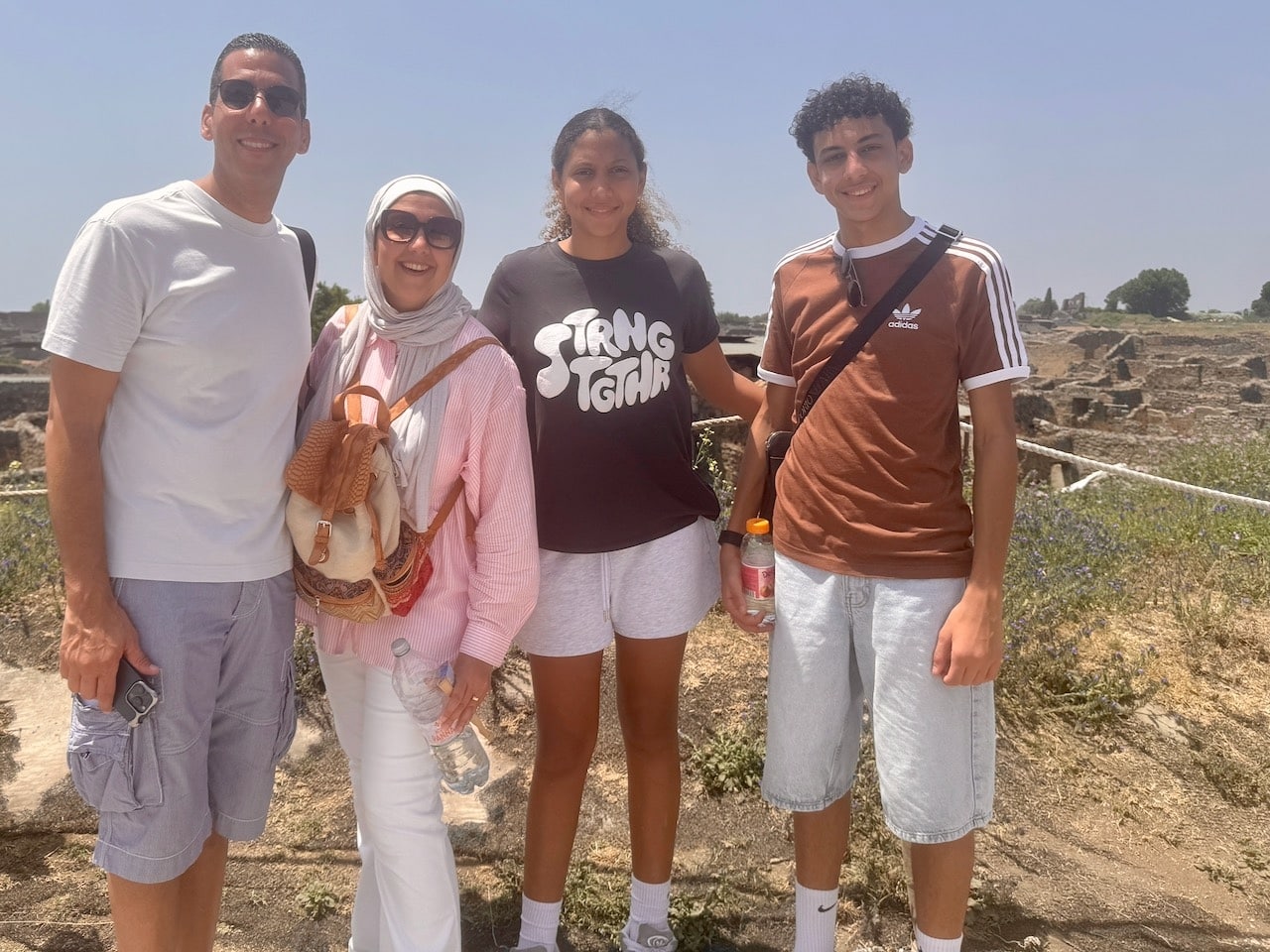
We were dreaming about lunch facing the sea and once we got the train back south, we got off in Sorrento where a local recommended the Royal Hotel.
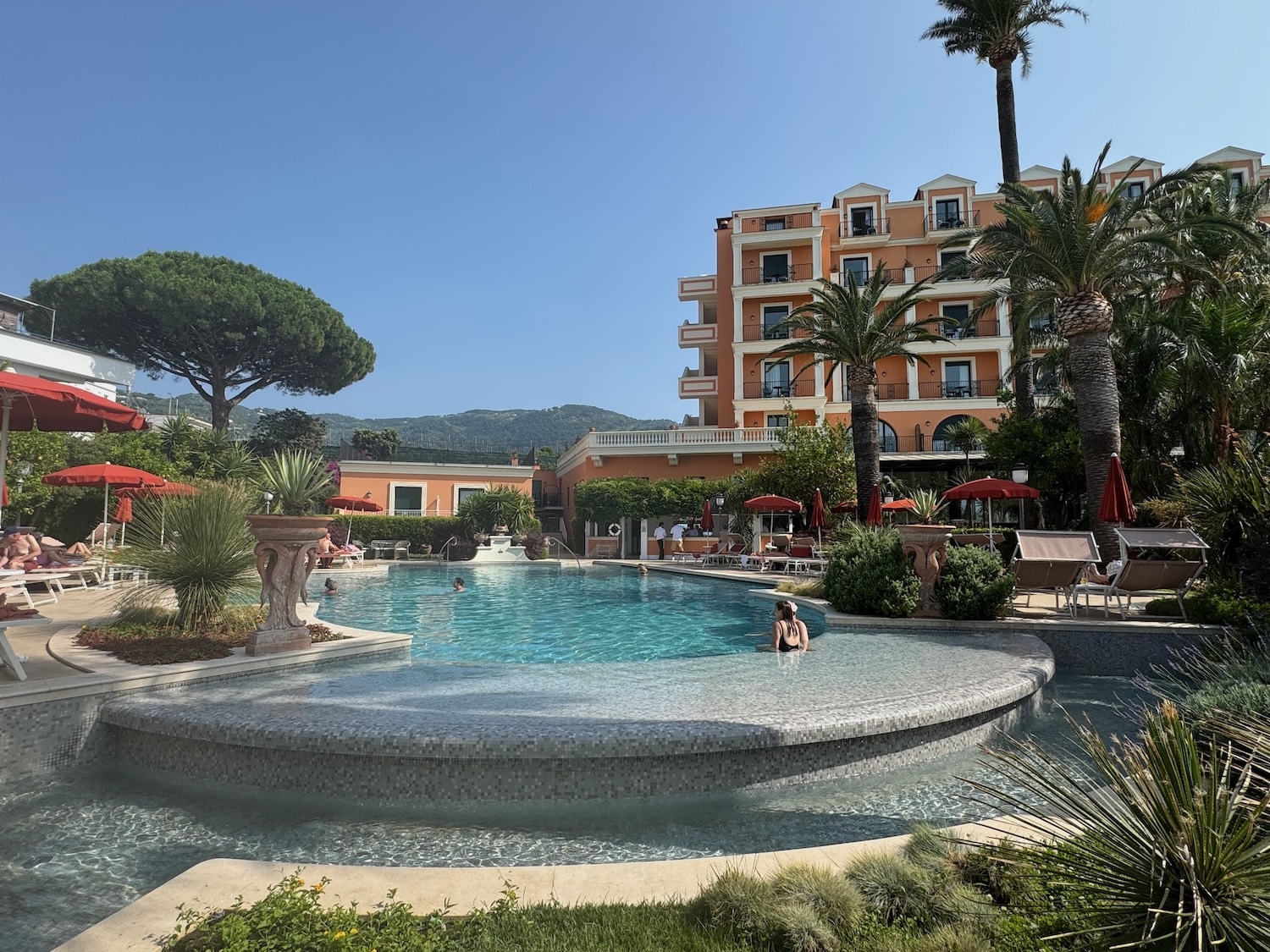
It turned out to be an inspired suggestion. It was a little after 3 p.m. and that’s late for lunch in Italy. The terrace dining room was almost empty.
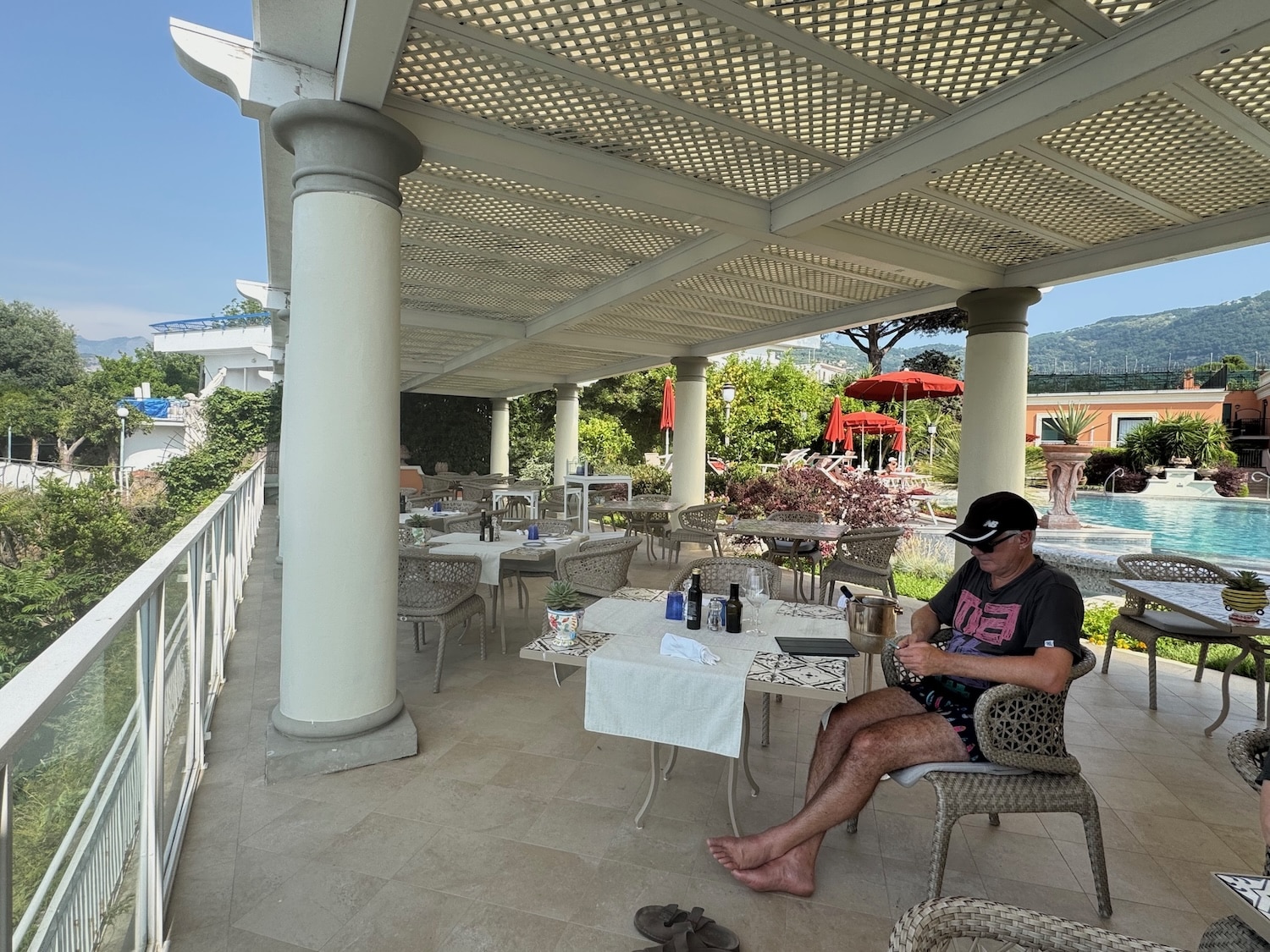
But they served they served us and Caprese salad on the Bay of Naples seemed just right.
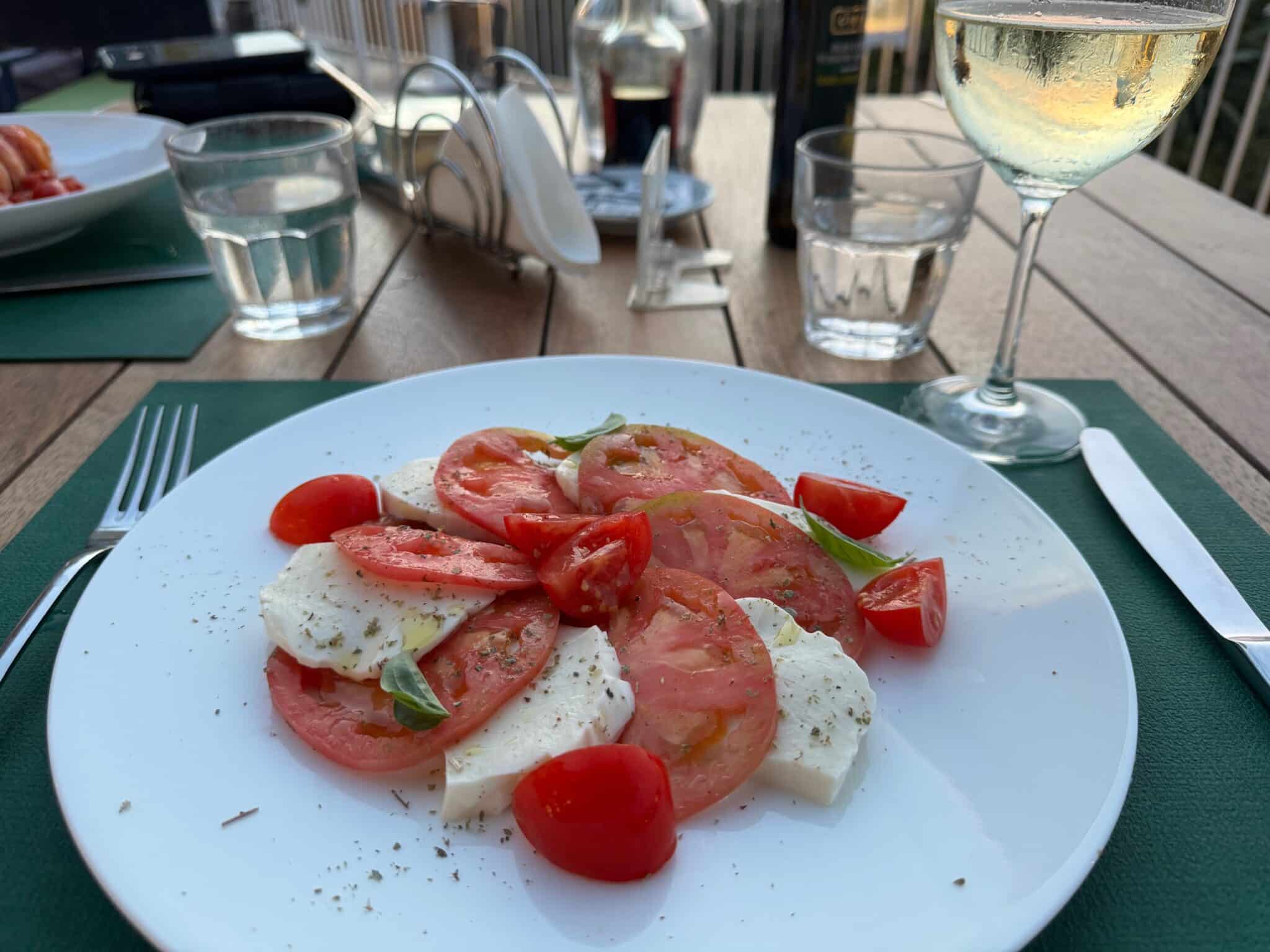
Our table had a beautiful view.
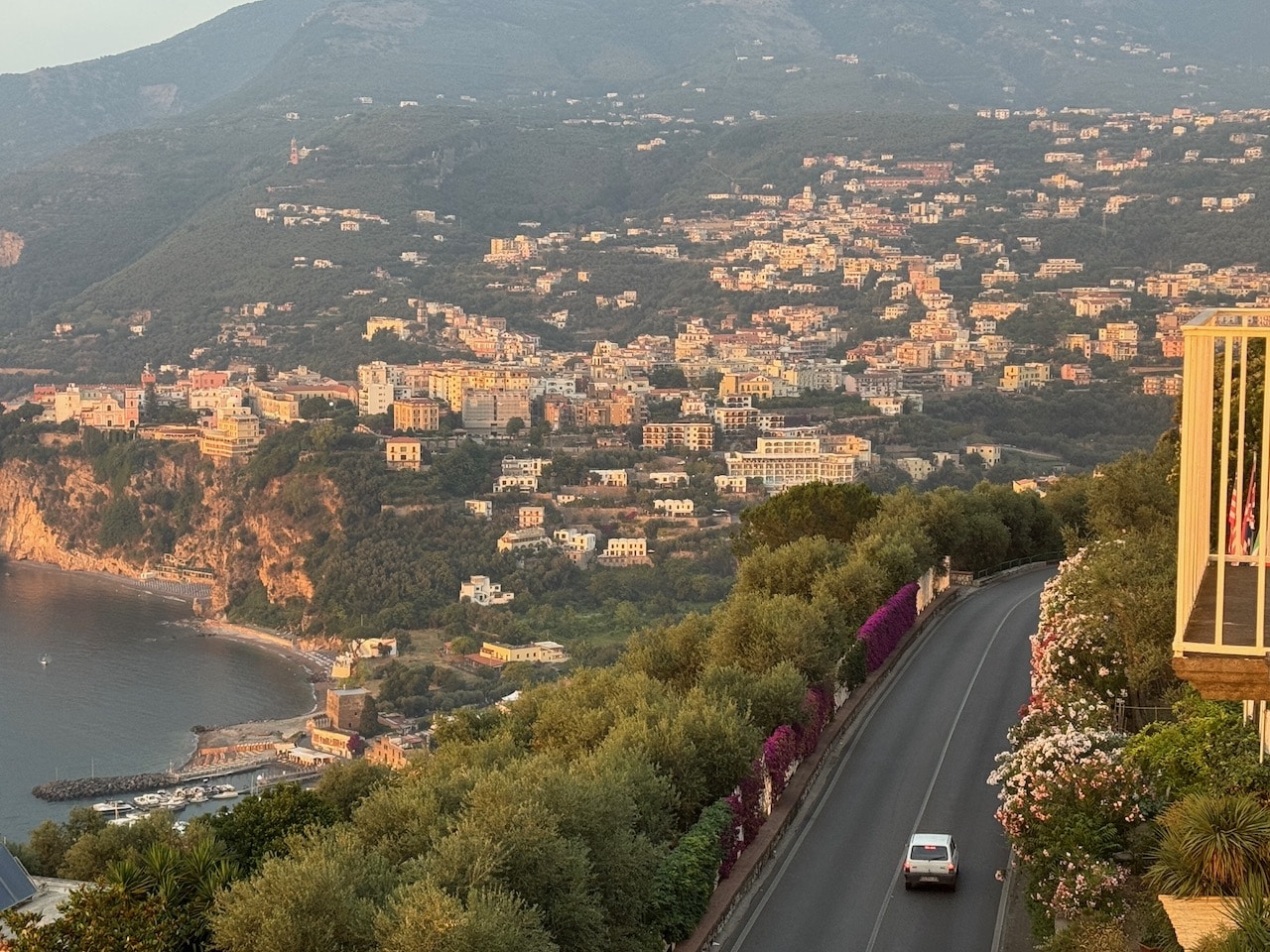
Back at Torre Barbara from our terrace we loved the way the late afternoon sun cast a golden glow on the town of Vico Equense.
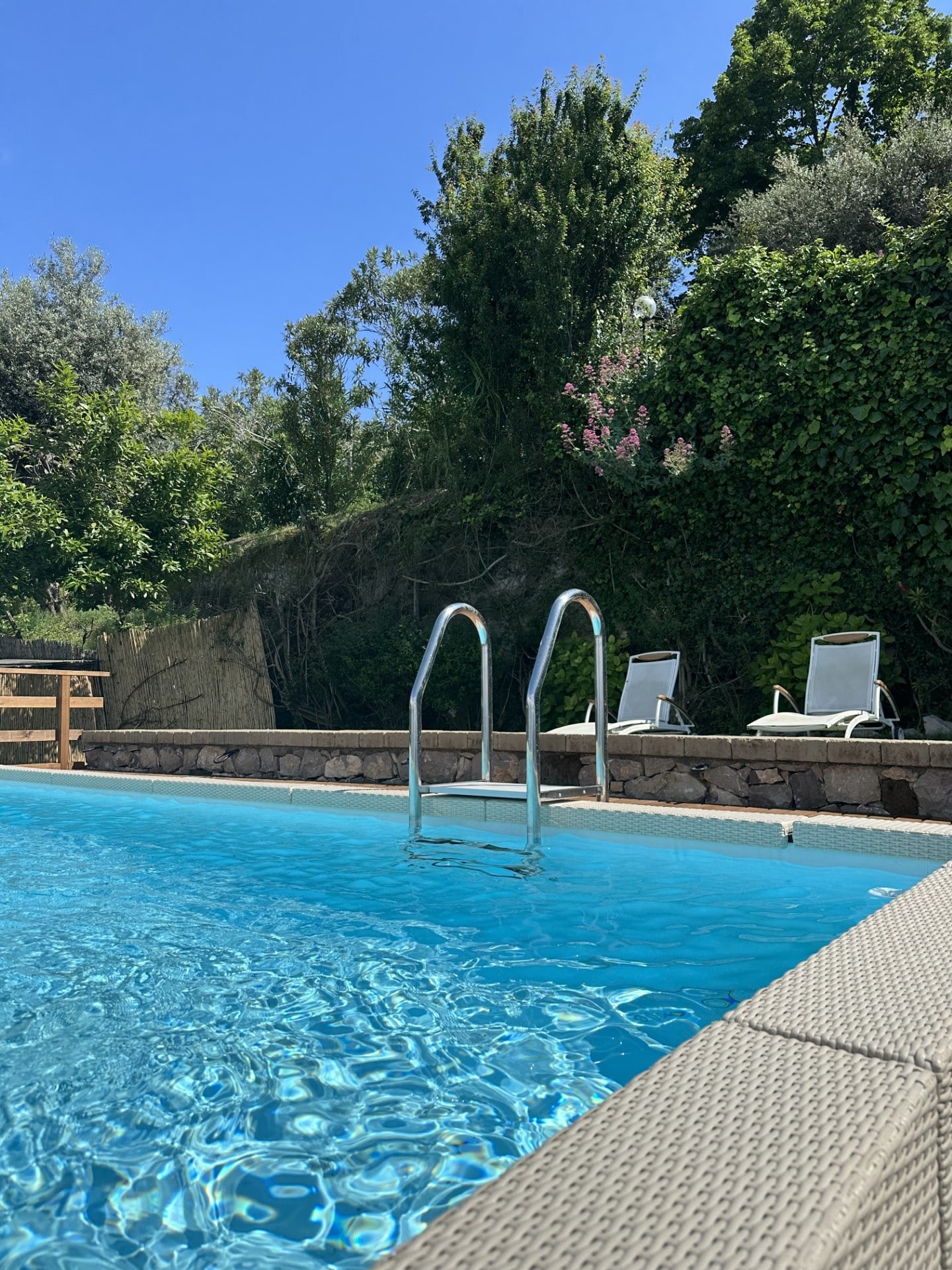
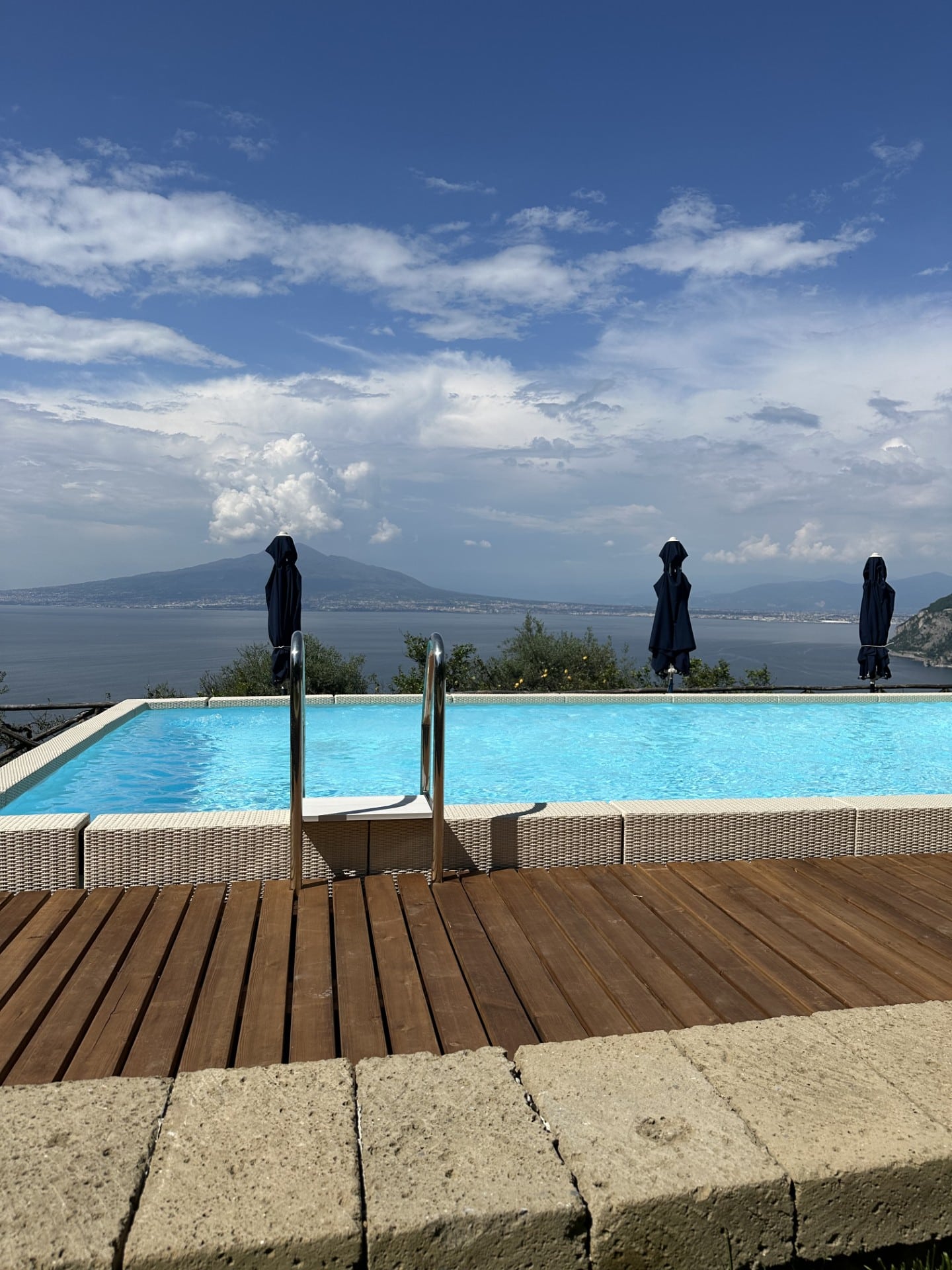
And there was just enough to time for a swim in the pool in the beautifully landscaped garden.
But there was still something to arrange. Benedetta, at the reception desk, asked what we planned for the next day and when we explained that we were having a tough time getting a last minute boat trip to the Amalfi Coast, she jumped on it. Even though most offices were closed, she persisted. Amazingly, she found us a trip. While we were enjoying dinner, she came to tell us that we were set for boat trip the next day and a driver would pick us up at 7:30 a.m. and take us to the meeting point.
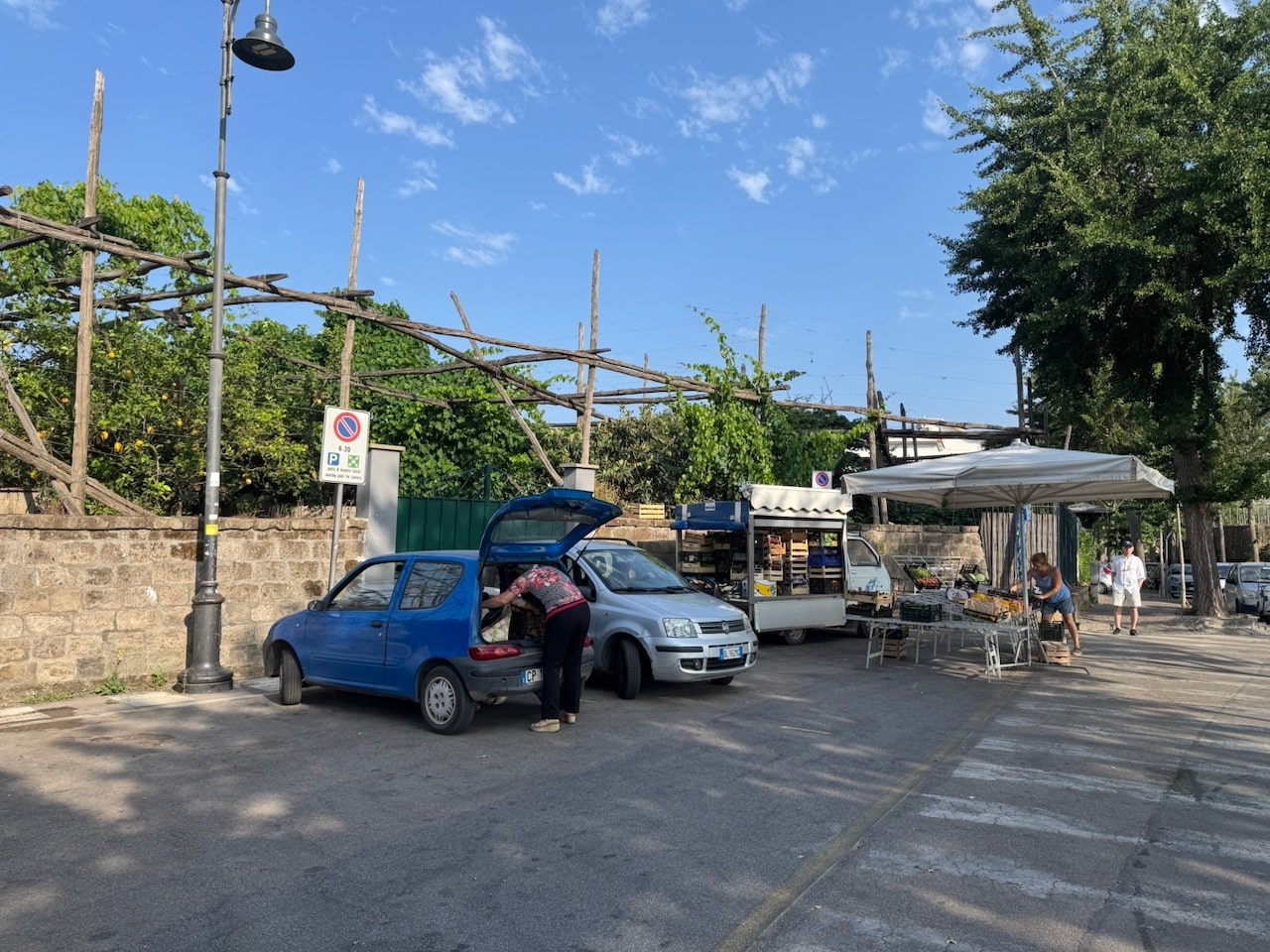
The driver dropped us in what felt like the middle of nowhere. It was a pull-off from a small road where we watched as a woman named Viola set up a fruit stand.
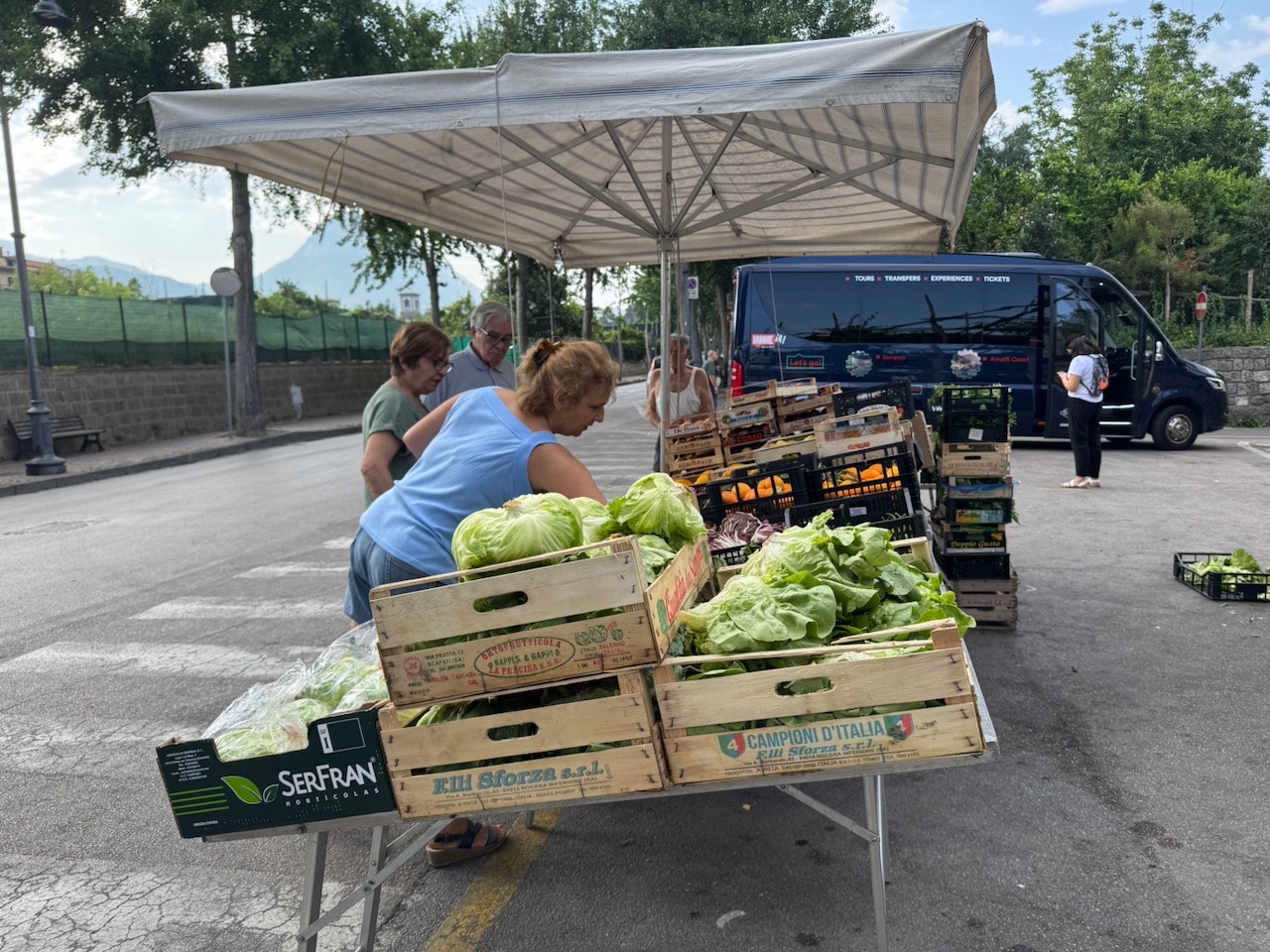
About 30 minutes later, a bus pulled up with others from Sorrento who would also take this tour. We all trouped down a narrow street to an elevator that took us down through the town wall and the mountain to the waterside.
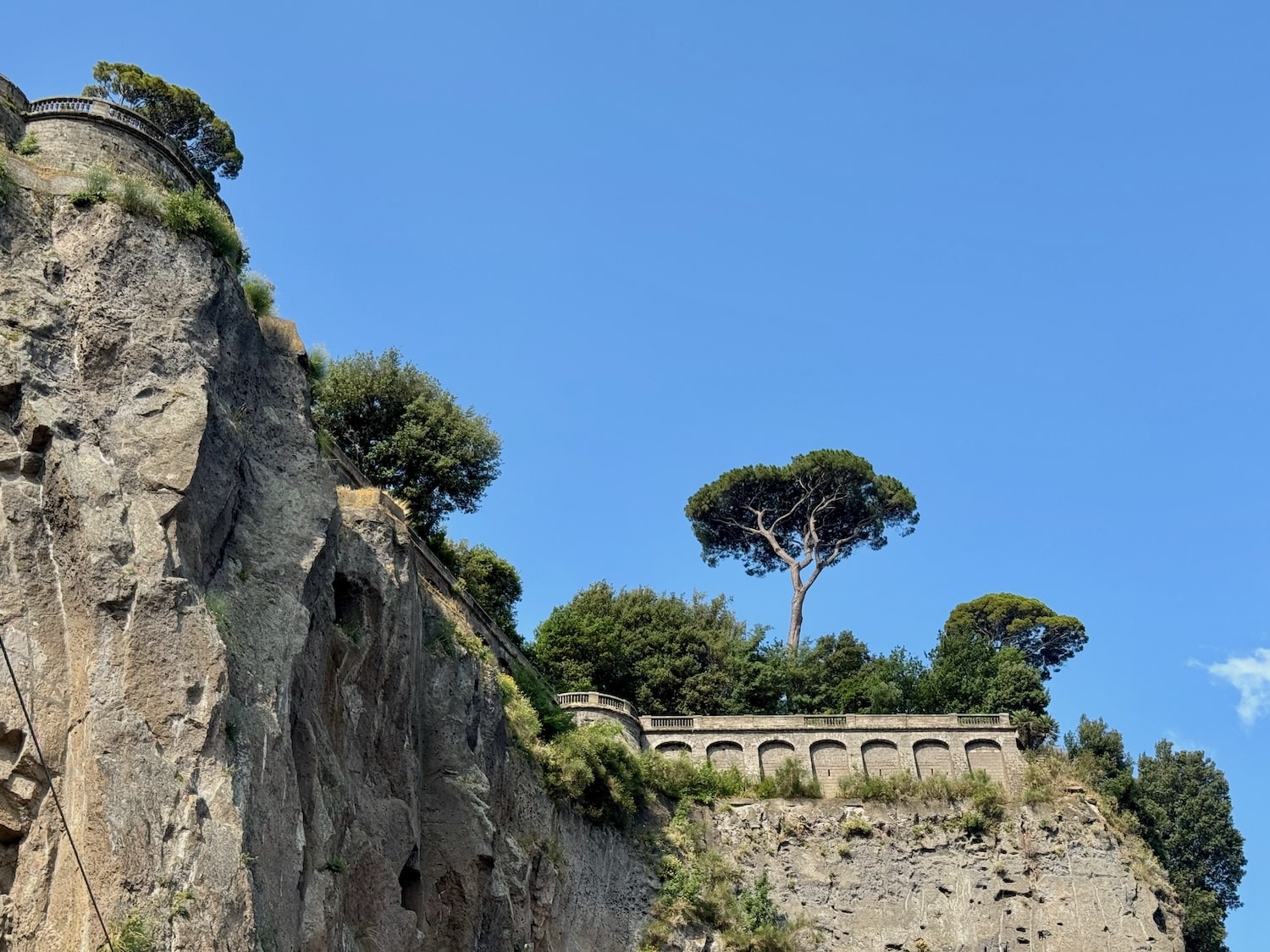
The harbor below was the Marina di Cassano, a little village hidden away.
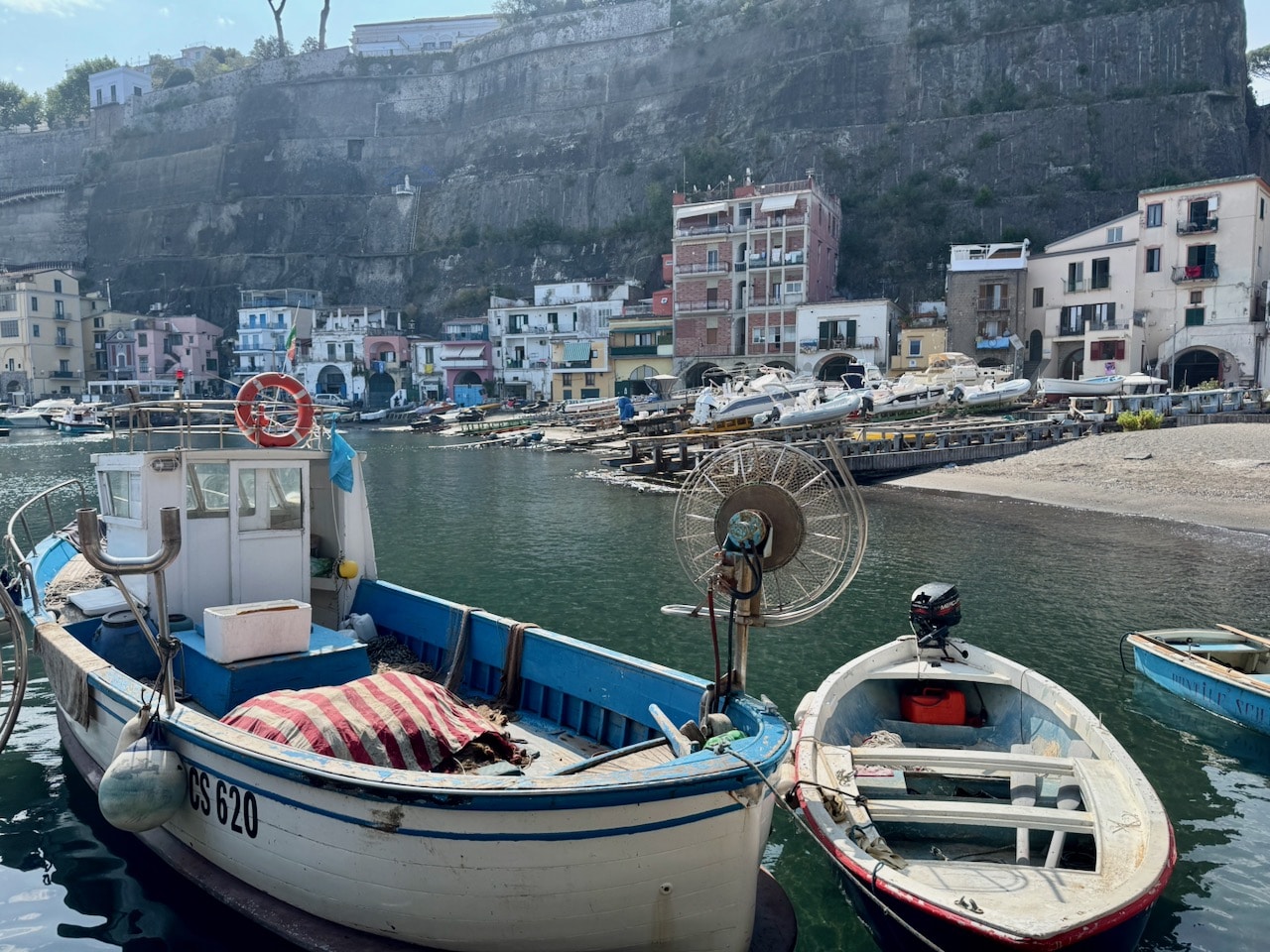
We boarded a boat that was more ferry than pleasure craft and probably held about 150 people. We opted for the shade inside rather than topside deck.
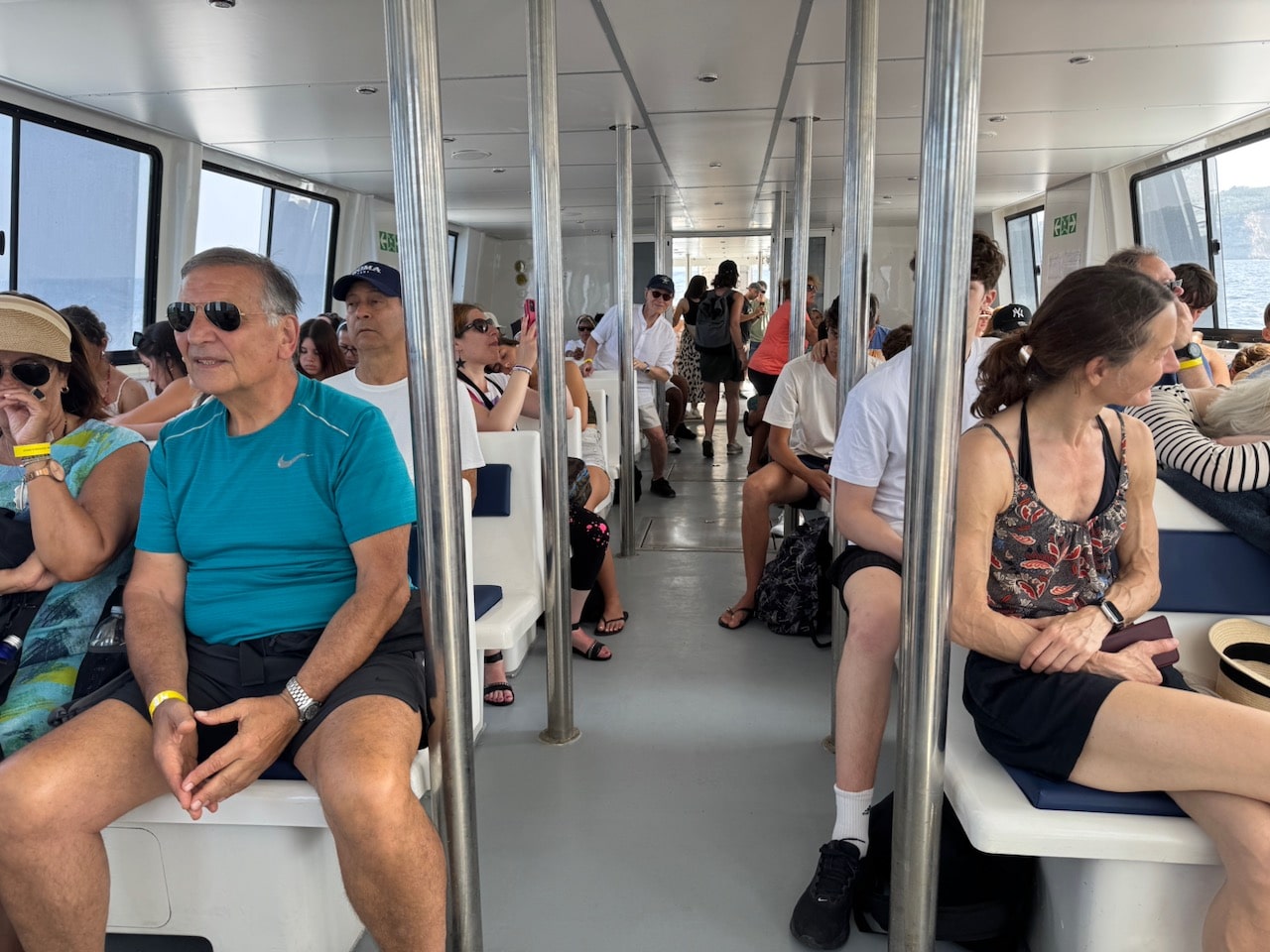
We felt we had a good view during the hour and 10 minute ride.
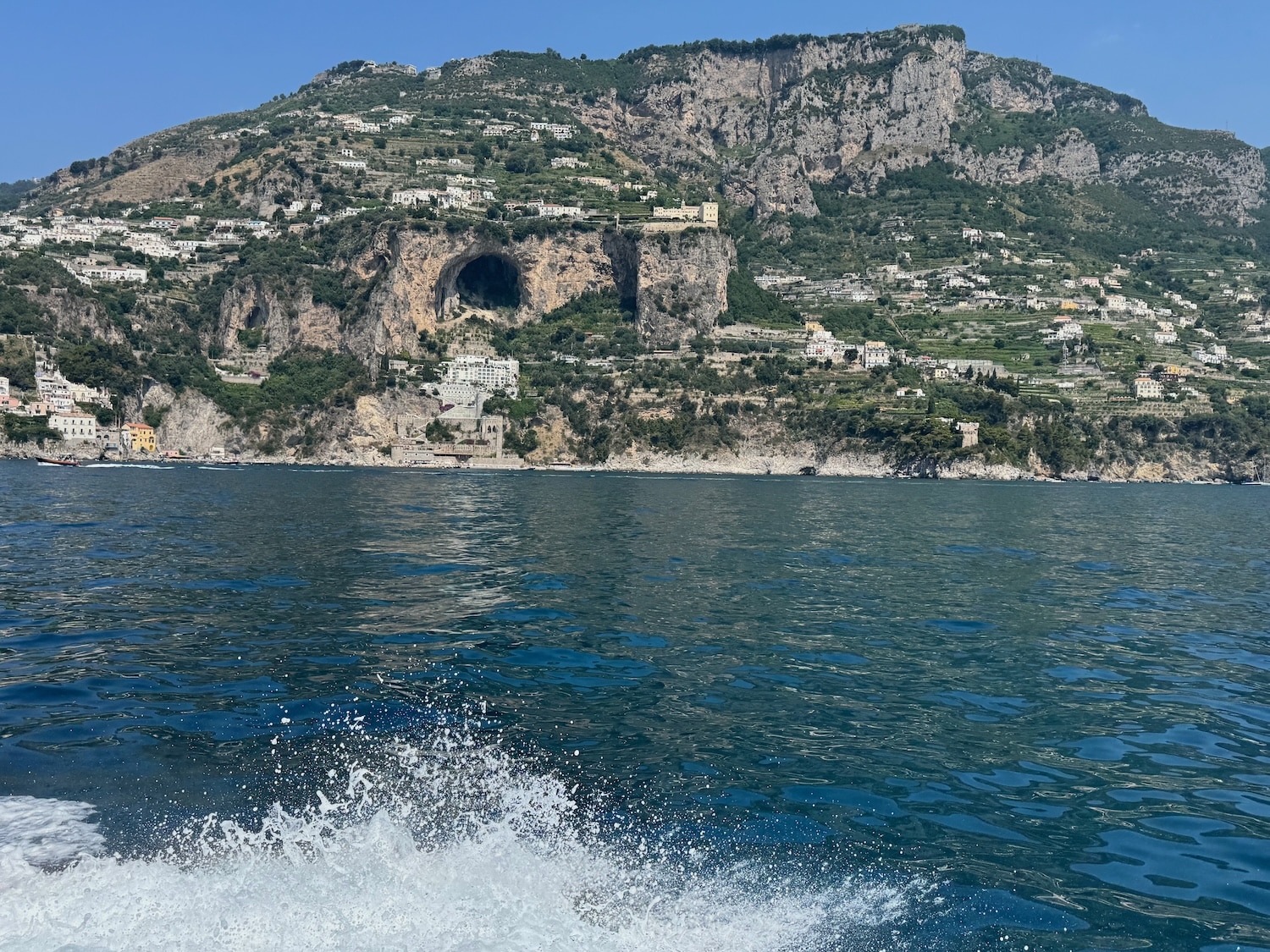
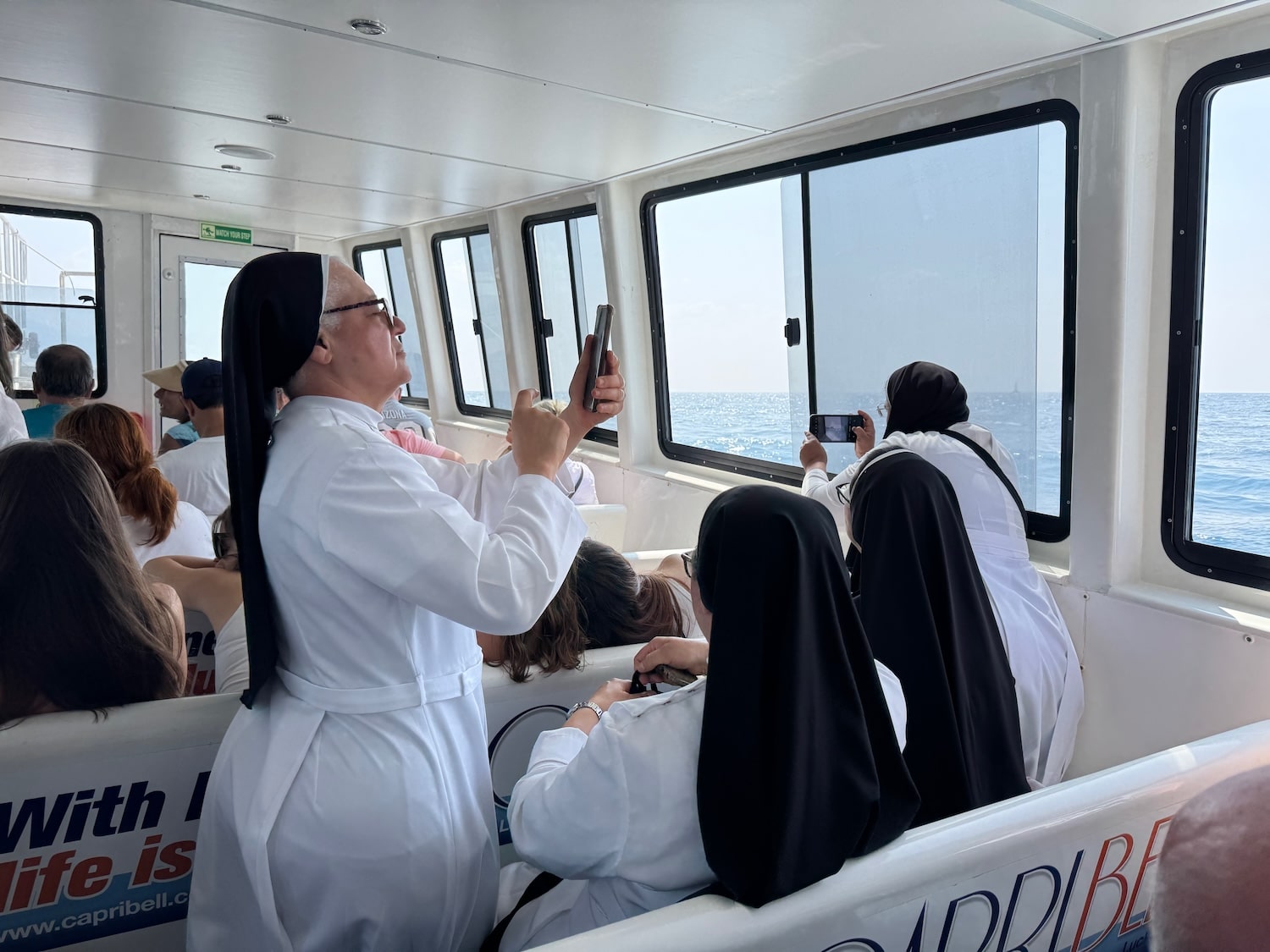
A group of nuns on the boat enjoyed the scenery while shepherding a bunch of high school students.
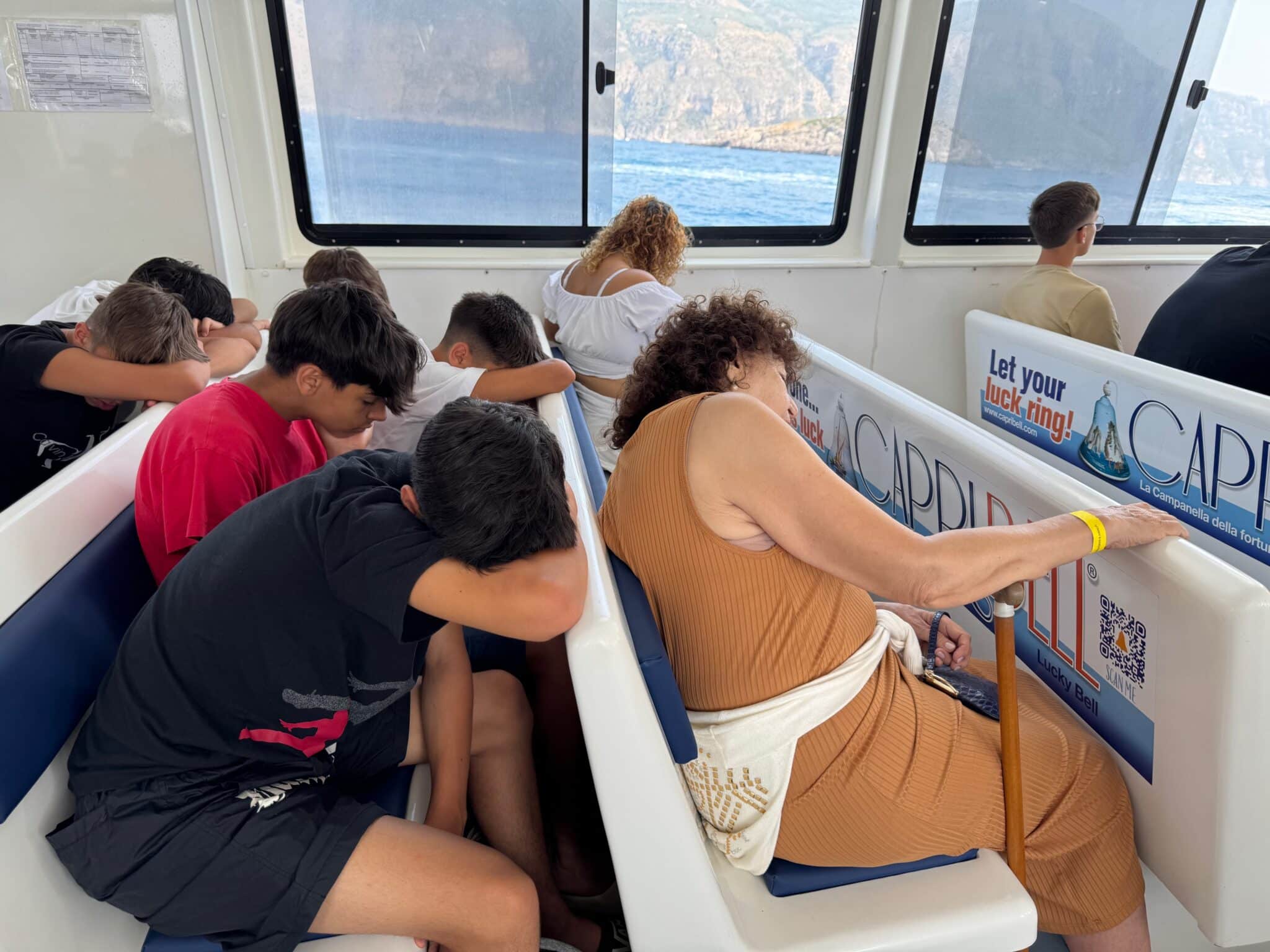
While the students slept we, like the nuns, enjoyed everything we saw.
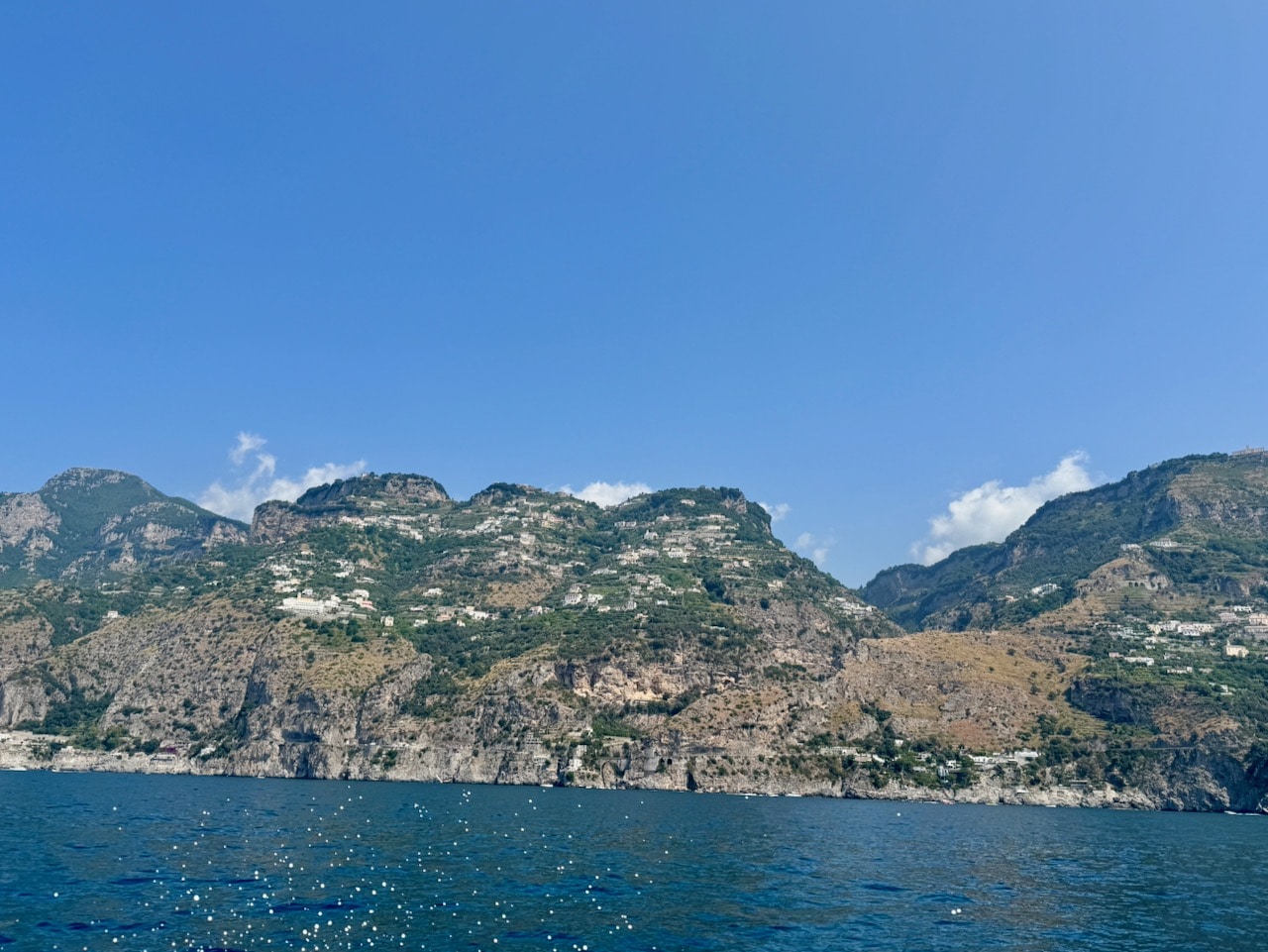
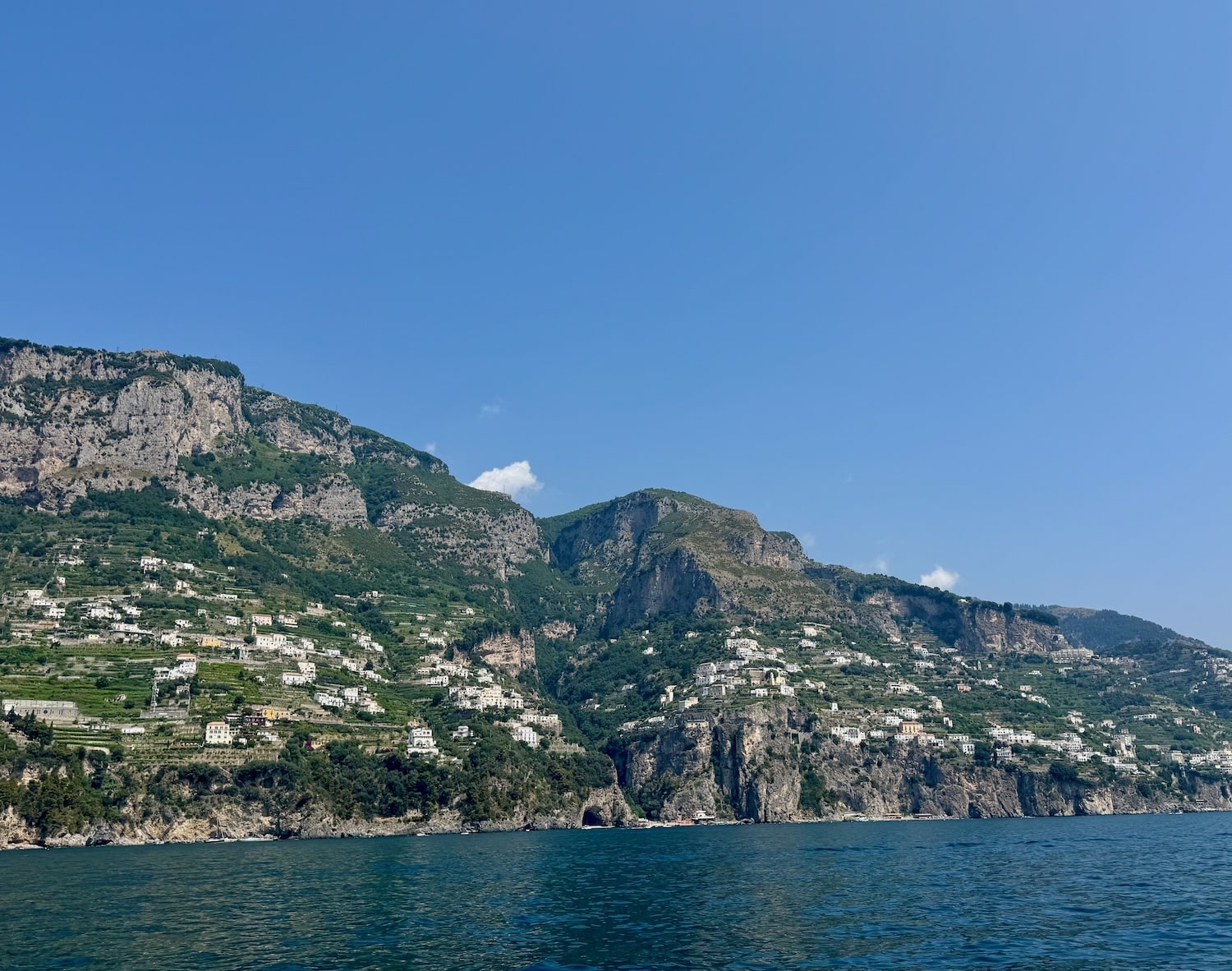
We saw scattered homes, and clusters of communities on the mountainsides on the way to Amalfi.
Amalfi was the first stop.
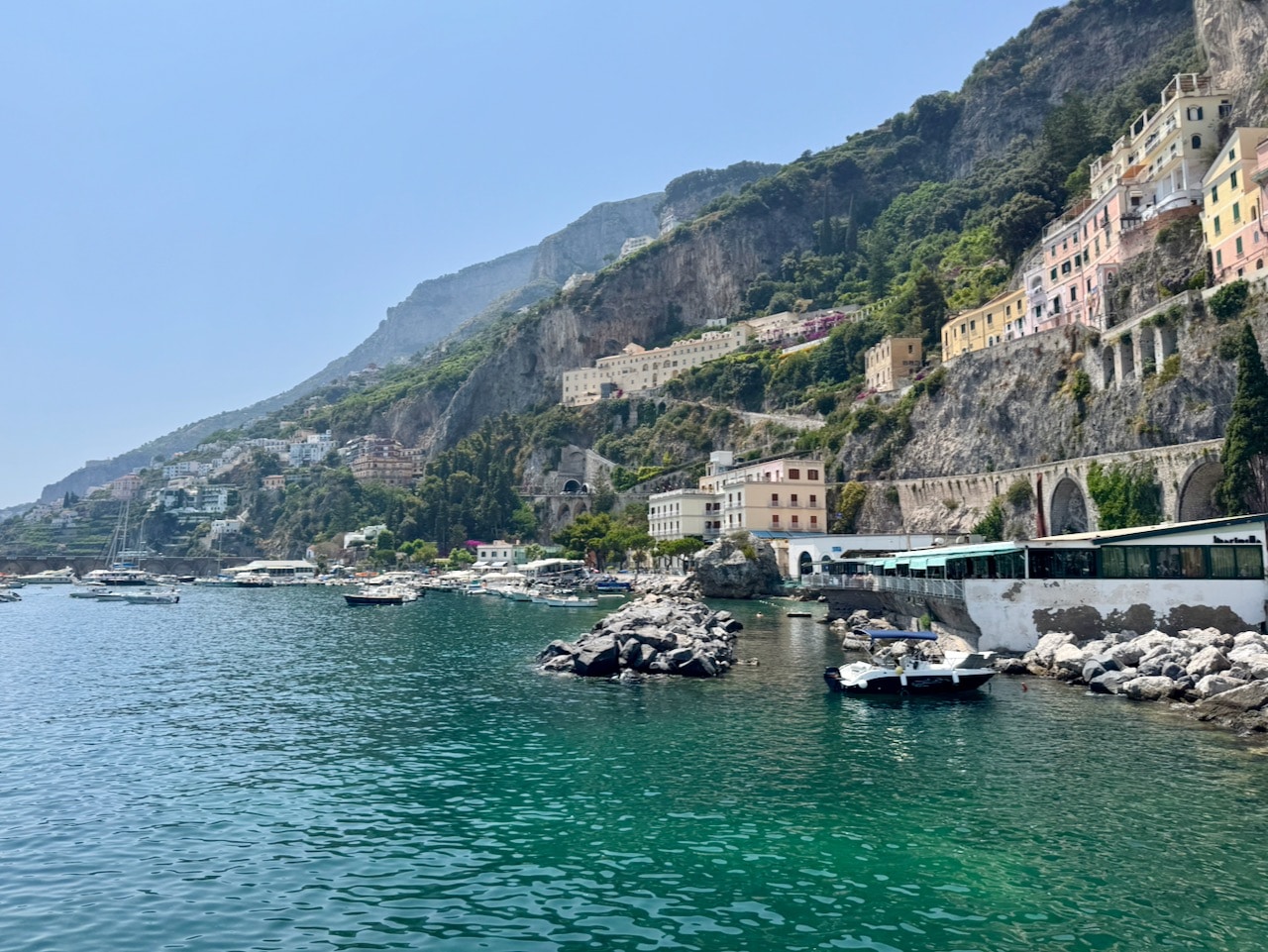
This was more of a boat ride than a tour and as we disembarked at Amalfi, we were told that the boat would pick us up in three hours. That felt like a long time, so we started out to explore a little. We wound our way up the hill to the main square, where we marveled at the arresting beauty of the medieval Duomo di Amalfi, begun in the 9th and 10th centuries renovated and restored over the centuries.
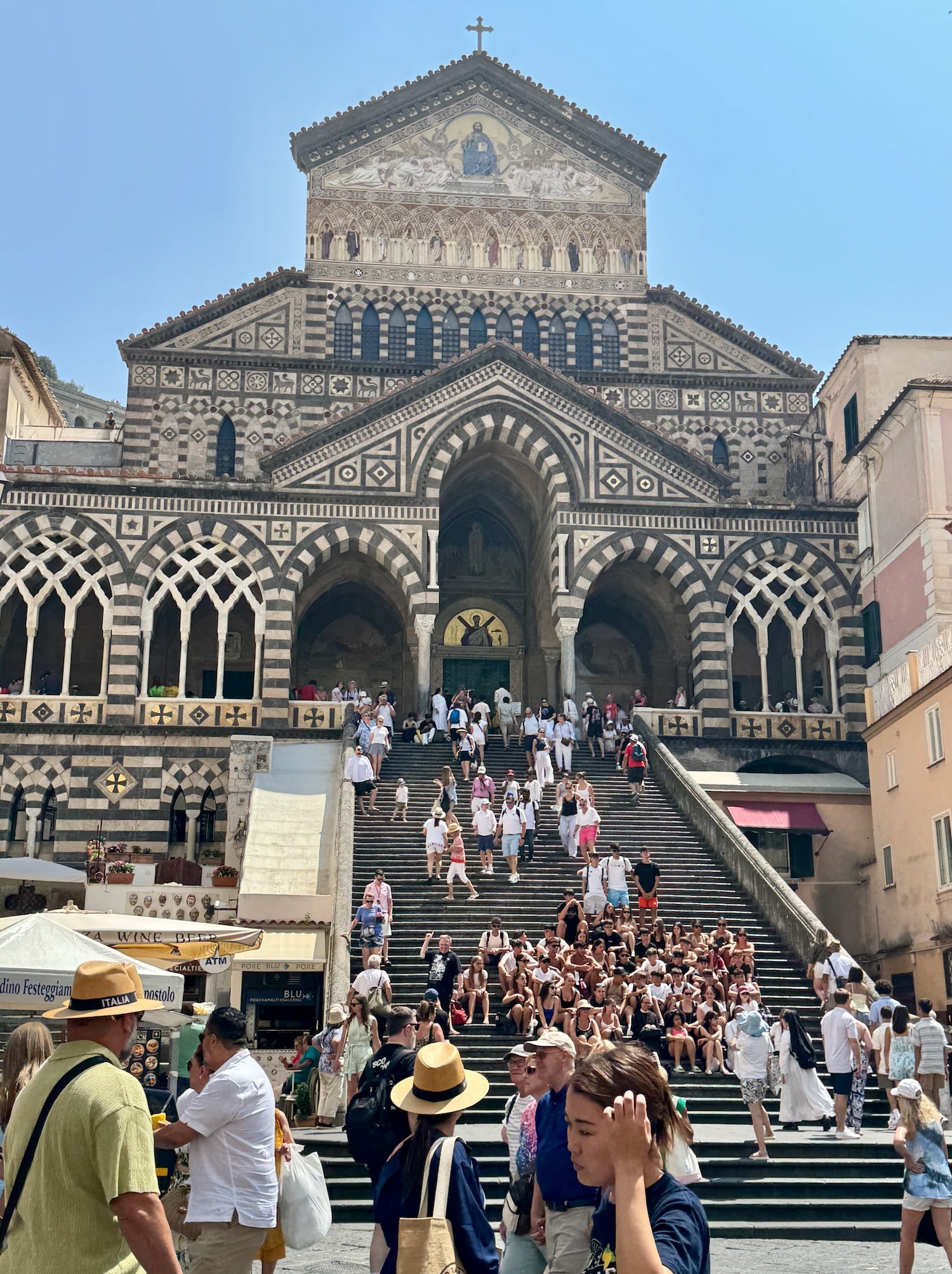
This is where the nuns from the boat brought the students.
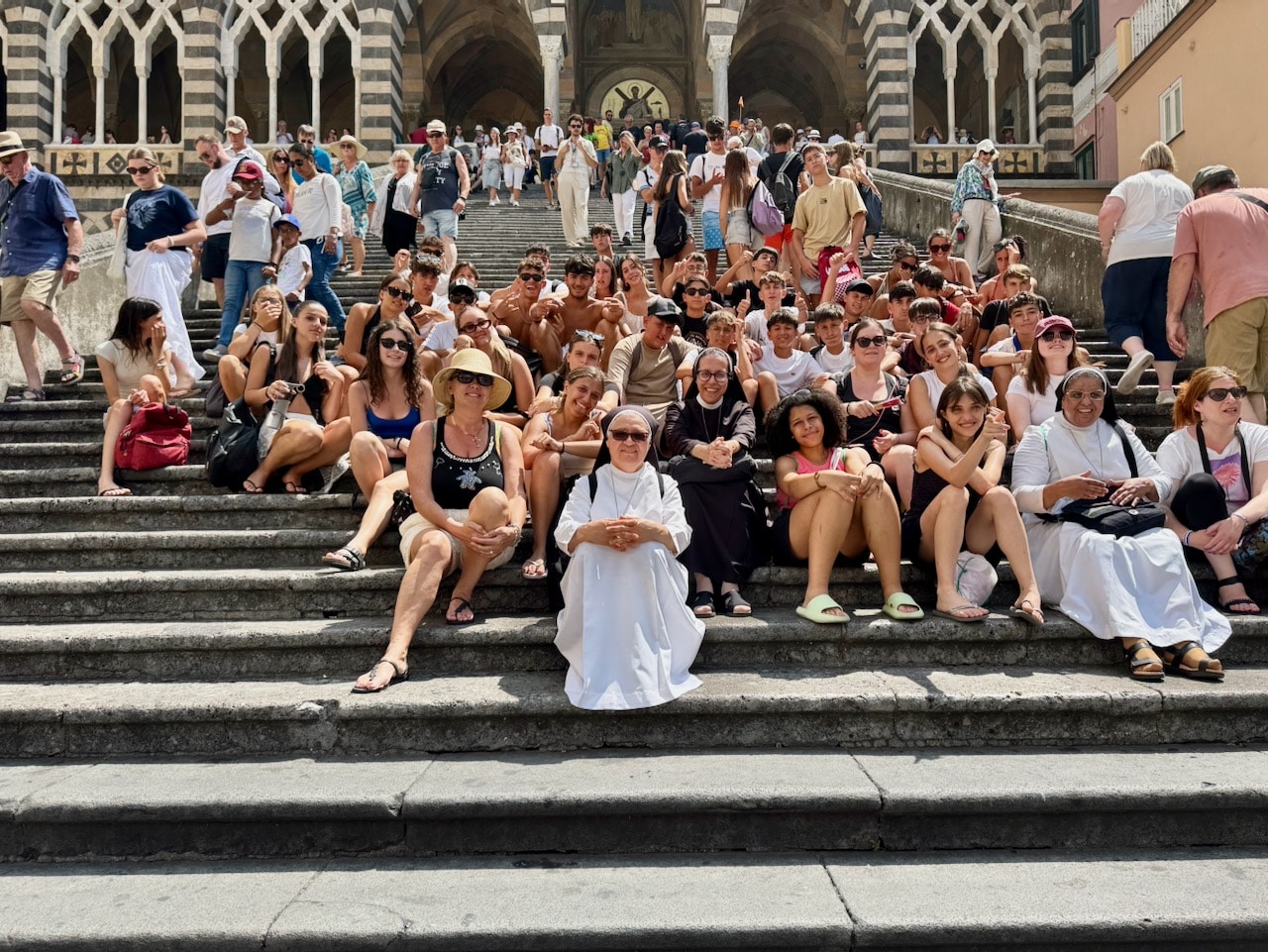
The Duomo’s facade today reflects the Norman, Arab and Byzantine influence here. The church is dedicated to St.Andrew and contains his relics. We left the students to that, and continued the walk uphill from the church. Everything here was uphill.
We wanted to get out of the narrow main street filled with shops and other tourists. We passed a man repairing a motorcycle and asked about a good restaurant for lunch. “Roccoco,” he said. “Where is it?” we asked. “Just keep walking,” he waved uphill. “About 10 minutes.” We followed his instructions and went through a tunnel and up the hill where the streets were calmer.
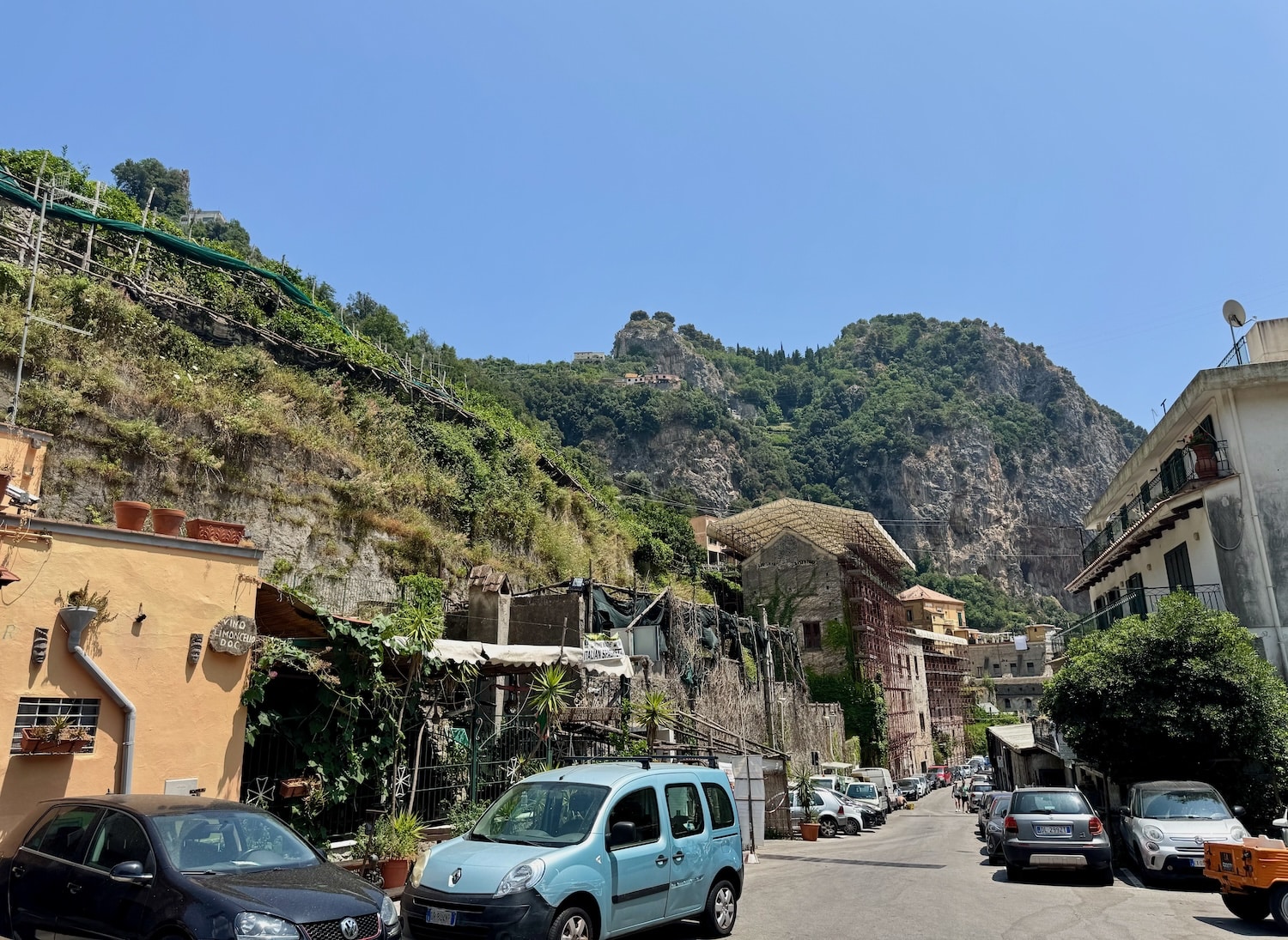
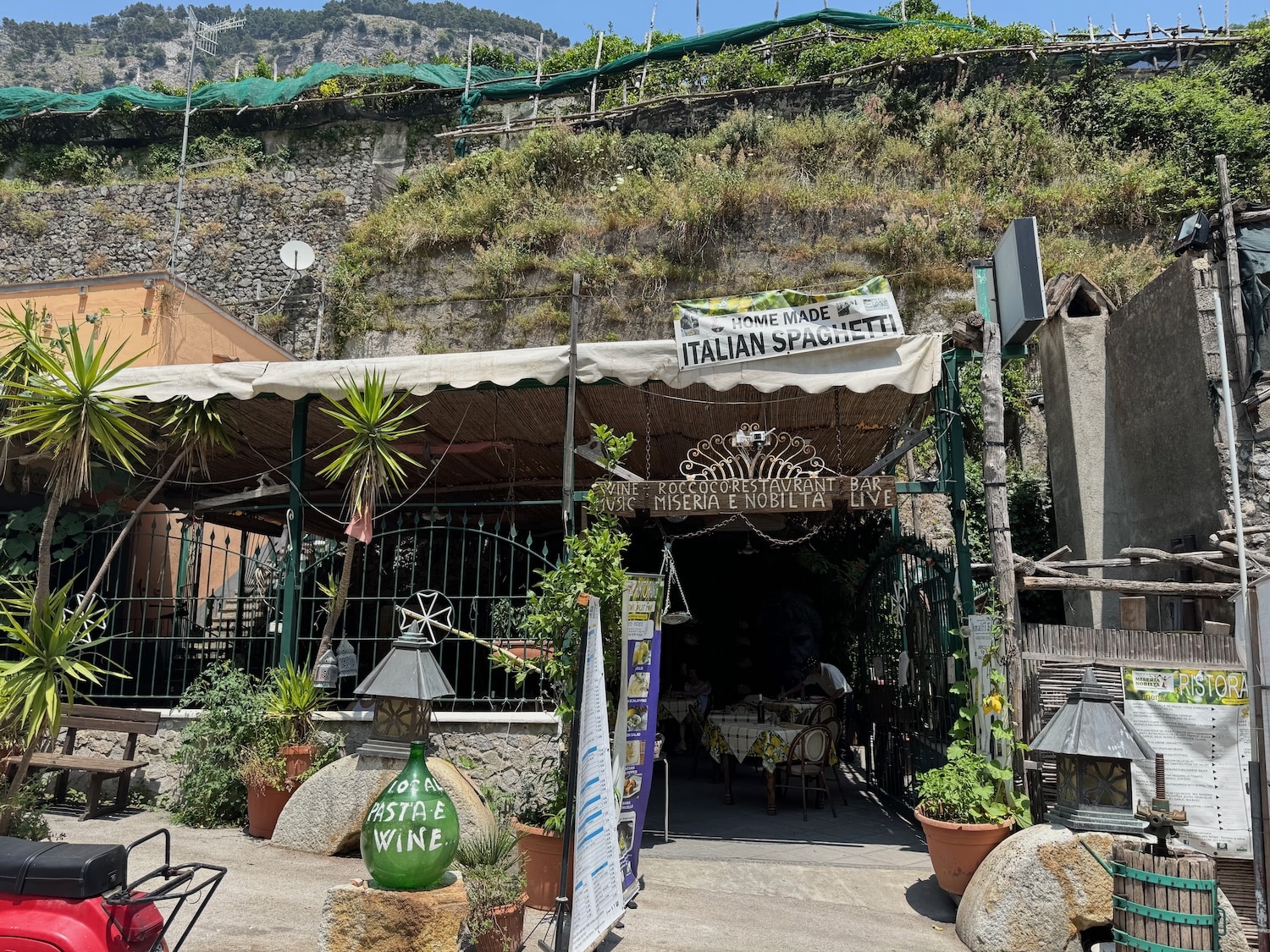
We finally found the placed tucked into the mountain underneath a lemon grove. Its official name is Miseria e Nobilita — misery and nobility — an odd contrast that sounds like a philosophical discussion. No surprise that locals just call it Roccoco, for the owner..
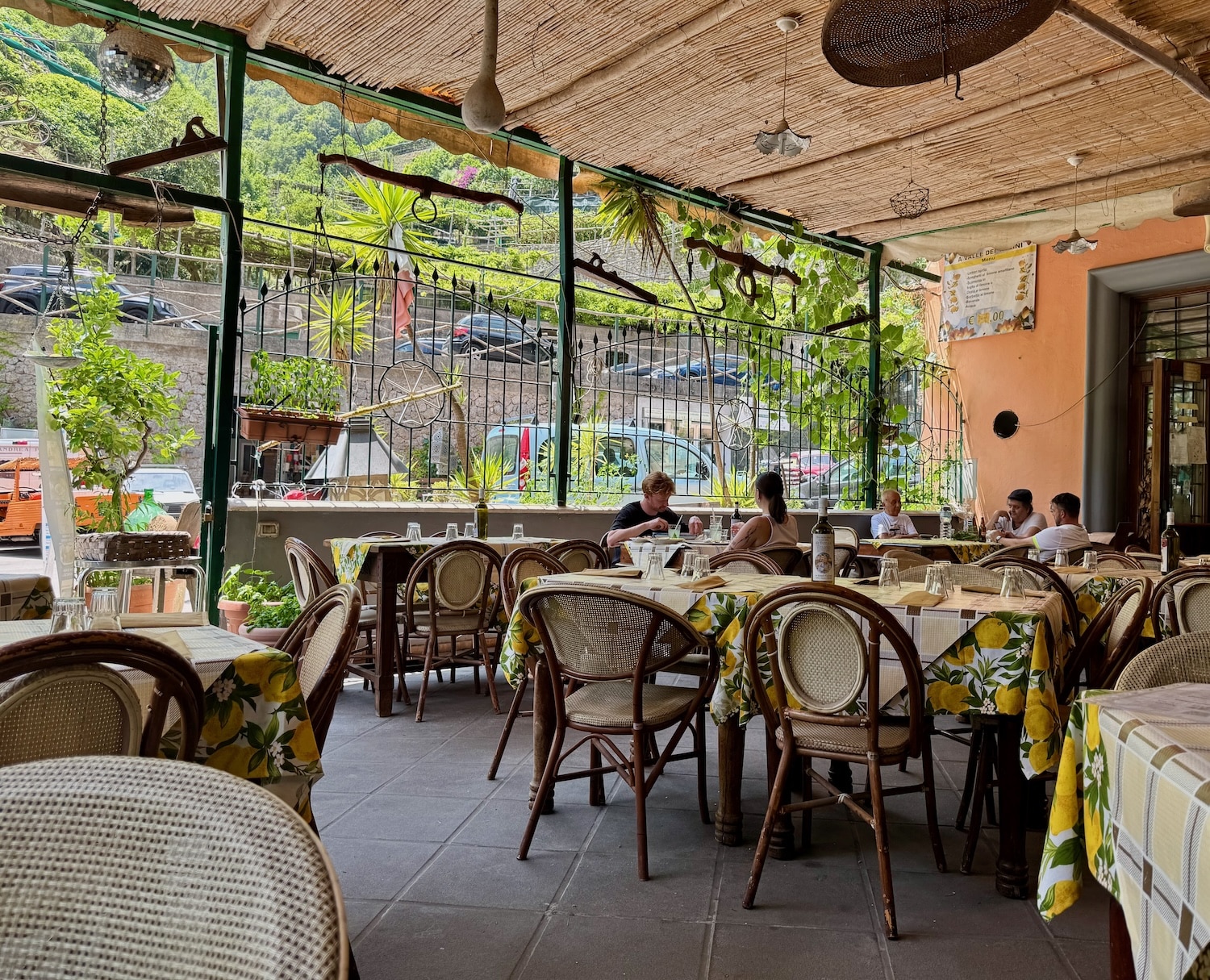
The owner Rocco was sitting in the back near the kitchen with his friends. He’s the one in the middle and he greeted us warmly after we told him the man in the motorcycle shop had recommend us.
Right across the road from Rocco’s we spotted a lemon grove owned by the Acetto family. They and Amalfi lemons are famous. The lemons in the region are prized for their low acidity and have been grown on terraced slopes in southern Italy since the 2nd century AD. But in the 10th century, when the Arabs arrived, they spread the use of lemons on the sea to ward off scurvy among sailors. They may even have given the fruit the name lemon. Today’s Amalfi lemon, developed by farmers over the centuries, was crossed with bitter oranges and the current variety called Sfusato d’Amalfi.
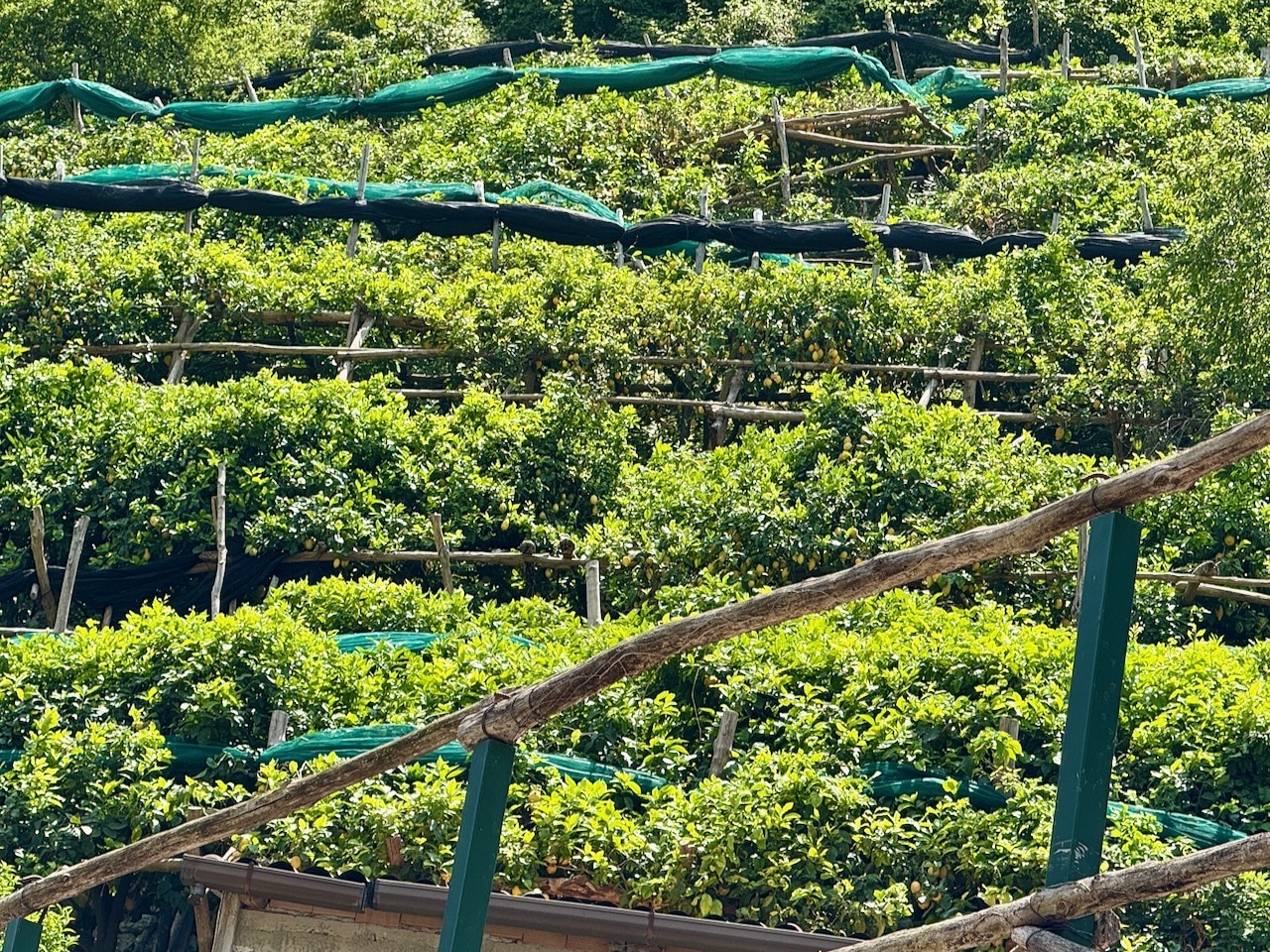
We saw a sign that said the grower offered tours and watched people climb the stairs into the grove.
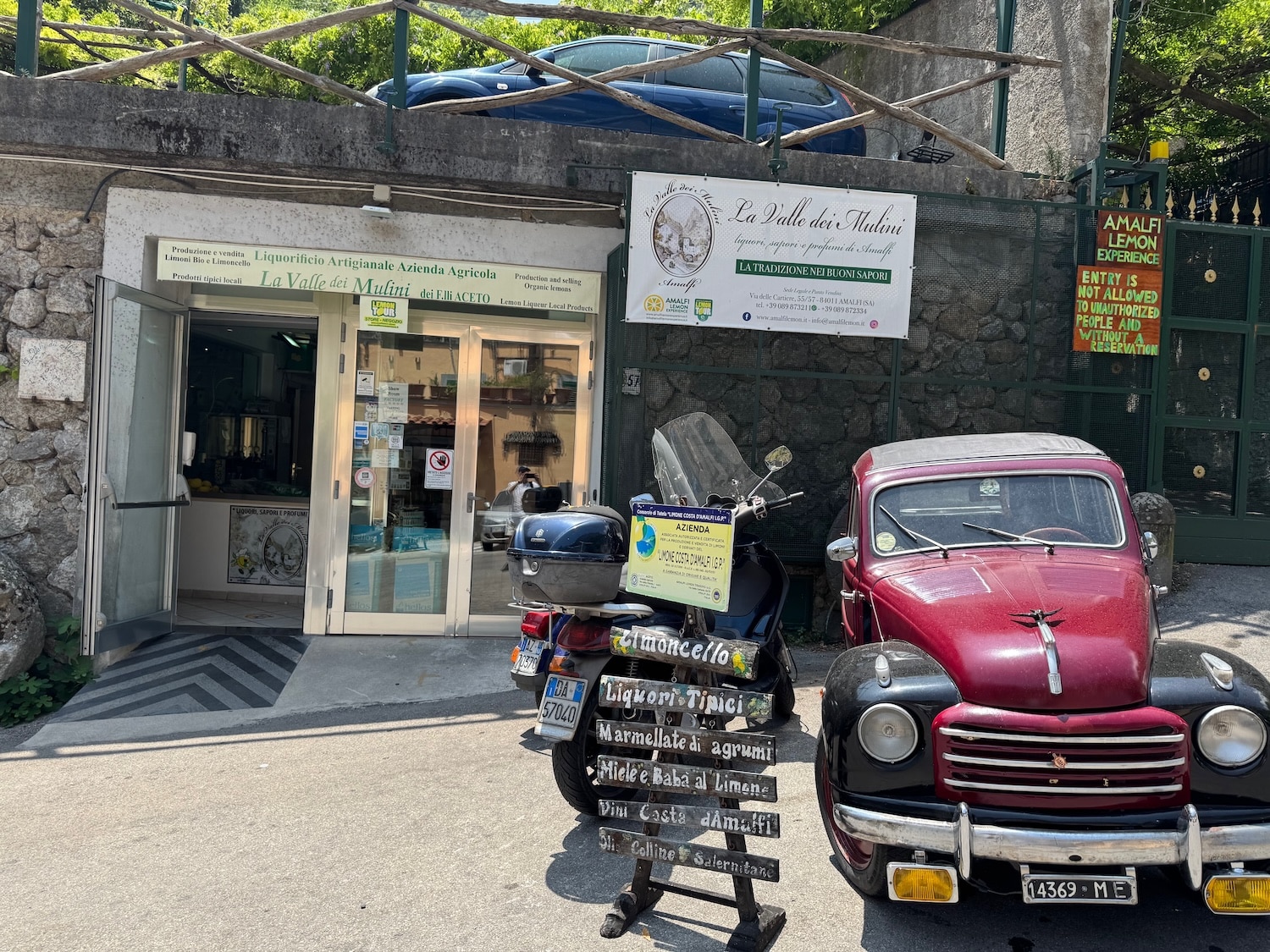
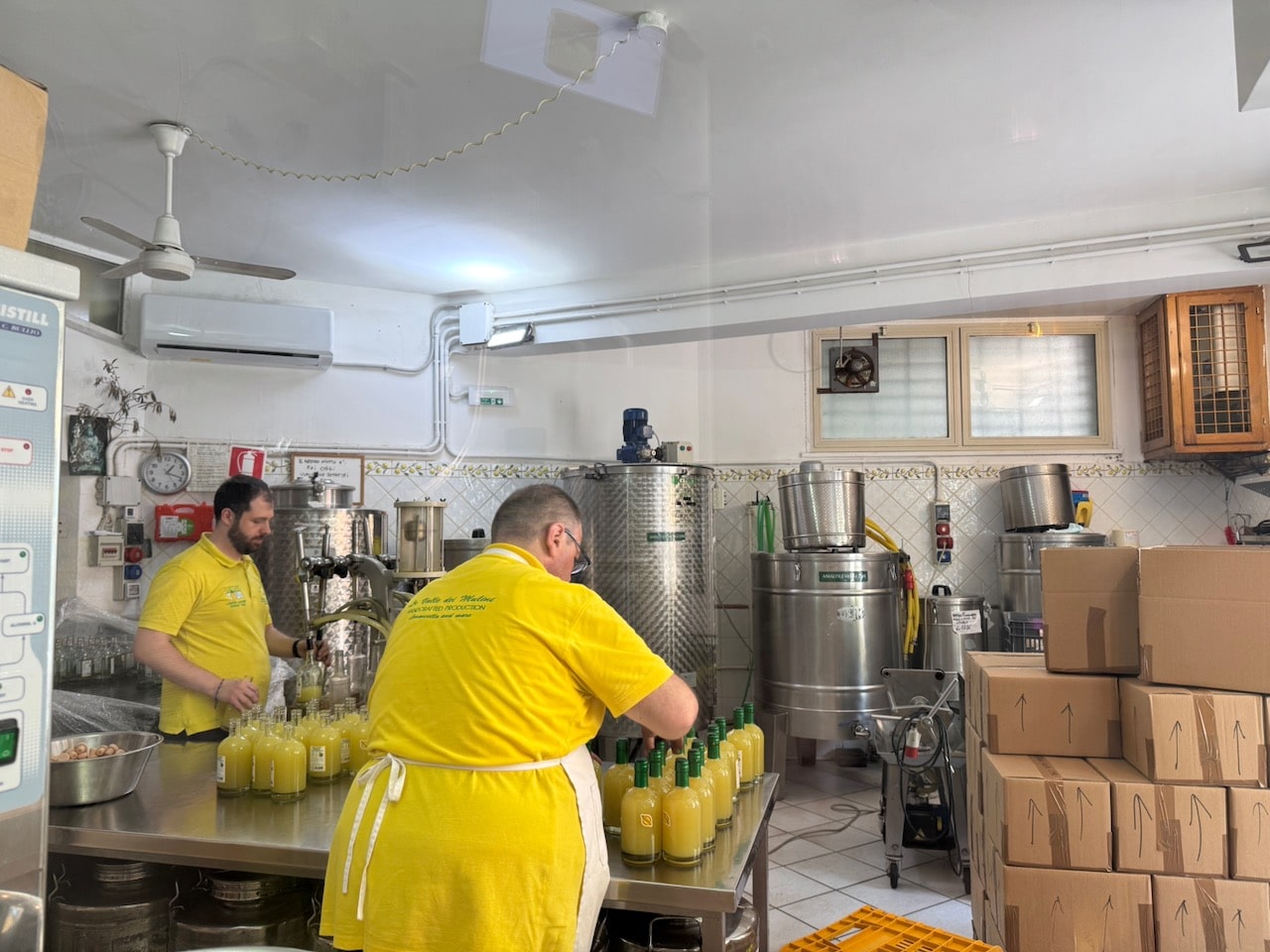
Our three hours were ticking away, but before we started back down the hill we stopped in the small shop and watched the men bottling limoncello. And of course Nick bought a bottle.
Back at the harbor our boat was waiting to take us to Positano.
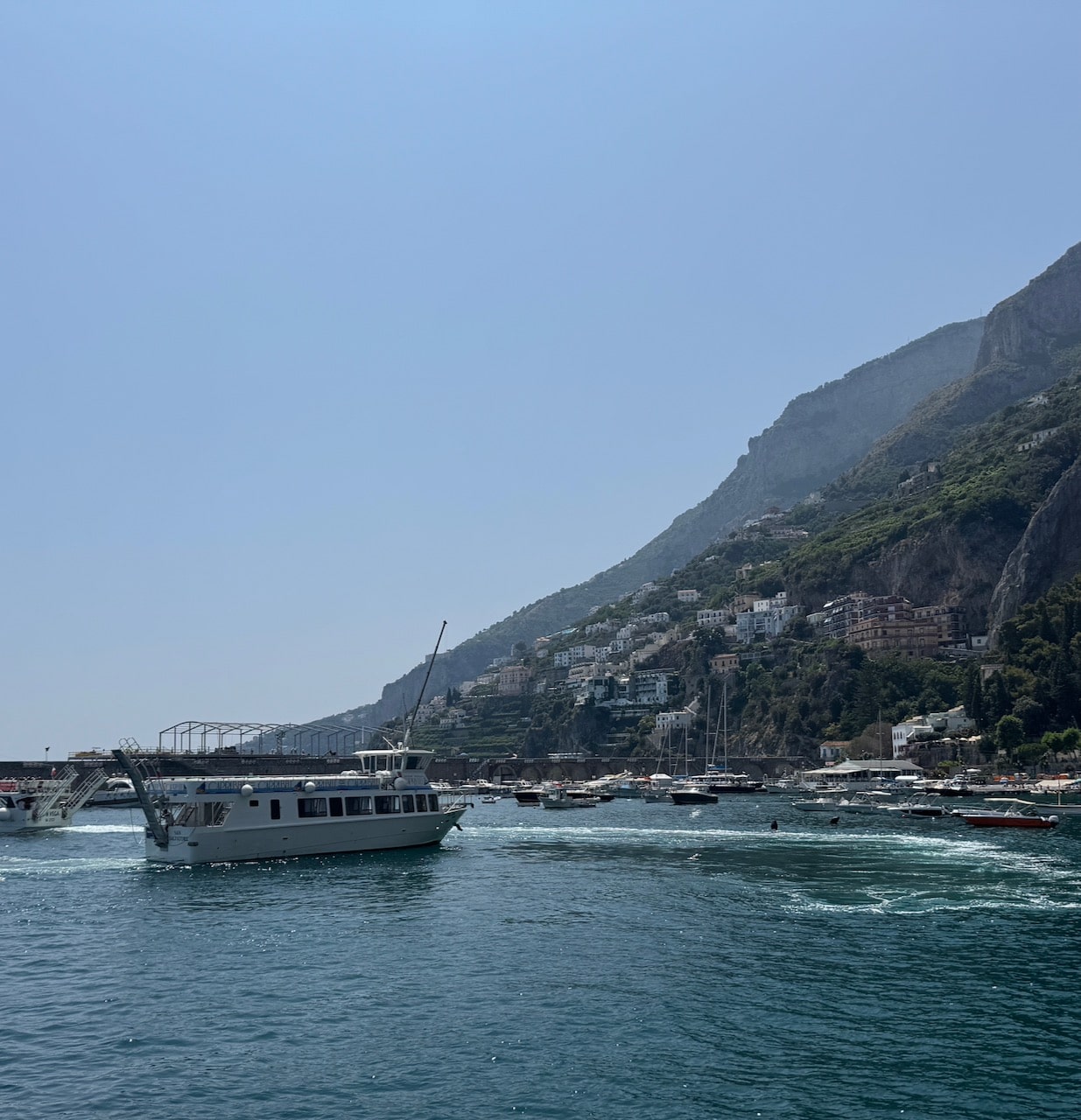
Again, the ride offered spectacular scenery and Positano appeared like a set of dollhouse buildings in the mountain.
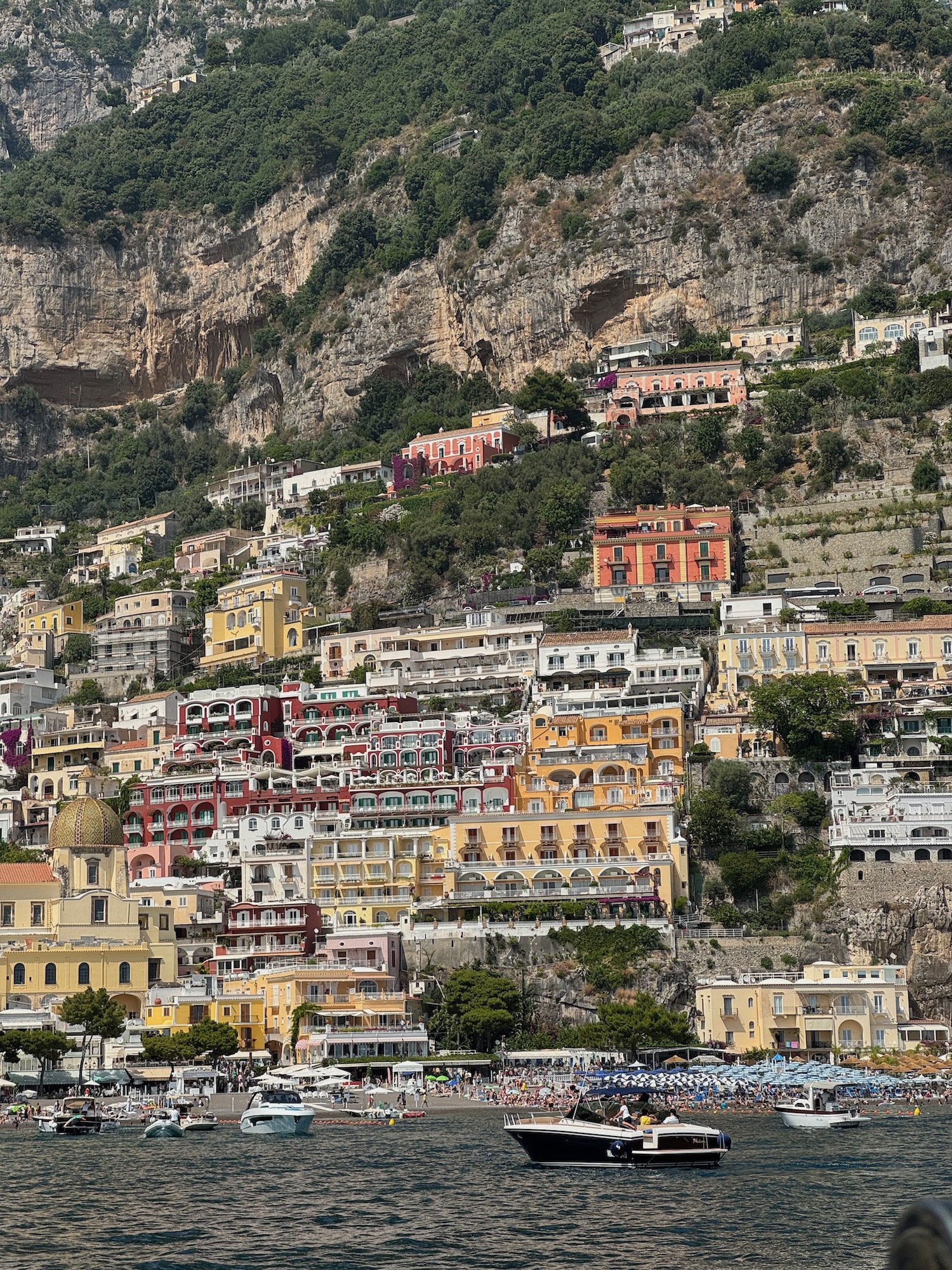
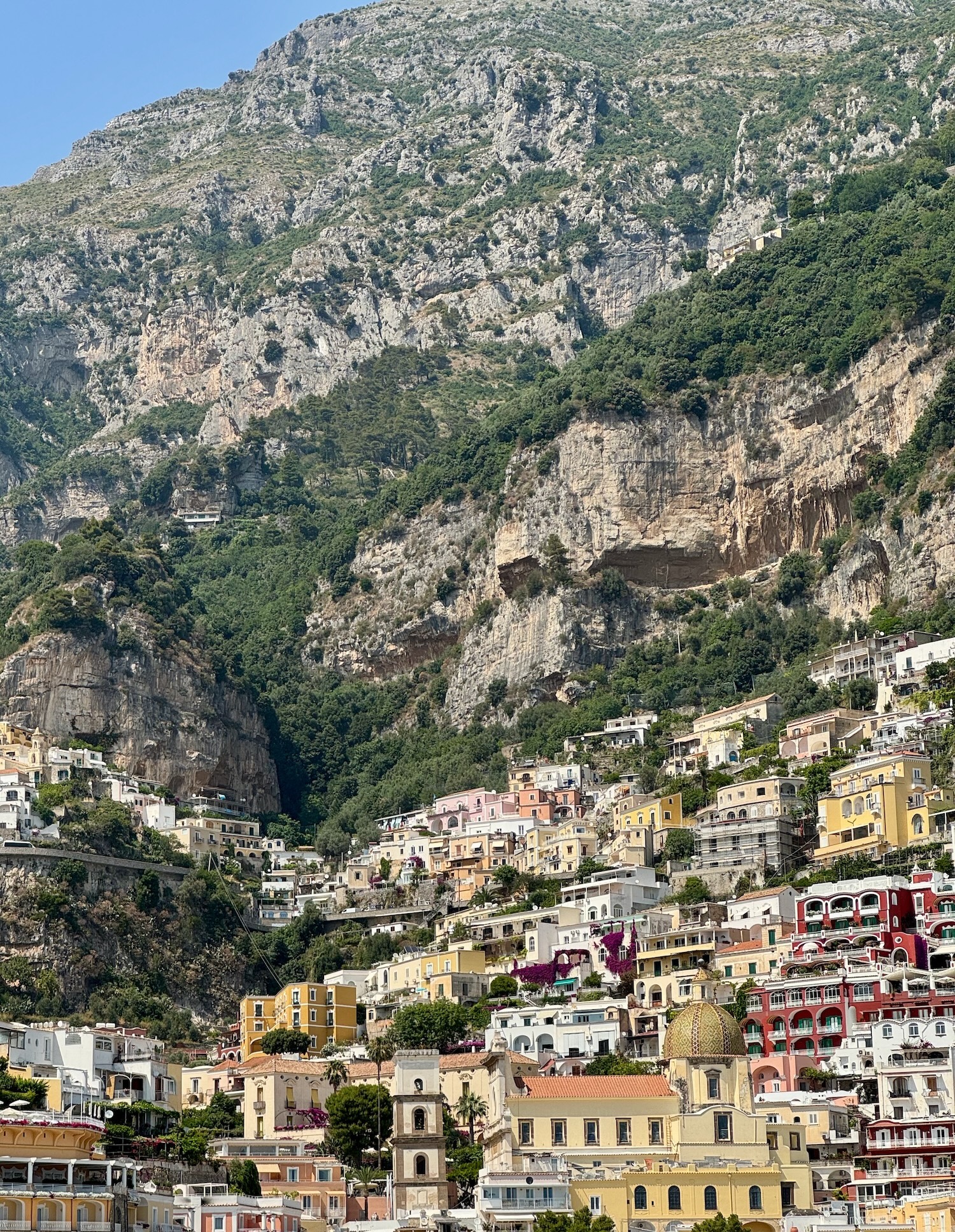
As we got closer we saw how much this stretch of the Lattari Mountains dominated the town.
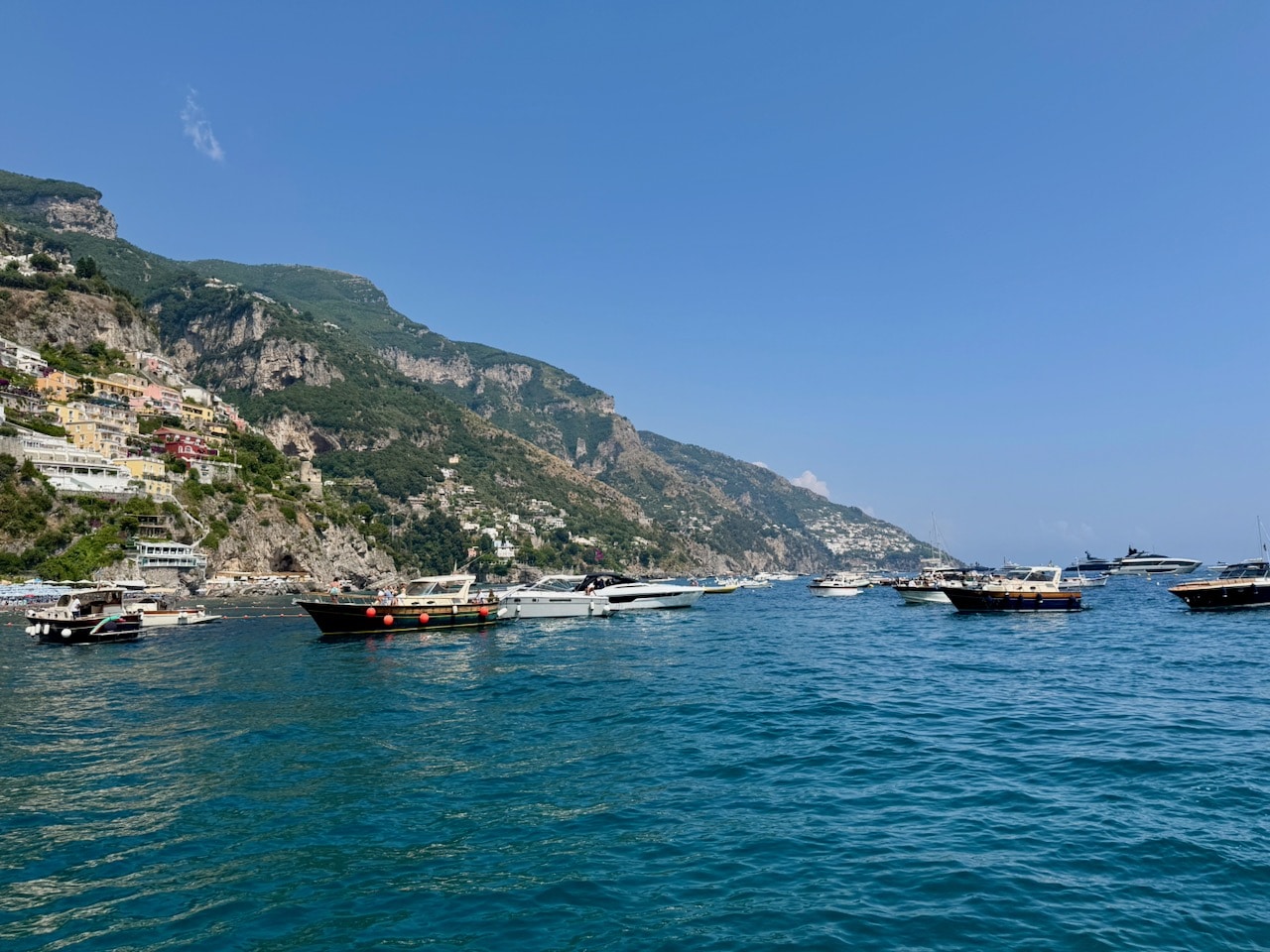
The small harbor was filled with small boats and beachgoers.
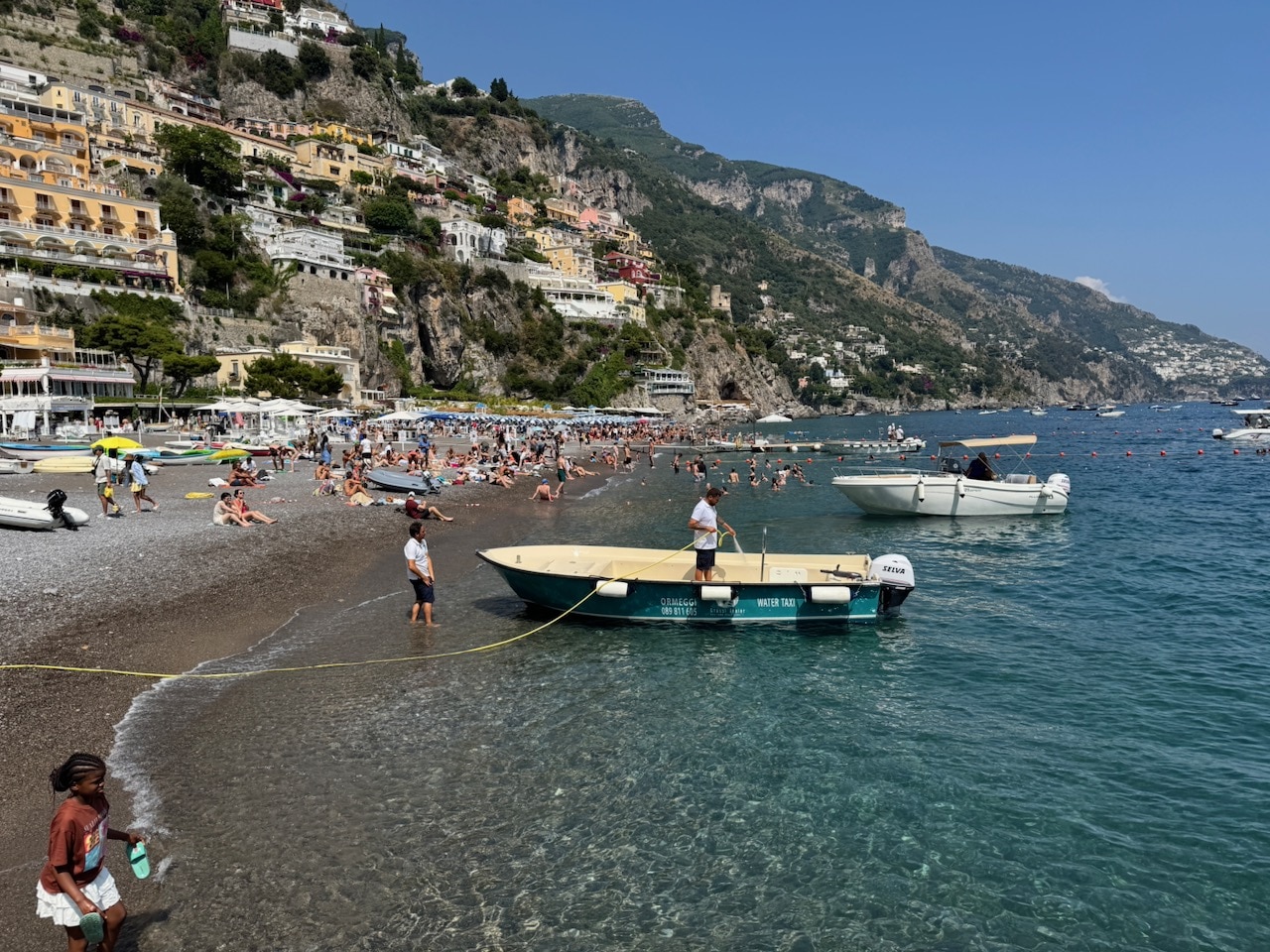
We had about an hour to see the part of Positano available to day tourists. And we started by doing what tourists do.
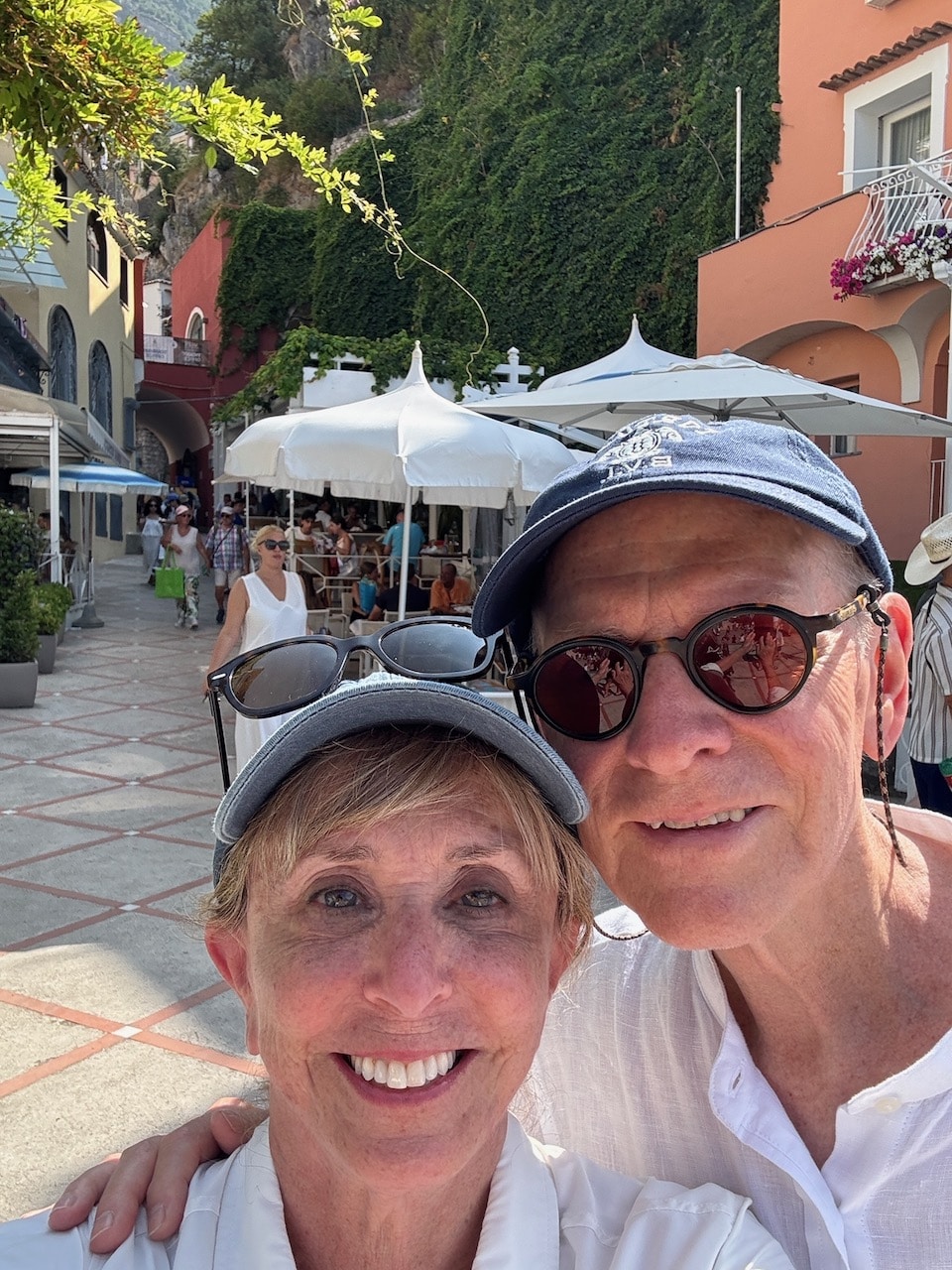
Positano is very pretty, but like Amalfi, it seemed that if you want to get beyond the tourist hype, you’ll have to spend some time on land.
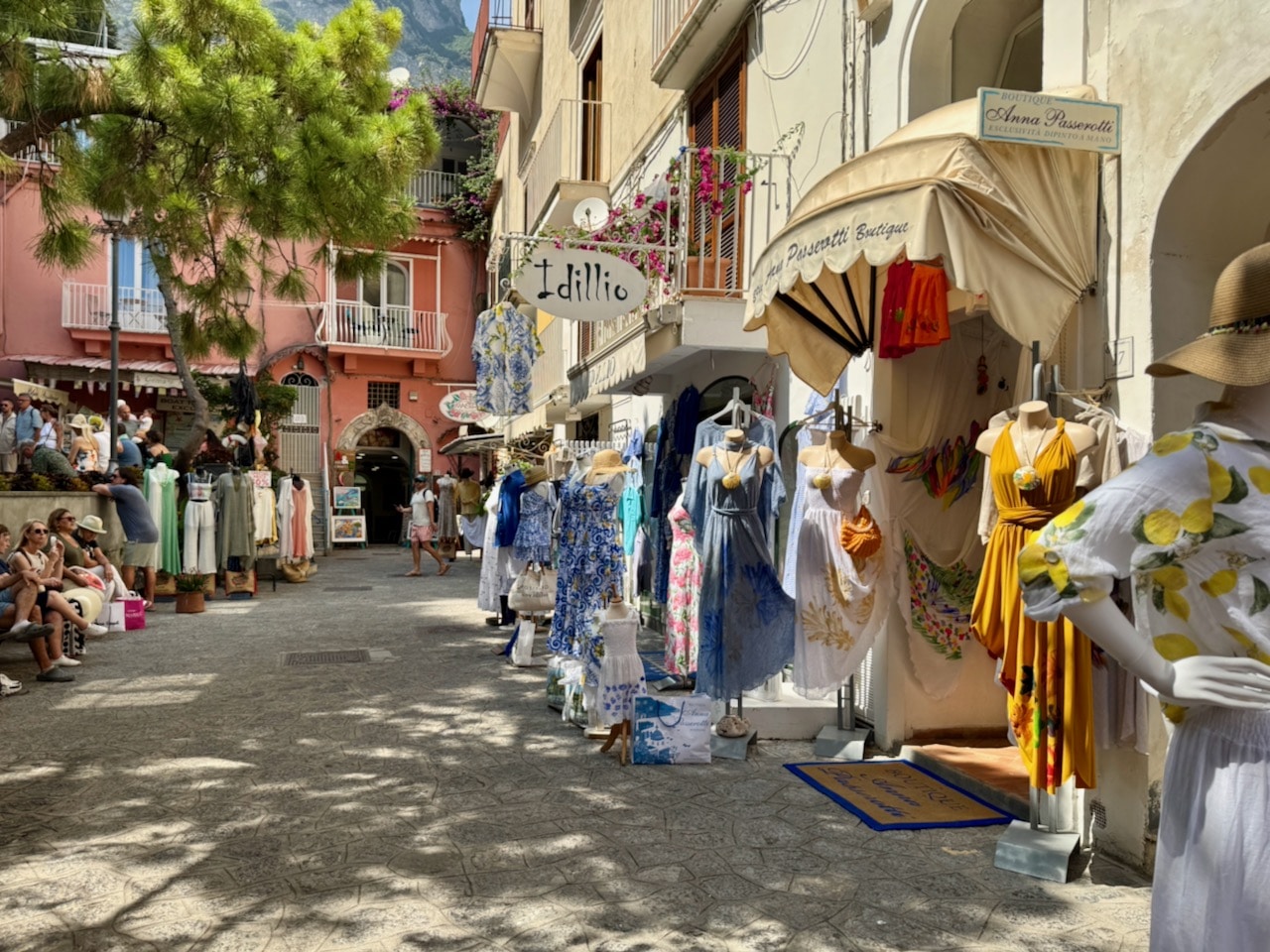
To escape the the other tourists, we dipped into a coffee shop.
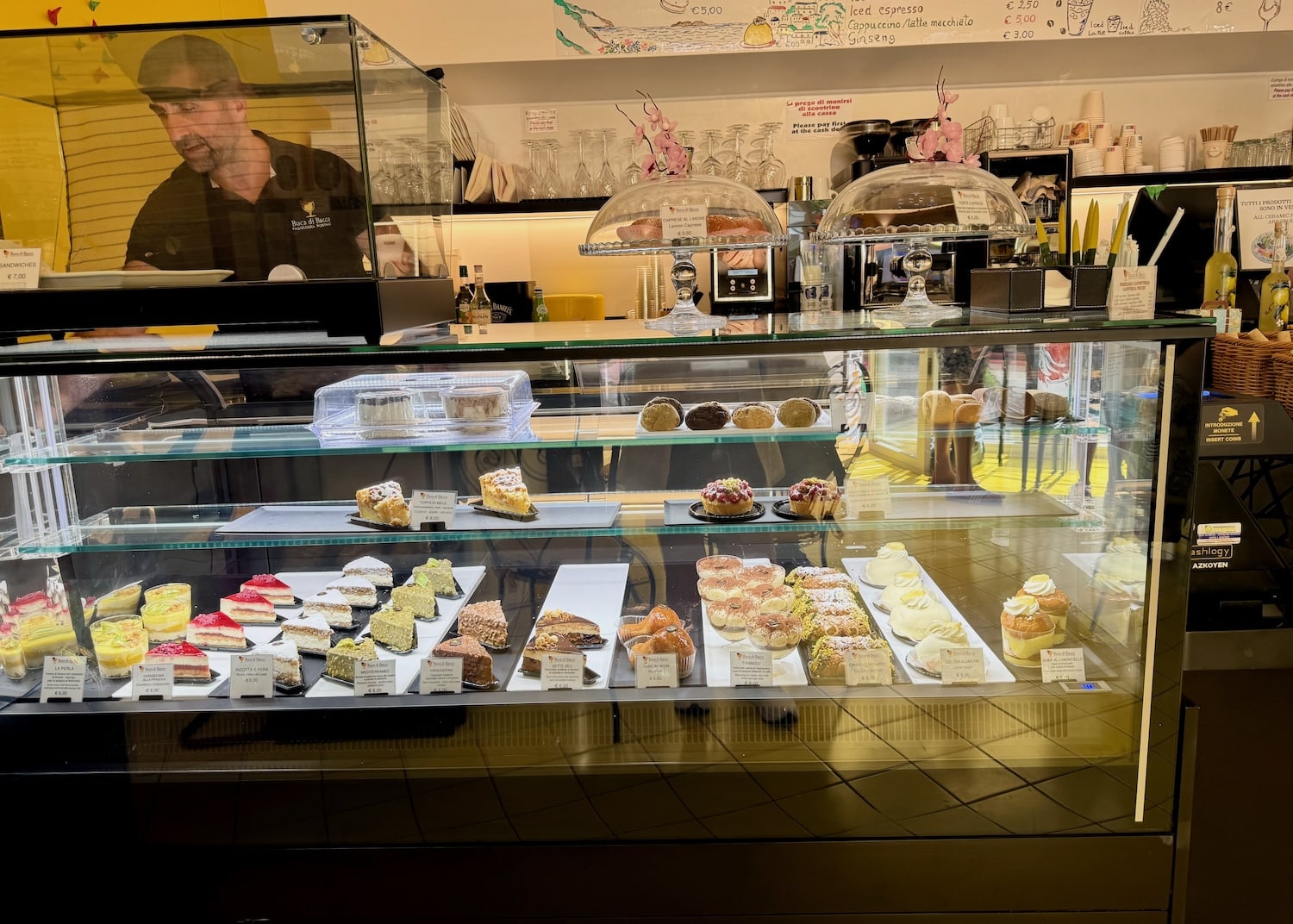
And what’s coffee in Italy without dessert?
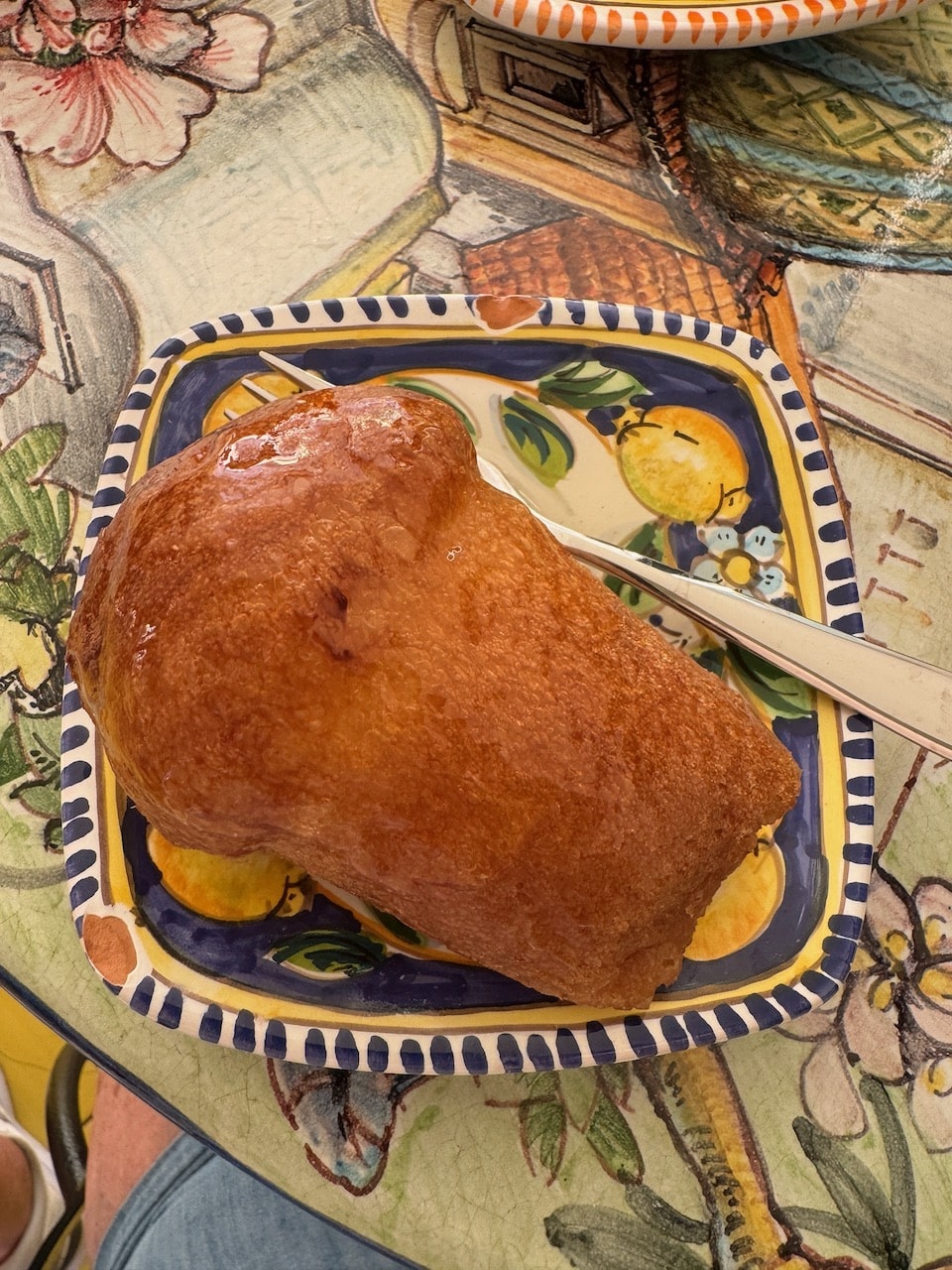
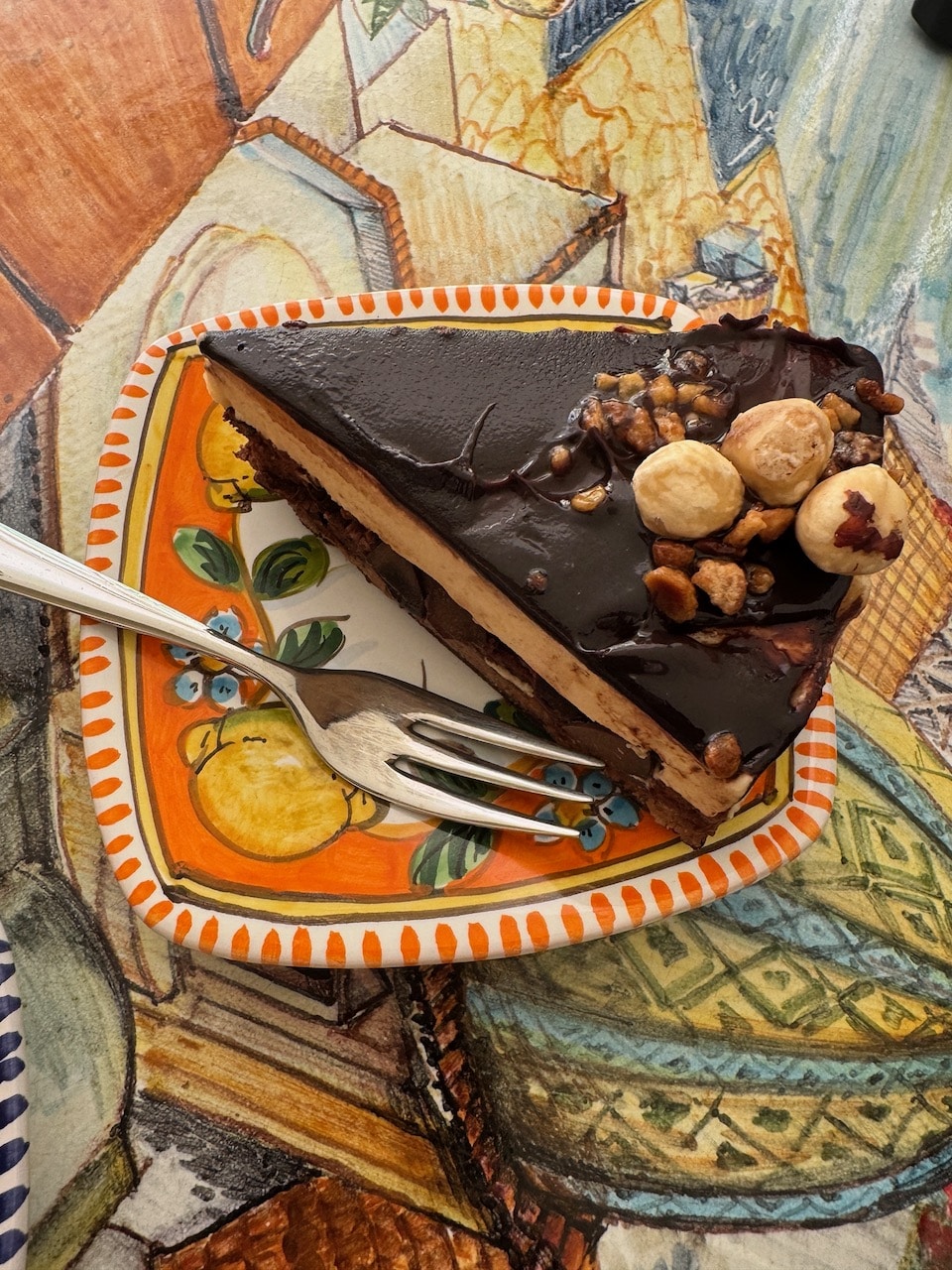
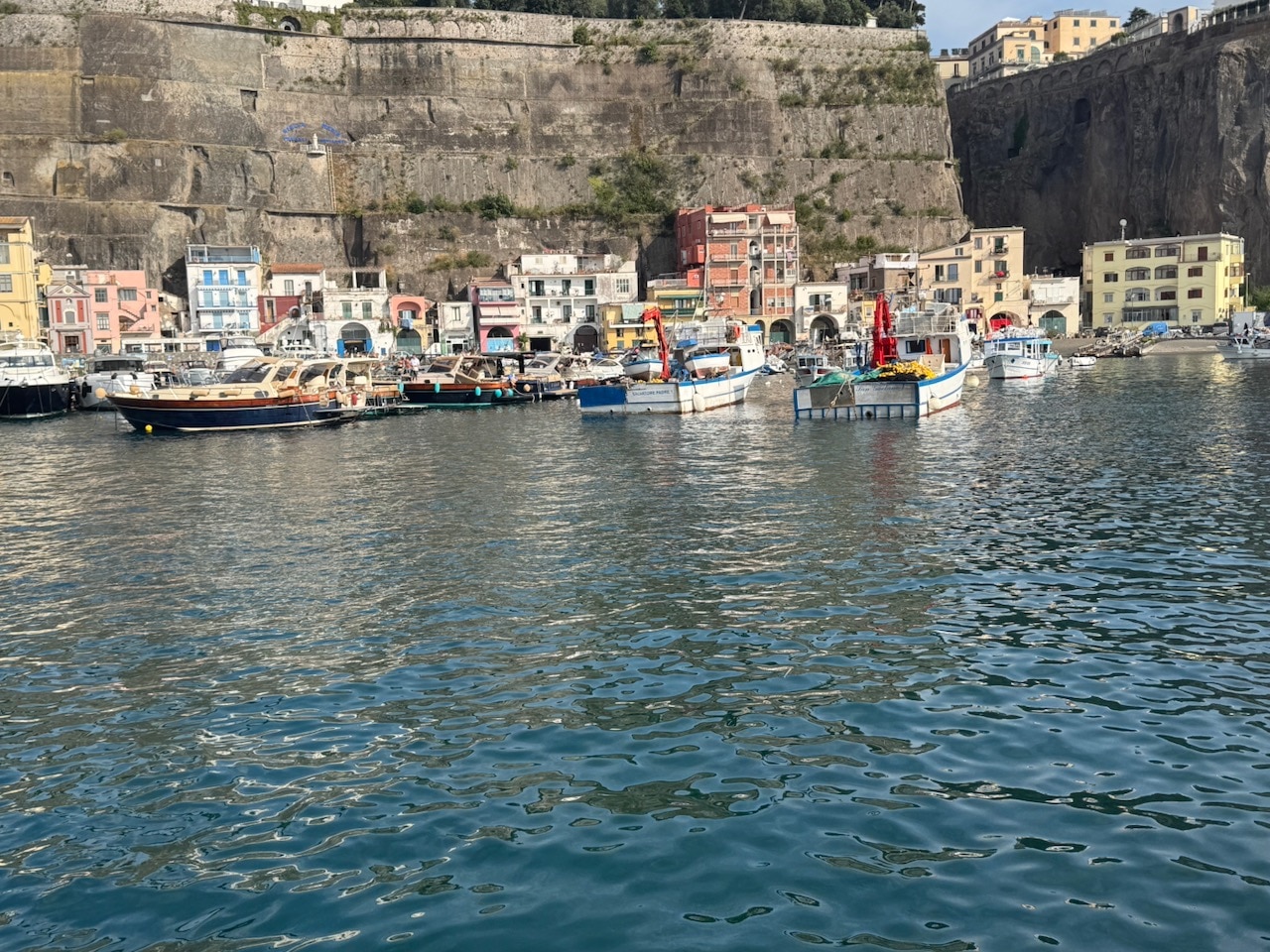
The trip back was as pleasant as the trip going and were happy that we managed to visit two very beautiful towns. Piano di Sorrento looked quite pretty when we returned and we didn’t think twice about leaving the tourist boat.
Back at Hotel Torre Barbara, we took a swim in the pool with Vesuvius looking toward us from across the bay.
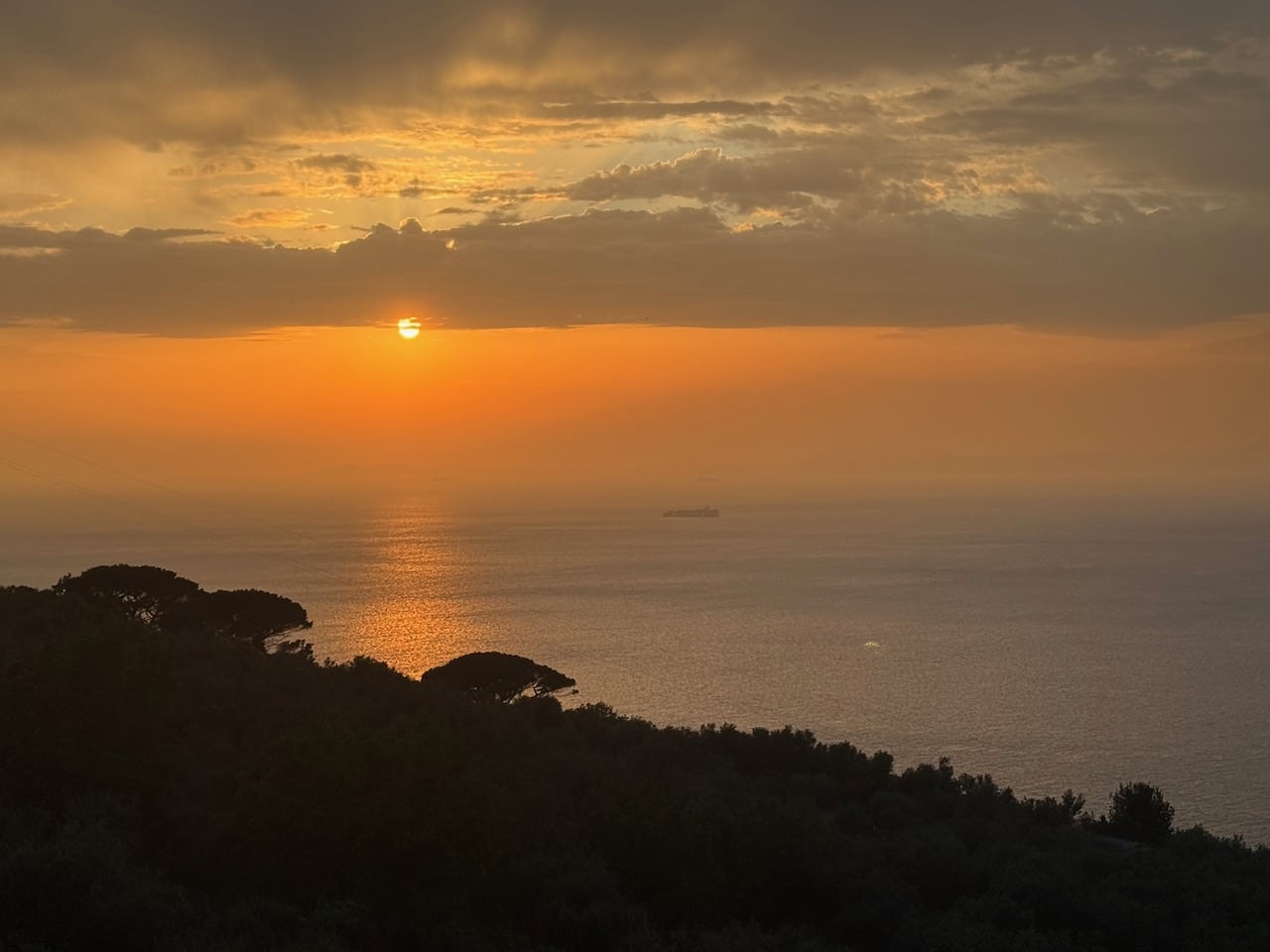
That evening the dramatic sunset reinforced the beauty of the Sorrento Coast.
During another relaxed dinner on the Torre Barbara terrace with good food, we talked about our action-packed day and reviewed our plans to head to Matera in Basililcata the next morning.